Gloria Gonzalez Sarmiento, René Ileana Velazquez (2026). Integrating Predictive and Agile Approaches in University Aircraft Development Projects: A Hybrid Project Management Framework. In: Human Factors, Business Management and Society. AHFE Open Access, vol. 215, pp. 61–69. https://doi.org/10.54941/ahfe1007586
Modern learning environments increasingly rely on multidisciplinary student teams to address complex engineering challenges under limited resources and strict performance requirements. University aircraft design competitions, such as SAE AeroDesign, represent high-impact educational settings that demand not only advanced technical solutions but also effective project management practices. However, traditional predictive project management approaches, while strong in planning and control, often lack flexibility when facing uncertainty, whereas agile approaches promote adaptability but may lack the level of documentation required for high-responsibility engineering projects. This study proposes and validates a hybrid project management methodology aimed at optimizing the design and construction of aircraft in competitive academic environments. The proposed approach integrates predictive practices aligned with the PMBOK® Guide with collaborative agile frameworks such as SCRUM. A cross-sectional mixed-methods case study was conducted within a multidisciplinary university AeroDesign team at Tecnológico de Monterrey. Qualitative data were collected through observation and document analysis, while quantitative data were obtained from performance indicators and surveys administered to 50 students across ten competition cycles. The results indicate improvements in time management, clarity of deliverables, early risk identification, and adaptability to changing requirements. Additionally, the methodology contributed to the development of professional competencies such as teamwork, leadership, and problem-solving. The study concludes that hybrid, human-centered project management models represent an effective approach for complex engineering education contexts.
University engineering competitions have gained prominence as experiential learning environments that foster creativity, innovation, and professional skill development. These competitions require multidisciplinary student teams to design, build, and validate complex engineering systems under Received February 6, 2026; Revised April 2, 2026; Accepted April 22, 2026; Available online July 20, 2026
62 Sarmiento and Pompeyo strict technical regulations, limited resources, and demanding timelines. In particular, university aircraft design competitions represent a highly challenging context due to the integration of aeronautical standards, systems engineering principles, and collaborative teamwork.
Despite their educational value, student-led aerospace projects face significant organizational challenges. Teams are often composed of students with diverse academic backgrounds and varying levels of experience, with high turnover rates driven by academic cycles. Additionally, these projects must balance learning objectives with competitive performance while responding to evolving technical requirements and constraints. Within this context, effective project management becomes a critical success factor.
Predictive project management approaches, grounded in international standards such as the PMBOK® Guide, provide structured planning, documentation, and control mechanisms that are essential in high- responsibility engineering projects. However, their sequential nature can limit adaptability in uncertain environments. Conversely, agile approaches emphasize flexibility, collaboration, and iterative development, but may lack the formal rigor required for complex systems such as aircraft. These limitations have motivated the emergence of hybrid project management models that integrate the strengths of both paradigms.
This study proposes and validates a hybrid project management methodology tailored to university aircraft design competitions. The approach integrates predictive planning and control practices with agile, collaborative mechanisms, emphasizing both technical performance and human factors such as teamwork and communication. The authors applied the proposed methodology in practice with students from a university AeroDesign team throughout the aircraft design and construction process, allowing for direct observation and evaluation of its effectiveness in a real competitive setting. By analyzing its implementation within this university AeroDesign team, this research contributes to the understanding of hybrid project management in competitive engineering education contexts.
HYBRID PROJECT MANAGEMENT FRAMEWORK DESIGN This study adopts a case study research strategy to develop and validate a hybrid project management methodology for university aircraft design competitions. The case study approach is appropriate for investigating complex socio-technical systems within real-life contexts, particularly when the boundaries between the phenomenon and its environment are not clearly defined (Yin, 2018). Given the strong interaction between technical processes, human factors, and educational outcomes, this approach allows for an in-depth understanding of project management practices within a multidisciplinary academic team.
The research was conducted within a multidisciplinary university AeroDesign team at Tecnológico de Monterrey, Campus Estado de México. A cross-sectional mixed-methods research design was employed, integrating qualitative and quantitative techniques to capture both process-oriented and performance-related aspects of project management (Creswell & Plano
Integrating Predictive and Agile Approaches in University Aircraft 63 Clark, 2023). Mixed-methods designs are particularly suitable in engineering education research, as they enable the triangulation of technical metrics with human-centered and experiential data.
Data Collection and Sample Qualitative data were collected through non-participant observation and document analysis, focusing on project planning artifacts, technical reports, risk registers, and meeting records. These data sources provided insights into decision-making processes, team coordination, and the integration of predictive and agile practices throughout the project lifecycle. Observation and documentation analysis are widely used methods for capturing human and organizational factors in project-based environments (Reason, 2016).
Quantitative data were obtained from project performance indicators, including schedule adherence, milestone completion rates, rework frequency, and competition performance outcomes. Additional data sources included project schedules, progress reports, and structured surveys administered to team members, aimed at assessing perceived effectiveness, collaboration, and competency development. The sample consisted of 50 students, considering participation across the last ten competition cycles, which ensured longitudinal representation of team dynamics while maintaining a cross- sectional analytical perspective.
Research Design and Procedure The research design was structured into sequential phases, following methodological recommendations for applied engineering and project management research (Saunders et al., 2023). The first phase focused on project planning, during which the research objectives, scope, and evaluation criteria were defined. In the second phase, sample delimitation was conducted by identifying relevant competition cycles and participants. The third phase involved the design and validation of research instruments, including observation protocols and survey questionnaires. These instruments were subsequently applied during ongoing project activities. Finally, a comprehensive data analysis phase was conducted, integrating qualitative thematic analysis with quantitative descriptive and comparative techniques.
Table 1: Summary of the research methodology.
Table available in the original PDF paper.
Dimension Description Research strategy Case study
Research design Cross-sectional mixed-methods Context University AeroDesign team
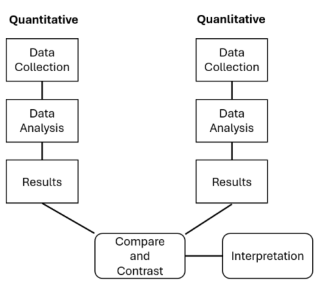
Qualitative data were analyzed using thematic analysis, allowing the identification of recurring patterns related to planning practices, adaptability, teamwork, and decision-making (Braun & Clarke, 2024). Quantitative data were analyzed using descriptive statistics to evaluate trends in project performance and perceived competency development. The integration of both data streams enabled methodological triangulation, enhancing the validity and reliability of the findings (Creswell & Plano Clark, 2023).
Figure 1: Triangulation design: Convergence model. (Adapted from Creswell and Plano Clark, 2018).
By combining technical performance metrics with human-centered qualitative insights, this methodology supports a holistic evaluation of hybrid project management in competitive engineering education environments.
RESULTS
This section presents the results obtained from the application of surveys, document analysis, and performance indicators used to evaluate the impact of the proposed hybrid project management methodology within a university AeroDesign team. The results are organized according to participant profile, planning effectiveness, execution and adaptability, project outcomes, and perceived impact of project management practices.
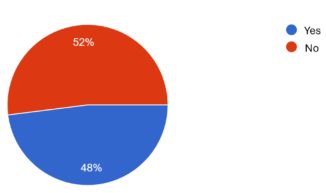
Figure 2 shows that most participants entered the project with limited formal exposure to project management practices, highlighting the educational relevance of structured management frameworks in multidisciplinary student teams.
Figure 2: Prior knowledge of project management before joining the team.
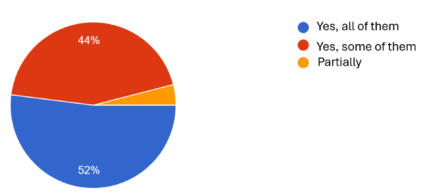
Integrating Predictive and Agile Approaches in University Aircraft 65 Results related to planning activities show a predominantly positive perception of early project definition. Most respondents indicated that project objectives and scope were defined either “completely” or “to a great extent” at the beginning of the project. Similarly, stakeholder identification and involvement were perceived as adequate or highly effective in most cases.
Additionally, responses regarding the level of planning before project execution—measured on a five-point scale—showed a tendency toward higher values, indicating that participants perceived the planning phase as structured and meaningful. These findings suggest that the predictive components of the hybrid methodology contributed to greater clarity, alignment, and shared understanding among team members, even within a dynamic academic competition context.
Figure 3: Clarity of objectives, scope, and stakeholder identification.
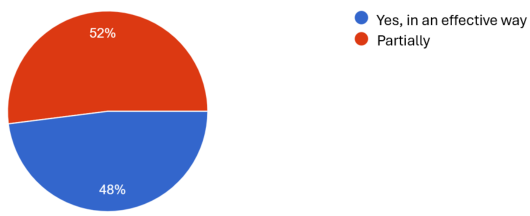
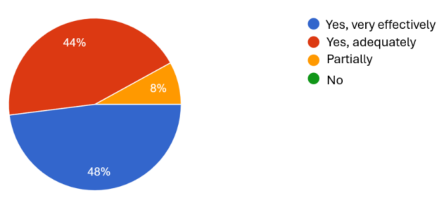
During the execution phase, participants reported positive perceptions regarding process optimization, resource utilization, and the implementation of lessons learned. Most responses fell within the categories of “adequate” or “very effective,” indicating that continuous improvement practices were present throughout the project lifecycle.
The incorporation of iterative practices and feedback mechanisms— characteristic of agile approaches—enabled the team to adapt to technical challenges, resource constraints, and evolving competition requirements. These results support the effectiveness of integrating agile-inspired practices within a structured project framework, fostering adaptability while maintaining technical control.
Figure 4: Optimization of processes, lessons learned, and adaptability.
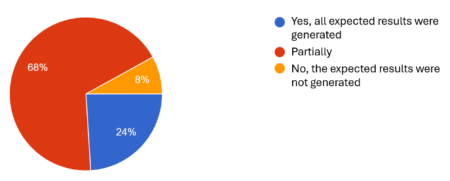
66 Sarmiento and Pompeyo In terms of project performance, most respondents indicated that projects were delivered within the planned schedule and budget, although minor or moderate deviations were reported in some cases. Regarding stakeholder expectations, the majority of participants perceived that expectations were partially or fully met, reflecting a balanced view of success beyond competition rankings.
Although not all projects achieved podium positions, respondents acknowledged that the projects generated valuable outcomes in terms of technical learning, system integration, and team performance. This reinforces the notion that success in educational engineering projects should be evaluated using multidimensional criteria that include learning outcomes, stakeholder satisfaction, and process effectiveness.
Figure 5: Project success, expectations, and competition results.
Participants consistently perceived project management as a critical factor for project success. Furthermore, respondents largely agreed that the use of a hybrid project management approach improved execution quality, communication, and goal achievement throughout the project lifecycle. Participants also reported that the hybrid methodology promoted continuous communication, clarity of responsibilities, and collaborative problem-solving, all of which are critical human factors in multidisciplinary team environments.
Figure 6: Importance of project management.Table 2: Summary of key findings.
Table available in the original PDF paper.
Dimension Main Finding Initial PM knowledge Mostly low
Planning effectiveness High Adaptability and learning High
Project performance Moderate to high Perceived PM importance Very high
Integrating Predictive and Agile Approaches in University Aircraft 67 Overall, the results demonstrate that the proposed hybrid project management methodology positively influenced both project performance and the development of professional competencies, including teamwork, leadership, decision-making, and problem-solving. These findings provide empirical support for the adoption of hybrid, human-centered project management models in competitive engineering education settings.
Related Work
University engineering projects, particularly those developed for international competitions, require management approaches capable of addressing technical complexity, uncertainty, and intensive teamwork. Prior research in project management and engineering education highlights three main approaches relevant to this study: predictive, agile, and hybrid project management models.
Predictive and Agile Project Management in Engineering Education Predictive project management approaches, grounded in international standards such as the PMBOK® Guide, emphasize structured planning, formal documentation, and systematic control. These characteristics are especially relevant in engineering projects where safety, traceability, and compliance are critical, including aerospace systems development (PMI, 2021; Kerzner, 2025). In educational contexts, predictive models expose students to professional practices aligned with industry expectations. However, their sequential nature can limit adaptability when projects face evolving requirements and resource constraints, which are common in academic competition environments (Bianchi et al., 2021).
Agile project management approaches emerged to address uncertainty and change through iterative development, continuous feedback, and close collaboration (Beck et al., 2001). In engineering education, agile practices have been associated with higher student engagement, improved communication, and enhanced teamwork (Serrador & Pinto, 2015). Nevertheless, purely agile frameworks may lack the level of documentation, risk management, and systems integration required for complex engineering projects such as aircraft design.
Hybrid Project Management and Human-Centered Approaches Hybrid project management models seek to integrate the strengths of predictive and agile approaches by combining structured planning and governance with iterative execution and adaptability (Székely, Késmárki- Gally & Lakner, 2025). Empirical studies indicate that hybrid models are particularly effective in projects characterized by high complexity and uncertainty, offering improved performance compared to purely predictive or agile approaches (Gemino, Reich & Serrador, 2020).
From a human factors perspective, project management is increasingly understood as a socio-technical system in which human interaction,
68 Sarmiento and Pompeyo communication, and collaboration play a central role (Reason, 2016). In multidisciplinary student teams, differences in disciplinary backgrounds and experience levels introduce additional coordination challenges. Research in engineering education highlights the importance of management frameworks that support teamwork, leadership, and decision-making while maintaining technical rigor (Pazos, Pérez-López & González-López, 2022). Hybrid project management models provide mechanisms to address both technical and human-centered requirements, making them particularly suitable for competitive academic engineering projects.
Table 3: Comparison of project management approaches in academic engineering projects.
Table available in the original PDF paper.
Dimension Predictive Agile Hybrid Planning structure High Low Moderate
Adaptability to change Low High High Documentation level High Low Balanced
Human-centered collaboration Moderate High High Suitability for aerospace projects High Limited High
Educational effectiveness Moderate High High
CONCLUSION
This study demonstrates that hybrid project management models represent an effective and human-centered alternative for managing complex engineering projects in university competition environments. By integrating predictive planning and control with agile adaptability and collaboration, the proposed methodology improved project execution, enhanced communication, and supported the development of professional competencies among students.
The main contribution of this work lies in the empirical validation of a hybrid project management framework tailored to aerospace engineering education, addressing both technical and human factors. The methodology provides a structured yet flexible reference that can be transferred to other engineering disciplines characterized by uncertainty, innovation, and high technical demands.
Future research should explore longitudinal implementations of the proposed framework, incorporate comparative analyses with other teams or institutions, and examine the integration of quantitative performance metrics with advanced human factors assessment tools. Additionally, further studies could investigate the scalability of the methodology and its applicability to industry–academia collaborative projects.
In conclusion, the strategic integration of predictive and agile approaches within a hybrid, human-centered project management framework offers significant value for both project performance and engineering education, aligning closely with the objectives of creativity, innovation, and human factors emphasized by the AHFE community.
ACKNOWLEDGMENT
The authors would like to acknowledge the Borregos CEM Aerodesign Team for their commitment, collaboration, and active participation throughout the development of the aircraft design projects that supported this research. Special recognition is extended to Tecnológico de Monterrey, Campus Estado de México, for providing the academic environment, institutional support, and resources that made this study possible.
REFERENCES
Beck, K. et al. (2001) Manifesto for Agile Software Development. Available at: https://agilemanifesto.org Bianchi, M. J. et al. (2021) ‘Recommendation of Project Management Practices:
A Contribution to Hybrid Models’, IEEE Transactions On Engineering Management, 69(6), pp. 3558–3571. https://doi.org/10.1109/tem.2021.3101179. Borrego, M., Douglas, E.P. & Amelink, C.T. (2009) ‘Quantitative, qualitative, and mixed research methods in engineering education’, Journal of Engineering Education, 98(1), pp. 53–66. doi:10.1002/j.2168-9830.2009.tb01005.x Braun, V. & Clarke, V. (2024) Thematic Analysis: A Practical Guide. London: SAGE. Creswell, J. W. & Plano Clark, V.L. (2023) Designing and Conducting Mixed
Methods Research. 34th edn. Thousand Oaks, CA: SAGE. Gemino, A., Reich, B.H. & Serrador, P.M. (2020) ‘Agile, Traditional, and Hybrid Approaches to Project Success: Is Hybrid a Poor Second Choice?’, Project Management Journal, 52(2), pp. 161−175. https://doi. org/10.1177/8756972820973082. Kerzner, H. (2025) Project Management: A Systems Approach to Planning,
Scheduling, and Controlling. 13th edn. Hoboken, NJ: Wiley. Pazos, P., Pérez-López, M.C. & González-López, M.J. (2022) ‘Examining teamwork competencies and team performance in experiential entrepreneurship education: Emergent intragroup conflict as a learning triggering event’, Education + Training, 64(4), pp. 461–475. https://doi.org/10.1108/et-06-2021-0208. Project Management Institute (2021) A Guide to the Project Management Body
of Knowledge (PMBOK® Guide). 7th edn. Newtown Square, PA: Project Management Institute. Reason, J. (2016) Managing the Risks of Organizational Accidents. 2nd edn.
Farnham: Ashgate. Saunders, M., Lewis, P. & Thornhill, A. (2023) Research Methods for Business Students. 9th edn. Harlow: Pearson. Serrador, P. & Pinto, J.K. (2015) ‘Does Agile work?’, International Journal
of Project Management, 33(5), pp. 1040–1051. https://doi.org/10.1016/j. ijproman.2015.01.006 Székely, B., Késmárki-Gally, S.E. & Lakner, Z. (2025) ‘Hybrid project management: Scoping review’, Project Leadership and Society, 6, pp. 2–12. https://doi. org/10.1016/j.plas.2025.100182. Yin, R.K. (2018) Case Study Research and Applications: Design and Methods. 6th
edn. Thousand Oaks, CA: SAGE.
LISTED IN THE AHFE DIGITAL BOOKSTORE CATALOGUE
Explore the complete digital volume
Human Factors, Business Management and Society
Read this individual research paper free through the original publisher, or explore the full digital proceedings book.
ISBN 978-1-964867-91-5
Explore this ISBN in the AHFE Bookstore ↗Listed in the July 2026 bookstore catalogue; search by ISBN to confirm current availability · Digital book purchase optional