Ignacio Pavón Garcia, Carlos Polvorinos-Fernández, Irene Sánchez-Hernández, Guillermo De Arcas, Luis Sigcha (2026). Digital Biomarkers for the Assessment of Motor Symptoms in Parkinson’s Disease: From Daily Life to Intervention Evaluation. In: Healthcare and Medical Devices. AHFE Open Access, vol. 211, pp. 272–281. https://doi.org/10.54941/ahfe1007490
1 Instrumentation and Applied Acoustics Research Group, Department of Mechanical, Engineering, ETS Ingenieros Industriales, Universidad Politécnica de Madrid, Madrid, Spain ↗
2 ALGORITMI Research Center/LASI, University of Minho, 4800-058 Guimarães, Portugal ↗
The objective and continuous assessment of motor symptoms in Parkinson’s disease (PD) remains limited by the episodic nature of clinical evaluations. This work presents a dual monitoring methodology developed within the BioCliTe project, integrating both standardized MDS‑UPDRS Part III exercises and an ecologically valid daily‑life task. Data were collected using smartwatches that acquired accelerometer and gyroscope signals at 50 Hz in supervised and free‑living settings, guided by a mobile application that enabled automatic labelling. The recordings were processed through a reproducible pipeline including filtering, segmentation, windowing, and feature extraction in both time and frequency domains. Explainable machine‑learning models, such as decision‑tree ensembles, logistic regression, and SVM, were trained using interpretability methods (LIME, SHAP) to define digital biomarkers of tremor, bradykinesia, and gait. These biomarkers demonstrated strong capability to differentiate PD patients from healthy controls and to reflect motor severity in unsupervised environments. Results confirm the feasibility of diagnosing and monitoring PD symptoms outside clinical facilities through wearable‑based biomechanical analysis. Notably, the free-living task yielded a low‑cost and reproducible bradykinesia biomarker with robust performance in clinical and remote conditions. The defined digital biomarkers establish the basis for the EVINTERS project, aimed at evaluating therapeutic effects on symptom progression. This approach supports more personalized, continuous, and patient‑centered management beyond point‑in‑time assessments.
Parkinson’s disease (PD) is a chronic and progressive neurodegenerative disorder characterized by the degeneration of dopaminergic neurons, which leads to a substantial reduction in dopamine production, a neurotransmitter essential for regulating voluntary movement and motor control. Clinically, PD is defined by a constellation of motor symptoms such as resting tremor, bradykinesia, muscular rigidity, postural and gait impairments, and dyskinesias, accompanied by a wide range of nonmotor manifestations
Digital Biomarkers for the Assessment of Motor Symptoms in Parkinson’s Disease 273 including sleep disturbances, depression, cognitive impairment, and, in advanced stages, dementia. Despite considerable progress in understanding its underlying mechanisms, PD remains incurable and its progression is inevitable (Armstrong & Okun, 2020). The Movement Disorder Society–Sponsored Revision of the Unified Parkinson’s Disease Rating Scale (MD-SUPDRS) is the most widely adopted instrument for assessing PD severity and progression, combining patientreported information with clinicianbased evaluations across multiple domains to offer a standardized and comprehensive assessment of motor and non motor symptoms (Goetz et al., 2008). One of the main challenges in PD management is the fluctuating and heterogeneous nature of its symptoms. Clinical follow ups are usually scheduled every six to twelve months, resulting in long periods without continuous monitoring or timely therapeutic adjustment. During these intervals, many patients experience a deterioration of symptoms that remains undocumented until their next appointment, limiting precise clinical decisionmaking and personalized care (Rodríguez-Martín et al., 2022). This context highlights the growing importance of objective and continuous monitoring tools capable of capturing the daily variability of symptoms and supporting the optimization of treatment strategies. As a result, new technological solutions are increasingly incorporated into PD management to improve both short- and long-term monitoring. Mobile health (mHealth) technologies and wearable devices equipped mainly with inertial or bioelectrical sensors make it possible to collect continuous, accurate data in a simple and non-intrusive manner. These devices enhance ecological validity and provide patients with an accessible, convenient, and unobtrusive monitoring alternative (Polvorinos-Fernández et al., 2024b). Ensuring the clinical reliability of the data generated by these systems requires verifying that the sensors operate consistently within the amplitude and frequency ranges relevant to PD motor symptoms, which makes calibration and performance validation essential steps (Ru et al., 2022). To obtain a comprehensive and objective representation of motor function, it is necessary to collect data in diverse contexts, encompassing both structured clinical tasks and activities of daily living. Such multimodal data support the development of digital biomarkers capable of quantifying motor impairment with precision and ecological relevance (Polvorinos-Fernández et al., 2024b). These biomarkers have the potential to play a significant role in personalizing treatments, improving monitoring of symptom dynamics, and ultimately enhancing patients’ quality of life (Mahadevan et al., 2020). The acquisition of data in both laboratory and free-living conditions is essential to evaluating the validity, robustness, and practical relevance of new digital biomarkers. Laboratory conditions allow the generation of reproducible and well-controlled metrics, whereas real-world monitoring determines whether these biomarkers maintain their stability and clinical usefulness in everyday environments.
This paper is based on previous works (Centeno-Cerrato et al., 2025), who examined how motor symptoms in PD are monitored using portable mHealth technologies, shifting the focus from controlled contex to free living. This paper summarizes the entire process and provides further details on using biomarkers to evaluate therapeutic interventions in the EVINTERS project, which aims to assess the influence of therapeutic interventions on the
motor progression of PD. This approach addresses the limitations of isolated clinical assessments by integrating continuous monitoring, everyday life data, and explainable models, moving towards a more individualised, data-driven treatment of PD.
MONITORING GUIDED ACTIVITIES: MONIPAR & BIOCLITE Monipar is a technological solution developed within the TECAPARK project (TECAPARK) and specifically designed to monitor the execution of guided motor activities derived from the MD-SUPDRS. These tasks are intended to be performed in supervised environments to ensure standardized conditions and maximize the reliability of motor assessments. The system is composed of two main components: a smartphone application that provides guidance to the user during the exercises, and a smart-watchbased wearable module responsible for real-time data acquisition. The mobile application incorporates an interactive interface that combines visual cues with audio instructions, ensuring correct execution and minimizing variability in task performance. In parallel, the application communicates activation and status information to the smartwatch, enabling the automatic labelling of sensor data. During each exercise, the wearable device records inertial signals through its integrated accelerometer and gyroscope, storing them locally for later analysis (Sigcha et al., 2023b). The performance of the embedded accelerometers has been previously evaluated in terms of precision, frequency response, and expanded measurement uncertainty using ISO-based calibration methods (Sigcha et al., 2018).
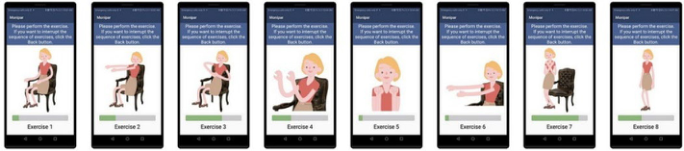
The Monipar protocol includes a sequence of exercises derived from Part III of the MDSUPDRS (Goetz et al., 2008), designed to assess distinct dimensions of motor function through standardized procedures. The dataset generated using this protocol is described in detail in Sigcha et al. (2023a). Figure 1 illustrates the types of instructions displayed in the application interface.
The assessment begins with the evaluation of resting tremor (Item 3.17 from UPDRS-III), which quantifies tremor amplitude while the limbs remain relaxed. This is followed by the postural tremor test (Item 3.15), where the user maintains a fixed posture to evaluate tremor during sustained positioning. An additional repetitive arm-extension task, not included in the MDS-UPDRS but incorporated to enrich the characterization of upper-limb motor function, requires cyclic forward extensions and returns toward the chest.
The protocol continues with the fingertapping task (Item 3.4), designed to assess bradykinesia and fine motor coordination through repetitive thumbindex tapping. Rapid hand movements (Item 3.5) extend this evaluation by measuring the ability to perform quick, repetitive actions, offering further insight into motor slowness. This is complemented by the pronation-supination task (Item 3.6), which evaluates bradykinesia and coordination during alternating rotational movements of the hands. Finally, functional mobility is assessed through the rising-froma-chair test (Item 3.9) and a gait assessment (Item 3.10), both of which provide valuable information on postural control, balance, and potential gaitrelated manifestations such as freezing episodes.
Figure 1: Visual instructions for Monipar’s exercise routine.
To maintain consistency and optimize user performance, rest periods were strategically placed between exercises, reducing fatigue-related effects on the recorded data. The complete Monipar protocol lasts approximately eight minutes, with task durations tailored according to the complexity, biomechanical characteristics, and clinical relevance of each activity.
Transition From Monipar to BioCliTe Monipar has demonstrated its capacity to provide high-quality data for evaluating motor symptoms in PD under controlled, supervised conditions. However, a comprehensive understanding of disease progression and treatment efficacy requires complementing these structured assessments with monitoring in free-living environments. The integration of guided and unsupervised activities offers substantial advantages for the characterization of motor function.
Supervised exercises such as those implemented in Monipar provide standardized and replicable measurements of specific motor parameters. Nevertheless, they do not fully capture the variability and functional demands experienced by patients in daily life. Activities such as walking, eating, or dressing offer a more realistic depiction of how motor symptoms affect realworld functionality, thereby contributing to an ecologically valid understanding of symptom severity. Combining data from both settings enables the collection of richer and more representative information about motor performance across contexts.
Continuous monitoring in daily-life conditions also facilitates the detection of motor fluctuations, a hallmark of PD where patients alternate between “on” states with adequate motor control and “off” states marked by significant impairment. These fluctuations often go unnoticed during scheduled clinical assessments and may not manifest during guided exercises alone. Capturing this information during free-living activities improves the accuracy of motor evaluations and supports more effective, individualized adjustments to medication and treatment plans (Mantri et al., 2021).
Furthermore, the integration of guided and real-world monitoring provides an expanded dataset (Polvorinos-Fernández et al., 2024a) with greater temporal and contextual diversity. This enables more detailed longitudinal analysis, supports the identification of long-term progression patterns, and enhances the development of predictive models of symptom evolution. In this context, the BioCliTe project extends the capabilities of Monipar by incorporating continuous, unsupervised monitoring, offering a more complete, accurate, and personalized assessment of motor function in PD.
MONITORING OF FREE-LIVING AND GUIDED ACTIVITIES: BIOCLITE BioCliTe represents an extension of the Monipar system, broadening monitoring capabilities beyond clinical settings. While Monipar captured data only during guided exercises performed under supervision, BioCliTe enables continuous, unsupervised acquisition of movement signals throughout the day, recording motor activity during natural daily tasks.
Along with accelerometer and gyroscope data, BioCliTe also tracks physical-activity metrics such as total steps, walking/running steps, speed, distance travelled and estimated caloric expenditure.
The smartwatch accelerometers were previously characterized in terms of amplitude linearity, frequency response, and measurement uncertainty following ISO-based comparison methods to ensure data reliability (Pavón et al., 2025; ISO, 2017; ISO, 2003).
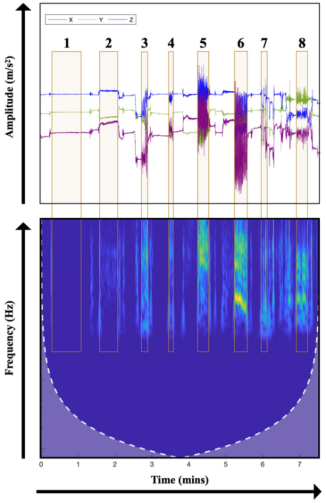
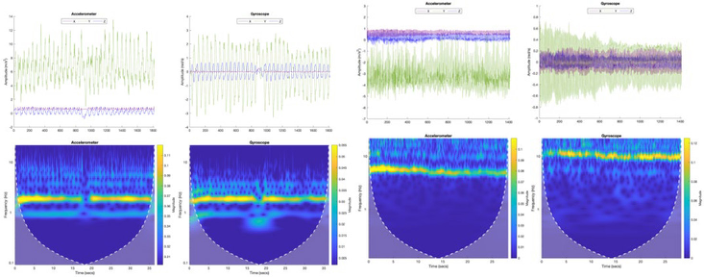
In addition to free-living monitoring, BioCliTe preserves Monipar’s guided-exercise functionality by allowing these structured tasks to be performed autonomously at home. The previous mechanism, based on smart-phonetriggered smartwatch recordings, has been redesigned: the mobile application now logs time-stamped activity intervals, producing files that indicate signal status and support automatic labeling of inertial data collected by the smartwatch. Figures 2 and 3 show the labelled raw data from the accelerometer using Monipar (guided exercises based on UPDRS-III) and BioCliTe (guided exercises based on UPDRS-III + free-living activities).
Battery life is an important consideration. Since commercial devices differ in capacity, it is necessary to estimate how long they can sustain continuous inertial sensing. Tests show that the smartwatches used in this study can record acceleration and angular velocity for about five hours; afterward, they continue collecting only physical-activity metrics for the rest of the day.
The system allows users to start or stop inertial recordings according to their routines, enabling guided exercises to be conducted at convenient moments.
The proposed methodology uses free-living daily activities to monitor motor symptoms of PD. These natural tasks contain characteristic markers of tremor, bradykinesia, and mobility impairments, which can be reliably captured using wearable inertial sensors, as demonstrated by Polvorinos- Fernández et al. (2024c). Because current systems still struggle to reliably identify activity-specific patterns, the initial stage relies on manual labeling. To address this, a mobile application similar to Monipar is proposed, providing visual or auditory prompts and marking precise start–end times for each activity.
All data are stored locally on the smartphone and temporally synchronized with the inertial (accelerometer and gyroscope) signals recorded by the smartwatch. To validate the selected activities, controlled laboratory experiments were conducted with 20 HC performing the proposed tasks while monitored using smartwatch sensors. These results serve as initial references for future PD studies.
The recorded inertial signals were subsequently processed through a structured analytical pipeline including preprocessing (band-pass filtering, segmentation and windowing), feature extraction in time and frequency
Digital Biomarkers for the Assessment of Motor Symptoms in Parkinson’s Disease 277 domains, and supervised machine-learning modelling. The explainable framework adopted for model interpretation, including LIME and SHAP analyses, is described in detail in Polvorinos-Fernández (2026).
Figure 2: Example of an accelerometer signal recorded by Monipar (left) and BioCliTe (right), both including raw labelled data. The upper section shows the temporal signal obtained from the three axes (time vs amplitude), while the lower section shows the scalogram of the combined signal from all three axes (time vs frequency). The right figure represents more than one hour of acceleration data, showing segments with clear tremor activity. This extended monitoring provides a more comprehensive view of motor symptoms than the previous Monipar approach, which was limited to structured tasks. In this example, the participant completed both Moniparexercises and a free-living activity (beating a mixture).
The six chosen free-living activities are listed below.
1. Standing up and sitting down: This activity captures transitional movements between seated and standing positions. Since PD frequently affects smoothness and timing during these transitions, inertial sensors can quantify abrupt changes in acceleration and angular velocity, providing insights into functional mobility. 2. Gait: Walking provides clinically relevant information about motor impairment in PD, making accurate detection of gait periods a key step for reliable analysis. Gait can be detected automatically by combining step-count or speed data with inertial patterns, making additional labeling unnecessary. As gait impairments such as freezing typically emerge in natural settings, free-living measurements enable early detection of subtle mobility changes. The oscillatory patterns observed in inertial signals
allow tracking of stride regularity, step amplitude, and gait rhythm, all clinically relevant PD markers (Borzì et al., 2023; Polvorinos-Fernández et al., 2024b). 3. Writing or drawing: Writing or drawing, especially spiral tracing, helps evaluate tremor, as irregular strokes reflect motor instability. Bradykinesia is also detectable through reduced stroke amplitude. Wrist-mounted sensors capture deviations in movement velocity and acceleration that reveal these impairments. 4. Brushing teeth: Tooth brushing involves repetitive upper-limb movements. Tremor appears as irregular oscillations, whereas bradykinesia produces slower, smaller-amplitude motion. This routine activity provides ecologically valid information about upper-limb motor control. 5. Cooking: Cooking is one of the most representative free-living activities because it involves complex, coordinated wrist and arm movements. Tasks such as beating, stirring, or cutting require precise control and repetition, making them particularly suitable for detecting tremor, bradykinesia, and rigidity. The transitions between different motion types create rich temporal and frequency patterns that benefit machine-learning models. Moreover, cooking naturally exposes fatigue-related slowness and intermittent tremor, offering highly ecological insight into PD symptoms. 6. Typing: Typing involves rapid, small-amplitude finger movements that reveal bradykinesia through reduced speed and amplitude. Tremor produces rhythmic, involuntary fluctuations detectable in the inertial data, making this task useful for quantifying symptom progression.
Figure 3: Example of an accelerometer and gyroscope signals recorded during activities. The top half shows the signals in the time domain. The bottom half shows them in the frequency domain. The two graphs on the left correspond to gait activity. The two graphs on the right correspond to cooking activity (beating a mixture).
FUTURE USE OF DIGITAL BIOMARKERS: THERAPEUTIC INTERVENTIONS The digital biomarkers defined in previous BioCliTe studies can characterize motor symptoms in unsupervised daily-life conditions and serve as a foundation for evaluating therapeutic interventions. Building on this
Digital Biomarkers for the Assessment of Motor Symptoms in Parkinson’s Disease 279 capability, the EVINTERS project uses these biomarkers to quantify the effects of transcranial direct current stimulation (tDCS) and other therapeutic strategies on motor function in PD.
Future work will focus on integrating continuous monitoring from both guided assessments and free-living data to better characterize therapy-related changes that may not be captured by standard clinical scales. By merging inertial-sensor information with explainable machine-learning models, digital biomarkers provide sensitive, objective, longitudinal indicators of response to interventions, capturing changes in bradykinesia, tremor, gait, and freezing episodes.
A major advantage of this approach is its ability to deliver high-frequency, ecologically valid measurements over extended follow-up periods. When applied before, during, and after therapeutic protocols (e.g., multi-session tDCS), these biomarkers help quantify real-world treatment effects, monitor their persistence, and evaluate inter-individual variability. Activity-recognition algorithms further contextualize motor behavior, refining the interpretation of therapy-related changes in both structured and naturalistic settings.
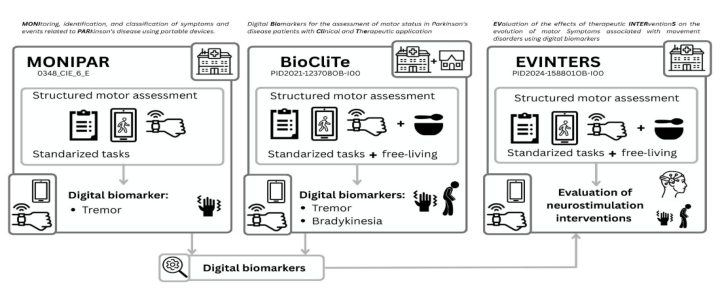
Figure 4: Overview of the process followed from the Monipar project to the EVINTERS project.
The EVINTERS framework envisions these digital measures as tools for personalized therapeutic decision-making, such as optimizing stimulation parameters, exercise plans, or medication adjustments based on objective, patient-specific motor profiles. The large, labeled database generated during the project will support more robust predictive models, potentially identifying early markers of treatment responsiveness or adverse motor fluctuations.
In the long term, this methodology could support adaptive, closed-loop therapeutic systems in which wearable-derived biomarkers dynamically guide treatment. By linking clinical assessments with everyday motor behavior, digital biomarkers will be central to advancing precision medicine in PD and transitioning from episodic evaluations to continuous, data-driven therapeutic management.
CONCLUSION
Previous studies have shown that digital biomarkers derived from inertial signals collected via wearable devices offer a reliable and objective means of assessing the motor symptoms of PD in both supervised settings and everyday life.
The dual-monitoring methodology implemented in BioCliTe, which combines standardized MDS-UPDRS tasks with ecologically valid activities of daily living, provides a comprehensive representation of motor performance that overcomes the limitations of traditional point-in-time clinical assessments. The proposed task of cooking-related activities (beating, using kitchen utensils, etc.), in particular, emerges as an activity for obtaining robust, low-cost, and reproducible biomarkers for assessing bradykinesia in real-world settings.
The results of the digital acquisition tool and biomarker development projects confirm that explainable machine learning models can effectively discriminate between people with PD and HC, while capturing significant variations in symptom severity. These findings lay a solid foundation for the EVINTERS project, which will use the same digital biomarkers to quantify the effects of therapeutic interventions. Ultimately, the integration of continuous monitoring, everyday life analysis, and interpretable computational tools drives the development of more personalized, data-driven clinical management strategies for PD, paving the way for dynamic, long-term, patient centered care.
ACKNOWLEDGMENT
This paper is part of EVINTERS research project PID2024-158801OB-I00, funded by MCIN/AEI/10.13039/501100011033/FEDER, EU.
REFERENCES
Armstrong, M., & Okun, M. (2020). Diagnosis and Treatment of Parkinson Disease: A Review. Jama, 323, 548. https://doi.org/10.1001/jama.2019.22360 Borzì, L., Sigcha, L., & Olmo, G. (2023). Context Recognition Algorithms for Energy-
Efficient Freezing-of-Gait Detection in Parkinson’s Disease. Sensors, 23(9), 4426. https://doi.org/10.3390/diseases7010018 Centeno-Cerrato, M., Polvorinos-Fernández, C., Sigcha, L., de Arcas, G., Asensio, C., López, J. M., & Pavón, I. (2025). From Controlled to FreeLiving Contexts: Expanding the Monitoring of Motor Symptoms in Parkinson’s Disease with Wearable mHealth Technologies. In Proceedings of the 18th International Joint Conference on Biomedical Engineering Systems and Technologies (BIOSTEC 2025) – Volume 2: HEALTHINF, pp. 1037–1044. DOI: 10.5220/0013386000003911 Goetz, C. G., Tilley, B. C., Shaftman, S. R., Stebbins, G. T., Fahn, S., Martinez-Martin,
P., … LaPelle, N. (2008). Movement Disorder Society-sponsored revision of the Unified Parkinson’s Disease Rating Scale (MDS-UPDRS): Scale presentation and clinimetric testing results. Movement Disorders, 23(15), 2129-2170. https://doi. org/10.1002/mds.22340
Digital Biomarkers for the Assessment of Motor Symptoms in Parkinson’s Disease 281 ISO (2003)- ISO 16063-21: 2003. Methods for the calibration of vibration and
shock transducers — Part 21: Vibration calibration by comparison to a reference transducer. International Organization for Standardization. ISO (2017). ISO 8041-1:2017. Human response to vibration — Part 1: Measurement of vibration and evaluation of human exposure to hand-transmitted vibration. International Organization for Standardization. Mahadevan, N., Demanuele, C., Zhang, H., Volfson, D., Ho, B., Erb, M., & Patel, S.
(2020). Development of digital biomarkers for resting tremor and bradykinesia using a wrist-worn wearable device. npj Digital Medicine, 3, 5. https://doi. org/10.1038/s41746-019-0217-7 Mantri, S., Lepore, M., Edison, B., Daeschler, M., Kopil, C., Marras, C., & Chahine, L.
(2021). The Experience of OFF Periods in Parkinson’s Disease: Descriptions, Triggers, and Alleviating Factors. Journal of Patient-Centered Research and Reviews, 8, 232–238. https://doi.org/10.17294/2330-0698.1836 Pavón, I., Polvorinos-Fernández, C., Centeno-Cerrato, M., de Arcas, G., & Sigcha, L.
(2025). Caracterización de relojes inteligentes para el análisis del movimiento humano. In Proceedings of the XXV Congreso Nacional de Ingeniería Mecánica (CNIM 2025). Polvorinos-Fernández, C. (2026). Biomarcadores digitales para la diagnosis de síntomas motores de la enfermedad del Parkinson a partir de señales biomecánicas. Tesis (Doctoral), E.T.S.I. Industriales (UPM). https://doi.org/10.20868/UPM. thesis.92902 Polvorinos-Fernández, C., Pavón, I., & Sigcha, L. (2024a). Smartwatch gait dataset
in simulated Parkinson’s disease restricted arm swing conditions. Zenodo. https:// doi.org/10.5281/zenodo.13884808 Polvorinos-Fernández, C., Sigcha, L. F., Borzí, L., Olmo, G., Asensio, C., Lopez Navarro, J. M., … Pavón, I. (2024b). Evaluating Motor Symptoms in Parkinson’s Disease Through Wearable Sensors: A Systematic Review of Digital Biomarkers. Applied Sciences, 14, 10189. https://doi.org/10.3390/app142210189 Polvorinos-Fernández, C., Sigcha, L. F., Pablo, L., Borzí, L., Cardoso, P., Costa, N.,
… Pavón, I. (2024c). Evaluation of the Performance of Wearables’ Inertial Sensors for the Diagnosis of Resting Tremor in Parkinson’s Disease. Rodríguez-Martín, D., Cabestany, J., Pérez, C., Pie, M., Calvet, J., Samà Monsonís, A., … Rodríguez-Molinero, A. (2022). A New Paradigm in Parkinson’s Disease Evaluation With Wearable Medical Devices: A Review of STAT-ON. Frontiers in Neurology, 13, 912343. https://doi.org/10.3389/fneur.2022.912343 Ru, X., Gu, N., Shang, H., & Zhang, H. (2022). MEMS Inertial Sensor Calibration
Technology: Current Status and Future Trends. Micromachines, 13(6), 879. Sigcha, L., Pavón, I., Arezes, P., Costa, N., De Arcas, G., & López, J. M. (2018).
Occupational risk prevention through smartwatches: Precision and uncertainty effects of the built-in accelerometer. Sensors, 18(11), 3805. https://doi.org/10.3390/ s18113805 Sigcha, L., Pavón, I., De Arcas, G., Costa, N., Costa, S., Arezes, P., … Polvorinos, C. (2023a). Monipar Database: Smartwatch movement data to monitor motor competency in subjects with Parkinson’s disease. Zenodo. https://doi.org/10.5281/ zenodo.8104853 Sigcha, L., Polvorinos-Fernández, C., Costa, N., Costa, S., Arezes, P., Gago, M.,
…Pavón, I. (2023b). Monipar: movement data collection tool to monitor motor symptoms in Parkinson’s disease using smartwatches and smartphones [Original Research]. Frontiers in Neurology, 14. https://doi.org/10.3389/ fneur.2023.1326640
LISTED IN THE AHFE DIGITAL BOOKSTORE CATALOGUE
Explore the complete digital volume
Healthcare and Medical Devices
Read this individual research paper free through the original publisher, or explore the full digital proceedings book.
ISBN 978-1-964867-87-8
Explore this ISBN in the AHFE Bookstore ↗Listed in the July 2026 bookstore catalogue; search by ISBN to confirm current availability · Digital book purchase optional