Yang Wen, Yimiao Liu, Ying Yang, Xue Chen, Zhang Ya Ting, Yuxuan Lu (2026). AR-AI Integrated System for Enhancing Safety in Rock Climbing: A Research Design. In: Human Factors in Sports, Preventive Medicine and Innovative Agonology. AHFE Open Access, vol. 226, pp. 80–86. https://doi.org/10.54941/ahfe1007826
With the continuous increase in the number of participants in extreme sports and the difficulty of the sports, the perception errors of key spatial information such as distance an d fulcrum by the athletes function as the leading cause of injury accidents. This research is predominantly intended to reinforce the spatial perception ability of extreme sports participants in dynamic environments. On this basis, the research has developed a real-time risk intervention system grounded in augmented reality and smart wearable devices. The system uses a mobile phone to conduct real-time environmental simulation. Through AI technology, it performs depth and edge recognition of climbing paths, fulcrum stability, and dynamic obstacles. The interaction layer adopts a simple collaboration approach. In detail, the phone analyzes the environment, and the watch provides intuitive vibration and visual alerts to keep athletes informed without distraction. As demonstrated by the tests on 25 valid samples of rock climbing and parkour, the error rate of movement decreased by 15% and the performance improved by 10% subsequent to the utilization of this distinctive system. The results verified the feasibility of the AR-assisted perception system in extreme scenarios and provided a new design framework for human-machine collaboration in high-risk environments.
Extreme sports have gained tremendous popularity worldwide over the past decade. Activities such as rock climbing, parkour, mountain biking, and BASE jumping attract millions of enthusiasts seeking adrenaline and personal challenges. Extreme sports have gained progressive popularity in recent years, throughout which millions of people have participated in this movement worldwide. These activities are associated with a high risk of injury attributable to the inherent nature of the sports, which often involve high speeds, heights, and unpredictable environments (Laver, Pengas and Mei-Dan, 2017).
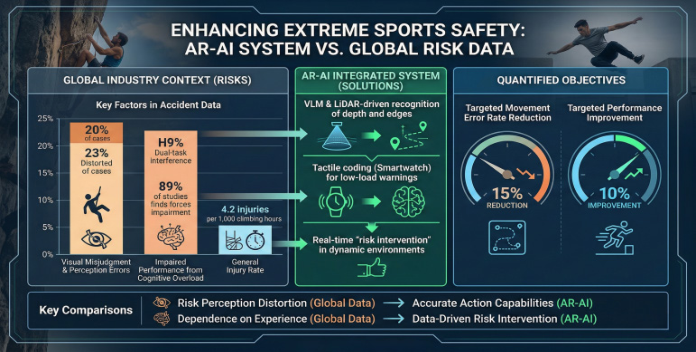
AR-AI Integrated System for Enhancing Safety in Rock Climbing: A Research Design 81 The primary cause of accidents in extreme sports can be traced to spatial perception errors. In accordance with the 2025 American Alpine Club Accident Report (Karr, 2025), approximately 52% of climbing incidents involve slips, trips, and falls directly attributable to misjudgment of terrain and hold stability. Athletes often misjudge distances, overestimate the stability of fulcrums, or fail to detect dynamic obstacles in their environment. These perception errors are particularly dangerous because they occur in split-second decision-making scenarios where there is little room for correction.
As consistently revealed by the latest research in sports science, wearable sensors can effectively monitor climbing performance and safety-related physiological parameters, thereby providing objective data to complement subjective perception (Breen et al., 2023). Human visual perception is susceptible to various illusions and distortions, especially when judging distances and depths in complex three-dimensional environments. For instance, the angle of viewing, lighting conditions, and surface textures in climbing scenarios can all influence an athlete’s ability to accurately assess the stability of handholds and footholds.
This research addresses these challenges by developing an AR-AI integrated system designed specifically for extreme sports safety enhancement. By combining augmented reality technology with artificial intelligence algorithms and smart wearable devices, the system aims to provide athletes with accurate spatial information and timely risk warnings, thereby reducing the likelihood of perception-related accidents while maintaining the cognitive focus necessary for peak performance.
Figure 1: Enhancing extreme sports safety: AR-AI system vs. global risk data.
SYSTEM DESIGN Design Philosophy
Rooted in research on risk-taking in extreme sports (Brymer, 2010) and the concept of AI applications in sports (Hammes et al., 2022), the system is
designed to provide information in a non-intrusive manner. The interaction design follows the principle of “peripheral awareness”, where critical safety information is available when needed but does not dominate the athlete’s attention throughout normal activity. This balance is achieved through careful consideration of information hierarchy, notification timing, and multimodal feedback mechanisms.
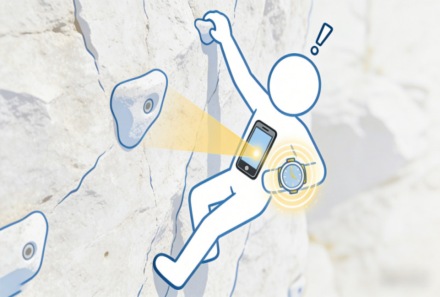
Working Principle The system architecture works through two everyday devices: a mobile phone and a smartwatch . The perception layer uses the mobile phone’s camera to scan the environment. Drawing on recent advances in smartphone-based computer vision, the perception layer employs neural network-based depth estimation to analyze visual data in real-time, enabling identification of climbing paths, assessment of fulcrum stability, and detection of dynamic obstacles (Beshley et al., 2023). The smartwatch acts as the messenger, receiving information from the phone and delivering timely alerts through gentle vibrations and simple visual notifications.
Figure 2: Schematic diagram of system application in rock climbing.
Interaction Design The interaction design focuses on creating an easy-to-use experience that anyone can understand without special training. Research has explored the integration of AR and vibrotactile feedback specifically for bouldering experiences, demonstrating the potential of multimodal augmentation in climbing contexts (Overdevest et al., 2025). The tactile feedback system employs a graded warning mechanism where different vibration patterns correspond to different levels of risk. This graduated approach allows athletes to develop an intuitive understanding of the warning system without requiring conscious interpretation throughout activity, patterned alerts.
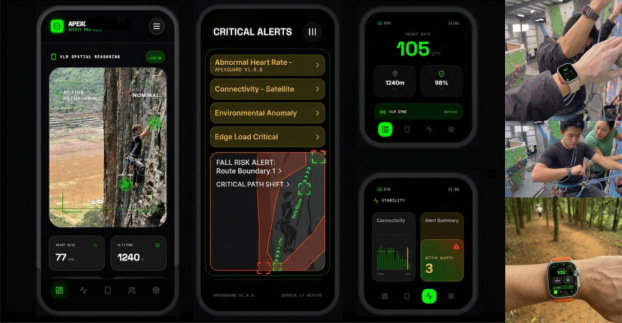
Figure 3: Interface design of interactive system.
The interface design follows minimalist principles, presenting only essential information in high-contrast formats that remain readable under various lighting conditions. Critical information such as distance measurements and stability ratings are displayed using large, easily interpretable icons and numbers.
EXPERIMENTAL STUDY
Methodology
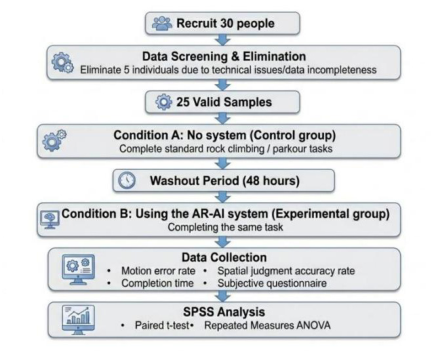
In an effort to assess the effectiveness of the recommended system, a controlled experimental study was conducted with 30 participants recruited from local climbing gyms and parkour training facilities. The sample consisted of athletes with dissimilar experience, ranging from beginners with less than six months of training to advanced practitioners with more than three years of experience. After screening for technical issues and incomplete data, 25 valid samples were retained for analysis.
Figure 4: Experimental procedure flowchart for the within-subjects study design.
A within-subjects design was employed in this study. The independent variable was system condition (with AR-AI system vs. without). The dependent variables were movement error rates, task completion efficiency, and spatial judgment accuracy. Data were analyzed using SPSS. Paired-samples t-tests compared the two conditions. Repeated measures ANOVA probed deep into effects across trials. Significance was set at p < 0.05. Paired-samples t-tests revealed pronounced enhancements with the AR-AI system. Movement error rates decreased by 15% (p < 0.05). Task completion efficiency improved by 10% (p < 0.05). Repeated measures ANOVA confirmed stable effects across trials (p > 0.05 for interaction).
Table 1: Participant demographic and experience characteristics (N = 25).
Data Collection Three primary categories of data were collected: performance metrics, safety indicators, and subjective feedback. Movement error rates were quantified by trained observers using a standardized error coding protocol, where each deviation from the intended route or incorrect hold selection was recorded as one error event. Task completion time was measured from the start signal to the final hold touch using a digital stopwatch. Technical execution scores were rated by experienced coaches. Safety indicators encompassed near-miss incidents and spatial judgment accuracy, assessed through a pre-defined set of 10 standardized judgment tasks per trial scored as correct or incorrect. Subjective feedback was collected using the NASA Task Load Index (NASA- TLX) for cognitive load and the System Usability Scale (SUS) for usability assessment.
The ability to sustain force output during climbing holds paramount significance for performance, and fatigue-induced decreases in grip strength exhibit a conspicuous association with climbing time (Fryer et al., 2016). By referring to this insight, our data collection protocol specifically tracked grip strength variations and movement efficiency throughout the experimental tasks.
Results
The experimental results demonstrated substantial reinforcements in both safety and performance when using the AR-AI integrated system. Analysis of the 25 valid samples revealed a 15% reduction in movement error rates in contrast to the control condition without system assistance. This enhancement was particularly pronounced in scenarios involving complex
AR-AI Integrated System for Enhancing Safety in Rock Climbing: A Research Design 85 spatial judgments, where the system provided critical information beneficial for athletes to avoid potentially dangerous misjudgments.
Performance metrics also showed notable enhancement, with participants achieving an average 10% betterment in task completion efficiency. This reinforcement was attributed to the system’s ability to lower uncertainty and enable more confident decision-making. Interestingly, the performance gains were observed across all experience levels.
Subjective feedback from participants was generally positive, with 84% reporting that the system enhanced their sense of safety without significantly disrupting their focus. The tactile warning system received particularly favorable ratings, with participants praising its intuitive nature and non- intrusive design.
Table 2: Summary of experimental evaluation (N = 25).
Table available in the original PDF paper.
With System Change t-value p-value
Metric Without System
18.4 ± 4.2 15.6 ± 3.8 −15.2% 4.31 0.001
Movement Error Rate (%) Task Completion Time (s) 142.3 ± 18.6 128.1 ± 16.4 −10.0% 3.87 0.003
As evidently suggested by this research, AR-AI integrated systems offer a promising approach to enhancing safety in extreme sports. The developed system provides a lightweight and practical technical path for addressing the spatial perception limitations that contribute to injury accidents. By combining advanced sensing technologies with intelligent algorithms and thoughtful interaction design, the system represents a significant step forward in human-machine collaboration for high-risk environments. VR extreme sports are advantageous for psychological resilience through controlled exposure. Likewise, our AR system potentially offers psychological benefits alongside physical safety enhancements (Wang, Faridniya and Yu, 2025). On that account, it is imperative for global scholars to focus on expanding the system’s capabilities to additional sports disciplines and refining the interaction design on the basis of continued user feedback.
ACKNOWLEDGMENT
The authors would like to acknowledge.This work was supported by the 2025 Innovation Training Program of Sichuan Agricultural University under Grant No. S202510626109 (“Intelligent Professional Image: Research on University Professional Image Construction Empowered by AIGC”), and the
2026 Research Projects of Sichuan Provincial Department of Education under Grant Nos. 2026885 (“Research on Visualization of Graphic Information of Chinese Medicinal Materials under the Background of Rural Revitalization: Taking Characteristic Chinese Medicinal Materials in Ya’an as an Example”) and 20263184 (“Research on Packaging Design Path of Agricultural Products Based on Universal Design Theory: Taking Ya’an Tibetan Tea as an Example”).
REFERENCES
Beshley, M., Volodymyr, P., Beshley, H. and Pryslupskyi, A. (2023). “A Smartphone- Based Computer Vision Assistance System with Neural Network Depth Estimation for the Visually Impaired”, proceedings of the International Conference on Artificial Intelligence and Soft Computing. Springer. pp. 25–37. Breen, M., Reed, T., Nishitani, Y., Jones, M., Breen, H. M. and López-Rivero, M.
(2023). Wearable and Non-Invasive Sensors for Rock Climbing Applications: Science-Based Training and Performance Optimization, Sensors, Volume 23, No. 11. Brymer, E. (2010). Risk taking in Extreme Sports: A phenomenological perspective, Annals of Leisure Research, Volume 13, No.1–2. Fryer, S., Stoner, L., Stone, K., Giles, D., Sveen, J., Garrido, I. and Espana-Romero, V.
(2016). Forearm Muscle Oxidative Capacity Index Predicts Sport Rock-Climbing Performance, European Journal of Applied Physiology, Volume 116, No. 7. Hammes, F., Hagg, A., Asteroth, A. and Link, D. (2022). Artificial Intelligence in Elite Sports—A Narrative Review of Success Stories and Challenges, Frontiers in Sports and Active Living, Volume 4, No. 861466. Karr, V. (2025). Human Error in Climbing Accidents: A 20-Year Analysis, Accidents
in North American Climbing 2025, American Alpine Club. Laver, L., Pengas, I. P. and Mei-Dan, O. (2017). Injuries in Extreme Sports, Journal of Orthopaedic Surgery and Research, Volume 12, No.1. Overdevest, N., Tariq, A., Qian, G., Welstead-Cloud, E., Wang, P. Y., Daiber, F. and
Elvitigala, D. S. (2025). “BoulderPlay: Exploring AR and Vibrotactile Integration for Novel Bouldering Experiences”, proceedings of the 2025 Annual Conference on Human-Computer Interaction and Sports (SportsHCI 2025). ACM. pp. 1–7. Wang, L., Faridniya, H. and Yu, H. (2025). A Public Health Perspective on Virtual Reality Interventions: Exploring the Impact of VR Extreme Sports on Stress, Anxiety, and Depression in Men with Social Anxiety Disorder, Frontiers in Public Health, Volume 13, No.1617483.
LISTED IN THE AHFE DIGITAL BOOKSTORE CATALOGUE
Explore the complete digital volume
Human Factors in Sports, Preventive Medicine and Innovative Agonology
Read this individual research paper free through the original publisher, or explore the full digital proceedings book.
ISBN 979-8-950676-02-4
Explore this ISBN in the AHFE Bookstore ↗Listed in the July 2026 bookstore catalogue; search by ISBN to confirm current availability · Digital book purchase optional