Amic G. Ho (2026). Designing for Emotional Resonance: Affective Communication in Cultural Heritage Interfaces. In: Affective and Pleasurable Design. AHFE Open Access, vol. 204, pp. 216–227. https://doi.org/10.54941/ahfe1007347
There are many digital mental health tools with little or no regard for context and time when it comes to emotional regulation and intervening in social anxiety episodes. Most existing apps provide general reminders as if all users are prepared to help themselves at any given time. Therefore, this paper outlines a design opportunity for developing micro-interventions that can provide timely assistance to people who may experience social anxiety episodes. It also looks into whether low-fidelity digital interventions could minimise immediate emotional responses while allowing users to maintain their autonomy. The research examines the COM-B model and the Fogg Behaviour Model to determine the efficacy of micro-interventions and follows on from literature reviews, stakeholder workshops, prototype development, and usability studies. In total, the ultimate aim of the project is to produce emotionally intelligent and context-aware digital interventions to assist in regulating emotions and supporting young adults with social anxiety.
Many digital mental health tools (Baumel, Fleming, Schueller & Harrer, 2020) intended to enhance emotional well-being exist, but most were not designed with acute consideration for context and timing – two factors critical to behavioural influence and emotional regulation. Most existing applications present generic reminders or coping strategies, presuming the user’s motivation and readiness to engage in self-help. Social anxiety episodes, however, are usually fleeting and embodied in the environment, making it difficult for users to apply previously learnt strategies or access formal tools in real time (Nepal, 2024). A significant design opportunity exists to address this gap between structured self-help methods and the lived experience of individuals who are experiencing emotional distress in the moment (Madrid Cagigal, 2025). So, the issue is not just designing interventions but also creating ones that can be used when needed. Specifically, the question is how a low-fidelity, low-resource digital support (e.g., a simple grounding exercise before a social encounter or a reassuring message to someone anticipating negative judgment from others) (Chau et al., 2025) can reliably and autonomously reduce a momentary increase in social anxiety without disrupting autonomy or causing unintended discomfort. The underlying problem being
Designing for Emotional Resonance: Affective Communication 217 investigated is therefore dual-purpose: efficacy and design sensitivity. What types of micro-interventions are most likely to facilitate emotional regulation in the moment, and how can their mechanisms and conditions of delivery be constructed to feel like timely, credible, and human-centred assistance rather than overly prescriptive or invasive?
This study seeks to determine whether behavioural nudges delivered in the context of a specific situation can reduce the immediate emotional reactions to social anxiety experienced by young adults. The use of the COM-B model (Capability, Opportunity, Motivation–Behaviour) (Michie, van Stralen & West, 2011) and the Fogg Behaviour Model (Fogg, 2009) and cognitive reappraisal serve as the theoretical bases for assessing the effectiveness of micro-interventions to positively shift awareness and coping capacity during moments of social stress. This research proceed in four stages: a brief literature review to synthesise current knowledge about behavioural nudging and digital wellbeing; a workshop with stakeholders (young adults and mental health professionals) to identify relevant social triggers and supportive messaging formats; the design of one-to- two low-fidelity prototypes (e.g., a series of prototype screens in Figma or a scripted WhatsApp sequence); and usability (Bear et al., 2024) and acceptability testing of the prototype(s) using 10–15 participants employing think-aloud protocols, scenario walkthroughs, and pre/post state anxiety assessments. Through this exploratory phase, this study seeks to gain preliminary insights regarding when and how behavioural cues are most useful in supporting emotional regulation (Gross, 1998) and to establish foundational design principles for creating emotionally intelligent, context-aware digital micro-interventions that can assist in reducing social anxiety in young adult populations (Ho, 2024b).
BACKGROUND AND RELATED WORK Digital technologies now form a large part of modern mental health practice, especially among younger populations (Lodha, 2025), who experience barriers to accessing face-to-face support. There is a considerable amount of literature examining digital interventions for anxiety and related conditions, highlighting their potential to provide low-cost, scalable, and private access to support that does not require a formal referral. However, it has been consistently noted that there are ongoing issues relating to engagement and adherence to these types of interventions. Many users cease to engage with digital support after a very short period of time, typically because there is no alignment between the design of the intervention and the rhythms of everyday life. Recent research has therefore sought to develop ‘micro- interventions’, conceptualised as highly focused, low-burden therapeutic components designed to be provided in situ and requiring the least possible effort from the individual using them at the time of delivery. The participant data collected in this study, indicating modest anxiety reductions and positive ease-of-use ratings, are consistent with claims that micro-interventions can provide “lighter weight” forms of support that are more congruent with variable levels of motivation and limited cognitive capacity under stress.
As part of the broader context in which micro-interventions are being developed, social anxiety represents a particularly compelling example of how context-aware micro-interventions could potentially be utilised. Young
218 Ho adults experience a wide range of social interactions as both ubiquitous and foundational to their educational, vocational, and relational pathways; however, social interactions are also powerful triggers for anxiety, self- consciousness, and avoidance. As previously noted, prior research on context-aware mobile treatments for social anxiety has emphasised the importance of timing; demonstrating that the success of interventions is heavily dependent upon supporting users when they are experiencing anxiety and prior to becoming disengaged or cognitively overloaded. The participant data in this study, demonstrating that anticipatory prompts were viewed as more acceptable and helpful than those imagined as occurring during the course of live interactions, supports these earlier conclusions and demonstrates how timing can function as an additional dimension of design sensitivity. Therefore, it is argued that context-aware systems must do more than simply detect relevant situations; they must coordinate the provision of interventions in ways that respect users’ social environments and limits on their attention.
Research on the conceptualisation of digital micro-interventions has drawn on behavioural science frameworks (e.g., COM-B and the Fogg Behaviour Model), which emphasise the necessity of the simultaneous presence of capabilities, opportunities, motivations, and triggers to support behaviour change. Specifically, these models suggest that successful interventions minimised the number of practical and cognitive barriers to action while providing the necessary level of motivation at the time of action; thus, maximising the likelihood that a prompt results in adaptive behaviour. Participant comments regarding ease of use (“simple screens,” “clear steps”) and requests for improved personalisation highlight the role of increased perceptions of capability at critical junctures and the need for triggers that are perceived as relevant to the user’s context. Finally, the modest but consistent reductions in state anxiety reported following interaction with the prototype systems provide preliminary support for the hypothesis that carefully- timed, low-effort prompts can support cognitive and emotional changes (e.g., brief grounding or reappraisal) even within the constraints of a laboratory-based evaluation (Ho, 2024a).
In addition to behavioural science, researchers working in the field of human- computer interaction (HCI) and digital mental health have highlighted the importance of using user-centred and co-design approaches (Ludlow et al., 2023) when developing tools for young people. Studies employing mixed- methodologies and user-centred design approaches have demonstrated that engaging adolescents and young adults in iterative cycles of feedback leads to improvements in usability, acceptability, and perceived relevance, while also identifying barriers related to stigma, privacy, and practical considerations. Similarly, the stakeholder-engaged methodology employed in the present study, and the resultant dataset, which identifies issues such as autonomy, social visibility of notifications, and perceived intrusiveness as salient, illustrate that technical feasibility is not sufficient. Furthermore, the nuanced comments of the participants (e.g., valuing control over prompts, expressing concern about others seeing notifications, requesting adaptive personalisation) mirror themes identified in evaluations of other digital mental health platforms, in which poor usability and insufficient tailoring have been linked to attrition.
Designing for Emotional Resonance: Affective Communication 219 Recent reviews of technology-mediated emotion intervention tools have also warned that attempts to down-regulate negative affect can have unintended consequences (e.g., unwanted focus on negative triggers, cognitive overload from repeated reappraisals, or feelings of weakness associated with certain forms of support). These concerns are reflected in the participants’ ambivalence about the utility of post event prompts (i.e., some participants found prompts useful for reflection, while others were concerned that prompts could reopen negative self-evaluations). Additionally, these concerns reflect broader ethical debates surrounding the “attention economy”, and the risk of over- notification, in which repeated prompts may be perceived as intrusive demands on limited attentional resources rather than as care. The relatively low ratings of intrusiveness in this study, coupled with strong preferences for voluntary engagement and the option to mute or delay prompts, suggest that careful calibration of frequency, neutral notification styling, and explicit normalisation of non-engagement are critical to establishing trust and protecting autonomy.
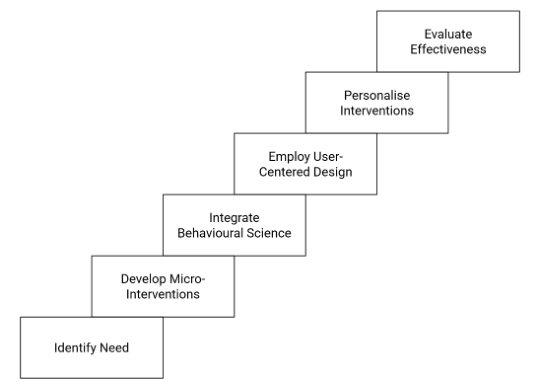
Finally, the growing interest in the development of personalised and context- aware digital mental health interventions provides an important background against which to interpret the results of this study. Research on personalised digital platforms has shown that tailoring content to behavioural patterns and contextual information can increase perceived relevance and improve outcomes, and young adults have expressed preferences for tools that appear to be responsive to their immediate emotional experiences (Ho, 2023) and daily routines. Similarly, in this study, participants associated higher levels of personalisation with higher levels of credibility and likelihood of future use of the system, and requested adaptive learning from their usage and triggers. Taken together, these lines of evidence suggest that micro-interventions for social anxiety are most likely to be effective when they integrate behavioural science models, user-centred design principles, and data-driven personalisation, and when they are deployed in ways that recognise the complex social environments through which young adults manage their mental health.
Figure 1: Developing effective digital mental health interventions.
RESEARCH METHODS A four-phase mixed-methods approach to designing context-aware digital micro-interventions for social anxiety has been established. The approach includes a literature review, a stakeholder workshop, low-fidelity prototype design, and usability and acceptability testing with young adults who have experienced social anxiety. These phases are meant to provide a grounded approach to developing digital micro-interventions based on both theoretical and practical lived experience, as well as provide initial evidence of their feasibility and emotional impact.
LITERATURE REVIEW
The first phase of this research is a focused literature review on behavioural nudging, digital mental health, social anxiety, and context-aware design, with a focus on tools that aim to support emotional regulation in situ. Keyword combinations, such as “social anxiety,” “behavioural nudges,” “digital mental health,” “context-aware design,” and “young adults”, were used to search the major academic databases; grey literature and design reports were searched. Criteria for inclusion prioritised studies that examine momentary interventions, ecological validity, and user experience outcomes, thus providing the mechanisms and delivery conditions most relevant to the proposed micro-interventions.
ANALYSIS The literature review was synthesised thematically, rather than exhaustively, with studies grouped based on the type of intervention, delivery channel, timing, and reported emotional or behavioural outcomes. Attention was given to how existing systems detect or assume “moments of need”, as well as to how supportive messages are framed in relation to user autonomy, perceived intrusiveness, and emotional tone. The resulting thematic map was converted into a preliminary set of design considerations that serve as the basis for the sensitising concepts of the stakeholder workshop in the next phase.
STAKEHOLDER WORKSHOP The second phase involved a co-creative workshop with two primary stakeholder groups: young adults who have experienced social anxiety and mental health professionals who regularly assist individuals who have experienced social anxiety. Young adult participants were recruited through university and community networks; practitioners may include counsellors, psychologists, or other professionals with expertise in anxiety and digital wellness. By incorporating the views of both stakeholders, it is hoped that the emerging design space was informed by both the lived experience of sudden, embodied social anxiety episodes and by the clinical or practice- based knowledge of effective coping strategies.
PROCEDURE The workshop consisted of collaborative activities designed to reveal common social triggers, emotional paths, and preferred forms of support in the moment. Participants encouraged to create maps of their recent anxiety-provoking social experiences and annotate these with contextual information (such as location, social roles, and sensory cues); participants were encouraged to discuss types of digital prompts or messages that would have been helpful and when. Other workshop exercises may include critiquing examples of messages or interaction sequences drawn from the literature review, thus allowing participants to express what supports their feelings of being supported, intrusive, stigmatised, or unrealistic.
ANALYSIS Data collected during the workshop (including written products and audio recordings of discussions) was subjected to qualitative thematic analysis to reveal common triggers, situational patterns, and communication preferences. Techniques for affinity diagramming were used to group participant observations into potential “micro-intervention moments,” such as anticipation of anxiety before engaging in a social environment or rumination immediately following a social encounter. The analysis emphasised language and tone preferences, thus defining how digital messages can convey empathy, reduce perceived judgment, and honour user autonomy while providing tangible coping suggestions.
PROTOTYPE DESIGN Using the synthesis of theoretical models and workshop results, the third phase translated the insights into specific design requirements for low-fidelity digital micro-interventions. The COM-B model helped determine how each prototype is likely to modify capability, opportunity, and motivation—e.g., by making access to grounding techniques easier, by reframing social cues, or by encouraging more adaptive appraisals of anticipated judgment. In addition, the Fogg Behavior Model was used to determine under what circumstances (i.e., trigger, perceived ability, motivation) a nudge is likely to be viable in high-stress, time-limited social environments; and the Cognitive Reappraisal Principles guided the wording and organisation of supportive messages in the prototypes.
PROTOTYPES One or two low-fidelity prototypes were designed, such as simple interactive screen flows created in Figma or scripted WhatsApp-type conversations simulating context-aware prompts that occur before, during, or immediately following social interactions. The prototypes intentionally minimise visual and interactional complexity, focusing instead on the timing, framing, and sequence of affective messages, brief grounding techniques or decision prompts. The design aims to produce a feeling of timely, human-centred support and avoid prescriptive or diagnostic language and allow users to
ACCEPTANCE TESTING The final phase consists of usability and acceptance testing of the prototypes with a sample of 10–15 young adults who have reported experiencing social anxiety. Participant recruitment for this phase may include participants who participated in the workshop described above, and others to expand the range of social environments and technological experiences represented among participants. This sample size is appropriate for exploratory, prototype-level assessment intended to identify significant usability problems and generate qualitative feedback about the prototypes rather than establish definitive efficacy metrics.
PROCEDURE Participants conducted scenario-based walk-throughs in which they were asked to imagine, recollect, or lightly act out various anxiety-provoking social encounters while interacting with the prototypes. Think-aloud protocols were employed to record participants’ moment-by-moment responses to the timing, wording, and perceived intrusiveness/helpfulness of the messages presented in the prototypes. Probing from the facilitator also supplements the protocol to capture participants’ immediate reactions to the prototype messaging. State anxiety measures were administered to participants before and after participation in the walk-throughs to assess any immediate changes in participants’ self-reported emotional states resulting from exposure to the micro-interventions in the walk-throughs.
MEASURES Usability was measured through participant self-reporting of ease of use, clarity, and perceived friction, along with any errors or breakdowns observed during the walk-throughs. Acceptability was studied through participant ratings and open-ended questions concerning perceived credibility, trustworthiness, intrusiveness, and willingness to utilise such tools in actual social settings. Emotional resonance and regulation were analysed by correlating the pre- and post-walk-through anxiety score changes with qualitative descriptions of how participants reacted to the prompts (as feeling grounded, reassuring, overwhelmed, etc.) relative to their subjective experience.
QUALITATIVE DATA ANALYSIS Participant think-aloud protocols and follow-up interviews were qualitatively coded to identify themes related to when and how behavioural cues were most beneficial. While the coding scheme for the qualitative data was built upon previous coding schemes, it would not be limited by those previous schemes.
METHODOLOGICAL RIGOR Quantitative data, including mean pre/post anxiety scores and mean ratings of acceptance, were summarised using descriptive statistics to demonstrate general trends in perceived effects and feasibility of the prototypes. As previously mentioned, methodological rigour was maintained across all phases through transparent documentation of procedures, reflexive examination of the researchers’ assumptions about social anxiety and digital support, and explicit linkage between empirical results, theoretical models, and emergent design principles for emotionally aware, context-sensitive micro-interventions.
Table 1: Sample human systems integration test parameters (Folds et al. 2008).
Table available in the original PDF paper.
ID
Age
Gender
Prior therapy (Y/N)
Baseline state anxiety (1-5)
Post-intervention
state anxiety (1-5)
Helpfulness of prompts (1-5)
Intrusiveness
Key comment (short)
P01 20 F Y 4 3 4 2 Helped me pause and breathe before class.
P02 22 M N 5 4 3 3 Good reminders, but some messages felt generic.
P03 19 F Y 4 3 4 2 Felt like someone had my back before social events.
P04 21 NB N 3 3 2 3 Didn’t change anxiety much, but easy to use.
P05 23 F Y 5 3 5 2 Grounding steps were very clear and calming.
P06 20 M N 4 4 3 4 Mid-conversation prompts felt a bit distracting.
P07 24 F Y 3 2 4 1 Liked being able to snooze or dismiss prompts.
P08 21 M Y 4 3 4 3 Anticipatory prompts were most helpful.
P09 22 F N 5 4 3 3 Some scenarios didn’t quite fit my situation.
P10 19 F N 4 3 4 2 Felt less alone going into group discussions.
P11 25 M Y 3 3 3 2 Neutral impact, but I’d try it over time.
P12 20 F N 4 3 4 2 Tone was kind, not pushy.
P13 23 NB Y 5 4 3 4 Worried about notifications being visible to others.
P14 21 F Y 4 3 4 2 Post-event messages helped me reframe what happened.
P15 22 M N 3 2 4 1 Simple screens; easy even when anxious.
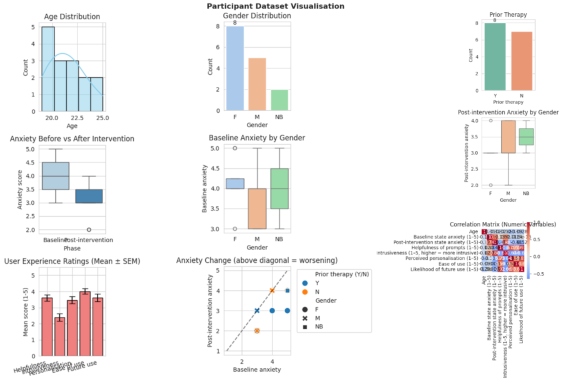
Figure 2: The figure illustrates participant-level feedback.
FINDINGS The results from the analysis of the participant dataset indicate that, in general, participants found the prototypes to be both usable and emotionally supportive. Although there were some declines in reported state anxiety after exposure to the micro-interventions, these changes were modest and varied across the sample. The mean baseline state anxiety scores of the sample of fifteen young adults ranged from moderate to high, while post-exposure scores indicated a small decline for most participants. Therefore, based upon this study’s results, it appears that participants experienced a small amount of increased self-regulation of emotion during the scenario-based tasks following exposure to the micro-interventions. However, the results of this study are constrained by the fact that the micro-interventions were evaluated using a laboratory-style procedure with a short duration.
Participants generally had positive evaluations of usability and helpfulness of the micro-interventions. Many participants indicated that the prompts and grounding exercises were clear, concise, and manageable while experiencing elevated levels of social apprehension. High usability ratings for the micro- interventions suggest that the simplicity of the low-fidelity interfaces allowed them to be easily navigated, even when attention and working memory may have been impaired due to anxiety. Many participants commented that the step-by-step instructions and limited on-screen text helped to facilitate understanding and reduce cognitive load; these comments further emphasise the importance of low-friction interaction design in this context. The findings from this study provide evidence that micro-interventions should strive to minimise interactional complexity to be applicable in real-time social situations.
In addition to finding similarities among the participants in terms of usability and helpfulness, the data highlighted a number of ways in which the timing and level of intrusiveness impacted the acceptability of the micro-interventions. On average, the intrusiveness ratings for all of the micro-interventions were relatively low. However, based upon the qualitative feedback of the participants,
Designing for Emotional Resonance: Affective Communication 225 the micro-interventions that were presented before anticipated interactions were seen as significantly more supportive than the micro-interventions that were presented mid-interaction. A few participants characterised the in-the- moment notifications as distracting and/or socially risky when they would have been visible to others in proximity. Collectively, the findings from this study demonstrate that the situational visibility of digital support and the social meanings of notifications must be carefully calibrated to ensure that users feel comfortable with the level of discretion and safety that is afforded to them through the use of such systems.
The perceived personalisation of the micro-interventions emerged as a significant factor influencing the participants’ engagement and willingness to utilise the micro-interventions in the future. Participants who rated the level of personalisation of the micro-interventions as high described the content as “relevant” and “understanding” of their typical social contexts, while participants who rated the level of personalisation as low felt that the content was generic and/or misaligned with their daily experiences. Several participants stated that they would like the system to be able to adapt over time to their typical patterns of anxiety and their preferred methods of coping with anxiety. This suggests that static, one-size-fits-all messages may be sufficient for initial engagement; however, developing mechanisms to allow the micro-interventions to be tailored to the specific triggers and habits of each participant would be essential in developing sustainable utilisation of the system.
Autonomy and control were two additional themes that emerged from the findings. Participants valued having the option to delay, mute or cancel a prompt without any negative consequences. Higher likelihood-of-future- use ratings were typically accompanied by comments from participants that emphasised the non-pressuring aspect of the micro-interventions, suggesting that users’ perception of their agency is critical to perceiving the micro- interventions as legitimate. However, a few participants expressed concerns regarding possible feelings of guilt that could result from declining to engage with the micro-interventions at times. This implies that future versions of the system may need to clearly communicate that declining to engage with the micro-interventions is acceptable and normative. Overall, the findings of this study suggest that context-aware micro-interventions can serve as a useful supplement to other available coping resources for individuals dealing with anxiety in social settings, assuming that designers address the relevant issues related to timing, personalisation, privacy, and agency in an integrated fashion.
CONCLUSION
This study aimed to evaluate whether context-aware digital micro-interventions could be a viable method to provide support to young adults with social anxiety, specifically assessing design sensitivity (sensitivity to user experience), usability, and emotional response to micro-interventions. Participants who used the micro-interventions demonstrated small but consistent decreases in their state anxiety levels; however, participants reported that the micro- interventions were generally easy to use and acceptable in all evaluation scenarios. Therefore, it appears that providing users with short-term,
226 Ho minimal burden micro-intervention prompts surrounding users’ anticipation of social anxiety may assist users during a time of social anxiety, without causing undue distress or burden to users. However, at the same time, the results clearly demonstrate that effectiveness is heavily contingent upon issues related to timing, personalisation, autonomy, and privacy. In terms of timing, participants indicated a preference for anticipatory micro-interventions over those provided in interaction; in terms of personalisation, participants expressed a strong desire for relevance of content to their own experiences; and in terms of control, participants emphasised the importance of having control over notifications, which highlights the necessity to consider context as both a social and technological construct.
Therefore, the study provides initial empirical evidence to suggest that micro-interventions for social anxiety was most effective when they are implemented as flexible, user-controlled companions rather than prescriptive tools. As such, future studies should build upon the present research by extending its findings via longitudinal, real-world deployment of the micro- interventions, incorporating adaptive personalisation and advanced context- sensing capabilities to further examine the long-term effects of implementing micro-interventions into young adults’ daily social lives.
ACKNOWLEDGMENT
The authors would like to acknowledge all those involved in this study.
REFERENCES
Baumel, A., Fleming, T., Schueller, S. M., & Harrer, M. (2020). Digital micro interventions for behavioral and mental health: A conceptualization. JMIR Mental Health, 7(10), e20631. https://doi.org/10.2196/20631 Bear, H. A., et al. (2024). The acceptability, engagement, and feasibility of mental
health apps for underserved young people: A mixedmethods systematic review. JMIR Mental Health, 11(7), e52154. https://doi.org/10.2196/52154 Chau, L. W., et al. (2025). Digital health interventions for depression and anxiety in low and middleincome countries: A rapid scoping review. JMIR Mental Health, 12(1), e68296. https://doi.org/10.2196/68296 Fogg, B. J. (2009). A behavior model for persuasive design. Proceedings of
the 4th International Conference on Persuasive Technology, 40. https://doi. org/10.1145/1541948.1541999 Gross, J. J. (1998). The emerging field of emotion regulation: An integrative review. Review of General Psychology, 2(3), 271–299. https://doi. org/10.1037/1089-2680.2.3.271 Ho, A. G. (2024a). Exploring emotional impact in interactive digital art. In Proceedings
of the 2024 International Conference on Art, Design, and Digital Technology (ADDT 2024) (pp. 1–8). EAI. https://doi.org/10.4108/eai.24-5-2024.2350023 Ho, A. G. (2024b). Understanding typical emotions in the design process. Convergências – Revista de Investigação e Ensino das Artes, 17(34), 1–15. https://doi.org/10.53681/c1514225187514391s.34.261 Ho, A. G. (Ed.). (2023). Human factors in communication of design. AHFE Open Access. https://openaccess.cms-conferences.org/publications/book/978-1- 958651-66-7
Designing for Emotional Resonance: Affective Communication 227 Lodha, P., et al. (2025). Ethical dilemmas of digitalisation of mental health. Frontiers
in Human Dynamics, 4, 1654355. https://doi.org/10.3389/fhumd.2025.1654355 Ludlow, K., Russell, J. K., Ryan, B., Brown, R. L., Joynt, T., Uhlmann, L. R., Smith, G. R., Donovan, C., Hides, L., Spence, S. H., March, S. & Cobham, V. E. (2023). Codesigning a digital mental health platform “Momentum” with young people. (2023). Digital Health, 9, 1–16. https://doi.org/10.1177/20552076231216410 MadridCagigal, A., et al. (2025). Digital mental health interventions for university
students: A systematic review and metaanalysis. Internet Interventions, 29, 100653. https://doi.org/10.1016/j.invent.2025.100653 Michie, S., van Stralen, M. M., & West, R. (2011). The behaviour change wheel: A new method for characterising and designing behaviour change interventions. Implementation Science, 6, 42. https://doi.org/10.1186/1748-5908-6-42 Nepal, S., et al. (2024). The role of contextaware mobile interventions in addressing
social isolation in serious mental illness. Psychiatric Services, 75(1), 45–54. https:// doi.org/10.1176/appi.ps.202300123
LISTED IN THE AHFE DIGITAL BOOKSTORE CATALOGUE
Explore the complete digital volume
Affective and Pleasurable Design
Read this individual research paper free through the original publisher, or explore the full digital proceedings book.
ISBN 978-1-964867-80-9
Explore this ISBN in the AHFE Bookstore ↗Listed in the July 2026 bookstore catalogue; search by ISBN to confirm current availability · Digital book purchase optional