Sharon Mozgai, Ed Fast, Kevin Kim, Edwin Sookiassian, Andrew Leeds, Arno Hartholt (2026). Rapid personalized doppelgänger avatar generation: Dyadic evaluation of the TAC-Twin virtual human pipeline. In: Human Interaction and Emerging Technologies (IHIET-AI 2026): Artificial Intelligence and Future Applications. AHFE Open Access, vol. 201, pp. 406–411. https://doi.org/10.54941/ahfe1007194
TAC-Twin (Hartholt et al., 2013; Hartholt et al., 2025) is a rapid, modular framework for generating personalized doppelgänger avatars from a single photograph using commercially available software integrated within the Virtual Human Toolkit (VHToolkit) (Hartholt et al., 2022). Developed at the USC Institute for Creative Technologies (ICT), TAC-Twin extends prior work on virtual human system architectures that support sensing, automated speech recognition, natural language processing, nonverbal behavior generation, and text-to-speech synthesis. The framework uses Reallusion Character Creator and Headshot to produce high-fidelity 3D avatars and deploys them via Unity and the RIDE platform, which provides scalable simulation and interoperability with multiple AI services (Hartholt et al., 202; Mozgai et al.,2023; Mozgai et al., 2024). In its present configuration, TAC-Twin generates a fully rigged, testbed-ready avatar in roughly 20 minutes, enabling rapid iteration without specialized 3D modeling expertise.We conducted an exploratory mixed-methods evaluation to characterize early perceptions of usability, realism, and workflow effectiveness. Twenty participants (ten dyads), all affiliated with the USC ICT, completed the study. The convenience sample was intentionally composed of domain-relevant experts, researchers, engineers, and technical staff working with virtual human pipelines, Unity, and Unreal Engine. Eighteen participants reported moderate-to-high fluency with real-time 3D tools, making this group well-positioned to identify workflow bottlenecks and subtle perceptual artifacts that novice users might miss. Dyadic participation reflected typical workplace relationships and enabled naturalistic comparison of self- and partner-based avatars.Each dyad completed a five-phase protocol: standardized photo capture; automated avatar generation; live pipeline demonstration; repeated viewing of a controlled Unity-based combat scenari; and post-interaction questionnaires with open-ended items. The scenario was designed to hold narrative, timing, and camera structure constant while embedding three avatar identities, Self, Partner, and Generic, so that observed differences could be attributed primarily to avatar identity. Avatar order was randomized within a within-subjects design.Participants rated TAC-Twin as efficient and intuitive: 80% agreed that avatar creation required little effort, and 85% reported that manual refinement improved facial resemblance. Realism and engagement followed a consistent gradient, with self avatars rated highest, followed by partner and generic avatars. Qualitative analysis indicated that likeness was generally satisfactory, but behavioral expressivity, including micro-expressions, gaze timing, and post-impact reactions, remained a key limitation. Participants also reported habituation across repeated exposures to the identical scenario, underscoring the need for narrative and emotional variation when evaluating avatar-based systems.Workflow-focused feedback highlighted TAC-Twin’s strengths as a modular, repeatable pipeline, while noting reliance on expert intervention for facial refinement and engine integration. Methodological takeaways include the importance of balancing fidelity and scalability, anticipating affective flattening in repeated-exposure designs, and using principled APIs to manage trade-offs across sensing, language, and speech technologies.In summary, TAC-Twin offers a practical open-source pathway for rapidly generating personalized virtual humans using production-ready tools and extensible system architecture. The exploratory dyadic evaluation provides early evidence of feasibility and yields methodological guidance for researchers deploying doppelgänger avatars in health, training, and human–AI interaction contexts.
Personalized virtual humans are increasingly explored as components of interactive systems across training, simulation, health, and human–AI interaction, where embodiment, social presence, and perceived credibility have been shown to meaningfully shape user engagement and response (Hartholt et al., 2013; Rizzo et al., 2019; Mozgai et al., 2024). Advances in sensing, machine learning, and real-time graphics have made it increasingly feasible to generate avatars that resemble specific individuals, often described as doppelgängers or digital twins, using automated or semi-automated pipelines. Prior work suggests that perceived likeness and identity relevance can influence attention, trust, and emotional resonance in interactions with virtual agents, particularly in applied contexts where users are repeatedly exposed to the same character over time (Bailenson et al., 2008; Nowak & Fox, 2018). Despite these advances, generating personalized virtual humans
Rapid Personalized Doppelgänger Avatar Generation 407 that are both scalable and suitable for interactive use remains a design challenge. Many avatar generation approaches prioritize visual likeness at the point of creation, while deferring questions of expressivity, movement, and downstream integration to later stages of development. From a human- centered design perspective, this separation risks overlooking how avatars are ultimately experienced in context, through facial animation, body movement, timing, and behavioral coherence during interaction. Moreover, pipelines that require specialized artistic expertise or extensive manual intervention limit reproducibility and broader research adoption The TAC-Twin framework was developed to address these challenges by enabling rapid generation of personalized avatars from a single photograph within a modular, extensible system architecture. Rather than evaluating likeness in isolation, this work aimed to examine how a practical avatar pipeline performs end-to-end when avatars are embedded in an interactive scenario. Drawing on an exploratory dyadic evaluation, the study was designed to surface formative insights about workflow usability, perceived realism, and engagement, with the explicit goal of informing iterative refinement of personalized virtual human pipelines from a human-centered design standpoint.
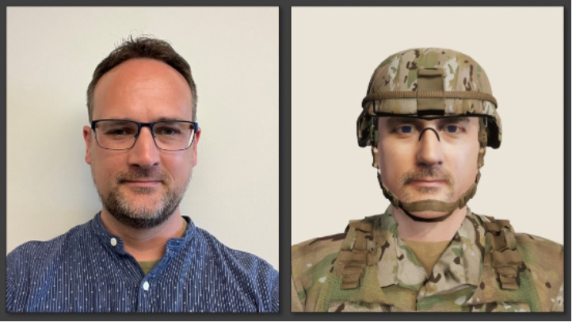
Figure 1: Tac-Twin rapid avatar generation from a single photograph.
SYSTEM OVERVIEW TAC-Twin operates as an extension of the Virtual Human Toolkit (VHToolkit), a modular platform for creating embodied conversational agents that integrates sensing, language, speech, and nonverbal behavior through principled APIs (Hartholt et al., 2013; Hartholt et al., 2022). The VHToolkit was designed to support rapid experimentation while maintaining architectural rigor, enabling researchers to swap underlying technologies without restructuring the overall system. This design philosophy is particularly important in domains where AI services evolve rapidly and trade-offs between fidelity, latency, and scalability must be continuously re-evaluated.
The toolkit is powered by the Rapid Integration and Development Environment (RIDE), which provides scalable simulation infrastructure, support for networked environments, and interoperability with multiple AI services (Hartholt et al., 2021). RIDE enables virtual humans
created through TAC-Twin to be deployed consistently across desktop, mobile, and immersive platforms, supporting both laboratory studies and translational prototypes.
In its current configuration, TAC-Twin uses Reallusion Character Creator (v4) and the Headshot plugin (v2) to generate high-fidelity 3D heads from a single photograph. Character Creator was selected for its balance of automation and manual control, allowing rapid generation while preserving the ability to refine facial features when higher fidelity is required. Avatars are manually refined and configured within Character Creator, exported as Unity-compatible assets, and deployed into Unity-based testbeds that support real-time animation and integration with conversational AI components.
A key design principle of TAC-Twin is modularity. While the present implementation relies on specific commercial tools, the pipeline itself is not vendor-locked. Alternative avatar generation tools, rendering pipelines, or animation systems can be substituted as technologies mature. This flexibility allows TAC-Twin to function as both a practical production pipeline and a research testbed for studying trade-offs between speed, realism, and expressivity. Creating a single avatar, from photo capture to Unity deployment, currently requires approximately 20 minutes with TAC-Twin. This rapid turnaround enables iterative testing, supports within-subject experimental designs, and allows personalized avatars to be generated at a scale that would be infeasible with traditional modeling workflows.
METHODS
Participants Twenty individuals (ten dyads) participated in the study. All participants were affiliated with the USC Institute for Creative Technologies and had prior experience with virtual human systems, Unity, Unreal Engine, or similar real-time 3D environments. This convenience sample included researchers, engineers, and technical staff, selected intentionally to provide informed, experience-based feedback on both workflow efficiency and perceptual realism. Eighteen participants reported moderate to high familiarity with real-time simulation tools, making them well positioned to identify subtle artifacts and pipeline bottlenecks that novice users might overlook. Dyads primarily consisted of coworkers from the same or adjacent projects, with others identifying as friends or casual professional acquaintances. Relationship closeness was assessed using the Inclusion of Other in Self (IOS) scale, with an average score indicating moderate overlap. This level of familiarity supported naturalistic evaluation of partner likeness while avoiding ethical and privacy concerns associated with recruiting close personal relationships.
PROCEDURE Each dyad completed a structured five-phase protocol during a single session. Standardized frontal photographs were captured under controlled lighting conditions with neutral facial expressions to support consistent avatar generation. Second, three avatars were created for each participant using the TAC-Twin pipeline: a Self avatar modeled from the participant’s own photo,
Rapid Personalized Doppelgänger Avatar Generation 409 a Partner avatar modeled from their dyad partner’s photo, and a Generic avatar created in the same visual style but without resemblance to either individual. Third, participants were shown a live demonstration of the TAC- Twin pipeline, allowing them to observe how photographs were processed into 3D avatars and integrated into Unity. This step served to contextualize subsequent usability judgments and to elicit initial impressions of workflow transparency and efficiency. Fourth, participants viewed a standardized Unity-based scenario three times, once per avatar condition. The scenario content, timing, and camera framing were held constant across conditions to isolate the effect of avatar identity. Avatar order was randomized within a within-subjects design to counterbalance potential order and expectancy effects. During each viewing, participants identified which avatar they believed they were observing. Finally, participants completed post-interaction questionnaires assessing perceived ease of use, realism, engagement, and overall impressions of the pipeline. Open-ended items invited qualitative feedback on strengths, limitations, and recommendations for improvement.
Quantitative measures focused on perceived ease of avatar creation, visual realism, and emotional engagement. Given the exploratory nature of the study, the small sample size, and the absence of formal control conditions, quantitative data were analyzed descriptively to identify patterns of central tendency and variation rather than statistically significant effects. Qualitative responses were analyzed using a thematic analysis approach. Responses were reviewed iteratively to identify recurring themes related to workflow usability, visual and expressive realism, and scenario engagement. Quantitative and qualitative findings were interpreted together to provide a holistic account of participant experience.
RESULTS
Quantitative Findings Participants generally rated the TAC-Twin pipeline as efficient and intuitive. Eighty percent of participants agreed or strongly agreed that avatar creation required little effort, and 85% reported that manual refinement steps improved facial likeness. Ratings suggested that the system was largely accessible to technically fluent users, though several participants noted that they had observed rather than directly performed the workflow. Perceived realism and engagement followed a consistent gradient across avatar identity conditions. Self avatars were rated highest in terms of likeness and emotional salience, followed by partner avatars, with generic avatars rated lowest. This pattern suggests that personal relevance and familiarity play a meaningful role in shaping perceptions of avatar realism beyond purely visual fidelity. Engagement with the scenario was moderate overall and declined across repeated viewings. Participants frequently described the first exposure as engaging or technically impressive, with subsequent exposures eliciting reduced emotional response. This habituation effect appeared to be driven primarily by scenario repetition rather than avatar-specific differences.
Qualitative Findings Thematic analysis revealed three dominant themes. First, participants described the pipeline as logically organized and efficient, but reliant on expert intervention for fine-grained facial refinement and engine integration. Many noted that while the workflow was intuitive to observe, performing the refinements themselves would require training or artistic judgment. Second, participants emphasized a distinction between static visual likeness and expressive realism. While most felt that the avatars resembled the intended individuals after refinement, limitations in facial animation, gaze timing, and micro-expressions reduced emotional credibility. Several participants noted that the avatars “looked right” but did not yet “feel alive.” Third, participants highlighted the role of scenario design in shaping engagement. The standardized scenario supported controlled comparison across avatar conditions, but its repetition limited sustained emotional impact. Participants suggested that greater narrative or behavioral variation would be necessary for longer-term or repeated-use applications.
ACKNOWLEDGMENT
This exploratory dyadic evaluation provides insight into how users perceive both the TAC-Twin avatar pipeline and the resulting personalized virtual humans when deployed in an interactive context. Consistent with prior work, perceived realism was shaped by a combination of visual likeness, behavioral expressivity, and personal relevance, with self-based avatars consistently eliciting stronger engagement than partner or generic avatars (Hartholt et al., 2019; Mozgai et al., 2023). This gradient underscores the role of identity in shaping user experience, particularly in socially contextualized or repeated-exposure settings. At the pipeline level, findings highlight a central tension between fidelity and scalability. Manual refinement improved perceived likeness and visual credibility, yet also introduced reliance on expert intervention, limiting accessibility and reproducibility. Participants’ feedback further suggests that visual realism alone was insufficient to sustain engagement: expressive behavior, including facial animation, gaze dynamics, movement, and context-appropriate responses, played a critical role in how avatars were experienced during scenario playback.
Together, these findings provide early evidence that TAC-Twin offers a practical and extensible approach to rapid personalized avatar generation using production-ready tools within a principled system architecture, while also surfacing key design considerations for future development. More broadly, this work underscores the importance of evaluating personalized virtual humans as end-to-end systems rather than static artifacts, where identity, behavior, and context jointly shape perceived realism and engagement. As virtual human technologies continue to mature, pipelines such as TAC- Twin provide a foundation for balancing speed, fidelity, and human-centered design in scalable, real-world applications.
REFERENCES
Bailenson, J. N., Yee, N., Blascovich, J., Beall, A. C., Lundblad, N. and Jin, M.
(2008). The use of immersive virtual reality in the learning sciences: Digital transformations of teachers, students, and social context. Journal of the Learning Sciences, 17(1), pp. 102–141. Hartholt, A., et al. (2013). All together now: Introducing the Virtual Human Toolkit.
In: Proceedings of the International Conference on Intelligent Virtual Agents (IVA 2013). Berlin, Heidelberg: Springer, pp. 368–381. Hartholt, A., McCullough, K., Fast, E., Leeds, A., Mozgai, S., Aris, T., and McGroarty, C. (2021). Rapid prototyping for simulation and training with the Rapid Integration & Development Environment (RIDE). Proceedings of the Interservice/Industry Training, Simulation, and Education Conference (I/ITSEC). Hartholt, A., Fast, E., Li, Z., Kim, K., Leeds, A. and Mozgai, S. (2022). Re-architecting
the Virtual Human Toolkit: Towards an interoperable platform for embodied conversational agent research and development. Proceedings of the 22nd ACM International Conference on Intelligent Virtual Agents. Mozgai, S., Rizzo, A. S. and Hartholt, A. (2023). Persuasive technology for suicide prevention: A virtual human mHealth application. Adjunct Proceedings of the 18th International Conference on Persuasive Technology, Eindhoven, The Netherlands. Mozgai, S., Rizzo, A. S. (2024). Virtual Humans in Mobile Health (mHealth)
Applications: Designing for Increased User Engagement and Adherence. Proceedings of the International Conference on Disability, Virtual Reality and Associated Technologies (ICDVRAT 2024). Nowak, K. L. and Fox, J. (2018). Avatars and computer-mediated communication: A review of the definitions, uses, and effects of digital representations on communication. Review of Communication Research, 6, pp. 30–53. Rizzo, A.S., et al. (2019). Virtual reality applications for addressing the needs of those
with PTSD. Journal of Aggression, Maltreatment & Trauma, 28(6), pp. 697–718.
LISTED IN THE AHFE DIGITAL BOOKSTORE CATALOGUE
Explore the complete digital volume
Human Interaction and Emerging Technologies (IHIET-AI 2026): Artificial Intelligence and Future Applications
Read this individual research paper free through the original publisher, or explore the full digital proceedings book.
ISBN 978-1-964867-77-9
Explore this ISBN in the AHFE Bookstore ↗Listed in the July 2026 bookstore catalogue; search by ISBN to confirm current availability · Digital book purchase optional