Native corn production in Tlaxiaco, Oaxaca, is an ancestral practice deeply rooted in the region’s cultural and gastronomic identity. However, producers face significant challenges, such as limited technological access and high illiteracy rates, which hinder their ability to diversify income through sustainable experiential tourism. This research proposes an Artificial Intelligence (AI)-based teaching model that facilitates the training of native corn producers, enabling them to transform their agricultural products into culinary tourism experiences. The program leverages AI to create contextualized educational manuals, adaptive learning strategies, and interactive content, allowing producers to acquire essential skills without requiring literacy or advanced digital proficiency.The main objective is to empower the community, strengthen regional economies, and preserve cultural heritage by integrating AI-driven educational tools with traditional knowledge. Specific objectives include: (1) designing accessible manuals for teaching traditional gastronomic processes, (2) applying AI tools to generate visual and auditory learning materials, (3) training producers in preparing and presenting traditional dishes for tourists, (4) developing strategies for experiential tourism and sustainable commercialization, and (5) evaluating the program’s impact based on community participation and entrepreneurial initiatives.The methodology consists of three phases, tailored to the community’s socio-cultural conditions:Diagnosis and Development of Educational Materials – Conducting interviews with producers to assess prior knowledge and challenges, designing printed manuals with illustrated content and AI-generated audio recordings, and producing multilingual instructional videos with AI-assisted narration.Gastronomic Training for Experiential Tourism – Organizing hands-on workshops where producers learn to prepare and present traditional dishes, such as masita (corn-based dishes with beef or lamb), tasajo, chorizo, and machucadas (corn tortillas with regional chilies). The training integrates multisensory learning techniques, including tastings, live demonstrations, and guided cooking experiences for tourists.Implementation of the Sustainable Tourism Model – Designing interactive tourism activities such as guided visits to native corn fields, immersive traditional cooking classes, and tastings highlighting the distinct characteristics of native corn products. AI-powered market analysis will be used to optimize pricing and promotional strategies, ensuring sustainable commercialization.AI is applied in three key areas:Educational Content Creation – AI-generated illustrated manuals, multilingual audio guides, and interactive instructional videos.Personalized Learning – AI-powered virtual assistants answering producers’ questions, interactive diagrams explaining food preparation, and adaptive learning strategies tailored to different knowledge levels.Market Optimization – AI-driven analysis of tourism trends, pricing recommendations, and product promotion strategies based on gastronomic tourism data.The expected outcomes include training at least 50 producers in the first year, developing accessible educational resources, launching gastronomic workshops as a tourism product, strengthening the regional economy through food commercialization, and preserving traditional culinary knowledge for future generations. The initiative also aims to establish a sustainable tourism route in Tlaxiaco, showcasing native corn production and traditional cooking practices.The social and sustainability impact of this project is substantial. It fosters social inclusion by making training accessible to producers with varying literacy levels, empowers rural communities by promoting entrepreneurship, encourages responsible and sustainable tourism, and supports agroecological conservation efforts to protect native corn varieties.This initiative represents a pioneering effort to bridge traditional knowledge with emerging AI-driven educational technologies, creating a replicable and scalable model for rural development. By integrating AI into the learning process and sustainable commercialization of traditional foods, the project offers an innovative pathway for empowering indigenous communities, preserving cultural heritage, and promoting sustainable tourism in Tlaxiaco and beyond.
Experiential and Sustainable Tourism: Teaching With Artificial Intelligence to Native Corn 213
Oaxaca was a center of origin and domestication of corn, according to archaeological evidence. Corn is native to Mexico, and the Guilá Naquitz Cave in Oaxaca contains the oldest known remains of domesticated corn since 6250 years ago (Piperno & Flannery, 2001). Additionally, the Oaxacan Green maize variety, traditionally cultivated by the Zapotec people, is integral to the preparation of their distinctive green masa, reflecting the deep cultural significance of maize in Oaxacan heritage (Specialty Produce, n.d.). Indigenous communities in Mexico have preserved over sixty native varieties of maize through ancestral seed exchange practices, highlighting the profound biocultural heritage of the region (Vázquez, 2020). More than a staple food, native corn embodies a deeply rooted system of knowledge, identity, and intergenerational continuity. Stolmaker (1996) documented how family structures, gender roles, and economic practices in rural Oaxacan communities have been shaped by modernization while remaining anchored in ancestral beliefs and farming techniques. Similarly, Yee (2022) highlights how Mixtec communities have historically forged and defended their identity through collective organization and the preservation of cultural practices, even in urban migratory contexts influenced by indigenismo and structural racism. These insights reinforce the importance of initiatives in Tlaxiaco that seek to safeguard traditional maize cultivation not only for food security but also as a means of cultural resilience. However, these communities continue to face significant barriers (such as limited technological infrastructure and high illiteracy rates) that hinder their ability to diversify income and participate in sustainable activities like experiential tourism. Addressing these challenges requires culturally grounded, innovative approaches that build upon strengths while bridging knowledge gaps.
Food sovereignty in rural Mexico is not only a matter of agricultural productivity but is deeply intertwined with gender roles, economic policies, and community structures (Martínez, 2012). As Deere and León (2002) emphasize, the liberalization of the rural economy has placed disproportionate burdens on women, who often assume responsibility for food provisioning despite reduced access to resources and support systems. These gendered impacts must be considered when designing policies or interventions that aim to enhance food sovereignty. In this context, applied social sciences offer a valuable lens for analyzing the intersection of cultural practices, market dynamics, and social equity (Basquerote, 2024).
As highlighted by Kusch-Brandt (2022), efforts to redesign food systems must prioritize the ecological balance and social equity and public health outcomes.
Experiential tourism, particularly culinary tourism, offers a promising avenue for economic development by allowing visitors to immerse themselves in cultures through authentic food experiences (Falconi, Gonzáles & Oropeza Tosca, 2024). For Tlaxiaco’s native corn producers, this presents an opportunity to showcase their traditional agricultural practices and culinary arts (such as the preparation of handmade tortillas and fresh cheese) which have demonstrated high acceptance among both rural and urban consumers (Arnés, Severiano-Pérez, & Astier, 2021), thereby fostering cultural appreciation and generating additional income.
Artificial Intelligence (AI) has emerged as a transformative tool in various educational contexts, offering adaptive learning methods that cater to diverse learner needs (Oropeza-Tosca, Ramón Santiago and Martínez Gutiérrez, 2023), AI-driven approaches have been explored to enhance learning experiences and outcomes. For instance, Neophytou and Liasidou (2024) suggest that integrating AI into sustainable tourism education can equip students with a more analytical understanding of sustainability issues. Additionally, Tapalova and Zhiyenbayeva (2022) highlight that AI facilitates personalized learning pathways, making education more accessible and effective for individuals with varying levels of prior knowledge and literacy. Furthermore, Halkiopoulos and Gkintoni (2024) discuss how AI can improve student engagement and performance by providing tailored educational content and adaptive assessments.
Integrating AI into educational initiatives for indigenous communities has shown promise in bridging traditional knowledge with modern technological advancements. Projects that blend indigenous knowledge with AI have demonstrated the potential to create adaptive co-management solutions, thereby fostering environmental conservation and cultural preservation (Coffey, 2024).
This project aims to develop an AI-based educational model tailored to the unique socio-cultural context of Tlaxiaco’s native corn producers. By leveraging AI, the program seeks to create contextualized educational materials, including illustrated manuals, multilingual audio guides, and interactive content, designed to overcome barriers associated with literacy and technological access. These resources can facilitate the acquisition of skills necessary for transforming agricultural products into marketable culinary tourism experiences.
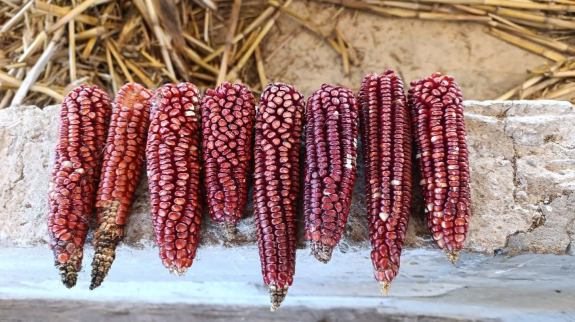
The initiative is structured around three core objectives: Empowerment through Education. Equip native corn producers with the knowledge and skills required to engage in culinary tourism, thereby enhancing their economic prospects and fostering self-sufficiency (Figure 1).
Figure 1: Red corn in a plot of land in the Río Delgado micro-basin community in Tlaxiaco, Oaxaca.
Experiential and Sustainable Tourism: Teaching With Artificial Intelligence to Native Corn 215
Cultural Preservation. Promote and preserve traditional agricultural and culinary practices by integrating them into tourism offerings, adding that cultural heritage remains a living, dynamic aspect of community life.
Sustainable Economic Development. Establish a replicable model that combines traditional knowledge with AI-driven educational tools to create sustainable tourism experiences, contributing to the broader goals of economic diversification and environmental stewardship.
By focusing on these objectives, the project aspires to serve as a catalyst for positive change in Tlaxiaco, offering a scalable framework that can be adapted to similar communities seeking to harness the benefits of sustainable tourism while preserving their unique cultural identities.
MATERIALS AND METHODS
This study adopts a qualitative, participatory, and interdisciplinary methodology, grounded in the approach proposed by Oropeza-Tosca et al. (2025), which integrates field observation, community-based knowledge, and artificial intelligence (AI) tools for educational innovation in rural contexts. The research was conducted in two distinct field visits to Tlaxiaco, Oaxaca, specifically in the communities of the Río Delgado micro-basin, San Diego quarter, and El Vergel.
Phase 1. Participatory Observation and Identification of Circular Economy Practices The first visit focused on direct observation of native corn production systems and the embedded circular economy practices in the Río Delgado micro- basin. Researchers documented how families cultivate oats, barley, mustard, and native corn to feed small Holstein cows that have been bred locally for decades. These cows produce milk, which is used to make traditional fresh cheese, while corn residues are repurposed as cattle feed. The fields are irrigated with spring water from the micro-basin, and seeds are preserved across more than three generations, reflecting a deep intergenerational transmission of agroecological knowledge.
The research team for this phase included: a specialist in microenterprise development and business administration, a specialist in regional development and sustainability, a specialist in biochemistry and artificial intelligence in education. This phase enabled the identification of cultural, environmental, and productive dimensions necessary to contextualize the design of AI-based educational materials that reflect knowledge and needs. In line with regional planning strategies implemented in the Mixteca Oaxaqueña through geographic information systems (GIS) for community- based decision-making (Jiménez Márquez, Vásquez Olvera, & García Hernández, 2024), the project emphasized the spatial and cultural specificity of each production practice as the foundation for tailored educational interventions.
Phase 2. Ethnographic Interviews and AI-Integrated Educational Strategy Design The second visit deepened the ethnographic approach through semi- structured interviews with native corn producers from San Diego and El Vergel. Interviews revealed that: Producers practice subsistence agriculture with a strong cultural motivation to preserve ancestral knowledge. The “cajete” planting technique is widely used to retain soil moisture during the early rains in April and May. Producers begin agricultural training during early childhood (ages 6–8), with active labor from age 12.
Educational attainment among producers is high, with 75% holding a university degree, combining academic knowledge with traditional practice. Milpa cultivation remains a fundamental strategy, involving maize, beans, squash, quelites, and other complementary crops. Division of labor within families supports both agricultural and service-sector participation to reinforce household economies. Oral traditions, rituals, and religious beliefs play a central role in the preservation of agroecological practices, including offering mezcal to the earth before planting and engaging in communal work through “tequio.”
The second field team included: a specialist in molecular biology and biofertilizers, a second specialist in regional development and sustainability, a specialist in regional planning and administration, a mycology expert exploring mushroom production using corn stalk residues.
Integration of AI in Educational Strategy Building on insights from both visits, for the project is proposal to developed contextualized educational content using AI to: generate illustrated manuals and multilingual audio guides, adapt content for individuals with limited literacy or digital access, simulate real-life situations to support experiential learning in sustainable tourism, reinforce traditional knowledge through digital means while respecting cultural integrity.
AI tools can be selected and trained based on the community’s linguistic, educational, and technological profile, ensuring that the educational model could be accessible, culturally relevant, and scalable to other rural regions. Moreover, adopting a sustainable and quality-driven approach to digital training (especially in rural settings) requires the use of reliable certification mechanisms and adaptive technologies that uphold the standards of learning effectiveness (Kavosa, Lapina, & Kozlovskis, 2022).
To illustrate the pedagogical strategy proposed in this project, Table 1 presents a comparative view of how traditional knowledge from native corn- producing communities can be integrated with artificial intelligence (AI) tools to achieve specific educational outcomes. The integration strategy was designed to respect and enhance knowledge systems while leveraging the adaptability of AI to address challenges such as limited literacy and digital access. By aligning key cultural practices, such as milpa cultivation, oral traditions, artisanal food preparation, and communal learning, with tailored digital resources, the educational model fosters experiential learning, cultural preservation, and the development of market-ready tourism products. This
Experiential and Sustainable Tourism: Teaching With Artificial Intelligence to Native Corn 217
synergy between tradition and technology reflects the project’s broader goal of promoting sustainable and inclusive rural development.
Table 1: Table comparing traditional knowledge + AI integration.
Table available in the original PDF paper.
Traditional Knowledge AI-Based Educational
Expected Outcome
Tool Milpa system and Simulations of planting
Reinforcement of farming
agroecology
and product transformation
identity through experiential learning Oral transmission of
Multilingual audio guides Cultural preservation and
rituals and myths
accessibility for non-literate learners Cheese and
Illustrated step-by-step
Creation of tourism-ready
manuals
food products
tortilla-making traditions Community-based
Interactive learning
Peer learning and digital
learning (tequio)
platforms
collaboration
RESULTS
The proposal of implementation of the AI-based educational model in the native corn-producing communities of Tlaxiaco, Oaxaca, yielded significant outcomes for work across three areas: institutional and territorial linkage, documentation of traditional knowledge and circular economy practices, and development of inclusive educational content using AI.
1. Strengthening of Institutional and Territorial Collaboration. A major outcome of the project is the establishment of a strategic partnership with the Municipal Government of the Heroic City of Tlaxiaco (Jorge Octavio Hernández Martínez, Jairo Jiménez Santiago and all the team), which provided access to producers, community venues, and logistical support for the development of the initiative. This collaboration enabled continuous dialogue between municipal authorities, the Instituto Tecnológico de Tlaxiaco, and participating research networks, aligning the project with the sustainable development agenda and the Sustainable Development Goals (SDGs). Additionally, a pathway was established to incorporate the project outcomes into the Voluntary Local Review (VLR Tlaxiaco, 2025) as part of the Agenda 2030 process, positioning Tlaxiaco as a reference for sustainable rural innovation at the national and international levels. 2. Identification of Circular Economy Practices and Native Corn Preservation. Field visits led to observe and the documentation of regional circular agricultural practices, where farmers cultivate oats, barley, mustard, and native corn to feed small Holstein cows, which in turn produce milk used to make tlaxiaquian fresh cheese. Corn residues are repurposed as fodder, irrigation is carried out with spring water from the micro-basin or mountains near, and seeds are preserved within families for over three generations, highlighting deeply rooted
intergenerational agroecological knowledge. Ethnographic interviews confirmed that traditional milpa systems (intercropping of corn, beans, squash, and leafy greens) remain central to household food systems and cultural identity. Farming knowledge is transmitted from early childhood, integrating formal education with agricultural training from the ages of 6 to 8, and intensive labor by age 12. Rituals and symbolic practices were also observed, including offering mezcal to the earth before planting, the use of tequio (communal labor), and agricultural activities tied to religious observances and a kind of cosmovision. 3. Development of Inclusive and Accessible AI-Based Educational Content. Based on the ethnographic and agricultural insights gathered, AI- generated educational materials are proposal to design to reflect community contexts and overcome barriers related to literacy and digital access. These resources included: illustrated manuals for low- literacy users, multilingual audio guides (Spanish and Indigenous languages), interactive simulations to support experiential learning in culinary tourism. These materials enabled self-directed learning and skill-building among native corn producers, particularly in sustainable tourism design. It is worth noting that 75% of the interviewed producers held university degrees, indicating strong potential for the adoption and expansion of AI-assisted educational tools within these communities. Although this can vary widely depending on the geographic area of the municipality and the culture of each family. 4. Initial Steps Toward Experiential Tourism Design. With academic guidance, the community can begin conceptualizing prototypes of experiential tourism products centered on native corn, artisan food production (cheese, tortillas), traditional mushroom foraging, and traditional culinary practices. These prototypes aim to be developed into full tourism offerings that promote cultural heritage, environmental stewardship, and economic diversification for the Tlaxiaco region.
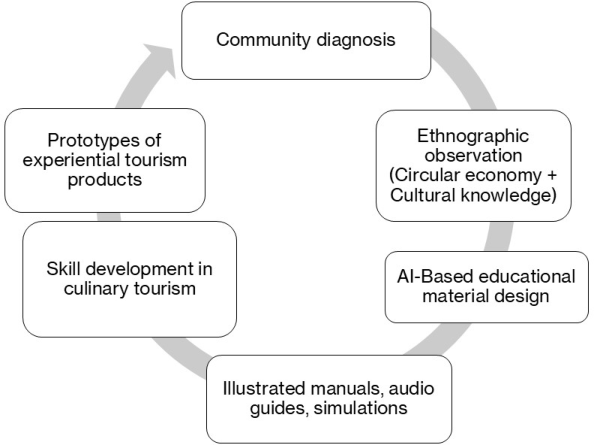
The implementation process of the educational model follows a structured sequence grounded in participatory research and iterative design. As illustrated in Figure 2, the project begins with a community diagnosis phase, which identify assets, challenges, and educational needs. This is followed by ethnographic observation, focusing on circular economy practices and the transmission of cultural knowledge related to native corn production. These findings can inform the design of AI-based educational materials, including illustrated manuals, multilingual audio guides, and interactive simulations tailored to the community’s linguistic and literacy context. The materials can be applied in workshops with producers, facilitating skill development in culinary tourism. As a result, the project can culminate in the co- creation of prototype experiential tourism or sustainable community tourism products that integrate traditional knowledge with sustainable economic strategies.
Experiential and Sustainable Tourism: Teaching With Artificial Intelligence to Native Corn 219
Figure 2: Sequential flow of the AI-enhanced educational model implementation.
Interviews and participatory observation confirmed that women in the Tlaxiaco region play a central role in food processing and the conservation of native corn varieties in which men cultivate them, and women mostly irrigate them, much like the resistance strategies of migrant women elsewhere, who leverage traditional knowledge as a form of economic and cultural empowerment (Fernández Quiroga, 2024). This demonstrates the strength of the tlaxiaquian people to work hard even in conditions of migration, since this population has many migrant relatives or at least have been migrants themselves at some point in their lives.
CONCLUSION
This study establishes that integrating artificial intelligence (AI) with traditional knowledge can be a powerful catalyst for community empowerment, cultural preservation, and sustainable economic development. Through a participatory and interdisciplinary approach, native corn producers in Tlaxiaco can be recognized as cultural knowledge holders and as key actors capable of innovating within their own contexts, generating opportunities to diversify their employment opportunities and strengthen self-consumption for food sovereignty. The strong institutional collaboration established with the Municipal Government of the Heroic City of Tlaxiaco, Secretariat for Agri-Food Promotion and Rural Development (SEFADER), along with academic and community partnerships, play a central role in grounding the educational model in real territorial needs. The identification of circular economy practices, deep-rooted agroecological systems, and intergenerational knowledge transmission highlights the rich
potential of these communities to lead sustainable tourism initiatives from within.
By developing AI-assisted educational resources tailored to regional realities, such as illustrated manuals, multilingual audio guides, and experiential learning simulations, this project offers a replicable and scalable framework for rural development. These tools enable accessible and inclusive learning for producers with varying levels of digital literacy, aligning with the Sustainable Development Goals (SDGs) and contributing directly to the Voluntary Local Review (VLR Tlaxiaco, 2025). During the participatory design of tourism products, special attention should have to the texture, aroma, and flavor of tortillas made with native corn varieties. This can allow for assessing the systemic competitiveness of corn derivatives, potentially strengthening the region’s economy. These characteristics are crucial for the development of gastronomic tourism experiences, as previous studies have shown that consumer acceptance of tortillas is closely related to their sensory and physicochemical properties (Iuga, Ávila Akerberg, González Martínez, & Mironeasa, 2019). These considerations must guided both the educational materials and the development of prototypes of regional gastronomic experiences for tourists.
ACKNOWLEDGMENT
The authors would like to express their sincere gratitude to Ramón Jiménez López for his invaluable guidance, support, and commitment to the preservation of native corn and the cultural heritage of Tlaxiaco, Oaxaca. His experience and leadership in community engagement were fundamental to the successful development of this research. Special thanks to Jairo Jiménez Santiago, Director of Planning of the Heroic City of Tlaxiaco, for his strategic coordination and facilitation of the interinstitutional collaboration, and to Amado Santos Santiago, Director of the Instituto Tecnológico de Tlaxiaco, for his warm welcome and the institutional support provided throughout the academic mission.
We also extend our appreciation to the Red de Probióticos Vegetales Rizobianos (PROBIOTEC), and Dr. Reiner Rincón Rosales, National Leader of it, for his insights into sustainable agricultural practices, and the Red de Investigación en Economía Social y Solidaria (RIESS) to Dr. Rodolfo Martínez Gutiérrez, National Leader, for his methodological contributions and leadership in the coordination of the Voluntary Local Review Tlaxiaco 2025. This work would not have been possible without the collaboration of the native corn producers communities of Tlaxiaco, whose knowledge, hospitality, and commitment to sustainable development were vital to this experiential learning initiative. Their voices, traditions, and resilience continue to inspire our work.
We acknowledge the support of the Tecnológico Nacional de México (TecNM) and the NODESS ACUISUR, EDEN-DEL-SUR, ALIM-DEL-SUR, and BAGRE-DEL-SUR, whose academic and community-based frameworks
Experiential and Sustainable Tourism: Teaching With Artificial Intelligence to Native Corn 221
have guided this project toward the integration of artificial intelligence, education, and sustainable tourism.
REFERENCES
Arnés, E., Severiano-Pérez, P. and Astier, M. (2021) ‘Sensory profile and acceptance of maize tortillas by rural and urban consumers in Mexico’, Journal of the Science of Food and Agriculture, 102(2), pp. 642–651. doi: 10.1002/jsfa.11568. Basquerote, A. T. (ed.) (2024) Perspectivas de las ciencias sociales aplicadas:
reflexiones sobre la sociedad y el cambio 2. Atena Editora. Available at: https:// doi.org/10.22533/at.ed.833241906. Coffey, D. (2024) ‘Indigenous youth are using coding and AI to save native language’, Teen Vogue, 24 January. Available at: https://www.teenvogue.com/story/ these-coding-camps-are-teaching-indigenous-youth-to-save-native-language- through-ai. Falconi, S. I., Gonzáles Izquierdo, K. and Oropeza Tosca, D. R. (2024) ‘Metodología
para el diseño de un modelo de turismo sostenible en destinos rurales: Caso de Ismate y Chilapilla’, in Ortiz Martínez, F. I. and Mazó Quevedo, M. L. (eds.) Turismo circular y sustentable en destinos rurales. Comunicación Científica, pp. 135–153. https://doi.org/10.52501/cc.213 Fernández Quiroga, A. (2024) ‘Construcción de la desigualdad en las contrataciones en origen de mujeres migrantes. Estrategias de resistencia de las mujeres migrantes marroquíes en la provincia de Huelva, España’, La ventana. Revista de estudios de género, 7(59), pp. 291–321. https://dialnet.unirioja.es/servlet/ articulo?codigo=9379719 Halkiopoulos, C. and Gkintoni, E. (2024) ‘Leveraging AI in E-Learning: Personalized
Learning and Adaptive Assessment through Cognitive Neuropsychology—A Systematic Analysis’, Electronics, 13(18), p. 3762. Available at: https://doi.org/ 10.3390/electronics13183762. Iuga, M., Ávila Akerberg, V. D., González Martínez, T. M. and Mironeasa, S.
(2019) ‘Consumer preferences and sensory profile related to the physico-chemical properties and texture of different maize tortillas types’, Foods, 8(11), p. 533. https://doi.org/10.3390/foods8110533 Jiménez Márquez, O., Vásquez Olvera, C. and García Hernández, G. (2024) ‘Optimización de la planeación municipal mediante el uso de sistemas de información geográfica en la región mixteca oaxaqueña’, in Basquerote, A. T. (ed.) Perspectivas de las ciencias sociales aplicadas: reflexiones sobre la sociedad y el cambio 2. Atena Editora. Available at: https://doi.org/10.22533/ at.ed.83324190612 Kavosa, M., Lapina, I. and Kozlovskis, K. (2022) ‘Sustainable Approach to
Certification of Persons: Ensuring Reliability and Quality’, Sustainability, 14(3), p. 1137. https://doi.org/10.3390/su14031137. Kusch-Brandt, S. (ed.) (2022) Towards more sustainable food systems. MDPI.
Available at: https://doi.org/10.3390/books978-3-0365-9048-6. Martínez Gutiérrez, R. (2012) ‘Quinta hélice sistémica (QHS), un método para evaluar la competitividad internacional del sector electrónico en Baja California, México’, Investigación Administrativa, 41(110), pp. 34–48. Available at: http://www.scielo.org.mx/scielo.php?script=sci_arttext&pid=S2448- 76782012000200034&lng=es&tlng=es.
Neophytou, N. and Liasidou, S. (2024) ‘Artificial intelligence driven adaptive learning methods in sustainable tourism education’, Worldwide Hospitality and Tourism Themes, 16(1), pp. 45–58. https://doi.org/10.1108/WHATT-12-2024- 0308 Oropeza-Tosca, D., Martínez, R., Notario-Priego, R., González-Izquierdo, K.
and Rivera-Rodríguez, M. (2025) ‘Teaching with Artificial Intelligence in Rural Communities for Microenterprise Development’, in Ahram, T., Karwowski, W., Martino, C., Di Bucchianico, G. and Maselli, V. (eds.) Intelligent Human Systems Integration (IHSI 2025): Integrating People and Intelligent Systems. AHFE (2025) International Conference. AHFE Open Access, vol. 160. AHFE International, USA. https://doi.org/10.54941/ahfe1005848 Oropeza-Tosca, D. R., Ramón Santiago, P. and Martínez Gutiérrez, R. (2023) ‘Evaluación del desarrollo de habilidades investigativas a través de estrategias de aprendizaje activo, aplicando Inteligencia Artificial’, in Tendencias de aprendizaje para la ciencia y la innovación educativa. Querétaro, México: Zenodo, p. 269. https://doi.org/10.5281/zenodo.15140860 Piperno, D. R. and Flannery, K. V. (2001) ‘The earliest archaeological maize (Zea
mays L.) from highland Mexico: New accelerator mass spectrometry dates and their implications’, Proceedings of the National Academy of Sciences, 98(4), pp. 2101–2103. https://doi.org/10.1073/pnas.98.4.2101 Preibisch, K. L., Rivera Herrejón, G., & Wiggins, S. L. (2002). Defending food security in a free-market economy: The gendered dimensions of restructuring in rural Mexico. Human Organization, 61(1), 68–79. https://doi.org/10.17730/ humo.61.1.b0xbdqk1lw37yy1j Specialty Produce (n.d.) ‘Oaxacan Green Dent Corn Information and Facts’. Available at: https://specialtyproduce.com/produce/ Oaxacan_Green_Dent_Corn_11475.php. Stolmaker, C. (1996) Cultural, social and economic change in Santa María
Atzompa in the late 1960’s. In: Thieme, M. S. (ed.) Ceramics and Society in Oaxaca. Vanderbilt University Publications in Anthropology, No. 49. Vanderbilt University. Available at: https://ir.vanderbilt.edu/bitstream/1803/5791/ 1/VUPA49.pdf. Tapalova, O. and Zhiyenbayeva, N. (2022) ‘Artificial Intelligence in Education: AIEd for Personalised Learning Pathways’, The Electronic Journal of e-Learning, 20(5), pp. 639–653. https://doi.org/10.34190/ejel.20.5.2597 Vázquez, G. (Director), Barbieri, J. and Vallejo, Y. (Producers) (2020) Los Guardianes
del Maíz [Documentary film]. Los Guardianes del Maíz. https://youtu.be/ NiePPDk67rQ?si=H2JUdVXvDmC4Dphk Yee, D. (2022) ‘Forging Mixtec identity in the Mexican metropolis: Race, indigenismo and Mixtec migrant associations in Mexico City, 1940–70’, Journal of Latin American Studies, 54(1), pp. 55–77. https://doi.org/10.1017/ S0022216X21000985
LISTED IN THE AHFE DIGITAL BOOKSTORE CATALOGUE
Explore the complete digital volume
Training, Education, and Learning Sciences
Read this individual research paper free through the original publisher, or explore the full digital proceedings book.
ISBN 978-1-964867-69-4
Explore this ISBN in the AHFE Bookstore ↗Listed in the July 2026 bookstore catalogue; search by ISBN to confirm current availability · Digital book purchase optional