Seth Corrigan, Shahin Vassigh, Bhavleen Kaur, Mark Finlayson, Tisa Islam Erana, Giancarlo Perez, Bhanu Vodinepally, Biayna Bogosian, Mohammadreza Akbari Lor, Shu-ching Chen (2025). The Architecture and Early Results of the IL-PRO AI-Driven Immersive and Adaptive Learning System for Industrial Robotics. In: Training, Education, and Learning Sciences. AHFE Open Access, vol. 193, pp. 200–211. https://doi.org/10.54941/ahfe1006661
While many traditional approaches to robotics training have been successful, the expense, space, and hazards associated with industrial robotics can be prohibitive and limit the scale at which students can be trained. Use of advanced digital technologies such as XR environments can provide economic and safe training alternatives. Previously introduced in this same forum, the Intelligent Learning Platform for Robotics Operations (IL-PRO) is now operational and in use in an undergraduate credentialing course at a major university. IL-PRO uses a multi-modal approach to automating instruction. It leverages students’ verbal responses and actions, a pre-trained large language model, and machine-learned models within an immersive (VR) environment for learning operations of robotic arms. At the core of the IL-PRO experience is the deployment of an automated learning system (ALS) designed to track student learning progress to personalize feedback and select i learning tasks. The ALS currently accounts for students’ levels of conceptual understanding and their motor skills relevant to operating the IL-Pro virtual robotic arm. This paper describes the learning content and system design of IL-PRO as currently implemented and presents sample student performance data from a recent pilot of the system.
Advances in automation and robotics will continue transforming the global economy as they enhance human strength, perception, speed, and dexterity. These technologies reshape industries while disrupting job markets by altering skill requirements for employment (Feng & Graetz, 2020; Tong et al.,
The Architecture and Early Results of the IL-PRO AI-Driven 201
2021). Research shows automation replaces tasks requiring both high and low levels of training and engineering complexity, urgently necessitating targeted interventions (Feng & Graetz, 2020).
However, students learning industrial robotics follow arrangements largely unchanged from traditional classrooms and workshops. Due to equipment costs, hands-on classes are often small, with students working alone or in small groups. Additionally, hands-on training can pose safety risks. Thus, traditional robotics instruction can limit scalability as it requires low student- to-teacher ratios and the need for specialized equipment.
Meanwhile, learning sciences have reshaped training design and delivery by leveraging advancements in modeling, simulation, and animation. These changes create a dynamic educational landscape with instructional routines that integrate new technologies (Palvia et al., 2018). Some robotics courses incorporate new approaches, such as cloud-based learning and online delivery of text-focused materials. However, use of advanced technologies like Virtual Reality (VR), machine learning, and large language models for automated assessment and feedback is scant.
Addressing these gaps represents a key opportunity to modernize robotics training and better align it with contemporary learning needs. An AI-powered, VR-driven approach could reduce dependence on costly resources, enhance scalability, and improve safety. The Intelligent Learning Platform for Robotics Operations (IL-PRO) is a digital learning environment that leverages natural language processing, machine learning, and VR to personalize student learning In what follows, we present a general description of adaptive learning systems and a learning theory well-suited for robotics operations—dynamic systems theory. We then describe IL-PRO’s automated learning system and how it applies dynamic systems theory to inform content and tasks for learning industrial robotics. The concluding sections highlight key milestones in utilizing IL-PRO as a core component of a credential course in basic robotics operations.
BACKGROUND
Adaptive Learning Systems By incorporating new technologies, adaptive learning systems afford personalized student experiences at unprecedented scales. Current approaches to adaptive instruction increasingly make use of AI to personalize instruction (Guettala et al., 2024). Though the shift is recent, as may be expected, AI is quickly becoming an important tool for adaptive learning (Ezzaim et al., 2024).
Whether or not AI is used, there are several general approaches to adapting instruction. So called ‘micro-adaptive’ approaches (Ennouamani & Mahani, 2017) focus on inferring students’ learning needs during instruction to provide real-time or near-real-time feedback, learning content and tasks. These approaches rely on data collected on the students’ current performance rather than measures implemented before the start of the learning experience, i.e. pre-task measures. In contrast to macro-adaptive approaches,
micro-adaptive approaches differentiate feedback, content delivery and task delivery based on students’ current task performance. Monitoring students’ responses as well as their response processes supports the system’s inferences about what students know and can do, informing system recommendations and delivery of feedback, content and additional tasks.
Historically, most adaptive learning systems have been designed around what is called a domain model and a student model (Nwana, 1990). The domain model is also known as an expert model. Domain models specify the concepts, rules and strategies associated with a given domain or subset of a domain (Nkambou et al., 2010). The student model can be thought of as mapping a given students’ current knowledge, skills and abilities onto one or more domain models. As students progress, that mapping becomes increasingly complete–i.e., components of the student’s knowledge, skills and abilities are mapped onto a greater number of elements within the targeted domain model.
Progress Maps Somewhat different from traditional conceptions of the student model, learning progressions, or progress maps, rely on a developmental view of learning. They characterize the domain model as a set of progressive steps learners take as they become increasingly proficient in a domain. Characterizing the domain model in this way allows for qualitative descriptions of what students currently know and can do. Likewise, students’ previous levels of performance can be described with regard to the same developmental path, as can those levels of knowledge, skill and ability that are likely to be achieved next.
When the progress mapping approach is used in this way, the student model can be understood as a location on a developmental pathway, i.e. the progress map. The history of a student’s learning pathway is logged by tracing the current and previous locations on the progress map. Instructional decisions can be made on the current location and with awareness of the next most likely step in the student’s pathway.
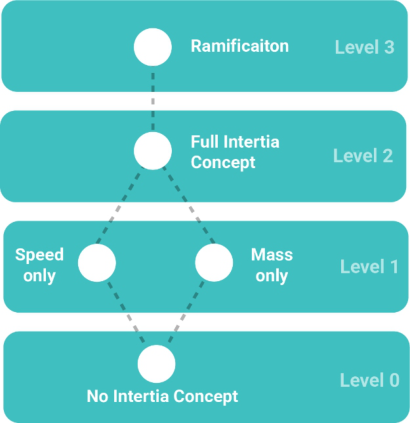
Automating Instruction via Progress Maps In our work on automating robotics instruction, we have adopted the use of a concept mapping, or learning progressions, approach (Duncan & Hmelo-Silver, 2009). The IL-PRO learning experience is designed around one or more such construct maps with automation decisions guided by the student’s current position on the map and the knowledge, skills and abilities associated with the map’s upcoming levels. As an example, Figure 1 summarizes the construct map used in the IL-PRO module treating inertia and payload. The role of the progress map in automating instruction within the IL-PRO environment is described later in this paper.
IL-PRO’s pedagogical model incorporates information about both the domain and student models to select appropriate content, feedback and tasks to serve in response to the student’s most recent performance(s). IL-PRO then uses what is called a mixed initiative approach, allowing students to choose
The Architecture and Early Results of the IL-PRO AI-Driven 203
whether they want to repeat a given task, complete a suggested remedial task, or move on to the next level even when they fail.
Figure 1: Progress map for inertia.
Learning Theory for IL-PRO—Dynamic Systems Our understanding of dynamic systems originates with Kelso (1999) and informs the design of the IL-PRO experiences. The theory of dynamic systems considers learners as self-organizing dynamic systems in the sense that when they are faced with complex tasks or changing environments, they can independently explore potentially large solution spaces to discover, test, and modify their response.
As learners discover productive parts of the solution space for the problems they are interested to solve they adapt their approaches and their understanding–identifying new solutions and new ways of thinking. The main point of training within the IL-PRO is to motivate students to attempt well-designed problems, or tasks, within environmental constraints to discover and practice desirable solutions. In our case, the more desirable solutions reflect acquisition of knowledge, skills and abilities that are higher up on the given module’s concept map, or domain model.
Our dynamic systems approach is well suited for carnival challenges which are game-like activities typically found at carnivals. These challenges can require both novel conceptual understandings and complex motor skill solutions. In the IL-PRO context, our tasks introduce conceptual and/or motor skill challenges that motivate students to explore new ways of thinking and new movement patterns that are relevant for mastery of operating robotic systems. Putting this perspective to use for teaching and learning involves employing design-based research to explore and understand the tasks, task features, and environments that facilitate students’ discovery of robust solutions to basic, everyday problems in robotics.
Game-Based Learning in IL-PRO With its reliance on dynamic systems theory, IL-PRO requires students’ sustained engagement as they search for solutions across potentially large spaces. The IL-PRO modules rely on a notion of ‘serious play’ to motivate students’ continued engagement to discover workable solutions. This design decision is supported with growing evidence that well-designed games motivate learners to persist in challenging tasks, engendering high levels of cognitive, affective, sociocultural, and behavioral engagement (Plass, Homer and Kinzer, 2015); and destigmatize failure (July, 2013). Interestingly, in the context of immersive VR settings, serious play can also provide context and motivation for situated practice (Dawley and Dede, 2014) of patterns of movement through careful use of game mechanics and level-design (Adams & Dormans, 2012). With the use of immersive virtual reality, IL-PRO situates students in sensory-rich environments and fosters a sense of presence that can contextualize the learning experience in a wide range of realistic settings relevant to robotics.
IL-PRO LEARNING CONTENT The current IL-Pro learning content is organized into six learning modules that each treat one or more components of fundamental training for robotics. The curriculum’s structure and content were informed by insights from an industry summit and interviews with automation engineers, software developers, roboticists, designers, educators, and system integrators. Additionally, the project team conducted an extensive literature review and analyzed existing robotics courses to refine key components of the training content. This process ensured alignment with industry needs and best practices in robotics education.
The modules are organized based on their difficulty and the dependencies among the learning goals for each module. Each module presents students with one or more carnival tasks. The carnival tasks require targeted conceptual understanding, use of sufficient dexterity guiding the robotic arm through use of a game controller, or a combination of both. Table 1 provides a summary of the current IL-PRO content for each module, the associated learning objectives, the tasks, and the type of knowledge gained after successful completion of the task.
Identify the robot’s kinematic chain, differentiate jogging methods, practice movement control, match joints, push objects, and trace toolpaths.
- Describe a robot’s kinematic chain - Identify the components of a robotic arm - Understand the elements of a teach-pendant and differentiate between the various jogging methods for moving a robot.
Continued
The Architecture and Early Results of the IL-PRO AI-Driven 205
Mark Robots’ safety limits, recalibrate boundaries, identify Safety hazards.
- Declarative Knowledge - Knowledge of Processes
- Identify the robot’s work envelope. - Recall safety zones, error messages, potential safety hazards.
3. Reference Frames (RF)
Demonstrate the ability to position and orient a robot’s end-effector.
- Conceptual Understanding - Knowledge of Processes
Calibrate work object frames, record poses, and analyze spatial positioning for accurate robotic navigation and movement.
Successfully balance 3 balls of varying weights.
- Conceptual Understanding - Motor Skill Solutions
4. Acceleration Demonstrate the impacts of acceleration and mass on robotic arm performance and stability.
5. End-Effectors (EE)
Identify the Tool Center Point (TCP) and demonstrate calibrating the End-Effectors.
- Declarative Knowledge - Knowledge of Processes
Calibrate end-effectors; Correct misalignment; Control EE with digital and analog signals for precision tasks.
6. Motion Planning
Describe techniques for creating a robotic program, including the waypoint and tool-path methods.
Use Waypoints and Toolpaths for obstacle navigation and 3D printing. Analyze movement precision, output quality in robotic tasks
- Declarative Knowledge - Knowledge of Processes - Conceptual Knowledge
Design of the learning content and the carnival tasks in each module reflect increasing levels of understanding and skill in the targeted content. These increasing levels of knowledge and skill are summarized in one or more progress maps. The progress maps can also be thought of as structuring an outcome space for learners.
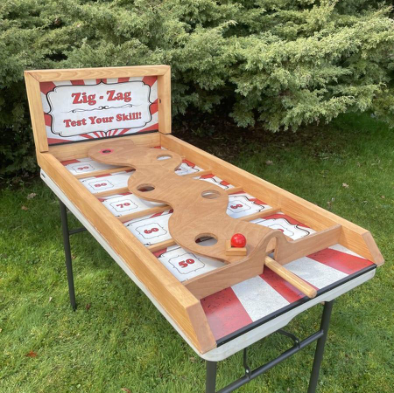
As one example of how progress maps are used, we describe the content of IL-PRO’s Module for teaching the concept of “Robot Acceleration” which treats the inertia concept in the context of robot control. The module is designed around two progress maps, one for conceptual understanding of inertia, and another for enacted understanding of inertia. We introduce a complex task in this module to support students’ ability to develop movement solutions for a robotic arm that reflect an understanding of inertia and its ramifications for robot control. The carnival task in the Acceleration Module is related to what is called the crazy driver, or Zig-Zag game, shown in Figure 2. In the crazy driver game, players tilt a narrow, flat and omni rotational board to get a ball to travel to the end of a course without falling off the edge or through one of the holes on the board. In our simplified version of the same game, students use a game controller to manipulate a robotic arm that titles an omni rotational board for getting a ball to trace specified paths. The students then repeat the same process with two additional balls of increasing weight.
Changing the mass of the ball and the time allotment for completion forces players to deal with the mass and speed variables of inertia. From
an instructional perspective, this task helps students discover how direction and angle of tilt influence the force needed to control the ball’s motion. By manipulating the board, students gain hands-on understanding of the relationship between directional forces, acceleration of the robot, and ball movement.
Through repeated practice and guided feedback, students explore various movement solutions to discover how the ball’s mass and speed affect its motion. The approach guides student learning by helping them attend to the consequences of their actions, adjust their strategies, and vocalize new conceptual understandings. This is one example of how the team has operationalized the dynamic systems and embodied learning concepts within the IL-PRO experience.
Figure 2: The crazy driver carnival task.
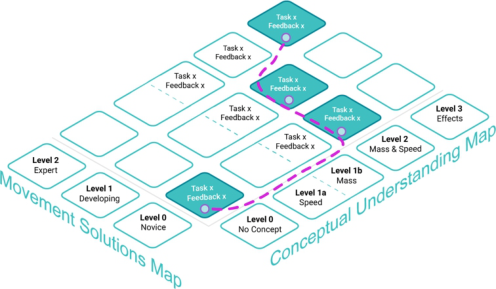
Figure 3 provides an example of the outcome space used in the Robot Acceleration Module and its ramifications for robot control.
As described in Figure 1, the progress map for conceptual understanding of inertia has four levels of understanding and five outcomes. The levels of understanding include an understanding of how the mass or the speed of an object affects the force required to change the object’s motion (Levels 1a and 1b), an understanding that accurately accounts for both mass and speed, and the highest level in which students are able to explain the ramifications of inertia for robot control. The lowest level, Level 0, includes students who are not yet considering that mass and speed of an object affect the force required to change the object’s motion.
The Robot Acceleration Module requires an integrated understanding of inertia that involves both conceptual understanding of the inertia concept and an ability to enact that understanding by practicing and successfully completing a related motor skill task. The progress variable for students’ movement solutions is defined with reference to a set of expert performances.
The Architecture and Early Results of the IL-PRO AI-Driven 207
Student performance is evaluated by comparing their movement of the robotic arm to those of expert users who developed and practiced optimal techniques through multiple sessions in IL-PRO.
The movement solutions progress variable for the Module is divided into three levels. Level 1, the novice level, is identified with motor skill performances with the greatest departure from the expert performance. Level 2, the developing level, is reserved for students who are not yet performing like the experts but who exhibit greater similarity to the expert performance in their movement patterns than the novices. Level 3, the expert level, is identified with students who present movement patterns highly similar to those of the expert.
When students’ joint location is identified along the movement solutions map (3 levels: novice, developing, expert) and the conceptual understanding map for inertia (5 levels), the result is an outcome space with 15 possible locations (a 5×3 matrix). By tracking students’ position in this outcome space across multiple attempts, we can construct their learning pathways, revealing how their movement and conceptual understanding progress simultaneously over time.
Figure 3: The IL-PRO outcome space for robot acceleration.
Outcome Spaces for Automated Feedback and Task Delivery The Robot Acceleration Module outcome space provides the basis for automating personalization of the learning experience–i.e., automation of selection and delivery of feedback messages and tasks. As described earlier, the system’s current approach to personalization is closest to a micro-adaptive process. IL-PRO uses telemetry, which includes collecting real-time data from students’ motor skill performances in conjunction with feature engineering and a machine-learned model to infer students’ position on the movement solutions progress map. The system also transcribes speech data from student responses to the system’s questions and then uses a pre-trained large language model to infer students’ level of conceptual understanding. These parallel processes yield the coordinates that position students’ performances on the outcome space. With each location of the outcome space identified with a predetermined set of feedback messages and tasks, the automated learning
system can identify helpful feedback and provide task suggestions that are relevant to the student’s current conceptual understanding and movement solution(s).
DATA COLLECTION AND ANALYSIS FOR AUTOMATION As the preceding description suggests, the IL-PRO system is instrumented to collect multiple types of data that make it possible for the system to infer student understanding and the adequacy of their movement solutions. The system responds by suggesting a set of tips, posing reflective questions and suggesting additional tasks for learning.
To accomplish this, the system collects multiple types of data that include student verbal responses to the system’s questions, telemetry data from the robotic arm’s movement and configurations, and user interaction data tracking cursor movement and student selections within the digital environment.
Students’ verbal responses are collected and transcribed in near real-time using a cloud-based pipeline that is also part of the IL-PRO platform. General telemetry hooks within the IL-PRO experience provide general situational awareness. The date, timestamp, module number and activity details are recorded alongside each student action in the system’s event log. This general information is augmented by information about the current number of attempts the student has made on a given task, the session number in which those attempts were made, as well as the score or success-failure status of each attempt.
Success-failure status is accompanied by more nuanced information about students’ performances. Those nuanced assessments of student performances are made using the given module’s progress maps described above and the IL- PRO’s machine-learned and AI models. The cloud-based pipeline transcribes students’ verbal responses, segments those responses and sends each segment to the IL-PRO’s large language model (LLM). The LLM passes over each segment and assigns a level for students’ conceptual understanding according to the relevant progress map for the module.
When student movement solutions are also relevant, the IL-PRO cloud- based pipeline routes the relevant logs to a set of scripts and machine learning models. The cloud-based pipeline segments the relevant telemetry logs and passes each segment through a set of machine learning models that evaluate the student movement performance with reference to the relevant progress variable. In some cases, such as the Robot Acceleration Module, both students’ conceptual understanding as inferred by their verbal responses, and the adequacy of their movement solutions, are used to determine the next best task, tips and questions for learning. Additional details of the IL-PRO pipeline are reported in Akbari Lori et al. (2025).
Sample Results In what follows we present results from IL-PRO’s Robot Acceleration Module for a single student who worked with the crazy driver task, receiving feedback and additional learning tasks to support their conceptual
The Architecture and Early Results of the IL-PRO AI-Driven 209
understanding and their motor performances. Our summaries of the student performances follow their inferred positions on the Module’s progress maps.
As demonstrated by their verbal response to the systematic probes, Student A considered the effects of the ball’s speed on their ability to control it before beginning the crazy driver task. But they were not yet considering the role of the ball’s mass. When asked what aspects of the task were important to consider before they began, Student A responded: “So, the first thing that comes to mind when developing a strategy is balancing the ball. So, I’m thinking about what would be the right velocity to move the paddle to be able to complete the stages without the ball falling off the table.”
IL-PRO thus identifies their understanding of the inertia concept with Level 1b – speed only. By the time they were asked about their strategy for success working with the third and final ball, the most massive ball, the student’s response reflected a new consideration of both mass and weight, a Level 2 understanding of the inertia concept: “In order to be successful, I would start off by going slower…it’s a good way to evaluate how heavy it [the ball] is as a start, and then once I see how heavy it is, I’m going to adjust my speed and how fast I move my hand towards the letters eventually.”
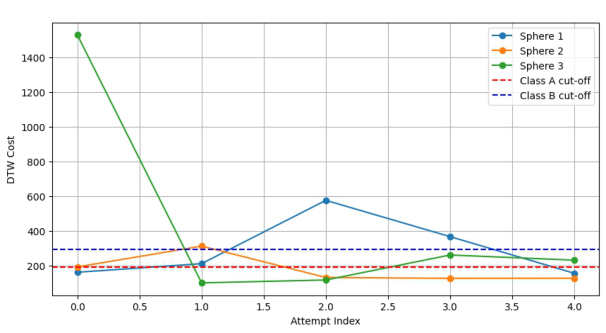
Figure 4 summarizes a student’s progress matching their level of control over the ball’s movement to that of the expert’s performance. Here, dynamic time warping (DTW) (see Akbari Lor et al., 2025) is used to gauge the similarity between the student performance and that of the expert user. High scores reflect large differences between the performances. Scores decrease as the performances become more similar. After multiple attempts with Ball 1, the lightest ball, student performance approximate that of the expert with multiple expert level performances with Ball 2, and Ball 3.
Figure 4: Student’s proximity (DTW Cost) to the expert performance.
Processing students’ verbal responses to the IL-PRO probes, and analyzing students’ logfile data in near-real time, IL-PRO applies a late fusion approach to integrate both types of performances to determine appropriate feedback and additional tasks. Table 2 follows student’s transitions within the Module 4 outcome space, across their multiple attempts at the crazy driver task. As suggested above, student’s movement solutions progress across their attempts with Ball 1 and Ball 2, but their verbal responses suggest a static conceptual understanding focused on speed only. By the end of the student’s attempts with Ball 3, they begin considering the role of mass and speed. IL-PRO’s feedback and task selection can flexibly account for the student’s changing knowledge and skill.
Table 2: Student A performance in the crazy driver task.
Table available in the original PDF paper.
Movement Solution
Level 3 Effects
Novice Developing Expert Conceptual Understanding Level 2 Mass & Speed Ball 3 Level 1b Speed Only Ball 1 Ball 2 Level 1a Mass Only Level 0 No Inertia
Concept
CONCLUSION
The IL-PRO learning system is an immersive VR environment that leverages a current large language model with established machine learning approaches to automate feedback and task selection. It uses a micro-adaptive approach that operates in near real time to adjust instruction in response to students’ most recent performances. Progress maps guide IL-PRO’s learning content and automated-system behavior, ensuring students receive relevant feedback and tasks. By automating feedback and task delivery in a digital immersive environment, IL-PRO provides a response to concerns over safety and scalability of robotics instruction.
ACKNOWLEDGMENT
This material is based upon work supported by the National Science Foundation (NSF) Award No. 2202610: Research on Emerging Technologies for Teaching and Learning Program. Any opinions, findings, conclusions, or recommendations expressed in this material are those of the authors and do not necessarily reflect the views of the National Science Foundation.
REFERENCES
Adams, E., & Dormans, J. (2012). Game mechanics: Advanced game design.
New Riders.
The Architecture and Early Results of the IL-PRO AI-Driven 211
Dawley, L., & Dede, C. (2014). Situated learning in virtual reality: Emerging trends and implications for education. Educational Technology Research & Development, 62(4), 529–547. https://doi.org/10.1007/978-1-4614-3185-5_58 Ennouamani, S., & Mahani, Z. (2017, December). An overview of adaptive e-
learning systems. In 2017 eighth international conference on intelligent computing and information systems (ICICIS) (pp. 342–347). IEEE. Ezzaim, A., Dahbi, A., Aqqal, A., & Haidine, A. (2024). AI-based learning style detection in adaptive learning systems: A systematic literature review. Journal of Computers in Education, 1–39. https://doi.org/10.1007/s40692-024-00328-9 Feng, A., & Graetz, G. (2020). Training requirements, automation, and job polarization. The Economic Journal, 130(631), 2249–2271. https:// doi.org/10.1093/ej/ueaa044 ed.). Palgrave Macmillan. https://doi.org/10.1145/ 950566.95059 Guettala, M., Bourekkache, S., Kazar, O., & Harous, S. (2024). Generative artificial
intelligence in education: Advancing adaptive and personalized learning. Acta Informatica Pragensia, 13(3), 460–489. http://dx.doi.org/10.18267/j.aip.235 Juul, J. (2013). The art of failure: An essay on the pain of playing video games.
MIT Press. Kelso, J. A. S. (1999). Dynamic patterns: The self-organization of brain and behavior.
MIT Press. Nkambou, R., Mizoguchi, R., & Bourdeau, J. (2010). Advances in intelligent tutoring systems. Springer. https://doi.org/10.1007/978-3-642-14363-2 Nwana, H. S. (1990). Intelligent tutoring systems: An overview. Artificial Intelligence
Review, 4(4), 251–277. https://doi.org/10.1007/BF00168958 Palvia, S., Aeron, P., Gupta, P., Mahapatra, D., Parida, R., Rosner, R., & Sindhi, S.
(2018). Online education: Worldwide status, challenges, trends, and implications. Journal of Global Information Technology Management, 21(4), 233–241. https:// doi.org/10.3389/fpsyg.2022.1016300 Plass, J. L., Homer, B. D., & Kinzer, C. K. (2015). Foundations of gamebased learning. Educational Psychologist, 50(4), 258–283. https://10.1080/ 00461520.2015.1122533 Pradhan, I. P., & Saxena, P. (2023). Reskilling workforce for the Artificial Intelligence
age: Challenges and the way forward. In The adoption and effect of artificial intelligence on human resources management, Part B (pp. 181–197). Emerald Publishing Limited. https://doi.org/10.1108/9781804556627
LISTED IN THE AHFE DIGITAL BOOKSTORE CATALOGUE
Explore the complete digital volume
Training, Education, and Learning Sciences
Read this individual research paper free through the original publisher, or explore the full digital proceedings book.
ISBN 978-1-964867-69-4
Explore this ISBN in the AHFE Bookstore ↗Listed in the July 2026 bookstore catalogue; search by ISBN to confirm current availability · Digital book purchase optional