Sergio Miranda, Tomasz Niedoba, Oktay Şahbaz, Clara Bassano (2025). Generative Artificial Intelligence for Effective Miner Training. In: The Human Side of Service Engineering. AHFE Open Access, vol. 182, pp. 85–95. https://doi.org/10.54941/ahfe1006409
This work aims to explore the use of virtual speakers generated by artificial intelligence (AI) to enhance multilingual e-learning experiences. The theoretical framework is based on the growing demand for accessible and effective e-learning platforms that overcome language barriers. Traditionally, creating audio and video content for e-learning is expensive and complex, especially in multilingual contexts. The integration of AI offers personalized and adaptive solutions, improving accessibility and student engagement. The research was conducted in the framework of the European ERASMUS+ project DigiRescueMe, which aims to develop e-learning modules to increase the knowledge and awareness of miners, rescuers and mining engineers on topics related to rescue, risk assessment and mental well-being. The project mainly targets people from Türkiye, Poland, Portugal and Italy, who often do not have a deep knowledge of English or a technical vocabulary in their own language. For this reason, a multilingual approach is essential to effectively engage users. The experiment involved 147 participants from different educational and professional backgrounds. The article highlights the potential of AI-generated virtual speakers to improve the accessibility and effectiveness of multilingual e-learning. Despite a certain preference for human speakers in some contexts, AI offers significant advantages in terms of customization, scalability, and cost reduction. It is crucial to address AI limitations, such as data quality and algorithmic biases, and integrate AI with human instruction to create more balanced and effective learning environments.
Increased attention to innovative solutions to address the challenges posed by students’ different linguistic backgrounds has arisen from the growing demand for accessible, effective e-learning platforms (Jia et al., 2022). Producing the audio and video content they deliver is always a costly and often ineffective undertaking, mainly due to language issues: having content in a language other than that of the participants makes it difficult to understand and ineffective and inefficient (Liu, 2023). Artificial Intelligence (AI) represents a possible solution to overcome these limitations. The use
of AI-generated virtual speakers is in fact a very promising approach since they are programmed to provide content in the students’ native languages, thus improving the accessibility and engagement of the learning experience (Liu, 2023). Adopting AI-generated virtual speakers, despite the potential benefits, requires particular attention. The accuracy and naturalness of speech, the seamless integration of AI-based components into the learning platform, as well as all the ethical considerations surrounding the use of AI in education, such as data privacy and algorithmic bias, are aspects that deserve careful consideration (Chen et al., 2023). The integration of AI-generated virtual speakers into e-learning platforms promises to overcome the language barriers that traditionally hinder the accessibility and effectiveness of online learning, making the learning environments themselves more immersive and personalized, improving learning outcomes (Liu, 2023).
Among the various objectives of the ERASMUS+ project called DigiRescueMe, Standardization and Digitalization of Rescue Education in Mining (2021-1-TR01-KA220-VET-000028090), there is one that concerns the development of e-learning modules for miners, rescue members and mining engineers on topics related to rescue, risk assessment and well-being, as identified through a survey of their needs (Miranda et al., 2023). The main objective of the project is to provide easy-to-understand learning content to people from Turkey, Poland, Portugal and Italy. Usually, people working in mines do not know English well. For these reasons, a multilingual approach has been sought. Obviously, for this objective, involving teachers of different languages is a difficult solution to manage as well as extremely expensive.
AI opens opportunities for the development of personalized educational experiences and adapts to the needs and preferences of individual students. Studies show that the use of AI can enhance learning outcomes through real- time feedback, customization, and path creation (Sarker, 2021). AI systems can also analyze large data sets to identify patterns and trends, allowing teachers to make data-driven decisions and improve their teaching methods (Kaouni et al., 2023).
AI-generated videos and virtual speakers are a new and groundbreaking development in the e-learning space. It offers a scalable and cost-effective way to distribute content. Technology uses advanced machine learning models to create lifelike avatars that can speak in different languages. The AI video generation platforms, such as ELAI (https://www.elai.io), HeyGen (https://www.heygen.com), and Colossyan (https://www.colossyan.com), allow educators or tutors to create high-quality videos using simple text inputs, yielding reduced time and costs. Research shows that AI-generated videos can help increase student engagement and retention by providing consistent, personalized, and visually appealing content (Zhao, 2024). Virtual speakers can add a personal touch to e-learning, making even complex and niche topics covered in this project easier to understand.
SYSTEMS AND METHODS Using Google Sheets and Google Script programming, a content management system has been developed. It supports the creation of multilingual courses.
Generative Artificial Intelligence for Effective Miner Training 87
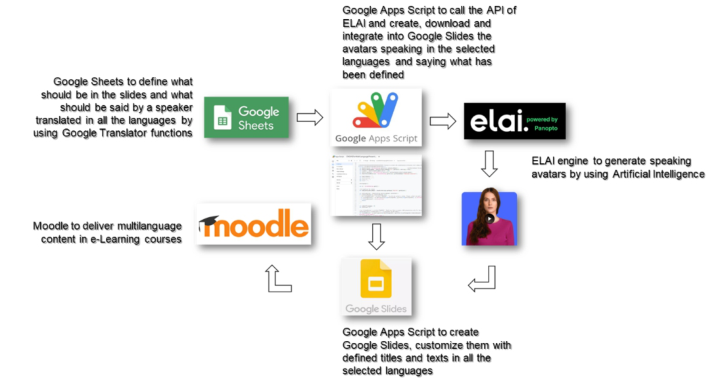
It is designed to allow instructional designers to define in their own language what they would like to show in their slides to students. Using the Google Translator functions that operate directly within the cells of Google Sheets, the slides details are automatically translated into all desired languages (Figure 1). Once configured, this system uses a Google Script procedure and configurable set of slide templates that define titles, subtitles, content and speaker (if desired) to automatically create a Google Slides presentation for each desired language. Through the API, an external AI engine can be called to create virtual talking avatars. For this project, ELAI was chosen on the base of the good quality in the generation of talking avatars and many API functions could be called directly from Google Scripts, which allowed to automate the process of creating the content in multiple languages. Videos of the talking avatars can be created, downloaded and directly integrated into Google Slides using Google Script procedures. The implemented logic is represented in Figure 2. In particular, the Google Script procedures can be called by clicking on the buttons in the sheets. These procedures create new Google Slides by customizing the templates and replacing the titles and the texts in all the selected languages. Then they can call the ELAI engine through the API to create videos of talking avatars using the written text as speech. Finally, the videos are added to the Google Slides and the presentations themselves are uploaded as resources to the Moodle platform.
Figure 1: The architecture and logic of the management system.
The e-learning platform used is Moodle 4.3 customized to meet the needs of the project. The Moodle platform has been properly exploited for the project purposes. In particular, the multilingual display plug-ins allowed us to upload titles, texts and messages in all the required languages and show them taking into account the user’s preferences. The page authoring features allowed us to create containers in which to directly upload presentations in the Google Slides format. The quiz authoring features allowed us to create all
the evaluation tests to be included in the courses. The questionnaire creation feature allowed us to create the final evaluation questionnaire and export the data collected for the analyses presented here.
Three courses were created: Mental Wellbeing in the Mine; Mine Rescue; Risk Assessment. The courses are on topics which, although in some cases very specific, are initially explained in a gradual and accessible way, and do not require any specific prerequisite knowledge to follow. The three courses have the same structure: a mandatory initial assessment with twenty multiple choice questions on the knowledge covered in the course; a sequence of videos with speaker, supported by slides; a mandatory final assessment with a set of twenty different corresponding multiple choice questions on the concepts covered, and a questionnaire to gather their opinions on this e-learning experience. Each course had an average duration of about 3 hours. No functionality was enabled to allow some form of interaction between participants.
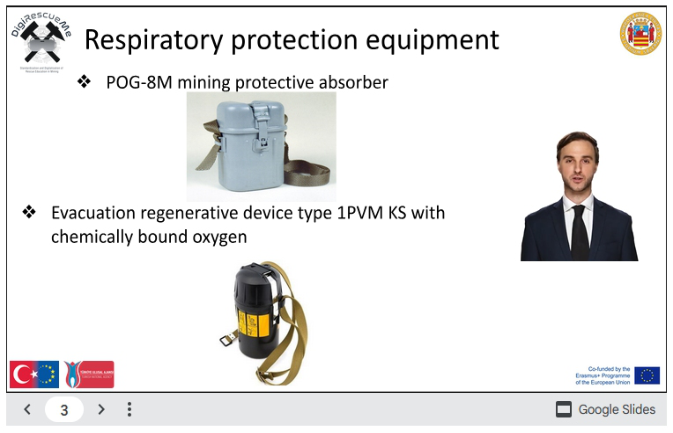
Figure 2: One of the English videos with an AI-generated talking avatar.
The questionnaire used was formulated in a clear and concise way to avoid ambiguity and ensure that the respondents understood the questions. In fact, simple language was used avoiding technical jargon (Krosnick & Presser, 2010). To collect users’ opinions on their e-learning experience, a questionnaire inspired by the UEQ model was defined (Saleh et al., 2022) and the TUXEL technique was used for the evaluation of user experience in e-learning (Nakamura, 2018). Table 1 shows some questions of the questionnaire that were then analyzed.
Generative Artificial Intelligence for Effective Miner Training 89
Table 1: The analysed questions of the questionnaire.
Table available in the original PDF paper.
Question Possible Answers
3. Occupation (Only one choice in the list: Student,
University student, Researcher, Specialized technician, Employee, Teacher, Unemployed) 5. Do you like this e-learning platform? (Yes, more Yes than No, more No than Yes, (Yes, more Yes than No, more No than Yes,
No)
No) 7. The contents are multilingual, that is, they are provided in the language in which you access the platform. Do you prefer to see and listen to the contents in your own language?
(Yes, more Yes than No, more No than Yes, No)
8. The videos in this course are generated with an Artificial Intelligence system. Do you like them?
(Yes, more Yes than No, more No than Yes, No)
9. Do you think that this communication based on videos generated with Artificial Intelligence directly in your own language is effective?
(Yes, more Yes than No, more No than Yes, No)
10. Would you have preferred a human interpreter who spoke in a language other than yours and with subtitles in your own language?
RESULTS
During the pilot phase of the project, people from schools, universities and companies in Turkey, Poland, Portugal and Italy were asked to participate by selecting only one of the available courses. This pilot phase was carried out in presence at companies from the mining sector, schools, at events, or together with the project meetings in the several countries involved, where both the E-learning platform and the courses created were presented. The courses were then used asynchronously and autonomously from the beginning of November 2024 until the end of December 2024. One hundred and forty- seven participants sent back the answers to the questionnaire. The number of participants per course, gender, occupation, country and device used are shown in Table 2.
In the two courses “Mental Well-being in the Mine” and “Rescue in the Mine”, virtual speakers generated by artificial intelligence were used as instructors, while in the course “Risk Assessment” a human teacher was employed. This allowed us to have an experimental group (EG) with 80 participants and a control group (CG) with 67 participants to compare their perception of their e-learning experience. Table 3 shows the data collected from the questionnaire. In particular, it shows the results of question no. 5 on the users’ perception of the e-learning platform, question no. 6 on the users’ perception of the topics covered, question no. 9 on the users’ perception of the multilingual content, question no. 10 on the users’ perception of the AI-generated content.
Table 3: Results for questions no. 5, 6, 7, 8, 9, and 10.
Table available in the original PDF paper.
Mental Wellbeing Risk Assessment
Total (CG)
in the Mine Mine Rescue (EG)
5. Do you like this e-learning platform?
YES 68 85% 50 75% 118 80% More yes than no 7 9% 12 18% 19 13% More no than yes 3 4% 3 4% 6 4% NO 2 3% 2 3% 4 3%
YES 71 89% 54 81% 125 85% More yes than no 6 8% 7 10% 13 9% More no than yes 1 1% 6 9% 7 5% NO 2 3% 0 0% 2 1% 7. The content is multilingual, that is, it is provided in the language in which you access the platform. Do you prefer to see and listen to the content in your own language?
YES 61 76% 59 88% 120 82% More yes than no 12 15% 5 7% 17 12% More no than yes 3 4% 1 1% 4 3% NO 4 5% 2 3% 6 4%
8. The videos in this course are generated with an Artificial Intelligence system. Do you like them?
YES 66 83% 49 73% 115 78% More yes than no 7 9% 15 22% 22 15% More no than yes 4 5% 2 3% 6 4% NO 3 4% 1 1% 4 3%
9. Do you think that this communication based on videos generated with Artificial Intelligence directly in your own language is effective?
YES 14 18% 1 1% 15 10% More yes than no 5 6% 5 7% 10 7% More no than yes 10 13% 6 9% 16 11% NO 51 64% 55 82% 106 72%
10. Would you have preferred a human interpreter to speak in a language other than yours and with subtitles in your own language?
Total 80 67 147
Generative Artificial Intelligence for Effective Miner Training 91
DISCUSSION
The main purpose of this project was to create e-learning modules that will improve the knowledge, mindset and awareness of miners, rescuers and mining engineers in the field of rescue, risk assessment and well- being. The most of answering respondents were students (59 out of 147) and university students (35 out of 147) rather than miners, rescuers and mining engineers. The rest of 53 questionnaire responding participants are researchers, technicians, employees, teachers and unemployed people. Although the feedback from the respondents provides a different view on the e-learning experience, their perspective as miners, rescue members and mining engineers can provide a better overview of the learning process as a whole. Although as a whole, but not specifically for their needs. However, our goal was to explore the participants impression of the AI generated virtual speaker and not specifically for the topic or content. For that reason, a future study should involve miners, rescue members, mining engineers and other professionals to receive a more detailed and certainly more valid evaluation of the e-learning modules.
From the data reported in Table 3 to question no. 5, participants from both the EG and CG groups appreciated the quality of the e-learning platform. In EG, 71 participants (89%) answered Yes and 6 participants (8%) answered More Yes than No. In CG, 54 participants (81%) answered Yes and 7 participants (10%) answered More Yes than No. These answers confirmed that the platform, developed using the Moodle framework with customizations specifically designed for the project, was appreciated by participants from both EG and CG. From the data reported in Table 3 to question no. 6, participants from both the EG and CG groups appreciated the topics covered in the online courses. In EG, 68 participants (85%) answered Yes and 6 participants (8%) answered More Yes than No. In CG,54 participants (81%) answered Yes and 7 participants (10%) answered More Yes than No. These answers confirmed that participants in both the EG and CG groups found the topics covered in the online courses interesting. Since different courses were delivered to the EG and CG groups, this could be a confounding variable. To minimize the influence of course topics on users’ evaluations of the approaches taken in the online courses, this question and the answers should focus exclusively on the methods used.
The data reported in Table 3 for question no. 7 show that users preferred to view the content in their own language. In EG, 68 participants (85%) answered Yes and 7 participants (9%) answered More Yes than No. In CG,50 participants (75%) answered Yes and 12 participants (18%) answered More Yes than No. These answers confirmed that participants in both EG and CG groups preferred to view and listen to content in their own language. This will eventually be automatically customized based on the language selected at the time of access. The data reported in Table 3 under question no. 8 shows that users appreciated the AI-generated content. In EG, 61 participants (76%) answered Yes and 12 participants (15%) answered More Yes than No. In CG, 59 participants (88%) answered Yes and 5 participants (7%) answered More Yes than No. These responses confirmed that participants in both the
EG and CG groups liked the content (95% expressed a positive perception, including both Yes and More Yes than No responses). A higher percentage of participants preferred the human teacher used in CG compared to the AI-generated teacher used in EG (88% Yes vs. 76%).
The data reported in Table 3 under question 9 shows that users found this communication effective. In EG, 66 participants (83%) answered Yes and 7 participants (9%) answered More Yes than No. In CG, 49 participants (73%) answered Yes and 15 participants (22%) answered More Yes than No. These answers confirmed that EG participants (83%) believed that AI-generated communication was more effective than CG participants (73%), who had a human teacher instead of an AI-generated speaker. The data reported in Table 3 under question 10 shows how users perceived an AI-generated speaker in their own language compared to a human speaking in a different language with subtitles. In EG, 14 participants (18%) answered Yes and 5 participants (6%) answered More Yes than No. A total of 10 participants (13%) answered More No than Yes and finally, 51 participants (64%) answered No. In CG, one participant (1%) answered Yes and five participants (7%) answered More Yes than No. A total of 6 participants (9%) answered More No than Yes and finally, 55 participants (82%) answered No. These answers confirmed that participants in both EG and CG groups perceived content in their own language as significantly more effective than content presented in a different language with subtitles. Naturally, people who listened to the human teacher perceived this communication as highly effective and stated that they would not prefer another speaker with subtitles.
The results identify the inclination of participants toward AI-generated content in e-learning settings, particularly in terms of accessibility. Participants favored AI-generated content for its ability to deliver coherent, multilingual, and easily accessible learning materials. These findings align with the earlier investigation by Adigun & Igboechesi (2024), which suggests that AI can enhance accessibility in e-learning through its provision of automated image descriptions, real-time text-to-speech, and automated subtitles and transcriptions. These developments are highly useful for students with disabilities, language barriers, and unique learning styles that may benefit from e-learning as a more inclusive and effective alternative. Nonetheless, despite these advantages, participants still favored human teachers in some cases. This is because human speakers possess unique qualities, such as emotional engagement, use of natural language, and flexibility in adjusting to the reactions of the audience (Leiker et al., 2023; Leiker et al., 2023). Human speakers can evoke empathy, humor, and other emotional cues to make learning more enjoyable, which AI-generated content currently struggles to imitate (Dinçer, 2022). These results are similar to those from other studies on e-learning, in which AI integration is viewed as a tool to complement rather than replace human teachers (Hsieh & Sato, 2020). Although AI-based e-learning platforms make learning more interactive and enjoyable (Lee & Kim, 2021), issues such as data quality, algorithmic bias, and the potential for overreliance on AI tools can hinder the learning process (Ouyang et al., 2022). Additionally, the lack of emotional and
Generative Artificial Intelligence for Effective Miner Training 93
contextual understanding in AI-generated content can make it less engaging and understandable for students (Walter, 2024).
CONCLUSION
The findings obtained suggest that integrating AI technologies into e- learning platforms offers potential for offering personalized, adaptive and innovative learning. e-learning platforms can provide more inclusive and attractive learning environments for language acquisition by incorporating AI-generated virtual speakers, while improving the learning process and learning outcomes. Despite the potential benefits, the limitations of AI-generated content, such as data quality, algorithmic bias and lack of emotional and contextual understanding, need to be addressed in this work. Future work can include offering participants different versions of the same courses in order to compare perceptions and types of speakers without any possible influence from the topics. Future research could also look at the quality and context within which AI-generated content is produced and ways to better integrate AI with human instruction. In conclusion, combining AI-generated content with human instructors has the potential to create a more balanced and effective e-learning environment. As AI technologies continue to advance, the potential of these technologies to revolutionize education seems promising and is an area worthy of continued exploration and adjustment. The experiment described in this article has generated some preliminary evidence that AI-based technologies might prove helpful and useful to assist educators and instructional designers to develop effective and engaging e-learning experiences.
ACKNOWLEDGMENT
For the piloting activities and many fruitful discussions, special thanks are addressed to colleagues from the partner institutions engaged in the project 2021-1-TR01-KA220-VET-000028090 named DiGiRescueMe: Kutahya Dumlupinar Universitesi, Türkiye (DPU), Akademia Gorniczo- Hutnicza Im. Stanislawa Staszica W Krakowie, Poland (AGH), Universidade Do Porto, Portugal (Uporto) and Nurettin Çarmıklı Madencilik Mesleki ve Teknik Anadolu Lisesi, Türkiye (BalVET).
Author Contributions: Conceptualization, S.M. and O.¸S.; methodology, S.M. and C.B.; software development, S.M.; content development, S.M., T.N. and O.¸S.; formal analysis, C.B.and T.N.; investigation, R.V.; supervision, O.¸S. All authors have read and agreed to the published version of the manuscript.
Funding: This research was conducted under the project 2021-1- TR01-KA220-VET-000028090 named DigiRescueMe, Standardization and Digitalization of Rescue Education in Mining, funded by the ERASMUS+ program of the European Union.
Institutional Review Board Statement: Social and Human Sciences Scientific Research and Publication Ethics Committee of Kütahya Dumlupinar University (protocol code 147851 and date of approval: 17 October 2022).
Informed Consent Statement: Informed consent was obtained from all subjects involved in the study.
Data Availability Statement: All information related to the cited project may be found at https://digirescueme.com/.
REFERENCES
Adigun, T. A.; Igboechesi, G. P. 2024. Exploring the Role of Generative Artificial Intelligence in Enhancing Information Retrieval and Knowledge Discovery in Academic Libraries. Int. J. Libr. Inf. Sci. Stud. 2024, 10, 1–14. Chen, J.; Lai, P.; Chan, A.; Man, V.; Chan, C.-H. 2023. AI-Assisted Enhancement
of Student Presentation Skills: Challenges and Opportunities. Sustainability 2023, 15, 196. https://doi.org/10.3390/su15010196 Dinçer, N. 2022. The voice effect in multimedia instruction revisited: Does it still exist? J. Pedagog. Res. 2022, 6, 17–26. Hsieh, R.; Sato, H. 2020. Evaluation of avatar and voice transform in programming
e-learning lectures. J. Multimodal User Interfaces 2020, 15, 121–129. Kaouni, M.; Lakrami, F.; Labouidya, O. 2023. Integrating Artificial Intelligence and Natural Language Processing in E-Learning Platforms: A Review of Opportunities and Limitations. In Proceedings of the 7th IEEE Congress on Information Science and Technology, Agadir-Essaouira, Morocco, 2023, pp. 56–63. https://doi.org/ 10.1109/CiSt56084.2023.10409971 Krosnick, J. A.; Presser, S. 2010. Question and questionnaire design. In Handbook
of Survey Research, 2nd ed.; Marsden, P. V., Wright, J. D., Eds.; Emerald Group Publishing Limited: Bingley, UK, 2010; pp. 263–313. https://doi.org/10.1108/ S1057-1922(2010)0000017014 Lee, H.; Kim, S. 2021. Automated content creation for e-learning using AI technologies. Comput. Education. 2021, 160, 104034. https://doi.org/10.1016/ j.compedu.2021.104034 Leiker, D.; Ricker Gyllen, A.; Eldesouky, I.; Cukurova, M. 2023. Generative AI for
learning: Investigating the potential of synthetic learning videos. In Proceedings of the International Conference of Artificial Intelligence in Education, Tokyo, Japan, 3–7 July 2023. Liu, M. Y. 2023. Exploring the Application of Artificial Intelligence in Foreign Language Teaching: Challenges and Future Development. SHS Web Conf. 2023, 168, 03025. https://doi.org/10.1051/shsconf/202316803025 Miranda, S.; Marzano, A.; Vegliante, R. An Investigation of Learning Needs in the
Mining Industry. Educ. Sci. 2023; 13, 1036. MDPI AG. https://doi.org/10.3390/ educsci13101036 Nakamura, W. 2018. TUXEL: A technique for user experience evaluation in e-learning. J. Educ. Psychol. Stud. 2018, 10, 52. Ouyang, F.; Zheng, L.; Jiao, P. 2022. Artificial intelligence in online higher education:
A systematic review of empirical research from 2011 to 2020. Educ. Inf. Technol. 2022, 27, 7893–7925. Saleh, A. M.; Abuaddous, H. Y.; Alansari, I. S.; Enaizan, O. 2022. The evaluation of user experience of learning management systems using UEQ. Int. J. Emerg. Technol. Learn. 2022, 7, 145–162. https://doi.org/10.3991/ijet.v17i07.29525 Sarker, I. H. 2021. Machine learning: Algorithms, real-world applications and
research directions. SN Comput. Sci. 2021, 2, 160. https://doi.org/10.1007/ s42979-021-00592-x
Generative Artificial Intelligence for Effective Miner Training 95
Walter, Y. 2024. Embracing the future of Artificial Intelligence in the classroom: The relevance of AI literacy, prompt engineering, and critical thinking in modern education. Int. J. Educ. Technol. High. Educ. 2024, 21, 15. Zhao, D. 2024. The impact of AI-enhanced natural language processing tools on
writing proficiency: An analysis of language precision, content summarization, and creative writing facilitation. Educ. Inf. Technol. 2024. https://doi.org/ 10.1007/s10639-024-13145-5
LISTED IN THE AHFE DIGITAL BOOKSTORE CATALOGUE
Explore the complete digital volume
The Human Side of Service Engineering
Read this individual research paper free through the original publisher, or explore the full digital proceedings book.
ISBN 978-1-964867-58-8
Explore this ISBN in the AHFE Bookstore ↗Listed in the July 2026 bookstore catalogue; search by ISBN to confirm current availability · Digital book purchase optional