Yannick Rank, Ludwig Streloke, Patrick Bründl, Freimut Bodendorf, Joerg Franke (2025). Large Language Models for Tacit Knowledge Elicitation in Industry 5.0: A Literature Review. In: The Human Side of Service Engineering. AHFE Open Access, vol. 182, pp. 36–46. https://doi.org/10.54941/ahfe1006404
As technological advances drive rapid change towards a human-centric Industry 5.0, integrating human expertise into intelligent systems is essential for adaptive, efficient and resilient operations. This paper investigates the role of Large Language Models (LLMs) in knowledge management, focusing on their ability to elicit tacit knowledge. Through a literature review, current methods for elicitation are explored in dynamic manufacturing environments and it is examined how LLMs can support this process.Tacit knowledge has long been a critical but elusive asset in manufacturing. Traditional methods of eliciting tacit knowledge require significant resources in time and personnel. In this context, LLMs emerge as a promising tool by using natural language processing to engage with operators.The paper examines key challenges, including ensuring operator acceptance of conversational agents. By incorporating operator insights, manufacturers can build an ever-expanding knowledge base that enhances decision-making and operational support. The extracted knowledge can serve as the basis for improving human-machine collaboration and allows continuous refinement of the knowledge base.By providing a thorough review of the current state of tacit knowledge acquisition in manufacturing and analyzing LLM applications, this paper highlights the challenges and opportunities for future developments. Addressing these challenges enables LLMs to bridge the gap between human expertise and increasingly complex production systems, thereby supporting the human-centric vision of Industry 5.0.
The transition from Industry 4.0 to Industry 5.0 signifies a substantial transformation in the role of human operators within production processes. Industry 4.0, characterised by automation and digitalisation, has repositioned humans from being merely direct factors of production to micro- managers and decision-makers on the shop floor (Spath, 2013). Industry 5.0 further evolves this role by emphasizing collaboration between humans and machines. A pivotal aspect of this collaboration is the human operators’
Large Language Models for Tacit Knowledge Elicitation in Industry 5.0: A Literature Review 37
capacity to interpret their environment and make informed decisions, a process that necessitates access to relevant knowledge.
In the context of a human-centric paradigm, effective knowledge management emerges as a fundamental element. The EU Commissions “Industry 5.0” report underscores the importance of efficient knowledge management in achieving human-centric production (European Commission: Directorate-General for Research and Innovation et al., 2021). To effectively adapt to the dynamic demands of the industry, organisations must implement adaptive production systems and integrate new insights continuously (Xu et al., 2021). Knowledge management is a multifaceted process encompassing several phases, including (1) Knowledge Creation, (2) Knowledge Storage/Retrieval, (3) Knowledge Transfer and (4) Knowledge Application (Alavi and Leidner, 2001). This paper focuses on the creation phase of new knowledge – especially the elicitation of tacit knowledge.
The concept of tacit knowledge was first introduced by Polanyi (1966) to explain how scientific knowledge is created and developed. A more comprehensive model for understanding knowledge transformation was later developed by Nonaka et al. (1996). They introduced the distinction between explicit knowledge, which can be easily documented and shared, and tacit knowledge, which is deeply rooted in individual experience and difficult to formalise. To describe the dynamic process of knowledge transformation between these two forms, they proposed the SECI model, which consists of four phases: Socialisation, Externalisation, Combination and Internalisation.
Collins (2010) further refined the concept of tacit knowledge by introducing additional distinctions. He differentiated between various types of tacit knowledge such as relational, somatic and collective tacit knowledge, emphasising that some forms of knowledge are deeply embedded in social and cultural practices and cannot always be fully transferred or documented.
A key criticism of Nonaka & Takeuchi’s approach is that only experts with the necessary motivation, opportunity and ability (MOA) are likely to engage in knowledge elicitation techniques based on the SECI model (Gavrilova et al., 2012). Knowledge-based systems in organisations, such as expert systems, often face challenges due to insufficient knowledge elicitation and integration, as employees contribute their knowledge to the organisation under non-ideal conditions. Gavrilova et al. (2012) propose supportive methods for knowledge creation. These methods introduce the concept of an analyst, who enhances knowledge transfer by collaborating with the experts as knowledge holders. Luftensteiner et al. (2023) explored strategies for eliciting expert knowledge in production environments. However, approaches such as interviewing knowledge holders require a significant investment of resources, making them resource intensive (Hörner et al., 2020). The recent advancements of Artificial Intelligence (AI) and especially Large Language Models (LLMs) has emerged as a potential solution to this challenge. LLMs represent a sophisticated form of AI, characterised by its capacity to process and generate natural language. LLMs are based on the Transformer architecture, which is revolutionising natural language processing (NLP) (Vaswani et al., 2017). Building on this architecture,
the concept of unsupervised pre-training on large amounts of text data with Generative Pre-trained Transformer (GPT) has been further developed, enabling GPT models to generate coherent and contextually relevant texts (Radford and Narasimhan, 2018). The flexibility and applicability of LLMs were demonstrated by Brown et al. (2020) on the GPT-3 model of OpenAI, in which the model can learn and execute new tasks through a few examples or simple instructions.
While this technology holds the potential to accelerate the SECI process by reducing the time required for knowledge creation (Zhang et al., 2023), the role of LLMs in knowledge management is still debated. LLMs can support all phases of the SECI model (Sumbal and Amber, 2024), but their ability to process tacit knowledge is still limited (He and Burger-Helmchen, 2024). As generative AI advances rapidly, this capability must be continually re-evaluated.
To provide a solid foundation to assist future research on the utilisation of the emerging LLM technology in knowledge elicitation, a systematic literature review will be conducted. This review aims to identify gaps in current research and to suggest further research directions to enhance the understanding of LLM technology in this context. The objective of the present study is to provide an answer to the following research question: What potential do large language models (LLMs) have in facilitating the elicitation of tacit knowledge from employees in industrial manufacturing settings?
METHODOLOGY
The present study employs a Systematic Literature Review (SLR) in accordance with the PRISMA (Preferred Reporting Items for Systematic Reviews and Meta-Analyses) guidelines, to explore the potential of LLMs in the elicitation of tacit knowledge within industrial manufacturing contexts. The PRISMA guidelines provide a structured framework for the systematic identification, selection and evaluation of relevant literature, ensuring transparency and reproducibility in the review process (Page et al., 2021).
A comprehensive literature search was conducted using major scientific databases, namely Scopus, Emerald Insight, ScienceDirect, IEEE, Springer Link and ACM Digital Library. These were selected due to their reputation for providing access to a wide range of academic material. The search was conducted with the objective of achieving a comprehensive overview of the topic, while taking into consideration the interdisciplinary nature of the subject. No subject-specific or time restrictions were set. The search was conducted in full text or in all available fields offered by the database search engine. This is based on the premise that the research fields of AI and knowledge management contains numerous equivalent terms, which should be covered as far as possible by this extensive search. At the beginning of the study, the term natural language processing (NLP) was not used in the search term. However, as the investigation proceeded, it became evident that concepts prior to the emergence of LLMs in the field of NLP could also be adopted. Consequently, the search term was expanded to include natural
Large Language Models for Tacit Knowledge Elicitation in Industry 5.0: A Literature Review 39
language processing and NLP. The final database search was conducted on 14 January 2024 using the following search terms: (LLM OR “Large language models” OR NLP OR “Natural language processing”) AND (“tacit knowledge” OR “implicit knowledge”) AND (Manufacturing OR production).
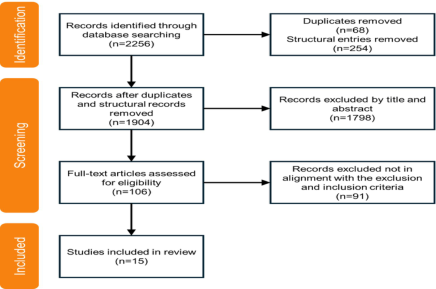
The database search yielded 2226 hits. Through a technical filtering process, 68 duplicate records and 254 structural entries (such as conference proceedings or tables of contents, which originated from the full-text search) were identified and removed. The remaining 1904 records underwent a screening process based on their titles and abstracts.
The inclusion and exclusion criteria for this study were carefully crafted to align with the research question, emphasizing the capture of tacit knowledge using LLMs or NLP techniques within the manufacturing industry. Critical to this selection was the focus on tacit knowledge predominantly held by employees, excluding knowledge designed for broader public or formal contexts. As such, the review prioritizes studies centred on internal corporate knowledge rather than public domain sources. The study targets investigation of tacit knowledge related to the operation of manufacturing machinery and processes, excluding studies on product design and creative processes. As the manufacturing sector also involves manual activities of the employees, the associated somatic, tacit knowledge is excluded, as well as studies on the generation of tacit knowledge from numerous data, e.g. machine learning algorithms based on sensory data from machines, as the review is focused on knowledge articulated in natural language and its integration with LLMs.
Studies with a broader focus are particularly excluded when the capture of implicit knowledge is not clearly addressed. In these cases, the technique of backward and forward citation searching was employed to identify additional relevant studies. Examples of such broader-focused studies include reference architectures or review articles.
Following this screening, the full texts of the remaining 106 papers were assessed. Of these, 15 studies met the criteria necessary to address the research question comprehensively. An overview of the process can be seen in Figure 1.
Figure 1: The PRISMA selection process for relevant literature.
RESULTS
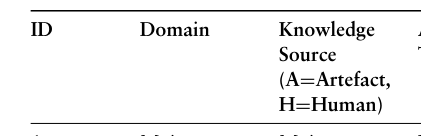
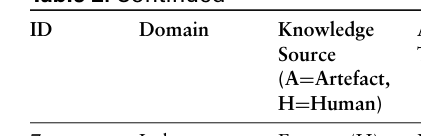
Table 1 summarises the Titles, Authors and Years of the selected studies that represent the foundations of this study. A review of the literature on the acquisition of tacit knowledge with LLMs in manufacturing reveals a variety of approaches. The knowledge acquisition approaches can essentially be divided into two main classes: Extraction und Elicitation. In this paper, the term extraction is defined as the process of extracting knowledge from artefacts (A) such as documents, maintenance reports or secondary sources. In contrast, the term elicitation is focussed on direct knowledge acquisition from human (H) employees (see Table 2). While extraction is focussed on the externalisation, elicitation is more in line with the principle of knowledge socialisation. The follow sections will provide a more detailed discussion of the relevant studies, while the focus is on elicitation. Table 2 reuses the IDs from Table 1 and provides an overview of the key concepts of the studies, highlighting the ‘Acquisition Technique’ column where LLMs provide support in the process of knowledge acquisition. The column ‘Framework’ describes, if the study provides a comprehensive framework for a potential practical implementation.
Table 1: Overview of the selected knowledge acquisition studies.
Table available in the original PDF paper.
ID Title Author Year
2022
1 Discovering critical KPI factors from natural language in maintenance work orders
Navinchandran, Sharp, Brundage, Sexton
2021
2 Network analytics and social BIM for managing project unstructured data
Aragao, El-Diraby
2024
3 Unlocking maintenance insights in industrial text through semantic search
Naqvi, Ghufran, Varnier, Nicod, Javed, Zerhouni
2016
Mourtzis, Doukas, Milas
4 A knowledge-based social networking app for collaborative problem-solving in manufacturing
2023
5 Harnessing Large Language Models for Cognitive Assistants in Factories
Kernan Freire, Foosherian, Wang, Niforatos
2024
Ogawa, Inoue, Uchihira
6 Enhancing Knowledge Sharing Workshops with Natural Language Processing in Maintenance Work
2022
7 Tacit knowledge elicitation process for industry 4.0
Fenoglio, Kazim, Latapie, Koshiyama
2022
8 A Space Conversational Agent for Retrieving Lessons-learned and Expert Training
Mihaylov, Vasile, Herd, Broughton- Stuart, Moshfeghi Continued
Large Language Models for Tacit Knowledge Elicitation in Industry 5.0: A Literature Review 41
Table 1: Continued ID Title Author Year
Table available in the original PDF paper.
2015
Alm, Aehnelt, Urban
9 Processing manufacturing knowledge with ontology-based annotations and cognitive architectures
2020
10 A Model for Capturing Tacit Knowledge in Enterprises
Soliman, Vanharanta
2019
11 An application for supporting the externalisation of expert knowledge
Dudek, Patalas- Maliszewska Lyu, Li, Chen 2022 12 Achieving Knowledge-as-a-Service in IIoT-driven smart manufacturing: A crowdsourcing-based continuous enrichment method for Industrial Knowledge Graph
2025
13 Procedural knowledge management in Industry 5.0: Challenges and opportunities for knowledge graphs
Celino, Carriero, Azzini, Baroni, Scrocca
2023
14 Tacit Knowledge Elicitation for Shop- floor Workers with an Intelligent Assistant
Kernan Freire, Wang, Ruiz-Arenas Niforatos Shen, Lin 2024 15 The Design of AI-Enabled Experience- Based Knowledge Management System to Facilitate Knowing and Doing in Communities of Practice
A major challenge with these methods is the lack of a clear definition of tacit knowledge and the absence of an underlying conceptual model. The use of textual and semantic analysis, as seen in studies by Navinchandran et al. (2022), Aragao and El-Diraby (2021), and Naqvi et al. (2024), demonstrates an attempt to extract tacit knowledge from documents, reports or even chats through NLP-based techniques. However, these approaches often ignore the fact that these knowledge artefacts were not originally created with the intention of sharing tacit knowledge, potentially leading to loss of context.
When employees are aware of the knowledge sharing process and the intended audience, knowledge transfer within organisational units should become more effective. Ogawa et al. (2024) illustrate this by retrieving relevant text snippets from a message database and using them as discussion prompts in workshops. While there is still a risk of decontextualisation, the interactive nature of these workshops allows for contextual reconstruction through collective discussion.
Another group of studies combines direct knowledge elicitation with structuring techniques to enhance knowledge transfer. For example, Dudek and Patalas-Maliszewska (2019) apply NLP techniques to analyse maintenance reports, where the social context of the knowledge is potentially preserved. However, structuring methods can introduce bias by enforcing rigid categorisations, as seen in the approaches of Soliman and Vanharanta (2020) and Mihaylov et al. (2022). Such techniques risk oversimplifying or
misrepresenting implicit knowledge by forcing it into predefined taxonomies rather than allowing it to emerge naturally.
One promising strategy is to increase the transparency of knowledge structuring processes. Alm et al. (2015) and Celino et al. (2025) integrate ontology-based approaches, in which employees classify knowledge elements using predefined categories. While ontologies provide a structured framework, their effectiveness depends on the stability of shared conceptual models in the social context. When there is consensus on terminology and relationships, these methods can facilitate meaningful knowledge transfer.
Several recent studies emphasise the importance of social contexts, terminology and conceptual structures. Fenoglio et al. (2022) present an innovative approach using role-playing scenarios based on the Turing Imitation Game, where knowledge emerges through interactions between different levels of expertise. While their study hints at ontology learning, its practical implementation remains an open question. Freire et al. (2023) take a different approach, using anomalies in manufacturing processes to trigger reflections facilitated by LLM-based agents. This approach provides a strong motivational factor for employees to engage with knowledge assistants, as real-world challenges serve as natural triggers for interaction and knowledge creation. The clearest focus on socialization is taken by Shen and Lin (2024), who propose the use of communities of practice (CoP) to support knowledge sharing through personal knowledge assistants. Their approach allows ontologies to be updated at both the individual and community levels, ensuring adaptability and contextual relevance. However, motivational challenges remain, suggesting that further research is needed to optimise engagement.
Table 2: Characteristics and key concepts of the selected knowledge acquisition studies.
Table available in the original PDF paper.
Framework
Acquisition Technique
Knowledge Target
Know-ledge Represen- tation
Equation reproduced from the original PDF.
No
NLP, Classification
Manager Classified Concepts
1 Maintenance Maintenance Work Orders (A)
No
2 Project Management
NLP, Blockmodeling
Future projects
Concept networks
Project documents (A), Chats (A)
Case Base No
3 Main- tenenace
Maintenance Reports (A)
Semantic Representation
Maintenance Operator Operator Database Yes
4 Manu- facturing
Operator (H) Similarity Search
No
5 Manu- facturing
Conversational User Interface
Worker Knowledge Graph
Workers (H), Issue Reports (A)
Yes
6 Workshop Maintenance Worker (H)
Maintenance Worker
Message Data Base
Discussion of NLP- selected Voice Messages
Continued
Large Language Models for Tacit Knowledge Elicitation in Industry 5.0: A Literature Review 43
Table 2: Continued
Table available in the original PDF paper.
Framework
Acquisition Technique
Knowledge Target
Know-ledge Represen- tation
Equation reproduced from the original PDF.
Yes
- Knowledge Graph
7 Industry Experts (H) Role Game with virtual expert
Yes
Future Employees
Knowledge Graph
8 Industry Experts (H) Chatbot with questioning techniques
Ontology No
9 Assembly Assembly Worker (H)
Assembly Worker
Classification of Annotations
- Database Yes
10 - Experts (H) Interview, Storytelling
No
11 Manu- facturing
Mechanic (H) Reports with NLP
Maintenance Worker
Process description Yes
12 Manu- facturing
All employees (H)
Crowd- sourcing
All employees Knowledge Graph Yes
13 Maintenance Maintenance Worker (H)
Web Form Maintenance Worker
Ontology/ Knowledge Graph No
14 Manu- facuturing
Operator (H) LLM-based Reflection
Operator Knowledge Graph Yes
15 Manu- facturing
Members of CoP (H)
Communities of practice
Personal Knowledge Assistant
Ontology/ Knowledge Graph
CONCLUSION
LLMs offer promising support for knowledge elicitation and are a useful enhancement to conventional knowledge elicitation methods. By understanding natural language, texts can be analysed, interpreted and classified.
The ability to interact directly with users when using LLMs as agents enables them to take on the role of an analyst for reflection as well as a virtual expert in role-playing games. In addition to these complementary capabilities, innovative solutions are also available that would not have been possible without LLMs, such as personal knowledge assistants. The possibility of interaction offers new ways of taking the social context into account when capturing knowledge to address motivational challenges. However, the flexibility of LLMs can conflict with rigid ontologies that interfere with the structuring of knowledge.
OUTLOOK This theoretical review reveals that there are still relatively few empirical studies on the feasibility of implementing LLMs in organisations. Developing concrete design recommendations for integrating LLMs into the knowledge capture process would be highly beneficial. In particular, understanding how the social context can be practically defined, preserved and expressed remains an important point for further research and may be crucial for the successful integration of LLMs into knowledge management systems and overcome
motivational challenges. One possible hypothesis is that the definition and the corresponding identification with a social context increases motivation to use LLM-based assistants to connect with shared knowledge. Various strategies could be explored to strengthen social context further for example through the common, potentially emotional, identification with the assistant. The use of personal ontologies also has significant potential, but a scalable and automated approach is essential.
These points offer a perspective towards human-centric knowledge assistants in manufacturing as an important contribution to the concept of Industry 5.0.
ACKNOWLEDGMENT
This work was supported by the German Ministry of Economic Affairs and Climate Action under grant 13IK026A.
REFERENCES
Alavi, Maryam/Leidner, Dorothy E. (2001). Review: Knowledge Management and Knowledge Management Systems: Conceptual Foundations and Research Issues. MIS Quarterly 25 (1), 107–136. https://doi.org/10.2307/3250961. Alm, Rebekka/Aehnelt, Mario/Urban, Bodo (2015). Processing manufacturing
knowledge with ontology-based annotations and cognitive architectures. In: Proceedings of the 15th International Conference on Knowledge Technologies and Data-Driven Business. New York, NY, USA, Association for Computing Machinery. Aragao, Rodrigo/El-Diraby, Tamer E. (2021). Network analytics and social BIM for managing project unstructured data. Automation in Construction 122, 103512. https://doi.org/10.1016/j.autcon.2020.103512. Brown, Tom B./Mann, Benjamin/Ryder, Nick/Subbiah, Melanie/Kaplan, Jared/
Dhariwal, Prafulla/Neelakantan, Arvind/Shyam, Pranav/Sastry, Girish/Askell, Amanda/Agarwal, Sandhini/Herbert-Voss, Ariel/Krueger, Gretchen/Henighan, Tom/Child, Rewon/Ramesh, Aditya/Ziegler, Daniel M./Wu, Jeffrey/Winter, Clemens/Hesse, Christopher/Chen, Mark/Sigler, Eric/Litwin, Mateusz/Gray, Scott/ Chess, Benjamin/Clark, Jack/Berner, Christopher/McCandlish, Sam/Radford, Alec/Sutskever, Ilya/Amodei, Dario (2020). Language models are few-shot learners. In: Proceedings of the 34th International Conference on Neural Information Processing Systems. Red Hook, NY, USA, Curran Associates Inc. Celino, Irene/Carriero, Valentina Anita/Azzini, Antonia/Baroni, Ilaria/Scrocca, Mario (2025). Procedural knowledge management in Industry 5.0: Challenges and opportunities for knowledge graphs. Journal of Web Semantics 84, 100850. https://doi.org/10.1016/j.websem.2024.100850. Collins, Harry (2010). Tacit and Explicit Knowledge. Chicago, University of Chicago
Press. Dudek, Adam/Patalas-Maliszewska, Justyna (2019). An Application for Supporting the Externalisation of Expert Knowledge. In: Jerzy ´Swia˛tek/Leszek Borzemski/ Zofia Wilimowska (Eds.). Information Systems Architecture and Technology: Proceedings of 39th International Conference on Information Systems Architecture and Technology – ISAT 2018, Cham, 2019. Cham, Springer International Publishing, 255–265.
Large Language Models for Tacit Knowledge Elicitation in Industry 5.0: A Literature Review 45
European Commission: Directorate-General for Research and Innovation/Breque, M./Nul, L. de/Petridis, A. (2021). Industry 5.0 – Towards a sustainable, human- centric and resilient European industry. Publications Office of the European Union. Fenoglio, Enzo/Kazim, Emre/Latapie, Hugo/Koshiyama, Adriano (2022). Tacit
knowledge elicitation process for industry 4.0. Discover Artificial Intelligence 2 (1), 6. https://doi.org/10.1007/s44163-022-00020-w. Freire, Samuel Kernan/Wang, Chaofan/Ruiz-Arenas, Santiago/Niforatos, Evangelos (2023). Tacit Knowledge Elicitation for Shop-floor Workers with an Intelligent Assistant. In: Extended Abstracts of the 2023 CHI Conference on Human Factors in Computing Systems. Hamburg, Germany, Association for Computing Machinery, Article 266. Gavrilova, Tatiana/Andreeva, Tatiana/Schiuma, Giovanni (2012). Knowledge elicitation techniques in a knowledge management context. Journal of Knowledge Management 16 (4), 523–537. https://doi.org/10.1108/13673271211246112 He, Xiaomei/Burger-Helmchen, Thierry (2024). Evolving Knowledge Management:
Artificial Intelligence and the Dynamics of Social Interactions. IEEE Engineering Management Review, 1–30. https://doi.org/10.1109/EMR.2024.3519342 Hörner, Lorenz/Schamberger, Markus/Bodendorf, Freimut (2020). Externalisierung von prozess-spezifischem Mitarbeiterwissen im Produktionsumfeld. Am Beispiel eines kontinuierlichen Fertigungsszenarios 115 (6), 413–417. https://doi.org/ 10.3139/104.112357 Luftensteiner, Sabrina/Chasparis, Georgios C./Mayr, Michael (2023). Gathering
Expert Knowledge in Process Industry. Procedia Computer Science 217, 960–968. https://doi.org/10.1016/j.procs.2022.12.293 Mihaylov, Dimitar/Vasile, Massimiliano/Herd, Andrew/Broughton-Stuart, Graye/ Moshfeghi, Yashar (2022). A Space Conversational Agent for Retrieving Lessons- learned and Expert Training. Mooradian, N. (2024). Is Knowledge Management (Finally) Extractive? – Fuller’s
Argument Revisited in the Age of AI. Interdisciplinary Journal of Information, Knowledge, and Management 19. https://doi.org/10.28945/5354 Naqvi, Syed Meesam Raza/Ghufran, Mohammad/Varnier, Christophe/Nicod, Jean- Marc/Javed, Kamran/Zerhouni, Noureddine (2024). Unlocking maintenance insights in industrial text through semantic search. Computers in Industry 157-158, 1–17. https://doi.org/10.1016/j.compind.2024.104083 Navinchandran, Madhusudanan/Sharp, Michael E./Brundage, Michael P./Sexton,
Thurston B. (2022). Discovering critical KPI factors from natural language in maintenance work orders. Journal of Intelligent Manufacturing 33 (6), 1859–1877. https://doi.org/10.1007/s10845-021-01772-5 Nonaka, lkujiro/Takeuchi, Hirotaka/Umemoto, Katsuhiro (1996). A theory of organizational knowledge creation. International Journal of Technology Management 11 (7-8), 833–845. https://doi.org/10.1504/IJTM.1996.025472 Ogawa, Riku/Inoue, Moritaro/Uchihira, Naoshi (2024). Enhancing Knowledge Sharing Workshops with Natural Language Processing in Maintenance Work. In: 2024 International Technical Conference on Circuits/Systems, Computers, and Communications (ITC-CSCC), 1–6. Page, Matthew J./McKenzie, Joanne E./Bossuyt, Patrick M./Boutron, Isabelle/
Hoffmann, Tammy C./Mulrow, Cynthia D./Shamseer, Larissa/Tetzlaff, Jennifer M./Akl, Elie A./Brennan, Sue E./Chou, Roger/Glanville, Julie/Grimshaw, Jeremy M./Hróbjartsson, Asbjørn/Lalu, Manoj M./Li, Tianjing/Loder, Elizabeth W./ Mayo-Wilson, Evan/McDonald, Steve/McGuinness, Luke A./Stewart, Lesley A./Thomas, James/Tricco, Andrea C./Welch, Vivian A./Whiting, Penny/Moher, David (2021). The PRISMA 2020 statement: an updated guideline for reporting systematic reviews. BMJ 372. https://doi.org/10.1136/bmj.n71
Polanyi, Michael (1966). The Tacit Dimension. University of Chicago. Radford, Alec/Narasimhan, Karthik (2018). Improving Language Understanding by Generative Pre-Training. In: Shen, Wen-Cheng/Lin, Fu-Ren (2024). The Design of AI-Enabled Experience-
Based Knowledge Management System to Facilitate Knowing and Doing in Communities of Practice. In: Lorna Uden/I-Hsien Ting (Eds.). Knowledge Management in Organisations, Cham, 2024. Cham, Springer Nature Switzerland, 292–303. Soliman, Yehya/Vanharanta, Hannu (2020). A Model for Capturing Tacit Knowledge in Enterprises. In: Jussi Ilari Kantola/Salman Nazir (Eds.). Advances in Human Factors, Business Management and Leadership, Cham, 2020. Cham, Springer International Publishing, 141–148. Spath, Dieter (2013). Produktionsarbeit der Zukunft - Industrie 4.0: Studie.
Stuttgart, Fraunhofer-Verl. Sumbal, Muhammad Saleem/Amber, Quratulain (2024). ChatGPT: A game changer for knowledge management in organizations. Kybernetes ahead-of-print (ahead- of-print). https://doi.org/10.1108/K-06-2023-1126 Vaswani, Ashish/Shazeer, Noam/Parmar, Niki/Uszkoreit, Jakob/Jones, Llion/Gomez,
Aidan N./Kaiser, ukasz/Polosukhin, Illia (2017). Attention is all you need. In: Proceedings of the 31st International Conference on Neural Information Processing Systems. Red Hook, NY, USA, Curran Associates Inc, 6000–6010. Xu, Xun/Lu, Yuqian/Vogel-Heuser, Birgit/Wang, Lihui (2021). Industry 4.0 and Industry 5.0—Inception, conception and perception. Journal of Manufacturing Systems 61, 530–535. https://doi.org/10.1016/j.jmsy.2021.10.006 Zhang, Xi/Liu, Ziyue/Cheng, Yihang/Wang, Xuyan/Wang, Zhe (2023). The Impact
of AIGC on Organizational Knowledge Creation: From the Perspective of Adaptive Structuration Theory. In: 2023 IEEE International Conference on Data Mining Workshops (ICDMW), 1469–1476.
LISTED IN THE AHFE DIGITAL BOOKSTORE CATALOGUE
Explore the complete digital volume
The Human Side of Service Engineering
Read this individual research paper free through the original publisher, or explore the full digital proceedings book.
ISBN 978-1-964867-58-8
Explore this ISBN in the AHFE Bookstore ↗Listed in the July 2026 bookstore catalogue; search by ISBN to confirm current availability · Digital book purchase optional