Silvia Albano, Gianmarco Longo (2025). Integrating Generative AI in Design Education: A Structured Approach to Client-Centered Interior Design Visualization. In: Human Interaction and Emerging Technologies (IHIET-AI 2025): Artificial Intelligence and Future Applications. AHFE Open Access, vol. 161, pp. 378–388. https://doi.org/10.54941/ahfe1005930
Generative AI (GAI) is reshaping the future of work in architecture by introducing innovative ways for humans to interact with technology, transforming the design process. In education, GAI offers students immersive environments for iterative exploration, enabling them to visualize, refine, and present design concepts more effectively. This paper investigates how GAI, through a structured framework, can enhance the learning of design tasks in elaborating interior design proposals, and preparing students for the evolving professional landscape. Drawing on the platform Midjourney, students explored concepts, material moodboards, and spatial compositions, simulating professional scenarios. Each student was assigned a real client and tasked with developing tailored design solutions, guided by client and tutor feedback. This approach demonstrates how GAI supports the development of future-oriented skills, directly linking education to the technological shifts in professional practice (Araya, 2019). The study adopts a practice-based methodology, documenting the outcomes of an interior design workshop where students employed GAI tools to develop client-specific proposals. Students engaged in role-playing, meeting their assigned clients face-to-face to gather requirements, acting as junior architects. They analyzed client feedback to inform the design phase, after which they used a structured framework for better using GAI to iteratively refine their proposals. By generating AI-assisted visualizations of spatial configurations and materials, students developed final design solutions that aligned with client expectations. Data from GAI iterations, client feedback, and tutor evaluations were used to assess how effectively AI tools contributed to producing professional-quality designs (Schwartz et al., 2022). Two research questions frame this investigation: (1) How does Generative AI enhance students' ability to create client-specific interior design solutions, from concept generation to final visualization, within a structured educational framework? (2) How does the integration of GAI tools impact the teaching of iterative design processes in architecture, particularly in preparing students for the future of work in the profession? The findings reveal that GAI significantly improved students' design outcomes by enabling them to visualize and refine their proposals based on real-world scenarios. GAI facilitated the exploration of current trends and supported the creation of material moodboards and space visualizations. The iterative nature of AI tools allowed students to better grasp the relationships between spatial configurations, design choices, and client needs. Their final proposals, incorporating AI-generated outputs, were praised for their conceptual clarity and technical precision, reflecting how AI-driven processes can transform traditional workflows (Burry, 2016). This study illustrates the transformative potential of GAI in architectural education, particularly in fostering dynamic human-technology interactions. By leveraging AI, students maintained control over outputs while transforming abstract concepts into client-ready designs. Moreover, the iterative feedback loop enabled by GAI promoted a more adaptive and responsive learning process, giving students real-time insights into their design decisions. These insights reflect broader changes in the future of work, where AI-driven tools will become integral to professional practice. Future research could explore expanding GAI’s role in more complex design stages, such as schematic design and development, building on the benefits observed in this study. References:Araya, D. (2019). Augmented Intelligence: Smart Systems and the Future of Work. Springer.Burry, M. (2016). The New Mathematics of Architecture. Thames & Hudson.Schwartz, J., Hatfield, S., & Monahan, K. (2022). Designing Work for a Generative Future: AI’s Role in Shaping Creative Professions. Deloitte Insights.
Generative AI (GAI) is increasingly redefining the way architects and designers conceptualize, develop, and communicate their work. Artificial intelligence is revolutionizing the architecture profession, empowering architects to enhance their design workflows. With the ability to rapidly generate concepts and visualize ideas, these systems facilitate personalized customization that meets clients’ unique needs, ultimately transforming how architectural projects are conceived and executed. AI Tools like Midjourney, Stable Diffusion and DALL-E, among the most popular, allow the creation of diverse design iterations, speeding up ideation and enhancing client communication. This technology supports iterative refinement, where designs are guided based on real-time client feedback, aligning more closely with client needs and expectations. GAI also assists with technical tasks, such as rendering and layout generation (more recently), combining
Integrating Generative AI in Design Education: A Structured Approach 379
creative and functional elements to explore new ideas, enhance workflow, and streamline the design process for greater efficiency. The architecture industry’s perspective on Generative AI (GAI) is a mix of positive and negative aspects; while it is recognized as a valuable tool, there’s also a belief that it poses disruptive challenges. On one hand, GAI offers significant benefits, particularly in enhancing visualization and facilitating client-centered design. For instance, Schwartz et al. (2022) describe how AI tools enable architects to rapidly generate and refine visuals, helping them respond more effectively to client feedback and achieve tailored solutions faster but without losing control in the majority of the cases. This capability is widely appreciated among professionals who see GAI as a means to streamline design processes and improve efficiency.
On the other hand, concerns persist regarding over-reliance on AI and the potential loss of human-centered design elements that are fundamental to architecture. Floridi and Chiriatti (2020) highlight ethical challenges related to GAI, including issues of data privacy, intellectual property, and the risk of AI-generated content overshadowing the unique, human-centric aspects of architectural design. These considerations emphasize the need for a balanced approach to AI adoption, where GAI complements architects’ expertise rather than replacing it. The general consensus is that GAI should add efficiency and broaden design possibilities without compromising the creative depth and professional competencies that architects bring to their work and social communities.
This research examines GAI’s role in design education, specifically focusing on client-centered interior design proposals, where the iterative nature of GAI helps students create visualizations and moodboards that align with real-world expectations (Floridi & Chiriatti, 2020). The integration of GAI into educational programs allows students to iteratively explore design solutions, apply client feedback, and refine their work within an organized framework, simulating the conditions of the professional world. Specifically, this application refers to an extra-curricular activity, a 4-days workshop, proposed to the students of a transnational university in China. This research investigates how GAI enhances the capacity of students to deliver tailored interior design proposals and prepares them for the technological shifts in design professions (Araya, 2019). The main aim of integrating GAI into architectural education is to prepare future architects who can balance the integration of AI tools into the design process with professional knowledge and competencies. By embedding GAI into an extra-curricula activity such as a workshop like in the presented case, students can gain practical experience with AI-enhanced workflows while retaining a foundation in core design skills (Schwartz et al., 2022).
Role-playing exercises and client-centered tasks simulate professional scenarios, strengthening students’ adaptability and responsiveness to client needs. This approach intends to prepares students to enter the professional career as adaptable, technologically skilled professionals who maintain a human-centered approach in an AI-driven industry.
380 Albano and Longo
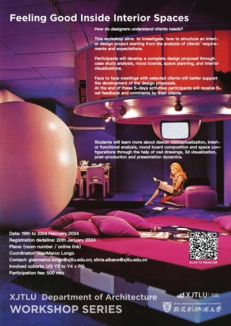
Figure 1: Workshop poster.
LITERATURE REVIEW
GAI in Design and Architecture GAI is rapidly reshaping the architectural and design professions, particularly in the realms of visualization, material exploration, and iterative design processes. Early research, such as Burry (2016), highlighted the potential of AI in enhancing design workflows by automating visualization tasks, enabling designers to generate multiple iterations and variations of concepts at unprecedented speeds. This is confirmed by Schwartz et al. (2022), who emphasize how GAI can accelerate the exploration of spatial configurations, allowing architects to test complex design ideas and refine them through iterative processes as inherent in the design process nature. In their study, GAI’s capacity for rapid prototyping and real-time feedback was central to enabling architects to adapt and optimize designs according to client needs.
A more recent study by Lippiello and Benassi (2023) further underscores GAI’s role in material exploration, where AI tools help architects experiment with novel material combinations and virtual simulations of environmental conditions without physical constraints. Additionally, GAI’s ability to generate high-quality visualizations facilitates better communication between architects and clients, ensuring that design proposals align with the client’s vision and expectations (McLean et al., 2023).
Moreover, the iterative design process, supported by GAI tools, fosters a continuous dialogue between architects and stakeholders, which is essential in responding to the evolving needs of the built environment. According to Li and Wang (2024), the feedback loops generated by GAI help to refine design proposals with real-time data, enhancing decision-making throughout the design lifecycle. This capability makes GAI a crucial tool in preparing students for the future of architectural practice, where the integration of AI- driven tools will increasingly define professional workflows.
In parallel, the integration of GAI into architectural pedagogy is also receiving growing attention. Research by Duffy and Munoz (2023) suggests that GAI tools can bridge the gap between design education and professional
Integrating Generative AI in Design Education: A Structured Approach 381
practice by providing students with a platform for experimenting with real-world client scenarios. This approach, as demonstrated in studies by Chen and Liu (2023), shows how AI can enhance students’ ability to conceptualize, iterate, and refine designs while adhering to professional standards, ultimately preparing them for the challenges of the future workplace.
Educational Applications of GAI The integration of Generative AI (GAI) in architectural education is gaining attention as a way to align academic practice with evolving professional standards. Araya (2019) highlights the importance of embedding AI into learning environments, suggesting that GAI prepares students for the future by developing skills that are integral to the profession. This is especially relevant for design students, as GAI’s iterative and immersive features allow for controlled experimentation within structured frameworks, enhancing both creativity and practical expertise. Sims and Hedberg (1995) discuss the concept of learner control in multimedia environments, which aligns with GAI’s capacity to provide students with greater autonomy in their design processes. By enabling students to iterate designs and make informed decisions, GAI fosters a deeper understanding of architectural principles. Further research by Duffy and Munoz (2023) also demonstrates how GAI tools in architectural pedagogy bridge the gap between theory and practice, encouraging experiential learning that reflects real-world professional challenges.
Client-Centered Design in Education Client-centered design is an essential focus in architectural and interior design education, preparing students to engage effectively with clients and respond to their needs. McNeil and Goodwin (2022) emphasize the importance of frameworks that prioritize client involvement in the design process, ensuring that students learn to tailor solutions to specific client requirements. This is crucial in fostering a professional mindset where students learn to balance creativity with client satisfaction. Reflective practice, as described by Schön (1983), is also integral to this approach, allowing students to critically assess their design decisions and refine them through iterative processes. This notion of continuous improvement is supported by AI tools, which can generate feedback loops that mirror real-world client interactions. Recent studies, such as those by McLean et al. (2023), demonstrate how generative AI (GAI) tools enable students to simulate client feedback more effectively, encouraging iterative design processes that enhance client engagement and the development of tailored solutions.
METHODOLOGY
Research Approach This study adopts a practice-based methodology to explore the integration of Generative AI (GAI) in interior design process. The approach combines
382 Albano and Longo
theoretical understanding with hands-on GAI applications in a controlled workshop setting, allowing for in-depth observation and data collection (Oxman, 2006). This methodology aligns with the growing body of research that emphasizes active learning and the development of practical design skills through iterative processes and client-centered design (Burry, 2016). Additionally, the research investigates how AI tools can act as collaborative partners in design, enabling students to refine their creative solutions within a professional context.
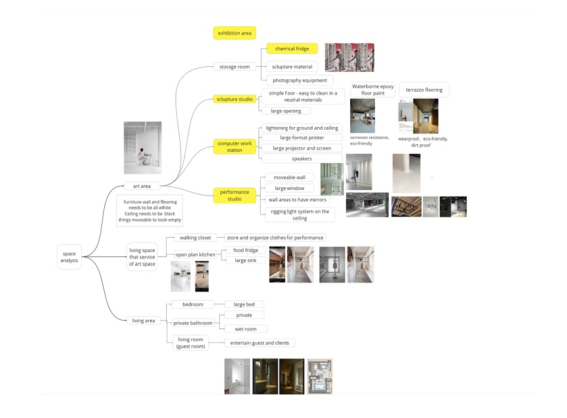
Workshop Structure The interior design workshop was presented to simulate real-world design environments. Each student was assigned a client with specific requirements and a profile, and students have to produce client-centered design solutions. Using Midjourney as the Generative AI (GAI) platform, students developed moodboards and visualizations that were iteratively refined through feedback from both clients and tutors (Dillenbourg, Schneider, & Synteta, 2002). Initiating the process, the research phase utilized the VLE platform Miro, which enabled students to systematically map and organize the information collected during client interactions.
Figure 2: Students’ miro mapping.
This mapping process was instrumental in helping students define the intervention strategies for their designs, offering a structured approach to translating client requirements into actionable design concepts. The integration of Miro facilitated a collaborative and visual method for synthesizing data, ensuring that students could effectively align their initial design ideas with the client’s needs and expectations.
This combination of AI visualization tools and collaborative mapping technologies supported a holistic design workflow, enhancing the students’
Integrating Generative AI in Design Education: A Structured Approach 383
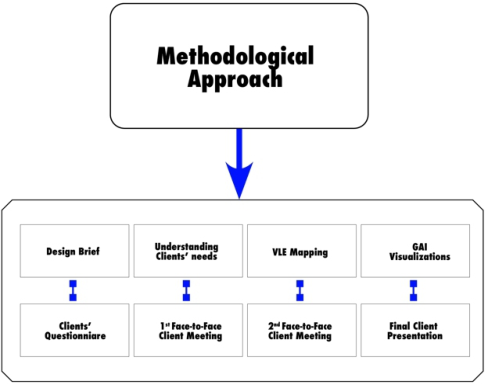
ability to develop refined, client-centered solutions that mirrored professional practice. The workshop was completed within a tight four-day timeline, a critical element that mirrors the time constraints of professional design work. The activities began engaging students with the theoretical framework and conducting an initial analysis of their assigned client’s profile. This analysis was based on data collected through a questionnaire shared before the workshop’s start. Using this data, students gained a comprehensive understanding of their client’s specific needs and preferences. This preparatory phase set the stage for an informative first meeting with the clients, during which students clarified expectations and gathered additional insights to inform their initial design proposals.
Following the first interaction, students developed their initial concepts, leveraging Generative AI (GAI) tools and mapping their strategies using the VLE platform Miro. A second client meeting allowed students to present their preliminary ideas and collect further feedback, which they used to refine their designs for the final presentation. The workshop’s accelerated timeline pushed students to produce focused, high-quality outcomes while adapting to iterative feedback in a simulated professional environment. This structure tested their ability to manage time pressure effectively, a crucial skill in real- world design scenarios, and demonstrated their capacity to deliver polished, client-centered solutions within tight deadlines.
Figure 3: Methodological approach diagram.
Data Collection and Assessment Framework Data was collected from multiple sources, including design iterations produced by students, client feedback sessions (pictures and written notes), and evaluations from tutors (tutorials as internal meeting). These data sources provided a robust basis for assessing the quality and responsiveness of student outputs. The analysis focused on how effectively GAI tools
384 Albano and Longo
contributed to producing professional-quality designs that met client expectations (Schwartz et al., 2022). To increase the reliability of the findings, pre- and post-workshop assessments were conducted to measure students’ knowledge and skill improvements in client-centered design and iterative processes. These assessments allowed the study to track progress and highlight any learning gains that resulted from the integration of GAI and serious gaming techniques.
The assessment framework involved a structured analysis of each phase of the student design process. Metrics included client satisfaction, alignment with client requirements, conceptual clarity, and technical precision in visualizations. Additionally, a key metric was the adaptability of students in incorporating feedback from both clients and tutors. This provided valuable insight into how effectively students utilized GAI in response to iterative feedback, a key tenet of the design process. The combination of client feedback, peer review, and tutor guidance fostered a holistic understanding of design practice that mirrors professional workflows, where iterative refinement is crucial (Schön, 1983).
Workshop Implementation Platform Utilization (Midjourney and VLE) Midjourney was selected as the primary Generative AI (GAI) platform for its advanced visualization capabilities, providing students with tools to transform analytical insights into compelling initial design concepts. The process began with the analysis of data collected through a pre- workshop questionnaire, which students mapped and organized using the VLE platform Miro. Miro allowed students to visually structure client profiles and expectations, facilitating a strategic approach to defining design interventions. This mapping phase ensured that students entered the design process with a clear understanding of their client’s needs and preferences.
Building on these insights, students utilized Midjourney to develop moodboards, explore material palettes, and visualize spatial layouts, iteratively refining their designs in response to client and tutor feedback. The combined use of Miro for organizing research and Midjourney for creative visualization enabled students to dynamically track and adjust the evolution of their concepts within the workshop’s compressed time frame (Woodbury, 2010). Despite the tight schedule, Midjourney’s generative capabilities, paired with Miro’s collaborative and analytical tools, enhanced students’ creative decision-making processes. This integration made students more agile and adaptive in addressing evolving client needs, fostering a professional approach to design problem-solving while maintaining conceptual clarity and technical precision.
Client Interaction Process A key component of this framework involved real client interactions. Students conducted interviews with their assigned clients to gather requirements and expectations, which informed each stage of the design process. This engagement simulated real-world workflows, where iterative
Integrating Generative AI in Design Education: A Structured Approach 385
feedback is central to achieving client satisfaction and professional design outcomes (McNeil & Goodwin, 2022). The time-limited nature of the workshop allowed students to test their adaptability and problem-solving abilities in the face of real-time client feedback. Incorporating serious gaming elements, such as role-playing and scenario-based simulations, encouraged students to engage in realistic client interactions, fostering critical thinking and decision-making under pressure (Abt, 1970; Michael & Chen, 2006).
Role-Playing and Tutor Feedback Students acted as junior architects, gathering insights from clients and implementing feedback in subsequent design iterations. Tutor feedback complemented the client interactions, providing guidance toward professionally viable solutions (like Design Directors in an architectural company). This dual feedback loop—combining client and tutor guidance— reinforced an adaptive and responsive design approach (Schön, 1983). Students demonstrated their ability to reflect on both client needs and design feasibility, fostering a deeper understanding of the dynamic relationship between design practice and client collaboration. The use of serious gaming techniques in this process enhanced student engagement and decision-making skills, as they were encouraged to take ownership of their designs while navigating professional challenges (Miah, 2024).
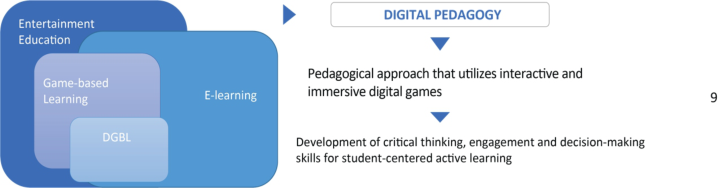
Figure 4: Reflection by Silvia Albano on “The relations between game-based learning and other educational concepts.” Reprinted from “Why so serious? on the relation of serious games and learning” by Breuer & Bente, 2010.
GAI Integration in Design Workflow The integration of GAI allowed for a streamlined design process where students used AI-generated visualizations to test and refine ideas. By iterating on material choices, spatial arrangements, and aesthetic elements, students developed increasingly accurate and personalized proposals that reflected the client’s initial specifications and responded to real-time feedback (Burry, 2016). The use of GAI tools enabled students to create professional-quality outputs in a compressed timeframe, while fostering creative autonomy. The iterative nature of the tool helped students better understand how their designs evolved in response to both the client’s needs and the technical demands of the profession. Additionally, the use of generative AI in design emphasized the growing role of AI-assisted decision-making in modern
386 Albano and Longo
architecture and interior design workflows providing a response to the current debate on going about the implementation of Generative AI (GAI) in the design process.
FINDINGS Improved Client-Specific Design Solutions
The integration of Generative AI (GAI) significantly enhanced students’ ability to produce design solutions that were finely tuned to meet client- specific needs. The workshop employed a structured framework that guided students through multiple phases of the design process, beginning with in- depth client engagement and continuing through iterative design refinement. Initially, each student was assigned a client profile with detailed requirements, including functional needs, aesthetic preferences, and contextual constraints. This was followed by an immersive client meeting where students collected feedback and clarified expectations—mimicking real-world architectural practice. Students then used the GAI platform, Midjourney, to generate moodboards, material palettes, and exploring a range of design solutions based on their understanding of the client’s vision (visualizations).
The iterative nature of the process, with ongoing client and tutor feedback, enabled students to refine their proposals at each stage. They could quickly test and adapt their designs using GAI-generated visualizations, ensuring their solutions remained closely aligned with client expectations. The structured framework allowed students to focus on translating theoretical concepts into practical, client-ready designs, ultimately resulting in final proposals that demonstrated a high degree of conceptual clarity and technical precision. This approach highlights the effectiveness of GAI in fostering a more dynamic, responsive, and client-centered design process (McNeil & Goodwin, 2022).
Enhanced Visualization and Refinement Capabilities Utilizing GAI tools, such as Midjourney, allowed students to explore design concepts visually, enabling iterative refinement based on real-time feedback. The dynamic nature of these tools deepened students’ understanding of how design choices influence spatial outcomes, leading to more nuanced and refined client-centered solutions. This iterative design process helped students engage in a deeper exploration of their concepts and facilitated a more holistic approach to design development (Floridi & Chiriatti, 2020).
Iterative Design Process Benefits The iterative process fostered by the GAI framework was a key factor in the refinement of student designs. By continuously revising their proposals in response to client and tutor feedback, students improved not only the technical quality of their designs but also their understanding of the relationship between client needs, design choices, and functional outcomes. This iterative approach reinforced the importance of refining ideas within structured feedback loops, which is central to the development of
Integrating Generative AI in Design Education: A Structured Approach 387
professional design skills (Sims & Hedberg, 1995) and represents an intense challenge in architecture education.
Tutor and Client Feedback on Final Designs Both client and tutor feedback validated the professional quality of the final designs. Students were able to produce client-ready designs characterized by conceptual clarity and technical accuracy. The successful integration of GAI tools in the design process underscored their potential to support students in producing real-world, high-quality design outcomes. This highlights the transformative role of GAI in shaping student competencies for professional practice (Schwartz et al., 2022).
CONCLUSION
This study has demonstrated the effectiveness of a structured Generative AI (GAI) framework in enhancing interior design tasks. The integration of GAI tools, such as Midjourney, allowed students to engage in a hands- on, iterative design process that closely mirrored professional architectural workflows. By embedding GAI within a structured, client-centered approach, students were able to produce refined, tailored design solutions that met client expectations, demonstrating the potential of AI to bridge the gap between academic learning and professional practice (McNeil & Goodwin, 2022). Furthermore, the iterative process facilitated by GAI empowered students to explore and refine spatial and material solutions based on real-time client feedback, thereby fostering a deeper understanding of client engagement and design responsiveness (Schwartz et al., 2022).
However, several limitations exist within the scope of this research. While the GAI-supported framework proved effective in producing high-quality, client-specific design outputs, the study was constrained by the short time frame of the workshop and the relatively simple design phases addressed. Future research could expand on this framework by incorporating more complex stages of design, such as schematic design and design development (Woodbury, 2010), to better understand how GAI can be utilized throughout the entire design process. Additionally, further studies could explore the scalability of GAI tools in larger project contexts or investigate the impact of AI integration on curricular activities such as studio modules, offering a broader perspective on AI’s role in architecture education. Challenges related to the alignment between AI-generated outputs and client expectations also warrant further exploration, as GAI tools are still developing in terms of accuracy and precision in complex design scenarios. Finally, research could investigate the pedagogical implications of GAI within collaborative environments, addressing how students interact with AI in group settings, potentially fostering enhanced team-based learning outcomes (Dillenbourg et al., 2002) and a more solid link for an application in the professional environment.
388 Albano and Longo
REFERENCES
Abt, C. C. (1970) Serious Games. Viking Press. Araya, D. (2019) ‘Artificial intelligence in the education system: Future proofing professions with smart systems’, Journal of Educational Technology, 32(1), pp. 12–29. Burry, M. (2016) Architectural design and generative design: A vision for the future.
Architectural Press. Chen, J. and Liu, Q. (2023) ‘Generative AI as a tool for architectural education: Bridging the gap between theory and practice’, International Journal of Architectural Education, 47(2), pp. 35–52. Dillenbourg, P., Schneider, D. and Synteta, P. (2002) ‘Virtual learning environments’, European Journal of Education and Technology, 1(1), pp. 1–10. Duffy, F. and Munoz, S. (2023) ‘Exploring the use of AI tools in architectural
pedagogy’, Journal of Architecture and Design Education, 18(1), pp. 10–22. Floridi, L. and Chiriatti, M. (2020) ‘GPT-3: Its nature, scope, limits, and consequences’, Minds and Machines, 30(4), pp. 681–694. Li, X. and Wang, Z. (2024) ‘The impact of generative AI on iterative design processes in architecture’, Journal of Architectural Technology, 16(4), pp. 72–89. Lippiello, A. and Benassi, L. (2023) ‘Generative AI and material exploration: A
sustainable approach to architectural design’, Designing with AI: Innovations in Architecture, 21(3), pp. 41–56. McLean, A., Robinson, J. and Zhang, Y. (2023) ‘Client-oriented design: How generative AI tools are improving communication in architectural practice’, Journal of Professional Practice in Architecture, 22(2), pp. 65–78. McNeil, M. and Goodwin, J. (2022) ‘Client-centered design frameworks in architectural education’, Journal of Interior Design Education, 19(2), pp. 88–101. Miah, A. (2024) ‘The role of educational technology in modern pedagogy: Bridging
theory and practice’, Educational Technology Review, 13(2), pp. 45–60. Michael, D. and Chen, S. (2006) Serious Games: Games That Educate, Train, and Inform. Thomson Course Technology. Oxman, R. (2006) ‘Theory and practice: The two sides of the educational coin’, Design Studies, 27(5), pp. 423–440. Schön, D. A. (1983) The reflective practitioner: How professionals think in action.
Basic Books. Schwartz, J., Hatfield, S. and Monahan, K. (2022) ‘Designing work for a generative future: AI’s role in shaping creative professions’, Deloitte Insights. Schwartz, L., Turner, R. and Wood, L. (2022) ‘Generative AI and its impact on
architectural practice’, Journal of Architecture and Technology, 15(3), pp. 45–61. Sims, R. and Hedberg, J. (1995) ‘Interactive multimedia learning environments: A conceptual framework’, Educational Technology Research and Development, 43(3), pp. 27–38. Woodbury, R. F., 2010. Generative design: A paradigm for design education. Design
Studies, 31(5), pp. 501–522.
LISTED IN THE AHFE DIGITAL BOOKSTORE CATALOGUE
Explore the complete digital volume
Human Interaction and Emerging Technologies (IHIET-AI 2025): Artificial Intelligence and Future Applications
Read this individual research paper free through the original publisher, or explore the full digital proceedings book.
ISBN 978-1-964867-37-3
Explore this ISBN in the AHFE Bookstore ↗Listed in the July 2026 bookstore catalogue; search by ISBN to confirm current availability · Digital book purchase optional