Jie Zheng, Fenghui Deng (2024). Interaction Design of a Center Navigation System for Female Drivers. In: Usability and User Experience. AHFE Open Access, vol. 156, pp. 246–254. https://doi.org/10.54941/ahfe1005435
The center-controlled navigation system of intelligent vehicles provides location-based information services for drivers, which is an important component in determining driving safety and driving experience. Currently, automobile center-controlled navigation systems are mostly based on male-preferred orientation strategies, ignoring the fact that female drivers are more inclined to path strategies, which raises the issue of differences in spatial cognitive ability between genders. Spatial cognitive ability, which refers to the cognitive process of locating a target in space, perceiving distance and direction relationships, and mentally changing an object's orientation based on its position or orientation in space, is an important factor in defining the effectiveness of navigation system services. Therefore, with the goal of solving young female drivers' difficulties in using navigation, this study firstly analyzes in-depth the characteristics of young female drivers' spatial cognitive abilities by using the wayfinding strategy scale, and extracts the differentiated pain points faced by young female drivers in using center-controlled navigation based on the oriented navigation task experiments and semi-structured interviews. After that, the information elements of intelligent vehicle center navigation interface for young female drivers are sorted out with case studies. Immediately following, based on the participatory design methodology, the study organized 20 subjects to conduct experiments on the design combination of interface information elements, according to which 20 sets of simulation prototypes were constructed using Protopie, and design experts were invited to evaluate the prototypes on a driving simulator, and an optimal set of solutions was generated based on the scoring calculation for usability testing. The results show that the optimal design scheme proposed in the study significantly improves the efficiency of navigation use as well as driving safety for young female drivers, and indirectly optimizes the driving experience of female drivers. Based on the problem of differences in spatial cognitive ability between genders, this study establishes a center navigation interface that meets the spatial cognitive ability of young female drivers. The study highlights the necessity of differentiated design of intelligent vehicles for different user groups, and provides new insights for promoting the diversity and inclusive development of technological innovation design.
Interaction Design of a Center Navigation System for Female Drivers 247
research issue in the field of automotive design. According to the 2022 China Women’s Automotive Consumption Insight Report, the “millennial gener- ation” of young female car users accounts for 85%, with strong market potential. They have a relatively higher demand for car networking services and have become the focus group of this study. Due to significant differ- ences in spatial cognitive abilities and driving attitudes between women and men, their usage behavior and needs in navigation systems also differ slightly. Although the navigation system adopts a universal design concept, it is gener- ally based on male cognition and aesthetics, resulting in conflicts with female spatial abilities and aesthetics. They are no longer able to meet the needs of women for navigation systems.
Therefore, it is necessary to investigate the spatial cognitive ability of female drivers and the pain points of using the central navigation system, and reflect their modifications in UI design. This study investigates the spatial cognitive characteristics and problem situations of female drivers, identifies their needs, and based on this, develops a navigation UI design that considers female drivers.Theoretical background.
LITERATURE REVIEW
Gender Differences in Spatial Cognitive Abilities The gender differences in spatial cognitive abilities are a focus of academic attention (Lawton, 1999), and the most commonly used research method is the Pathfinding Strategy Scale (Lawton, 1994), which includes two parts: directional strategy and route strategy. Many research results have shown that men are good at grasping the global map, adhere to directional strat- egy, rely on the relationship between objects (Munion, 2019), and often use direction (i.e. north, south, east, and west), while women generally adhere to path strategy, A self-centered strategy that relies on the spatial relationship between the body and objects (Chen, 2009), pays more attention to local fea- tures, and uses unique buildings (i.e. landmarks) near roads to find their way (Kawai, 2003). Although both strategies are the foundation of pathfinding, changing the path strategy that women adhere to is relatively difficult and requires considerable effort to rearrange and structure the changed results in order. In pathfinding, there are often situations where one gets lost or devi- ates from the path. Therefore, gender differences have emerged in navigation and pathfinding. This study constructs a questionnaire based on this scale to evaluate the pathfinding strategies of young women based on the theoretically advocated spatial cognitive differences between men and women.
Current Status of Research on the Interface of the Center Navigation System The centre navigation system is an automotive driving aid that helps drivers to reach their destinations smoothly. However, car navigation systems also have many problems when navigating, such as: the form of information presented on the navigation system does not meet the spatial cognitive ability of women can not reach their destinations smoothly and so on. Therefore, exploring
248 Zheng and Deng
the causes of such problems and solving them is the key to improving the navigation efficiency of car navigation systems.
Status of Literature Research on Women’s Use of Central Navigation System Interfaces According to the report, it is understood that 30% of women drive self- driving cars and, women use the centre navigation system more often than men because the information provided by the navigation system makes women calmer, less stressed and feel secure (Silber-Varod, 2019). And, when using the centre navigation system, they prefer to zoom in on the map to view the route information in detail (Lin, 2010). According to Lin P C’s experi- ment showed that female subjects, on the other hand, performed higher when using a 2D view interface. Meanwhile, using landmarks as auditory naviga- tion can make driving safer and more comfortable for women (Lin, 2013). As for how to search for information about the destination, wide and shal- low menu structure is better and preferred by female drivers than narrow and deep (Schoedel, 2018), Park K S experimentally indicated that on the results of lane changing, displaying the information directly on the road and high- lighting the path is the best method (Park, 2007). This will also make young female drivers feel more secure in using navigation on the way.
Center Navigation System Interface Case Study In this paper, we have selected a large number of central navigation systems on the market for information collation and found that: the main func- tional information content constituting the central navigation system includes four major categories: basic navigation functions, navigation aids, safety information, and entertainment information (see Table 1).
Table 1. Case study of visual image of anthropomorphic voice assistant (Zheng, 2024).
Table available in the original PDF paper.
Center Navigation System Function Information Basic Function Information Map Information Route Information Directions Search for destinations Scale Time WI-FI Satellite Signal Navigational aids Speed Year, month, day, week Weather Frequently Visited Places Estimated time of arrival
(Continued)
Interaction Design of a Center Navigation System for Female Drivers 249
Table 1. Continued Center Navigation System Function Information
Table available in the original PDF paper.
Road conditions Traffic light information Navigation Volume Adjustment Navigational Announcement Mode Map View safety information Speed Limit Reminder Speed camera reminder Speeding Alert Traffic light reminder Lane Change Alert Turn Alert Entertainment Information Group Travel Personalized Settings Neighborhood Information
USER RESEARCH A Study of Young Women’s Spatial Cognitive Abilities
The questionnaire (see Table 2) was based on Lawton’s revised Wayfinding Strategies Scale revised by (Fang and Zhou, 2012), which was used as a refer- ence questionnaire for the study. 138 young female drivers participated in the survey, and the participants were young female users who had a 2-year driv- ing licence and had driven an L2+ or higher level of self-driving car, and were between 23 and 33 years old, with the rest of the information being unre- stricted. The question options were expressed on a five-point Richter scale. A total sample size of 135 valid questionnaires was collected, while the reli- ability of the questionnaire data was statistically analysed using Cronbach’s Alpha coefficient, which was calculated by SPSS software to be α equal to 0.871, indicating that the validity of the questionnaire survey was high. The results are as follows: young female drivers preferred routing strategies, and in wayfinding and driving, women preferred to use left, right and landmarks for wayfinding than natural references and directional words. In other words, female users want to be told an easy way to go rather than a route.
Table 2. Pathfinding strategies scale (Fang and Zhou, 2012).
Table available in the original PDF paper.
Targeted strategy As I traveled, I would write down the route to my destination in four directions: east, south, west, and north. Before I leave, I’ll figure out which direction I should go further east, south, west, or north from a certain intersection or a certain landmark location As I traveled, I would note my position in relation to natural references such as the sun (moon) While traveling, I will make a note of the location of my current position in relation to the city center (e.g., my current position is on the South 3rd Ring Road). When I’m driving, I have a map or rough layout of where I’m going in my head (Continued)
250 Zheng and Deng
Table 2. Continued Paths strategy Before I leave, I will figure out if I should go left or right from a certain intersection or landmark when I arrive at that location Before I go, I’ll figure out how many intersections I have to go through before I make each turn. When I’m driving, I make a mental note of how many intersections I have to go through before I turn each corner. When I’m generally looking for a route, I’ll make a mental note of landmarks, buildings (museums, etc.), or natural landscapes (children’s parks, etc.) that I come across along the way.
Table available in the original PDF paper.
A Study of Young Female Drivers’ Navigation Task Behavior The author designed an experiment to study young female drivers’ use of a center-controlled navigation system to uncover pain points. The experiment observes and records the navigation behavior of 10 young female driver users and conducts interviews after the experiment. All subjects participating in the experiment were required to be between 23 and 33 years old, have obtained their driver’s licenses for more than 2 years, drive no less than 3 times per week, and have no traffic accidents in the past year.
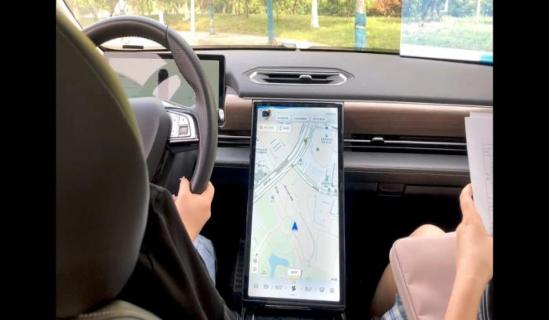
This experiment is divided into three phases: in the first phase, the use of Xiaopeng car navigation system is shown to the subjects before the start of the experiment, so that the subjects first understand and familiarise them- selves with the navigation interactive interface of Xiaopeng P5 car; in the second phase, the experiment starts, in the process of the experiment, there is a subject and a facilitator in the car, the facilitator sits on the co-pilot and reads a navigation task for the subject, and the subject performs the relevant operation according to the task(see Figure 1); in the third phase, semi-structured interviews are carried out, the facilitator conducts the inter- view with the subject to get to know and record the subject’s pain points of the use of the central navigation system during the navigation task, and the process is recorded with a video camera.
Interaction Design of a Center Navigation System for Female Drivers 251
Task Subtask Route planning Task 1: Entering the destination Task 2:Selecting a navigation route Task 3:Adding Waypoints Task 4:Change the navigation route Task 5:Searching for charging posts Information Reading access Task 6:Find out the remaining distance and estimated time of arrival Task 7:Understanding Driving Road Information Task 8:Understanding Lane Change Information Task 9:Understanding intersection turning information Task 10: Understanding route deviation warning messages Task 11:Understanding the warning information of speed limit or monitoring photos Operational control Task 12:Wake up the intelligent in-vehicle voice assistant Task 13:Setting the Navigation View Mode Task 14:Setting the Navigation Announcement Mode Task 15:Setting the volume of the navigation announcement Task 16:Turn off the navigation
Based on the above experiments and interviews, the needs of young women for center navigation systems were tapped. Under the integration (see Table 4), in conclusion, the use of the existing center navigation system invariably increases the fatigue and psychological burden of young female drivers.
Table 4. Integration of functional requirements (Zheng, 2023).
Table available in the original PDF paper.
Usage pain points/issues functional requirement Cumbersome display for complex road conditions Simplifies route information and displays important route information Lane change information display is not visible at the top of the centre screen
Display the main information of the category in the left-hand area All road information is displayed on the right side of the interface, which is hard to understand.
Placement of road condition information in the routes in different colours Tap on Settings to set the sound, mute needs to be tapped twice in different positions
Simplify the voice interaction process hierarchy and increase feedback Doesn’t understand the expression “start east” and “turn left after 200 metres”
In the interface and broadcast content, the words east, west, south, north and distance are cancelled, and descriptors such as landmarks, left and right, which are of interest to women, are added.
Participatory Design Study of a Centre Navigation System for Young Female Drivers The participatory design study mainly invited young female drivers to con- duct individual participatory design, and the study recorded the page layout and presentation of the central navigation system preferred by young female drivers. 20 young female drivers were invited to participate in the participa- tory design study, and the subjects were all required to be between the ages of 23 and 33 years old, to have obtained their driving licences for more than
252 Zheng and Deng
2 years, and to drive at least 3 times a week without having been involved in traffic accidents in the past year.
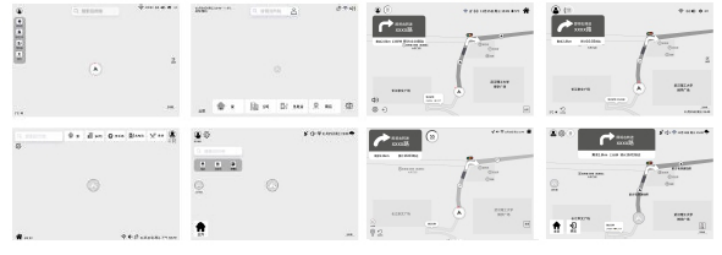
Figure 2: Part of the interface of the participatory design experiment (Zheng, 2023).
For this participatory design, 1920*1280 was chosen as the interface size. Based on the information known from the research, 338 design elements were created for the two interfaces for the participants to use, and each design element has its own interactive function, so that the participants can choose and combine the components to form a navigation home interface and a nav- igation centre interface (see Figure 2). Subsequently, based on the results of participatory design, the author searched for high-frequency commonalities to combine for reference in subsequent design schemes.
DESIGN PRACTICE Based on the design strategy constructed above, an interaction prototype was carried out. The interface style is chosen to be a diffuse gradient design style, combining text and graphics to produce an interface with day and night modes. Considering the specificity of the spatial cognitive ability of young female drivers, in the design scheme of this interface (see Figure 3), direction words such as east, west, south, and north do not appear, and the appearance of road names is reduced in the interface and broadcasting, and is replaced by left and right and landmarks. The layout of the navigation home screen puts the search bar and frequently visited places on the left area of the centre control screen, which shortens the operating distance to a certain extent, and cancels the scale and zoom buttons, so that you can use your fingers to zoom in and out with great flexibility.
Interaction Design of a Center Navigation System for Female Drivers 253
For complex roads such as viaducts, there is a button to switch; lane change information with light effect prompts, animation simulation and voice guid- ance three-pronged young female drivers to successfully complete the lane change. The volume adjustment button is advanced and placed on the top of the settings, clicking the button can slide the volume adjustment with vibration and sound feedback, and double-clicking the button can mute the navigation announcements.
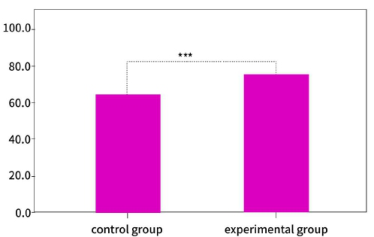
USABILITY TESTING Five female users were invited to carry out the above design programme evaluation, and the usability of the programme was tested on a driving simulator using Protopie, followed by filling in the SUS scale, and subse- quently analysed, and it was found that (see Figure 4) the experimental group (Mean = 78.71, SD = 8.999) was significantly higher than the control group (Mean = 62.26, SD = 13.14) in terms of the SUS system usability scale score (p = 0.000<0.05). This shows that the design solution significantly improves the usability of the central navigation system.
Figure 4: SUS availability results (Zheng, 2024).
CONCLUSION
This study was conducted to provide recommendations for navigation UI development guidelines and UI design recommendations that consider female spatial cognitive characteristics. As a result, guidelines for the development of navigation UI designs that address the difficulties posed by women’s spatial cognitive characteristics were drawn up, and UI design improvements were developed for map screen presentation and driving simulation, as well as for route setting. The proposed design concepts were presented as final design prototypes through paper prototype testing.
ACKNOWLEDGMENT
Thank you to my school and studio for supporting this research.
254 Zheng and Deng
REFERENCES
Chen, C. H., Chang, W. C., & Chang, W. T. (2009). Gender differencesin relation to wayfinding strategies, navigational support design, andwayfinding task difficulty. Journal of Environmental Psychology, 29, 220–226. Huicong Fang, Lin Zhou. The effect of gender, wayfinding strategy and navigational
support on wayfinding behaviour[J]. Acta Psychologica Sinica, 2012, 44(08): 1058–1065. Kawai, M.; Kawasumi, M.; Nakano, T.; Yamamoto, S. (2003). [IEEE IV2003 Intelligent Vehicles Symposium. Proceedings - Columbus, OH, USA (9–11 June 2003)] IEEE IV2003 Intelligent Vehicles Symposium. Proceedings (Cat. No. 03TH8683) - Displaying method in on-board display-route guidance method based on sex differences., 357–360. doi: 10.1109/IVS.2003.1212936. Lawton, C. A., and K. A. Morrin.1999. “Gender Differences in Pointing Accuracy in
Computer-Simulated 3D Mazes.” Sex Roles, 40, (1–2): 73–92. Lawton, C. A. (1994). Gender differences in way-finding strategies: Relationship to spatial ability and spatial anxiety. Sex Roles, 30, 765–779. Lin P C, Chien L W. The effects of gender differences on operational performance
and satisfaction with car navigation systems[J]. International journal of human- computer studies, 2010, 68(10): 777–787. Lin P C, Chen S I. The effects of gender differences on the usability of automotive onboard navigation systems–A comparison of 2D and 3D display[J]. Transportation research part F: traffic psychology and behaviour, 2013, 19: 40–51. Munion, A. K.; Stefanucci, J. K.; Rovira, E.; Squire, P.; Hendricks, M. Gender differ-
ences in spatial navigation: Characterizingwayfinding behaviors. Psychon. Bull. Rev. 2019, 26, 1933–1940. Park K S, Cho I H, Hong G B, et al. Disposition of information entities and adequate level of information presentation in an in-car augmented reality navigation system[C]//Human Interface and the Management of Information. Interacting in Information Environments: Symposium on Human Interface 2007, Held as Part of HCI International 2007, Bei**g, China, July 22–27, 2007, Proceedings, Part II. Springer Berlin Heidelberg, 2007: 1098–1108. Schoedel R, Hilbert S, Bühner M, et al. One way to guide them all: Wayfinding
strategies and the examination of gender-specific navigational instructions in a real-driving context[J]. Transportation research part F: Traffic psychology and behaviour, 2018, 58: 754–768. Silber-Varod V, Blau I, Lis-Hacohen R. Gender in Shared Navigation: Men to Mars, Women to Venus?[J]. Journal of Computer Information Systems, 2019, 59(2): 171–177.
LISTED IN THE AHFE DIGITAL BOOKSTORE CATALOGUE
Explore the complete digital volume
Usability and User Experience
Read this individual research paper free through the original publisher, or explore the full digital proceedings book.
ISBN 978-1-964867-32-8
Explore this ISBN in the AHFE Bookstore ↗Listed in the July 2026 bookstore catalogue; search by ISBN to confirm current availability · Digital book purchase optional