William Emond, Mohsen Zare (2024). The Potential of Haptic Motion Cueing to mitigate Motion Sickness in Highly Automated Passenger Cars. In: Human Factors and Systems Interaction. AHFE Open Access, vol. 154, pp. 218–228. https://doi.org/10.54941/ahfe1005369
The evolution of road vehicle towards high levels of automation is forecasted along with a higher prevalence of motion sickness on board such transportation systems. Experiencing such situations may precipitate concerns related to comfort, safety and trust, potentially compromising the overall acceptability of these vehicles among users. While prevalent in various modes of transportation, motion sickness is an intricate physiological reaction of the human body, likely to be caused by inconsistent perception of the motion forces, and a lack of postural stability. The use of haptic stimuli as sensory motion cues (“haptic cues”) should be underscored as an effective countermeasure. This approach offers the advantage of seamless integration with other mitigation techniques. Haptic cues also have virtues for helping in the estimation of self-motion in space and anticipation. Through a concise analysis of the prior research, this paper surveys the potential strategies and systems for the effective delivery of haptic cues to alleviate motion sickness in cars while considering the prerequisites associated with passenger comfort. The results show that vibrotactile and arthrokinetic signals can act as force-based haptic cues to mitigate motion sickness in cars. The provision of airflow, concurrently serving as a thermal cue, shows potential for motion sickness mitigation, but the exact underlying mechanisms remain unclear. Studies conducted in cars suggest that haptic stimulations can only be effective when congruent visual cues are provided. The different types of haptic systems are proffered for potential in-car integration, along with their respective operating principles to enhance perceptibility.
Experiencing kinetosis, better known as “motion sickness”, is a common phenomenon. Individuals feel its associated symptoms in many forms of transportation where they travel as passengers, with car journeys being the most frequent case (Turner and Griffin, 1999). Its most plausible cause is described by sensory rearrangements in response to a neural discrepancy between the expected and the real motion forces to be perceived (Reason, 1978). This conflicting situation may result into impaired strategies to sta- bilize the body, which have been shown to precede the onset of sickness symptoms (Riccio and Stoffregen, 1991; Stoffregen and Smart, 1998).
The Potential of Haptic Motion Cueing to Mitigate Motion Sickness 219
Human physical perception of motion is made by sensory integration of visual, vestibular and somatosensory signals, each transmitted to the brain by specific sensory receptors (Ernst and Banks, 2002). Other non-physical sensory cues such as auditory signals can help in better estimating spatial orientation. In one motion environment, all these sensory information help individuals to estimate self-motion and anticipate external forces from a moving environment (Table 1).
In car transportation, motion sickness is primarily caused by unpredictable and rough driving behaviour (Turner and Griffin, 1999), which passengers have difficulty anticipating and stabilizing their bodies against. With the increasing automation of vehicles, where drivers transition to the role of passengers, the likelihood of motion sickness is expected to rise, especially among habitual drivers (Diels, 2014; Sivak and Schoettle, 2015). This poses concerns for comfort, trust, and safety, leading to increased research efforts to find effective solutions for an application in highly automated vehicles (HAVs) (Diels et al., 2016).
Table 1. Sensory channels crucial for car passengers in perceiving self-motion and spatial orientation while experiencing vehicle dynamics (Bohrmann, 2022, p. 11).
Position X Velocity X (X) (X) Acceleration (X) X (X) X Angle X Angular velocity X X
BACKGROUND
Overview of Motion Sickness Mitigation in Cars Motion sickness remains a challenge without a universally proven coun- termeasure. While habituation is the most reliable solution, it may not be effective for everyone (Reason and Brand, 1975). To address this, ongo- ing research focuses on designing motion planning algorithms in HAVs to minimize the risk of motion sickness, aiming for trajectories that are both comfortable and predictable (Bellem et al., 2016; Elbanhawi et al., 2015). However, unpredictable vehicle movements and unavoidable low-frequency motions pose challenges, necessitating the integration of multiple mitigation techniques to enhance anticipation and postural stability for optimal motion sickness mitigation in cars.
Sensory motion cueing is a method used to alleviate motion sickness in cars by providing sensory signals that enhance an individual’s perception of their position and self-motion in relation to their surroundings. By improving these abilities, individuals can more accurately estimate present and future motion forces, reducing the chances of a sensory mismatch that could lead
220 Emond and Zare
to motion sickness symptoms. According to the multiple resource theory, the brain has the capacity to process various sensory motion cueing techniques simultaneously, given sufficient cognitive resources (Ernst and Banks, 2002; Wickens, 2008).
The ocular system’s crucial role in perceiving self-motion (Table I) under- scores the significance of visual motion cueing as an effective mitigation approach (Diels and Bos, 2021). However, the possible engagement of vehi- cle passengers in NDRAs may restrain their cognitive abilities to process these cues, and visual signals may not fully compensate for deficiencies in self-motion perception (Costes and Lécuyer, 2023). Auditory motion cue- ing is another sensory cueing method to enhance predictability on the future motion. Despite studies reporting encouraging results, auditory signals may be felt as intrusive while working, listening to music or chatting with other vehicle occupants (Diels and Bos, 2021). Conversely, some sensory cues, such as haptics, do not present the disadvantage of interference, making them a specific area of interest.
Haptic motion cueing, which involves delivering tactile, kinesthetic, or vestibular information, recently gained interest for its potential in enhancing perception and conveying anticipatory signals. Haptic signals have already been successfully used to provide car users with information about the vehi- cle’s states (Asif and Boll, 2010; van Erp and van Veen, 2001), and their integration with other sensory cues could greatly improve motion percep- tion. Such signals are processed faster than visual (Jordan, 1972) or auditory stimuli (Chang et al., 2011) and can cover a wider bandwidth of cueing information (Li and Chen, 2022). They can also be more emotional and per- sonal while being delivered in a silent and private way (Yusof, 2019, p. 141). Up to date, haptics have been poorly investigated as sensory motion cue- ing techniques to alleviate motion sickness in cars, leaving significant room for exploration (Dam and Jeon, 2021). In this perspective, the present paper aims to address this potential and explore the possibilities of integrating such techniques in HAVs.
The Potential of Haptic Motion Cueing Definition and Types of a Haptic Feedback The term “haptic” relates to the senses of tactile and kinesthetic perception (Costes and Lécuyer, 2023). Tactile senses are elicited by cutaneous stimula- tions to innervate the mechanoreceptors of the skin (e.g. vibrations or pulses applied on the skin) whereas kinesthetic senses encompass information on the velocity, acceleration and direction of motion from the sensory receptors of muscles, joint, limbs and tendons (McCloskey, 1978). Three different feed- back mechanisms of haptic can be distinguished: nerve-based, thermal-based and force-based (Huang et al., 2022).
Nerve-based feedback and thermal-based feedback are two types of hap- tic cueing strategies that have not been specifically studied for mitigating motion sickness in cars. While nerve-based feedback relies on electrical tran- scutaneous stimulations to induce tactile sensations (D’Anna et al., 2017), thermal-based feedback uses liquid circulation or thermoelectric stimulations
The Potential of Haptic Motion Cueing to Mitigate Motion Sickness 221
to generate heat transfers on the skin (Lee et al., 2020). The applicability of these cueing methods in vehicular contexts is yet to be tested, but it is worth noting that thermal feedback may help regulate body temperature, which is known to be affected by motion sickness (Nobel et al., 2012). On the other hand, a force-based feedback, such as tactile/vibrotactile stimuli and arthrokinetic stimuli (moving a body limb), has shown potential in enhancing both tactile and kinesthetic perception, with the advantage of being non- invasive and comfortable (Bos, 2015). Each force-based feedback system offers distinct advantages in alleviating motion sickness in cars.
Haptic Cueing Strategies Among the different types of haptic feedback, the authors distinguished four haptic cueing strategies that show potential to reduce motion sickness for car passengers. It is to notice that these strategies can apply for other sensory modalities as well.
Disrupt the physical perception of self-motion;
Enhance the physical perception of self-motion;
Increase predictability on the upcoming motion forces;
Minimize involuntary movement.
Disrupt the physical perception of self-motion: In this strategy, haptic cues are utilized to reduce the sensory discrepancy and introduce non-disturbing vibrations as ambient noise. Although the scientific explanation for its effec- tiveness is still lacking, it is hypothesized that this approach decreases the sensory mismatch, reduces the reliability of vestibular and proprioceptive modalities, and affects the overall perception of motion. Studies have shown that comfortable low-frequency vibrations on the head can significantly alle- viate sickness induced by rotations, and applying Bone Conducted Vibrations (BCV) to the head can delay symptom onset and mitigate sickness severity (Bos, 2015; Lucas et al., 2020; Salter et al., 2019; Weech et al., 2018). The effectiveness of this strategy may be enhanced by combining vibrations with sound signals, and the location of vibration plays a crucial role, considering the varying sensitivity of different body limbs to such stimuli.
Enhance the perception of self-motion: the startegy consists in using sen- sory signals to enhance one’s perception of self-motion. While not specifically tested in cars, numerous studies have shown the benefits of haptic feedback in virtual environments, where it facilitates the sensory illusion of self-motion (Amemiya et al., 2013; D’Amour et al., 2017; Weech and Troje, 2017). This illusion, known as vection, is considered a prerequisite for visually induced motion sickness. Vibrotactile devices are identified as suitable tools for implementing this strategy, as they can effectively stimulate the senses and contribute to alleviating symptoms of motion sickness (Kooijman et al., 2022). Increase predictability on the upcoming motion forces: This strategy involves using haptic feedback to enhance anticipation of present and future motion. Studies have shown that anticipatory haptic cues, experienced in both static and dynamic simulators, can lead to slightly lower sickness scores
222 Emond and Zare
and feelings of controllability (Li and Chen, 2022; van Veelen, 2022). How- ever, anticipation haptic signals did not significantly alleviate motion sickness in real-vehicle experiments (Tomzig et al., 2023; Yusof et al., 2020), suggest- ing that the effectiveness of this strategy may vary depending on the type of motion being cued.
Minimize involuntary movement: Postural instability has been theorized as a preceding condition to motion sickness (Stoffregen and Smart, 1998). In cars, stabilizing the head and better controlling body movements has been reported as an effective countermeasure (Bertolini and Straumann, 2016; Wada et al., 2012). To obtain such effects, some studies proposed limit- ing involuntary movements that are caused by the acceleration forces while exploring the use of arthrokinetic haptic cues, such as inflatable air bags in seat pans or moving plates in seat rests, to decrease head tilt and induce sickness reduction (Karjanto et al., 2021; Konno et al., 2011). Addition- ally, experiments in involving seat belt retractions before braking maneuvers found that despite inconclusive effects on motion sickness, such haptic sig- nals could enhance feelings of safety and trust in vehicle automation (Kremer et al., 2022; Tomzig et al., 2023).
These different possibilities of application demonstrate the potential of haptic motion cueing to elicit various perceptual phenomena (Costes and Lécuyer, 2023). This paper suggests that the wide application spectrum of haptic stimulations may be suitable to human’s complex perception mecha- nism, where other types of sensory cues may be limited in efficiency. Since the reviewed literature only mentions the use of force-based haptic signals or airflow to mitigate motion sickness, the next subsections aim to iden- tify the structures of a vehicle cockpits where such haptic systems could be implemented.
Structures for a Hardware Integration of Force-Based Haptic Motion Cueing Devices Inside Passenger Cars To successfully incorporate force-based haptic cues in cars, it is important to have continuous physical contact with the passenger’s body, regardless of their seating position or activity. This ensures accurate perception of the hap- tic cues. It is to notice that within the reviewed literature, tactile innervations were exclusively executed through a vibrotactile feedback. The influence of purely tactile stimulations remains an area yet to be thoroughly investigated.
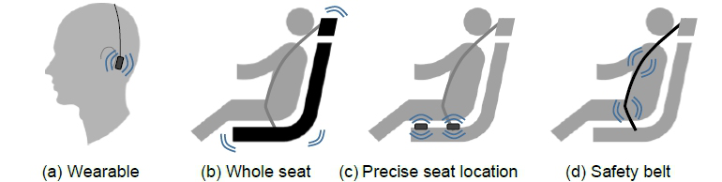
Figure 1: Different implementation possibilities of a force-based haptic system to mitigate motion sickness in cars.
The Potential of Haptic Motion Cueing to Mitigate Motion Sickness 223
The delivery of haptic motion cues through a wearable device could offer convenience by providing vibrations around the ear (Figure 1a) to disrupt the physical perception of motion (Bos, 2015). Another conceivable implementa- tion involves positioning such devices on inferior or superior body extremities to indicate directions of motion (Yusof et al., 2020). Nevertheless, it is crucial to acknowledge that wearable devices may be felt as invasive and exhausting unless they are integrated into a display that the user desires to wear (e.g. a VR-HMD1 for entertainment purposes).
Integrating haptic cues within the vehicle cockpit, such as the seat struc- ture, seat cushion, or seat belt, offers potential for enhancing the perception of self-motion and increasing predictability of upcoming motion forces. While vibrating the whole seat (Figure 1b) can stimulate abdominal sensory cells (Lucas et al., 2020), it may affect overall comfort and psychological factors. A more localized approach, focusing on the seat pan (Figure 1c) or seat- belt (Figure 1d), can provide less intrusive haptic feedback, while respectively targeting to improve the physical perception of motion and minimize invol- untary movement. The seat rest and headrest are also viable options, given their frequent contact with the passenger’s body, allowing for the replication of various aforementioned haptic cueing strategies. However, it is essential to note that the cues transmitted within these areas may be interpreted as more urgent than in other seat locations (Chang et al., 2011).
Table 2 shows the many different possibilities of providing vehicle occu- pants with permanent haptic feedback as a physical cue to decrease motion sickness while summarizing the different possibilities of force-based haptic stimulation, distinguished by the type of haptic system.
Table 2. Different types of haptic devices and signals studied for mitigating motion sickness.
Table available in the original PDF paper.
Type of haptic system Force-based haptic motion cueing Vibrotactile Arthrokinetic
Wearable additional device
Konno et al., 2011
Karjanto et al., 2021; Salter et al., 2019; Yusof et al., 2020 Actuators in the seat pan
Li and Chen, 2022; Reuten et al., 2023; Sawada et al., 2020; van Veelen, 2022 Bos, 2015 Karjanto et al., 2021
Actuators in the seat rest or in the head rest The whole seat D’Amour et al., 2017; Lucas et al., 2020 Seat belt actuators Kremer et al., 2022; Tomzig et al., 2023
1Virtual Reality Head-Mounted Display
224 Emond and Zare
Airflow as a Tactile or Thermal Haptic Feedback Although commonly reported as effective, the effectiveness of airflow on reducing motion sickness in cars has not been scientifically verified. Stud- ies have shown that airflow can have positive effects on reducing simulator sickness (D’Amour et al., 2017; Harrington et al., 2019; Paroz and Potter, 2021), regardless of whether the airflow is direct or indirect (Igoshina et al., 2022). However, there is no specific location requirement for implementing ventilation systems, as the influence of airflow is primarily related to how vehicle passengers perceive the stimuli on uncovered skin surfaces, such as the face and hands.
There is also uncertainty on which haptic cueing strategy can be attributed to airflow for mitigating motion sickness, as its exact influence on the allevi- ation of symptoms is yet unclear. While airflow can stimulate tactile sensors on the skin, it also serves as a thermal cue and can regulate body temperature. Airflow may not alleviate sickness by facilitating illusory self-motion on its own (Seno et al., 2011), and the study of Igoshina et al. (2022) suggests that the alleviation of symptoms is rather due to thermal than tactile stimulations. Yet, further evidence is needed to validate this hypothesis.
DISCUSSION
While some studies conducted in simulators show promising results, further research is needed to be conducted in real vehicles considering the limited transferability of findings from virtual to real motion environments (Talsma et al., 2023). It is also to notice that in the studies reporting positive outcomes, haptic signals were associated to visual effects within a motion simulation. This observation does not necessarily imply that the haptic signals would solely work for reducing motion sickness in cars. Examining the limited stud- ies carried out into real cars simulated as HAVs, we can notice that positive results were found when a forward view was available (Karjanto et al., 2021; Salter et al., 2019). Some simulator studies also reported haptic cues to be effective when supporting visual cues (Amemiya et al., 2013; Churan et al., 2017). Conversely, no effect was found when the subjects focused on NDRAs without visual cues on the vehicle’s motion (Tomzig et al., 2023; Yusof et al., 2020). These findings raise concerns about applicability of haptic cues in HAVs, where passengers would not necessarily focus on the road (Sivak and Schoettle, 2015).
The effectiveness of different strategies for mitigating motion sickness in real cars remains unclear. Studies investigating vibrotactile cues in real motion environments suggest their relative effectiveness, but the authors argue that their efficiency may vary under specific motion conditions (Reuten et al., 2023; Yusof et al., 2020). Further research is needed to explore the influ- ence of varying parameters of haptic feedback, such as location, pattern, frequency, amplitude, and signal timing, on human perception.
Apart from investigating which strategy is optimal, studying the best tradeoff between comfort and perceptibility should be also considered to ensure designing both efficient and user-friendly haptic cues. Additionally, it is imperative to understand the psychological impacts of such haptic sig- nals since individual feelings have great influence on the development of symptoms (McIntosh, 1998). Studying the learning and exhaustion effects
The Potential of Haptic Motion Cueing to Mitigate Motion Sickness 225
of haptic cues is also a necessary requirement for determining the long-term benefits of haptic cues during extended travel times and frequent usage.
CONCLUSION
The investigation of haptic motion cueing for mitigating motion sickness in cars has been insufficient, leaving uncertainty on its potential. This domain presents ample opportunities for research to explore the efficacy of inte- grating haptic systems that maintain continuous contact, thereby reducing the risk of a sensory mismatch. Further research should focus on validating the effectiveness of each related cueing strategy and studying their subjective impact before considering their industrial application.
ACKNOWLEDGMENT
The authors would like to acknowledge their research colleagues from the ELLIADD-ERCOS Laboratory and Mercedes-Benz AG for their support.
REFERENCES
Amemiya, T., Hirota, K., Ikei, Y., 2013. Tactile flow on seat pan modulates perceived forward velocity, in: 2013 IEEE Symposium on 3D User Interfaces (3DUI). Pre- sented at the 2013 IEEE Symposium on 3D User Interfaces (3DUI), IEEE, Orlando, FL, pp. 71–77. Asif, A., Boll, S., 2010. Where to turn my car?: comparison of a tactile display and a
conventional car navigation system under high load condition, in: Proceedings of the 2nd International Conference on Automotive User Interfaces and Interactive Vehicular Applications - AutomotiveUI’10. Presented at the the 2nd International Conference, ACM Press, Pittsburgh, Pennsylvania, p. 64. Bellem, H., Schönenberg, T., Krems, J. F., Schrauf, M., 2016. Objective metrics of comfort: Developing a driving style for highly automated vehicles. Transp. Res. Part F Traffic Psychol. Behav. 41, 45–54. Bertolini, G., Straumann, D., 2016. Moving in a Moving World: A Review on
Vestibular Motion Sickness. Front. Neurol. 7. Bohrmann, D., 2022. Motion Comfort: Physical-Geometric Optimization of the Vehicle Interior to Enable Non-Driving-Related Tasks in Automated Driving Sce- narios with the Focus on Motion Sickness Mitigation (PhD Thesis). TUM School of Engineering and Design, Munich, Germany. Bos, J. E., 2015. Less sickness with more motion and/or mental distraction. J. Vestib.
Res. 25, 23–33. Chang, W., Hwang, W., Ji, Y. G., 2011. Haptic Seat Interfaces for Driver Information and Warning Systems. Int. J. Hum.-Comput. Interact. 27, 1119–1132. Churan, J., Paul, J., Klingenhoefer, S., Bremmer, F., 2017. Integration of visual and
tactile information in reproduction of traveled distance. J. Neurophysiol. 118, 1650–1663. Costes, A., Lécuyer, A., 2023. Inducing Self-Motion Sensations With Haptic Feedback: State-of-The-Art and Perspectives on “Haptic Motion.”IEEE Trans. Haptics 16, 171–181. Dam, A., Jeon, M., 2021. A Review of Motion Sickness in Automated Vehicles,
in: 13th International Conference on Automotive User Interfaces and Interac- tive Vehicular Applications. Presented at the AutomotiveUI’21: 13th International Conference on Automotive User Interfaces and Interactive Vehicular Applications, ACM, Leeds, United Kingdom, pp. 39–48.
226 Emond and Zare
D’Amour, S., Bos, J. E., Keshavarz, B., 2017. The efficacy of airflow and seat vibration on reducing visually induced motion sickness. Exp. Brain Res. 235, 2811–2820. D’Anna, E., Petrini, F. M., Artoni, F., Popovic, I., Simani´c, I., Raspopovic, S., Micera,
S., 2017. A somatotopic bidirectional hand prosthesis with transcutaneous elec- trical nerve stimulation based sensory feedback. Sci. Rep. 7, 10930. Diels, C., 2014. Will autonomous vehicles make us sick?, in: Sharples, S., Shorrock, S.
(Eds.), Contemporary Ergonomics and Human Factors 2014. Taylor and Francis, Southampton, United Kingdom, pp. 301–307. Diels, C., Bos, J., 2021. Great Expectations: On the Design of Predictive Motion Cues to Alleviate Carsickness, in: Krömker, H. (Ed.), HCI in Mobility, Transport, and Automotive Systems, Lecture Notes in Computer Science. Springer International Publishing, Cham, pp. 240–251. Diels, C., Bos, J. E., Hottelart, K., Reilhac, P., 2016. Motion Sickness in Automated
Vehicles: The Elephant in the Room, in: Meyer, G., Beiker, S. (Eds.), Road Vehi- cle Automation 3, Lecture Notes in Mobility. Springer International Publishing, Cham, pp. 121–129. Elbanhawi, M., Simic, M., Jazar, R., 2015. In the Passenger Seat: Investigating Ride Comfort Measures in Autonomous Cars. IEEE Intell. Transp. Syst. Mag. 7, 4–17. Ernst, M. O., Banks, M. S., 2002. Humans integrate visual and haptic information
in a statistically optimal fashion. Nature 415, 429–433. Harrington, J., Williams, B., Headleand, C., 2019. A Somatic Approach to Combating Cybersickness Utilising Airflow Feedback. Comput. Graph. Vis. Comput. CGVC 9 pages. Huang, Y., Yao, K., Li, J., Li, D., Jia, H., Liu, Y., Yiu, C. K., Park, W., Yu, X., 2022.
Recent advances in multi-mode haptic feedback technologies towards wearable interfaces. Mater. Today Phys. 22, 100602. Igoshina, E., Russo, F. A., Haycock, B., Keshavarz, B., 2022. Comparing the Effect of Airflow Direction on Simulator Sickness and User Comfort in a High- Fidelity Driving Simulator, in: Chen, J. Y. C., Fragomeni, G. (Eds.), Virtual, Augmented and Mixed Reality: Applications in Education, Aviation and Indus- try, Lecture Notes in Computer Science. Springer International Publishing, Cham, pp. 208–220. Jordan, T. C., 1972. Characteristics of Visual and Proprioceptive Response Times in
the Learning of a Motor Skill. Q. J. Exp. Psychol. 24, 536–543. Karjanto, J., Yusof, N. M., Hassan, M. Z., Terken, J., Delbressine, F., Rauterberg, M., 2021. An On-Road Study in Mitigating Motion Sickness When Reading in Automated Driving. J. Hunan Univ. Nat. Sci. 48. Konno, H., Fujisawa, S., Wada, T., Doi, S., 2011. Analysis of motion sensation of car
drivers and its application to posture control device, in: SICE Annual Conference 2011. Presented at the SICE Annual Conference 2011, pp. 192–197. Kooijman, L., Asadi, H., Mohamed, S., Nahavandi, S., 2022. A systematic review and meta-analysis on the use of tactile stimulation in vection research. Atten. Percept. Psychophys. 84, 300–320. Kremer, C., Tomzig, M., Merkel, N., Neukum, A., 2022. Using Active Seat
Belt Retractions to Mitigate Motion Sickness in Automated Driving. Vehicles 4, 825–842. Lee, J., Sul, H., Lee, W., Pyun, K. R., Ha, I., Kim, D., Park, H., Eom, H., Yoon, Y., Jung, J., Lee, D., Ko, S. H., 2020. Stretchable Skin-Like Cooling/Heating Device for Reconstruction of Artificial Thermal Sensation in Virtual Reality. Adv. Funct. Mater. 30, 1909171.
The Potential of Haptic Motion Cueing to Mitigate Motion Sickness 227
Li, D., Chen, L., 2022. Mitigating Motion Sickness in Automated Vehicles with Vibration Cue System (preprint). Lucas, G., Kemeny, A., Paillot, D., Colombet, F., 2020. A simulation sickness study
on a driving simulator equipped with a vibration platform. Transp. Res. Part F Traffic Psychol. Behav. 68, 15–22. McCloskey, D. I., 1978. Kinesthetic sensibility. Physiol. Rev. 58, 763–820. McIntosh, I. B., 1998. Motion sickness–questions and answers. J. Travel Med. 5, 89–91. Nobel, G., Tribukait, A., Mekjavic, I. B., Eiken, O., 2012. Effects of motion sickness
on thermoregulatory responses in a thermoneutral air environment. Eur. J. Appl. Physiol. 112, 1717–1723 Paroz, A., Potter, L. E., 2021. Investigating External Airflow and Reduced Room Temperature to Reduce Virtual Reality Sickness, in: 33rd Australian Conference on Human-Computer Interaction. Presented at the OzCHI’21: 33rd Australian Conference on Human-Computer Interaction, ACM, Melbourne VIC Australia, pp. 198–207. Reason, J. T., 1978. Motion Sickness Adaptation: A Neural Mismatch Model. J. R.
Soc. Med. 71, 819–829. Reason, J. T., Brand, J. J., 1975. Motion sickness, Motion sickness. Academic Press, Oxford, England. Reuten, A. J. C., Smeets, J. B. J., Rausch, J., Martens, M. H., Schmidt, E. A., Bos, J. E.,
2023. The (in) effectiveness of anticipatory vibrotactile cues in mitigating motion sickness. Exp. Brain Res. Riccio, G. E., Stoffregen, T. A., 1991. An ecological Theory of Motion Sickness and Postural Instability. Ecol. Psychol. 3, 195–240. Salter, S., Diels, C., Kanarachos, S., Thake, D., Herriotts, P., Depireux, D. A.,
2019. Increased bone conducted vibration reduces motion sickness in automated vehicles. Int. J. Hum. Factors Ergon. 6, 299. Sawada, Y., Itaguchi, Y., Hayashi, M., Aigo, K., Miyagi, T., Miki, M., Kimura, T., Miyazaki, M., 2020. Effects of synchronised engine sound and vibration presentation on visually induced motion sickness. Sci. Rep. 10, 7553. Seno, T., Ogawa, M., Ito, H., Sunaga, S., 2011. Consistent Air Flow to the Face
Facilitates Vection. Perception 40, 1237–1240. Sivak, M., Schoettle, B., 2015. Motion sickness in self-driving vehicles (Technical Report). University of Michigan, Ann Arbor, Transportation Research Institute. Stoffregen, T. A., Smart, L. J., 1998. Postural instability precedes motion sickness.
Brain Res. Bull. 47, 437–448. Talsma, T. M. W., Hassanain, O., Happee, R., De Winkel, K. N., 2023. Validation of a moving base driving simulator for motion sickness research. Appl. Ergon. 106, 103897. Tomzig, M., Schoemig, N., Wehner, T., Marberger, C., Otto, H., Schulz, M., Kenar,
E., Schultz, A., 2023. How to Make Reading in Fully Automated Vehicles a Better Experience? Effects of Active Seat Belt Retractions and a 2-Step Driving Profile on Subjective Motion Sickness, Ride Comfort and Acceptance, in: Proceedings of the 15th International Conference on Automotive User Interfaces and Interactive Vehicular Applications. Presented at the AutomotiveUI ‘23: 15th International Conference on Automotive User Interfaces and Interactive Vehicular Applications, ACM, Ingolstadt Germany, pp. 11–21. Turner, M., Griffin, M. J., 1999. Motion sickness in public road transport: passenger behaviour and susceptibility. Ergonomics 42, 444–461.
228 Emond and Zare
van Erp, J. B. F., van Veen, H. A. H. C., 2001. Vibro-tactile information presentation in automobiles. Proc. Eurohaptics 99–104. van Veelen, P., 2022. Vibrotactile feedforward displays to reduce motion sickness for
rear-facing passengers; a VR study. Wada, T., Konno, H., Fujisawa, S., Doi, S., 2012. Can Passengers’ Active Head Tilt Decrease the Severity of Carsickness?: Effect of Head Tilt on Severity of Motion Sickness in a Lateral Acceleration Environment. Hum. Factors J. Hum. Factors Ergon. Soc. 54, 226–234. Weech, S., Moon, J., Troje, N. F., 2018. Influence of bone-conducted vibration on
simulator sickness in virtual reality. PLOS ONE 13, e0194137. Weech, S., Troje, N. F., 2017. Vection Latency Is Reduced by Bone-Conducted Vibration and Noisy Galvanic Vestibular Stimulation. Multisensory Res. 30, 65–90. Wickens, C. D., 2008. Multiple Resources and Mental Workload. Hum. Factors J.
Hum. Factors Ergon. Soc. 50, 449–455. Yusof, N. Md., 2019. Comfort in autonomous car: mitigating motion sickness by enhancing situation awareness through haptic displays (PhD Thesis). Technische Universiteit Eindhoven, Eindhoven. Yusof, N. Md., Karjanto, J., Terken, J. M. B., Delbressine, F. L. M., Rauterberg,
G. W. M., 2020. Gaining Situation Awareness through a Vibrotactile Display to Mitigate Motion Sickness in Fully-Automated Driving Cars. Int. J. Automot. Mech. Eng. 17, 7771–7783.
LISTED IN THE AHFE DIGITAL BOOKSTORE CATALOGUE
Explore the complete digital volume
Human Factors and Systems Interaction
Read this individual research paper free through the original publisher, or explore the full digital proceedings book.
ISBN 978-1-964867-30-4
Explore this ISBN in the AHFE Bookstore ↗Listed in the July 2026 bookstore catalogue; search by ISBN to confirm current availability · Digital book purchase optional