WALDEMAR BOBER, Barbara Gronostajska (2023). Shaping a device for Anti-viral disinfection and checking health of people moving in public space. In: Emerging Technologies in Healthcare and Medicine. AHFE Open Access, vol. 116, pp. 36–45. https://doi.org/10.54941/ahfe1004355
The main goal of the project is to develop a product innovation consisting in the implementation of a new type of disinfection device that combines functionality with the ability to monitor health and detect potentially infected people. The de-signed device for virucidal disinfection, together with monitoring the health of us-ers in public spaces, is part of the strategy of preventive measures to limit the spread of the pandemic, with particular emphasis on the SARS-CoV-2 virus. The device is intended to improve the safety of the public in epidemiological threats, as well as a long-term strategy to protect and counteract subsequent waves of pandemics and other, so far unrecognized viruses. For the needs of the research task, the concepts of the device varied in terms of size and ergonomics were de-signed. Initial analyzes concerned solutions based on a prism structure in an or-thogonal system. For the above solutions, 1:1 scale test benches have been pre-pared in order to conduct advanced ergonomic, functional and accessibility anal-yses. In order to carry out preliminary spatial and functional analyzes of the sup-port, 2D and 3D tests were carried out using simplified human models containing anthropometric data. Percentile models of women and men of European descent were used. In addition, accessibility variants for the reach of the arms of a person moving in a wheelchair were examined in terms of the assumptions of universal design. As a result of ergonomic analyses, the distribution of components in the space of the shaped device was assumed.For irregular shapes of the device housing, it is required to test the rod elements of the internal structure, which builds the device's rigidity. Parametric shaping of bar systems requires the implementation of tools useful in mastering the geometry of chaotic structures. One of the more practical methods is the Contracting meth-od taken from topological graph theory. This action, on the one hand, reduces the number of structure nodes, and on the other hand, has ordering properties in the space of geometric irregular structures. The use of the contracting method should not lead to a reduction in the role of the designer, who should maintain a direct impact on the aesthetics and technical parameters of the created structure at every design stage. An important problem to be solved is the scaling of the density of the device's frame in terms of technology and optimization of material consump-tion. In order to assess the stiffness of the device housing, tests were carried out on models composed of stainless steel bars connected to the housing sheets. Due to the location of the device in an open public space, the resistance of the device to accidental dynamic impacts was tested.
The main goal of the project is to develop a product innovation consisting in the implementation of a new type of disinfection device, ensuring a com- bination of new functionality on a national and global scale with the ability to monitor health and detect potentially infected people. The project will
Shaping a Device for Anti-Viral Disinfection and Checking Health of People Moving 37
also include a new technology in the form of an automated station for pre- cise cutting of materials using a fiber laser with variable beam modulation. As part of the project, material, structural and microscopic tests were car- ried out in order to obtain knowledge about the bactericidal and virucidal properties of the materials used. Industrial research was also carried out to develop a safe method of disinfecting personal items and increasing the effec- tiveness of hand disinfection. Strength tests and FEM numerical simulations were also carried out, which will be used to design a resistant frame and hous- ing that will ensure insulation and protection of sensitive internal elements (protection level min. IP55). Both solutions will be used during the planned development works to integrate individual components and demonstrate the final form of the device. The achieved results will be implemented in the met- alwork company’s own production, and the main recipients will be domestic and European managers of buildings and public utility facilities intended for organizing mass events (e.g., stadiums, sports fields).
SHAPING FORMS In the research work, 2D and 3D analyzes of curvilinear variants of the device housings were carried out. Curved surfaces are one form of experimentation in design. They are part of the search for optimization in the field of min- imizing the form and adapting it to economic and ergonomic assumptions. Nowadays, 2D and 3D drawing technologies have provided the possibility of more efficient drawing of curvilinear shapes, e.g., thanks to the NURBS surfaces used in modeling. NURBS curves (Non-Uniform Rational B-Splines) are a generalized name for most b-splines that consist of fragments of Bézier curves. The shape of a NURBS curve is made up of control points, nodes, con- trol point weights, and polynomial degree. Today, NURBS curves are being used more and more by engineers to optimize surfaces and create bent forms that simulate natural shapes.
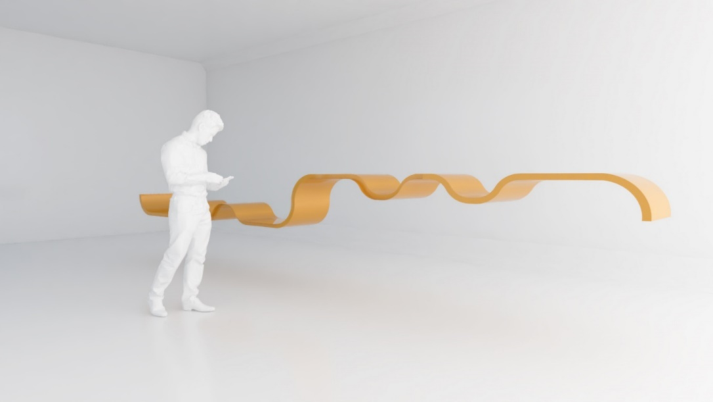
Shaping the Housing of the Integrated Device In the research on shaping the housing of the integrated device for virucidal disinfection, 3D analyzes of curvilinear surfaces were carried out, including solutions based on NURBS curves. The shape of the Möbius strip was ide- ologically analyzed as a starting point. The Möbius strip is an example of transferring the mathematical language to geometric solutions. As a shape, it has a very unique inventive potential. Thanks to the advanced level of dig- ital and engineering technology, it can be reinterpreted into a construction language.
In the structural studies regarding the preparation of 3D models of the housing for the integrated device for virucidal disinfection, the starting point was also the analysis of the possibility of drawing NURBS curves and the idea of the Möbius band as a starting point. Due to the technological possibilities, an attempt was made to reduce the skeleton substructure in favor of curved, bent shell elements, which would constitute a structural element cooperating with the skeleton.
38 Waldemar and Barbara
Determining the discretization of material surface bends is essential for the correct design of curved surfaces. The bending radius influences the continuity of the designed elastic material of the coating.
Figure 1: Ideological representation of a curvilinear shape based on the idea of a Mobius band.
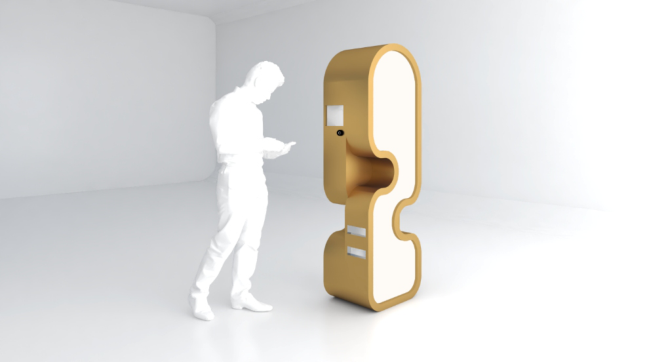
The shape in the abstract system was the starting point for the study of curvilinear elements constituting a housing enclosed in curvilinear surfaces. In addition, blinds with the possibility of revision have been introduced on the sides of the device. Additional side protections of the housing can be illuminated plane or line, which will enable better identification of the device in public space.
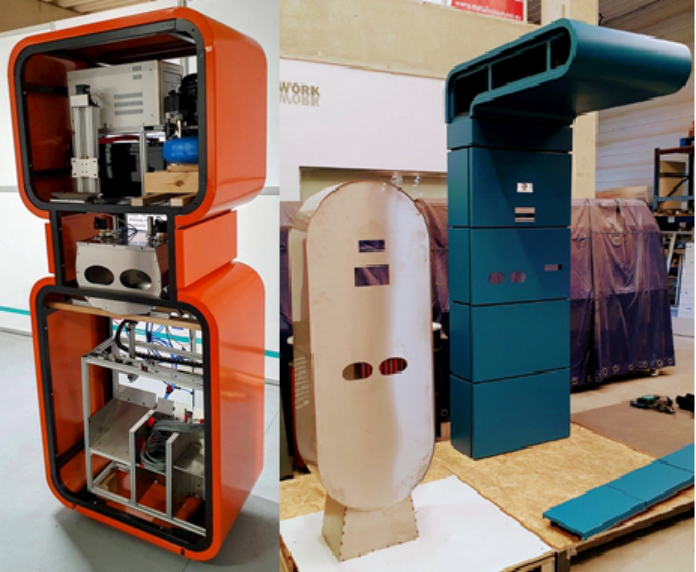
Figure 2: An exemplary housing variant as a modular element.
The Individual modules have been tested in terms of construction and ergonomics in order to be able to rotate the module by 180
, which will
Shaping a Device for Anti-Viral Disinfection and Checking Health of People Moving 39
ensure flexibility in setting individual elements and freedom in shaping the housing. Accessibility to the device for people with different fitness and oper- ating height was also checked. Percentile models of women and men of European descent were used. In addition, accessibility variants for the reach of the arms of a person moving in a wheelchair were examined in terms of the assumptions of universal design.
EQUIPMENT ELEMENTS The designed device has been equipped with a fogging chamber with hand disinfectant liquid, a chamber for disinfecting small personal items, a dis- penser for masks protecting the mouth and nose, a temperature measure- ment meter on the surface of the face and an LED screen providing basic information for the user of the device.
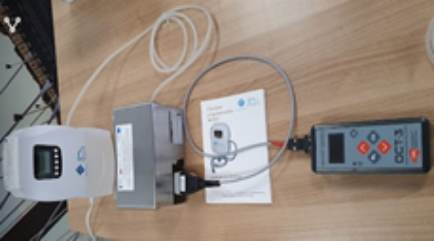
Figure 3: Set of the ozonation device.
The devices of the set are activated independently by pressing the meter’s switches and connecting the ozonator’s power cord. Ozone flow from the generator to the box starts after pressing the button on the ozonator control panel. Ozone concentration in the box to the level of 350 ppm takes about 5 seconds. Stopping the process of ozone flow from the generator to the box is a phenomenon prolonged in time. The start of the stopping process is pressing the stop button on the ozonator panel. The ozonator fan continues to run for 1 minute. after stopping the ozone generation process. During this time, the ozone concentration in the box slowly decreases. Re-obtaining the decreasing concentration to the level of 350 ppm takes place within 10–20 seconds from stopping the generation of ozone. The total working time of the ozonator during the test is equal to the ozone generation time increased by 1 minute.
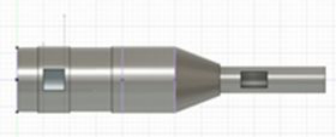
Figure 4: The designed form of the ozonation device.
40 Waldemar and Barbara
The geometric cylindrical form of the housing elements for ozonation was planned in the range from the box to the exhaust pipe outlet. The casing from the side of the ozone generator must be a blind circular lid with a centrally located connector for the silicone tube of the ozonator. A nominal diameter of 120mm was initially assumed for the casing pipe. The ozonation chamber should be equipped with a hinged flap cut from the surface of the cylindrical casing pipe. A peripheral gasket should be placed on the edge of the flap to ensure tightness of the chamber. The system with the filter and the exhaust pipe should be axially slid onto the housing of the ozonation chamber, with the sealing of the cylinder of the overlap of the pipe of the filter housing. This pipe, through a conical narrowing, should pass into the exhaust pipe. From the inside, the filter housing pipe should have a fixed ring limiting the position of the filter mesh from the inlet side to the exhaust pipe and a movable ring pressing the filter mesh from the box side. In order to fill the filter with activated carbon, a layer thickness of 3–8 cm on the inner wall of the filter housing should be marked. To close the filter, use a stainless steel mesh with a mesh of approx. 2.5 mm and a circular surface adapted to the limiting rings. The axial fan can be mounted in the exhaust pipe from the filter side, using the narrowing edge of the housing, or from the outlet side with the use of an additional inner ring stabilizing the position of the fan in the exhaust pipe.
The tests of the effectiveness of ozonation of viruses applied to the sur- face of objects were carried out in accordance with the sanitary safety rules for virological tests and the use of ozone. The basic indication is conducting research in a closed laminar chamber. The tests were carried out for the initially adopted ozone generation times in the set, with val- ues of 10 s; 15 sec; 20 sec; 25 sec; 30 sec. The time assumption results from the designed period of use of the peripheral device for disinfec- tion of small objects with the duration of the process in the range of 25–35 seconds.
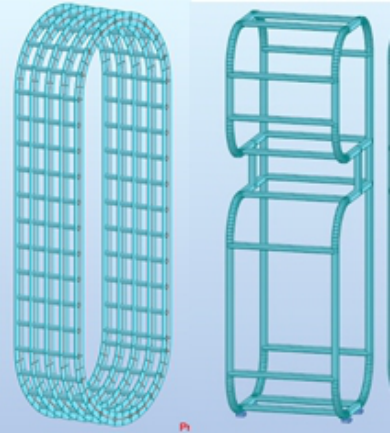
STRUCTURAL ELEMENTS For the analysis of some of the structures, basic bar models of the device housing skeleton, presented in Fig. 5, were adopted. The research methodology was based on the optimization analysis of the design of the frame structure. The optimal design of the structure con- sists in selecting its parameters in such a way that, in addition to meeting the required conditions: strength and use, it reduces material consumption.
Three basic directions can be distinguished in the optimal shaping of bar spatial structures:
geometric shaping
static and strength shaping
technological and construction shaping.
Shaping a Device for Anti-Viral Disinfection and Checking Health of People Moving 41
Figure 5: Skeletons of the housing structure.
Solving problems in particular directions is closely related. Shaping the geometry of the structure requires adopting technological and construction assumptions and carrying out static and strength calculations. The methods of solving the optimization task depend on the formulation of the optimiza- tion criterion, optimization parameters and the area of the acceptable task. Optimization of bar spatial structures belongs to multi-criteria processes, whose description in the mathematical sense is complicated due to the very large size of the solution area. This is a very labour-intensive task, therefore, during the search for an optimal solution, one can limit oneself to determining a representative subset of compromises with the number determined by the seeker. The chance of such a solution is provided by the method of random review of variants used in this project. The adopted assumptions determine the discrete nature of the optimization process. The criteria for optimizing the geometry of the examined structures were:
minimum static effort of the structure
minimum total length and number of structure bars
minimum extreme deflection of the structure.
The decision variables in the conducted process are the distances between nodes in the layers of bars and between the layers (structural height). The optimization parameters included the method of supporting the structure and the spatial shape of the structural system as well as material data and bar cross-sections.
Shaping the Anchoring the Housing Structure For the tested locations of the device, the following options for anchoring the housing structure are provided:
For concrete substrates included in the floor layers of buildings
For hardened surfaces with small-sized concrete elements
42 Waldemar and Barbara
For unpaved squares and grassy surfaces
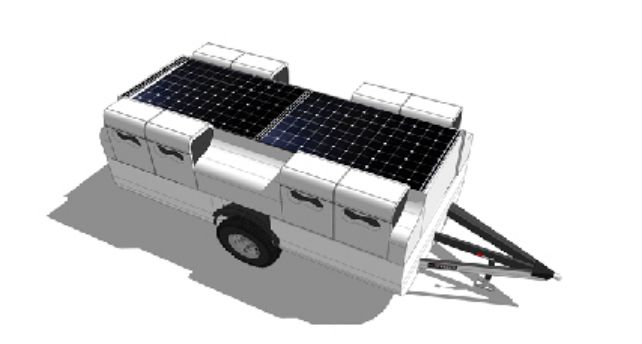
For the substructure of transport platforms, including car trailers
Figure 6: A mobile variant of the device placed on a platform.
In the case of anchoring to hardened surfaces, it is expected to use typical anchoring systems, terminated with screw connectors, transferring the loads specified in the relevant standards. For unpaved surfaces, it is planned to use own block pedestals made of thin-walled GRC prefabricated elements, filled with gravel backfills and concrete prefabricated elements with a weight adapted to the requirements of the device’s stability.
The project also examined the location of disinfection devices on mobile car trailer decks. This solution makes it possible to move a set of devices to the zones of sports and recreational events with the participation of a large number of people taking part in them. The transported devices have an integrated housing that allows them to be used separately. A system for transporting the device to the ground has been developed. In addition, each of the devices can be placed on the ground next to the platform.
Structural Analysis The comparative analysis was carried out in relation to the structures built on the basis of the arrangement of the basic solids of the model in Fig. 5. Rectangular cold-bent pipes were used in the frame structure. The strength characteristic of rectangular pipes is their high spatial stiffness, which should be considered in the technological optimization process together with the problem of shaping the connections of the sheathing sheet as well as indi- vidual sections of the frame. Due to the required difference in stiffness in mutually orthogonal planes of the cross-sectional axes, the use of rectangular cross-sections with the aspect ratio of the sides equal to 2 was also considered. Also in this case, the disadvantageous aspect is the small support surface of the device casing sheet metal panels. The analyzed system of the frame made
Shaping a Device for Anti-Viral Disinfection and Checking Health of People Moving 43
of cold-bent angles is characterized by the freedom of shaping joints. How- ever, the negative side of this technological advantage is the generally low rigidity of the skeleton frame.
Figure 7: Basic variants of device housing.
Stress concentration under external load applies to the area of supporting frame arches and sections of the structure at loaded nodes. In general, for the cross-section of square pipes with cross-sectional dimensions of 25x25x2.5, the stresses in the frame do not exceed 100 MPa, with deformations below 1 cm. For a pipe with a square cross-section of 30x30x2 mm, the values of both stresses and strains of the casing frame are significantly reduced. However, it should be noted that the material consumption for this model is almost twice as high as for the model made of angular open profiles and 30% exceeds the weight of the frame construction material in the model described above.
RESULTS
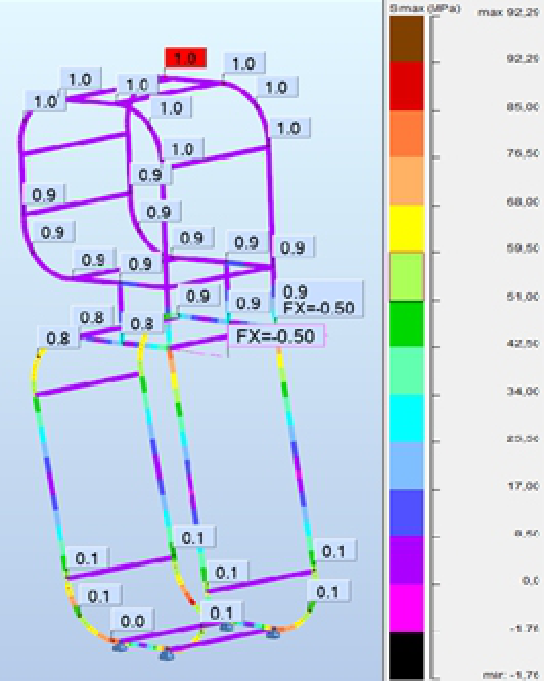
The research model assumed the location of the device on a rigid element of the ground (in the form of a block foundation) without additional support with steel elements. In order to carry out the static and strength calculations, a horizontal nodal load was implemented at the end of the upper arch of the casing. As a result of the load, the distribution of internal forces in individual
44 Waldemar and Barbara
sections of flat bars and crossbars connecting the grate system was deter- mined. The strength characteristic of rectangular pipes is their high spatial stiffness, which should be considered in the process of technological opti- mization together with the problem of shaping the joints of the sheathing sheet as well as individual sections of the flat bar grillage. Internal forces of relatively small value were obtained for the assumed cross-sections of the load schemes. The effort concentration under external load applies to the zone of support arches of the frame and sections of the structure at loaded nodes. However, the normal stress values are far from the steel strength values, which reduces the probability of model deformation beyond the permissible values adopted for exceptional loads. The analyzes of the form and technology of obtaining it allow for the implementation of designed devices intended to perform preventive functions in public space.
Figure 8: Diagram of displacements and stresses in the skeleton frame.
CONCLUSION
The conducted research on models of disinfection devices allows for the intro- duction of compact devices for public use that provide basic social security
Shaping a Device for Anti-Viral Disinfection and Checking Health of People Moving 45
for individual users of public space. The optimal combination of internal devices contained in the housing guarantees the durability of the module and the possibility of versatile placement in zones with access to public gather- ings. Tests carried out for internal component devices confirm the optimal way of their selection. Testing variants of the device housing guarantees pro- tection of its internal equipment against environmental conditions of its use in internal and external spaces. The device can be used both in the period of prophylaxis against viruses as well as in periods of possible pandemics.
REFERENCES
Bober, W., Random graphs models in shaping space structures. IASS Symposium Soul ed. (2012). McClurkin, Janie D., Dirk E. Maier, and Klein E. Ileleji. ed. (2013). Half-life time of
ozone as a function of air movement and conditions in a sealed container. Journal of Stored Products Research 55 41–47. pp. 663–698. Megahed, Ameer, Brian Aldridge, and James Lowe. ed. (2018). The microbial killing capacity of aqueous and gaseous ozone on different surfaces contaminated with dairy cattle manure. e0196555. Sharma, Manju, and James B. Hudson. ed (2008) Ozone gas is an effective
and practical antibacterial agent. American journal of infection control 36.8 pp. 559–563.
LISTED IN THE AHFE DIGITAL BOOKSTORE CATALOGUE
Explore the complete digital volume
Emerging Technologies in Healthcare and Medicine
Read this individual research paper free through the original publisher, or explore the full digital proceedings book.
ISBN 978-1-958651-92-6
Explore this ISBN in the AHFE Bookstore ↗Listed in the July 2026 bookstore catalogue; search by ISBN to confirm current availability · Digital book purchase optional