Rainer Nägele, Jens Neuhüttler (2023). The role of Data and AI during development of Smart Services. In: The Human Side of Service Engineering. AHFE Open Access, vol. 108, pp. 9–18. https://doi.org/10.54941/ahfe1003102
The development of innovative smart services holds a wide range of potential for companies, but also poses challenges due to the complexity involved. In current scientific literature, the use of AI is seen as having the potential to reduce precisely this complexity in innovation processes. This article examines the extent to which this also applies to the development of smart services. For this purpose, challenges in the development process are first described in more detail and general potentials for the support of AI along generic functionalities are considered. Based on this, initial ideas are presented as to how AI can support the individual development steps in the development process of smart services.
Digital technologies are considered to be a central growth and innovation driver for the service sector. The potential of digital technologies is parti- cularly pronounced for the development and provision of so-called Smart Services. On the basis of data collected and analysed with intelligent techno- logies, situational needs can be detected, and services adapted and converted into customer- and provider-related added value. Despite the potentials of Smart Services, many companies face major challenges in developing them. In addition to a high degree of complexity, interdisciplinarity and a lack of design knowledge, there is also a lack of methods and tools for the systematic development of Smart Services (Neuhüttler, 2022). Due to constantly chan- ging customer needs and rapid technical developments, Smart Services have short life cycles, which is why efficient and targeted development and con- stant innovation capability are important pillars for the successful offering of Smart Services.
The current advances of Artificial Intelligence (AI) suggest that humanity may be on the cusp of the next industrial revolution (Mcginnis, 2020; Tho- mas, 2020). AI has the potential to fundamentally change the way people live, work, and educate themselves (Bitran, 2021; Nägele et al., 2021; Pew Research Center, 2018). For companies, too, there is an opportunity for AI to revolutionize the way companies do business and innovate (Neuhüttler et al., 2020a). AI, for example, enables organizations to tackle complex problems and streamline processes in ways that were previously impossible (Beale,
2022; Füller and Bilgram, 2018). Early contributions from the research com- munity make it clear that AI is likely to be a general-purpose technology that has the potential to revolutionize innovation in two directions: The products and services that are being innovated and the way the research and innova- tion processes are organized (Cockburn et al., 2018). In addressing how to organize the innovation process, AI has the potential to incorporate an incre- asing amount of data and information to reduce both the risk and cost of innovation (Sudhir, 2016).
Against the backdrop of high complexity and uncertainty in smart service development and the potential of AI for innovation management, the fol- lowing question arises: How can data and AI support the development of innovative Smart Services? In the following chapters, we will explore this question by first taking a closer look at the challenges of smart service develo- pment and the generic potentials of AI for innovation. Based on these insights, we will present initial ideas on how AI can support the different development phases.
DEVELOPMENT OF SMART SERVICES In a first step, it is necessary to characterize Smart Services as an object of development in more detail. Bullinger et al. 2017 describe Smart Services as “data-based, individually configurable bundles of personal services and digital services that are based on intelligent technology and organized and delivered via digital platforms.” (Bullinger et al., 2017). Thereby, data col- lected from the Internet of Things (IoT) or other sources allows drawing comprehensive conclusions about customer needs and thus allows adaption of offered services. AI plays a major role for deploying advantages of Smart Services, such as the automated extraction of information required for indi- vidualization or the more automated or even autonomous service provision via physical or digital robots (Neuhüttler et al., 2020b; Paluch and Wirtz, 2020). Building on this understanding, following characteristics of Smart Services can be derived that need to be taken into account during development (Neu- hüttler, 2022). (1) High complexity: Smart Services are brought together on the basis of data from different modules and can therefore take on many different variants. (2) Provision in ecosystems: In order to be able to design and provide Smart Services reliably and economically, cooperation across the boundaries of individual providers and sectors is increasingly necessary. (3) High degree of interactivity: Smart Services unfold their distinct value during a process, in which provider- and demand-side resources - especially data - are combined. (4) Automated individualization: The use of intelligent techno- logy and intensive data processing with machine learning algorithms enable a highly automated provision of individualized services. (5) Immateriality: Relevant service components of Smart Services, such as interactions, data, algorithms or service results, e.g. in the form of new insights, predictions or recommendations, are difficult to grasp and can only be perceived during the service delivery process.
The Role of Data and AI During Development of Smart Services 11
For development, certain challenges arise from the specific characteristics of Smart Services: Due to the different service components, service develo- pment approaches must be more closely intertwined with the disciplines of software engineering and data science. In addition, the requirement to be able to continuously offer customer-specific configurations as solutions results in the need for a high speed of adaptation and the shortest possible development cycles. However, short-cycle, interdisciplinary development also places new demands on developers, for example in the form of T-shaped competence pro- files (Demirkan and Spohrer, 2015; Ahner et al., 2021). The lack of suitable human resources is considered a major obstacle to the successful development and introduction of Smart Services (Friedrich and Schiller, 2022). In order to meet the goal of a high level of customer orientation, the early and continu- ous involvement of customers and users during development is a necessary task. Particularly, involvement in early tests to validate prototypes is seen as critical to success, in order to increase customer orientation and enable effi- cient and rapid development of accepted solutions. The formulated need for greater integration of stakeholders also results from the increasingly coope- rative provision of Smart Services in ecosystems. Accordingly, development projects often do not take place within the boundaries of a single company, but between different players. The interests, resources and development con- tributions of the various players in an ecosystem must be taken into account and coordinated by means of suitable process models and methods.
In order to carry out the development work efficiently and successfully, it is useful to follow a clearly structured process from the outset. This is referred to as a reference model, which defines development tasks and their sequence. In principle, clear structuring of the development process should prevent the individual steps from being random, duplication of effort and repetition of previous mistakes. Furthermore, a defined development process for Smart Services increases the transparency of tasks and responsibilities. Figure 1 illustrates a reference model for the development of Smart Services.
Figure 1: Reference process for developing Smart Services (adapted from Bullinger et al., 2015).
Figure available in the original PDF paper.
The reference model is structured as a task-based development process comprising six phases. During the “problem analysis”, new needs for a smart service or known needs of relevant stakeholders that have not been addres- sed by current offerings are identified and elaborated. “Ideation” comprises the collection and review of suitable ideas. During the “Service Conception”, detailed concepts, including value proposition, delivery processes, required ressources as well as a revenue model, are drawn up. The concepts are then carefully tested in terms of their functionality, but also in terms of the perceived quality of stakeholders. In the iterative sequence of designing and testing activities, smart service concepts are successively developed into com- plete solutions that can be implemented. Once all components have been
12 Nägele and Neuhüttler
implemented, the market launch can begin. During the engineering of Smart Services, integration of knowledge and resources of stakeholders is a key success factor. Due to the integrative and processual nature of services as well as their situational, context-specific and individual value deployment, customer-specific knowledge and resources have to be taken into account in order to develop valuable and meaningful solutions.
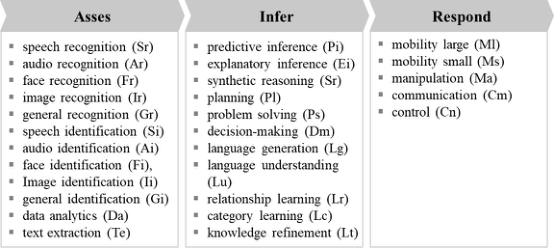
POTENTIALS OF AI FOR INNOVATION AND DEVELOPMENT AI can help companies gather, analyze and interpret vast amounts of data to identify trends, opportunities, and threats that would be difficult or impos- sible for humans to detect (Haefner et al., 2021; Mühlroth, 2023). This can allow companies to better understand their customers, markets, and opera- tions, and make informed decisions that drive growth and competitiveness (Andreae, 2023). By analyzing customer behavior, market trends, and com- petitive intelligence, AI can help organizations identify new opportunities and make informed decisions about which products and services to develop, which helps companies to reduce the risks associated with developing innova- tive offerings and improve the chances of success. Moreover, AI can support innovation management by automating various tasks and processes, such as identifying patterns and relationships in data, automate decision-making, and streamline workflows (Vogel-Heuser et al., 2020). This can help companies make better use of their resources, reduce costs, and increase efficiency (Beale, 2022). In order to better understand the possible potential for the development of Smart Services within our paper, the different functionalities of AI can first be considered. Building on the work of Kristian Hammond, the so-called perio- dic table of AI was developed. It comprises 28 AI elements, which represent a partial function in the sense of an encapsulated functionality that can be com- bined with one another (cf. Bitkom, 2018). In addition, the elements are each assigned to one of three groups representing a typical processing step of an AI use case, from “Assess” (e.g., the detection of a certain situation by data) to “Infer” (e.g., prediction of a state based on this) to “Respond” (e.g., an action derived from this). By selecting at least one element from each group, the support of AI in concrete applications can be described and characterized in more detail (see Figure 2).
Figure 2: Groups of elements in the periodic system for artificial intelligence (source: adapted from Bitkom, 2018).
The Role of Data and AI During Development of Smart Services 13
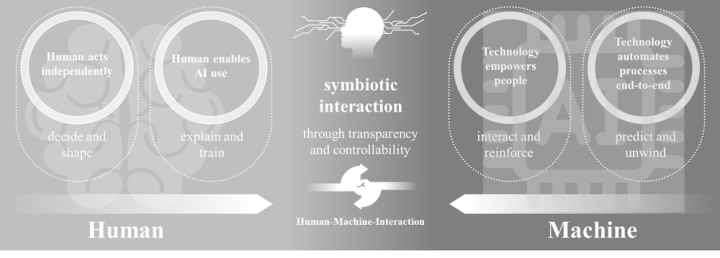
The periodic table helps to determine and clarify which functionality can support the development process. However, it does not describe how the functionalities contribute to the completion of the development tasks and whether they are understood as an autonomously acting entity or in a new form of labor division between AI and human developers. The concept of division of labor dates back to times when the use of technology in the working environment was not yet very pronounced. In an AI-supported innovation management, the potential is often seen in the augmentation of non-routine or knowledge work (Raisch and Krakowski, 2020). Augmen- ting such activities in innovation management with machines, hardware and software solutions means supporting and extending human capabilities in decision making and implementation. Processes automated by technology must be predicted and handled by humans with the help of technological aids. The expanded radius of possibilities of humans through technology must be used more intensively, also by people explaining the significance and pos- sible applications of new technologies (e.g. artificial intelligence) to other people (Rahwan et al., 2019). To achieve augmentation, the performance of machines and humans in relation to activities or small parts of work pro- cesses must be integrated, and joint learning from work practice must take place. The augmentation of work by AI (see Figure 3) can be described as a co-evolutionary process or a symbiotic interaction in which machines learn from humans and humans learn from machines (Amershi et al., 2015).
Figure 3: New rules for digital interaction.
The characteristics of symbiotic interaction within innovation manage- ment or development processes cannot be clearly described. The assumption here is that the interaction between people and technology differs greatly depending on the level of innovation, type of innovation and the task to be completed within the innovation process. For example, it can be assumed that incremental process innovations will largely take place without human intervention and, only if necessary require a final implementation decision by a human. Disruptive innovations, however, with a high degree of novelty far from known patterns will be strongly characterized by a collaborative inte- raction between human and machine. This raises the question of the extent to which creativity and inventiveness, for example, are and remain purely
14 Nägele and Neuhüttler
human characteristics. In a first approximation it can be said that AI can be creative in some ways but is still far from replacing or surpassing the crea- tivity of humans. AI systems can be creative by accessing large amounts of data and using pattern analysis and machine learning to identify new oppor- tunities for humans to review and develop. However, these novel insights are often derived from already existing patterns in analyzed data. Moreover, it is important to note that AI systems do not have their own awareness or understanding of the context in which they are used. They also cannot have their own values or perspectives and therefore cannot generate truly new and original ideas that ensure a high level of social and customer acceptance at the same time.
In practice, AI systems often play a supporting role in analysis and idea development, but the final implementation and refinement of an idea still requires human creativity and judgement. For the qualitative leap in the transformation of work, models of a new division of labour in symbiotic interaction should focus on the designability of positive interaction between humans and technology. This includes giving machines the status of actors in the socio-technical work system and enabling mutual learning between humans and machines. (Amershi et al., 2015; Daugherty and Wilson, 2018; Rai et al., 2019).
AI-SUPPORTED DEVELOPMENT OF SMART SERVICES In the previous sections, we presented the challenges of developing Smart Services on the one hand and general potentials and functionalities of AI on the other. The development of Smart Services can be characterized by a complex development object with a high degree of individualization, by short innovation cycles, new competence requirements for developers and the need for repetitive integration of customers. The potential of AI to support human developers by taking over individual functions in the development in symbiotic interaction therefore appears potentially valuable. This section will present initial ideas as to which tasks could be performed in the future with AI support and which AI functionality from the periodic table is required for this purpose (cf. Table 1).
Different types and functionalities can support different phases of the service development process. Within the problem analysis, Natural Language Processing (NLP), for example, can be used to analyze customer feedback, social media posts, and other sources of customer data to identify unmet needs. Especially the recognition of emotional states of customers provi- des opportunities for service innovation. In addition, data from customers’ networked, physical objects can also provide important clues for new Smart Services. Within the ideation phase, AI can support the search for previ- ously unserved branches with existing data and service capabilities or prevent developing ideas that already exist. Within conception, generative AI appli- cations can be used to prototype service artefacts in early stages to improve communication in interdisciplinary development teams regarding the imma- terial development object. If the relevant factors influencing the value in use
The Role of Data and AI During Development of Smart Services 15
are known, various configurations and application scenarios can be simu- lated and evaluated in terms of their impact. From the large number of configurations and application scenarios to be considered, particularly pro- mising variants can thus be selected and validated with real users. The speed and efficiency of development can be increased, which means that the requi- rement for agile development projects can be better met. One challenge, however, is the transformation of immaterial and intangible constructs into mathematically formalized elements that can be used for algorithm-based optimization of an objective function.
Table 1. Ideas for supporting smart service development through AI.
Table available in the original PDF paper.
Phase Initial ideas for AI-supported development tasks Potential AI support Sr; Te; Gr; Da; Gi; Lu; Ei; Sy; Lc Problem analysis Analyzing NPS results, customer feedback, social media posts or service reports to understand strengths and weaknesses of existing services and identify unsatisfied needs based on sentiment analysis.
Da; Te; Pi; Lr; Lc; Pl
Prediction of emerging trends and their impact on existing supply using automated text analysis of patent applications, scientific literature, and trend reports combined with prescriptive and predictive analysis capabilities.
Ideation Matching existing service capabilities with needs and problem areas from other industries through AI-powered semantic functional analysis to generate ideas for new application areas.
Da; Te; Sy; Lu; Lr; Lc; Ps; Finding and displaying similar ideas and innovation projects to avoid similarities within own corporation and branch as well as get inspiration from other branches.
Da; Ei; Sy; Lr; Lc; Lt
Da; Gr; Gi; Te; Lu; Pi; Ei; Sy Conception Identification and segmentation of customer groups based on previously unknown but potentially relevant characteristics and patterns from data.
Lg; Cn; Cn Use generative AI to visualize service concepts at an early stage in the form of mock-ups, taking into account identified target groups.
Pi; Ei; Pl; Ps; Dm; Sy
Along predefined development parameters and components of the development object, AI can be used to simulate all possible variants and configurations of the smart service delivery process. With the help of selection criteria, such as physical feasibility and positive impact on efficiency or customer experience, particularly promising variants can be selected for further inspection.
Generative AI; Pi; Cn
Test Use generative AI to create virtual test worlds in which service delivery and service artifacts can be simulated and evaluated with potential users in an individualized context.
Sr; Fr; Da; Ei; Gi; Lu;
Collect and analyze metadata when conducting real-world user testing, such as emotion recognition when answering validation questions or facial expressions during service delivery.
Implement Automated generation of synthetic data to train AI models for smart service delivery, using generative AI (such as GAN).
Pi; Lc; Lt;
Generative AI; Lg Apply predictive analytics and reinforcement learning to monitor and optimize service performance in real-world settings.
Pi; Lr; Ps; Data-based prediction of required resources to deliver the developed smart service.
Si; Cm; Cn; Lg; Fr
Launch Make customer care and customer service efficient and natural with the help of social robots (e.g. with chatbots or virtual assistants).
Sy; Sr; Cn Personalized targeting and promotional activities during the launch of the new service.
Ps; Lt Continuous improvement of smart service by learning from new data and feedback with transfer and continual Learning algorithms.
16 Nägele and Neuhüttler
Smart Services are characterized by a situation-specific individualization. To be able to test the perceived benefits of a smart service with stakeholders, relevant, individual context factors must therefore be taken into account and simulated (cf. Neuhüttler et al., 2022). By using generative AI, for exam- ple, 3D test environments can be individually tailored to test subjects and improve the validity of the tests. A central characteristic of Smart Services is the AI-supported automation of individualization. For developing bene- ficial Smart Services, effective AI algorithms must be trained that reliably recognize situational needs, which requires a large number of high-quality data sets. However, especially in the development of new Smart Services or highly fragmented use cases, these training datasets are often missing. The automatic generation of synthetic data using AI could contribute to solve this problem. Finally, the market launch can be supplemented by various AI-supported marketing activities (cf. Huang/Rust, 2021).
CONCLUSION
The aim of our paper is to make a first investigation of potentials of AI for the development of Smart Services. Three contributions were made to this end. First, the challenges in the development of Smart Services were described. Second, the generic potentials of AI for innovation and development proces- ses were described, looking both at the individual functions of AI and the symbiotic collaboration during development. Finally, a summary was given in which exemplary ideas for the use of AI during the six development pha- ses of Smart Services were given as well as the AI functionalities used for this purpose.
In conclusion, AI has the potential to significantly impact innovation management by streamlining processes, providing valuable insights, and enabling organizations to make informed decisions that drive growth and competitiveness. Nevertheless, AI does not enable innovation at the push of a button. Rather, it is a versatile tool that can support development at all sta- ges and will lead to a new division of labor. AI does not distinguish between different types of innovation. For the use of AI to succeed, however, three specific questions must be answered. It is about (1) knowing which type of AI can support specific steps during development, (2) having the right and appropriate data sets (in terms of quality and quantity) and (3) having the knowledge and experience which type of division of labor best supports the desired type of innovation or even makes it possible in the first place. For the innovation and development of Smart Services, however, there is so far no insight into how these generic potentials can be exploited.
Our paper is a first starting point based on the consideration of scientific contributions and therefore does not allow a final conclusion on the potential. Rather, more research as well as practical applications must demonstrate and evaluate the true benefits of AI for the development of Smart Services.
REFERENCES
Ahner, L., Bayrak, Y., Cleaver, I., Ge, M. L., Neuhüttler, J., & Urmetzer, F. (2021) Impacts of Professional Education Measures on the Digital Transformation in
The Role of Data and AI During Development of Smart Services 17
Organisations. In C. Leitner, W. Ganz, D. Satterfield, & C. Bassano (eds.), Adva- nces in the Human Side of Service Engineering Vol. 266, pp. 173–180. Springer International Publishing. https://doi.org/10.1007/978-3-030-80840-2_19 Amershi, S., Cakmak, M., Knox, W. B. and Kulesza, T. (2015) ‘Power to the People: The Role of Humans in Interactive Machine Learning’, AI Magazine, vol.35, no.4, pp. 105–120. Andreae, K. (2023) Use Big Data and Predictive Analytics to Drive Innovation
[Online]. Available at https://whitman.syr.edu/snyder/2022/01/10/use-big-data- and-predictive-analytics-to-drive-innovation (Accessed 2 February 2023). Beale, M. (2022) Why AI-Driven Innovation Should Be On Your Radar [Online].
Available at https://www.itonics-innovation.com/blog/why-ai-driven-innovation (Accessed 12 February 2023). Bitkom - Bundesverband Informationswirtschaft, Telekommunikation und neue Medien e. V. (2018) Digitalisierung gestalten mit dem Periodensystem der Kün- stlichen Intelligenz. EIn Navigationssystem für Entscheider. Berlin. Bitran, I. (ed) (2021) Innovating our common future: ISPIM Innovation Conference :
Berlin, Germany, 20–23 June 2021, Worsley, Manchester, United Kingdom, ISPIM Ltd. Bullinger, H.-J., Meiren, T. and Nägele, R. (2015) ‘Smart services in manufacturing companies’, 23rd International Conference on Production Research. Manila, August 02-05, 2015. Manila. Bullinger, H.-J., Neuhüttler, J., Nägele, R. and Woyke, I. (2017) ‘Collaborative development of business models in smart service ecosy- stems’, in Kocaoglu, D. F. and Anderson, T. R. (eds) PICMET’ 17: Technology Management for the Interconnected World, Portland. http://ieeexplore.ieee.org/servlet/opac?punumber=8124200. Cockburn, I., Henderson, R. and Stern, S. (2018) The Impact of Artificial Intelligence
on Innovation. Daugherty, P. R. and Wilson, H. J. (2018) Human + machine: Reimagining work in the age of AI [Online], Boston, Mass., Harvard Business Review Press. Available at https://ebookcentral.proquest.com/lib/kxp/detail.action?docID=5180063. Demirkan, H., & Spohrer, J. (2015). T-Shaped Innovators: Identifying the Right
Talent to Support Service Innovation. Research-Technology Management, 58(5), 12–15. https://doi.org/10.5437/08956308X5805007 Friedrich, M. and Schiller, C. (2022) ‘Smarte Produkt-Service-Systeme’, The Human Side of Service Engineering, July 24-28, 2022, AHFE International. Füller, J. and Bilgram, V. (2018) Autonomous Innovation – How AI and Algorithms
revolutionize Innovation Management: Scientific study on the impact of Artificial Intelligence on innovation management. Haefner, N., Wincent, J., Parida, V. and Gassmann, O. (2021) ‘Artificial intelligence and innovation management: A review, framework, and research agenda’, Technological Forecasting and Social Change, vol. 162, p. 120392. Mcginnis, D. (2020) ‘What Is the Fourth Industrial Revolution?’, Salesforce, 27 Octo-
ber [Online]. Available at https://www.salesforce.com/blog/what-is-the-fourth- industrial-revolution-4ir/ (Accessed 31 January 2023). Mühlroth, C. (2023) Big Data in Innovation Management: How Machine Learning is Revolutionizing the Search for Trends and Technologies [Online]. Avai- lable at https://www.linkedin.com/pulse/big-data-innovation-management-how- machine-learning-search-m%C3%BChlroth/ (Accessed 2 February 2023). Nägele, R., Ohlhausen, P. and Braun, A. (2021) ‘Smart Innovation - How will
Neuhüttler, J. (2022) Ein Verfahren zum Testen der wahrgenommenen Qualität in der Entwicklung von Smart Services, Stuttgart, Fraunhofer Verlag. Neuhüttler, J., Fischer, R., Ganz, W., Urmetzer, F. (2020a) Perceived quality of artifi-
cial intelligence in smart service systems: a structured approach. In: Shepperd, M., et al. (eds.) QUATIC 2020. CCIS, vol. 1266, pp. 3–16. Springer, Cham. https://doi.org/10.1007/978-3-030-58793-2_1. Neuhüttler, J., Kett, H., Frings, S., Falkner, J., Ganz, W., & Urmetzer, F. (2020b).
Artificial Intelligence as Driver for Business Model Innovation in Smart Service Systems. In J. Spohrer & C. Leitner (Eds.), Advances in Intelligent Systems and Computing. Vol. 1208, pp. 212–219. SPRINGER. Available at: https://doi.org/ 10.1007/978-3-030-51057-2_30 Paluch, S. and Wirtz, J. (2020) ‘Artificial Intelligence and Robots in the Service Encounter’, Journal of Service Management Research, vol. 4, no. 1, pp. 3–8. Pew Research Center (2018) Artificial Intelligence and the Future of Humans, Pew
Research Center. Rahwan, I., et al. (2019) ‘Machine behaviour’, Nature, vol. 568, no. 7753, pp. 477–486. Rai, A., Constantinides, P. and Sarker, S. (2019) Next-Generation Digital Platforms:
Toward Human-AI Hybrids. Raisch, S. and Krakowski, S. (2020) ‘Artificial Intelligence and Management: The Automation-Augmentation Paradox’, Academy of Management Review. Sudhir, A. (2016) ‘The Impact of Artificial Intelligence on Innovation - An Explora-
tory Analysis’, International Journal of Creative Research Thoughts, vol. 4, no. 4, pp. 810–814. Thomas, R. (2020) ‘How AI Is Driving The New Industrial Revolution’, Forbes, 4 March [Online]. Available at https://www.forbes.com/sites/ibm/2020/03/04/how- ai-is-driving-the-new-industrial-revolution/?sh=1a0341fc131a (Accessed 31 Janu- ary 2023). Vogel-Heuser, B., Brodbeck, F., Kugler, K., Passoth, J., Maasen, S. and Reif, J.
(2020) ‘BPMN+I to support decision making in innovation management for automated production systems including technological, multi team and organi- zational aspects’, IFAC-PapersOnLine, vol. 53, no. 2, pp. 10891–10898 [Online]. DOI: 10.1016/j.ifacol.2020.12.2825.
LISTED IN THE AHFE DIGITAL BOOKSTORE CATALOGUE
Explore the complete digital volume
The Human Side of Service Engineering
Read this individual research paper free through the original publisher, or explore the full digital proceedings book.
ISBN 978-1-958651-84-1
Explore this ISBN in the AHFE Bookstore ↗Listed in the July 2026 bookstore catalogue; search by ISBN to confirm current availability · Digital book purchase optional