Daniela Spirkova, Julius Golej, Monika Zatrochova (2023). Determinants influencing the current real estate market in the Slovak Republic. In: Human Factors in Architecture, Sustainable Urban Planning and Infrastructure. AHFE Open Access, vol. 89, pp. 76–83. https://doi.org/10.54941/ahfe1003682
Increasing mortgage loan prices, interest rates, the decline in the attractiveness of investment housing, inflation, and the energy crisis are the determinants that significantly affect real estate, especially the residential market. Currently, in December 2022, the European Central Bank (ECB) has raised key interest rates by 50 basis points and is expected to raise them further. According to the ECB's latest forecasts, the average inflation rate will reach 8.4% this year and fall to 6.3% in 2023. In the following years, the ECB expects inflation to average 3.4% in 2024 and 2.3% in 2025. Thus, current developments bring turbulence to the property market, but radical changes in the residential property market cannot be expected. In the past, investment properties accounted for up to half of all transactions in the real estate market in Slovakia. Those intended for rent are suffering under the impact of sharp price increases, as several analyses have shown. Another interesting fact is the payback period for such an investment. For example, in the centre of Slovakia's capital Bratislava, the return on a one-room flat has been extended by more than four years to 30.5 years from January to June 2022. Bratislava has thus overtaken Warsaw (27.3 years) and Budapest (30.1 years). The reason for the extension of the investment payback period when buying an apartment was the increase in prices, but this was no longer matched by the increase in rents, which were lagging behind. Therefore, current development is bringing shocks to the real estate market not only in Slovakia. The authors assume that home ownership may be affordable in the future only for a limited income group, especially in large cities. Due to the energy crisis, and increasing interest rates on housing loans, there will be a group of people who will not be able to repay their mortgage and will have to change from owner-occupied housing to rental housing. The aforementioned real estate market situation with an emphasis on residential housing is an unexplored topic in the current international literature. This paper focuses on the economic and behavioural aspects that are related to the issue of the residential real estate market, as well as the negative consequences of the energy crisis combined with the increase in interest rates, inflation, etc. In their research, the authors analyze and interpret relevant aspects of the behavioural aspects of the residential real estate market with a significant impact on the price development, sustainability, and affordability of residential real estate due to the negative turbulence on a global scale. The partial results will be presented in the paper.
Determinants Influencing the Current Real Estate Market in the Slovak Republic 77
INTRODUCTION
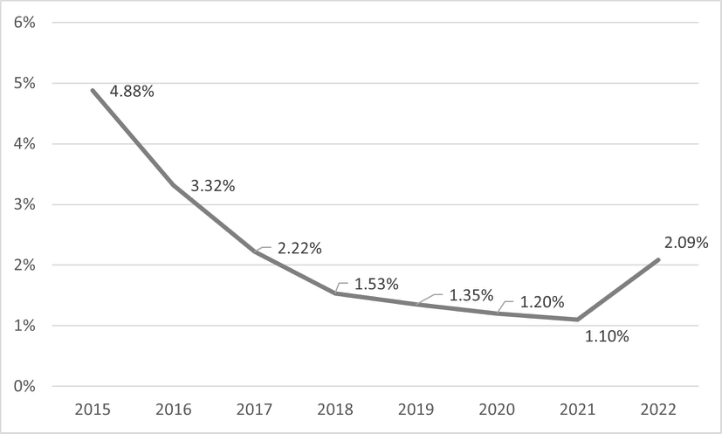
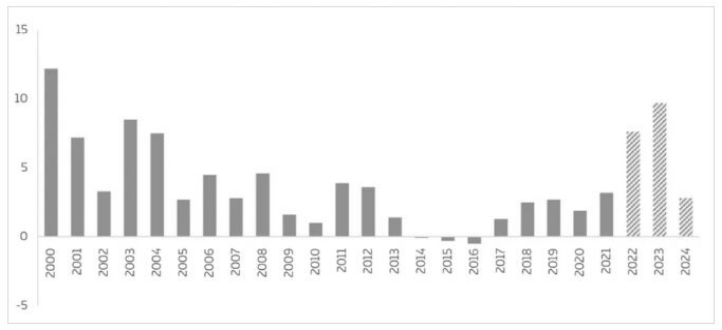
The Slovak real estate market has undergone significant changes in the last three decades of its existence. These fundamental transformations are subject to changes caused by economic cycles and geopolitical developments. Real estate is classified as an asset with a low risk of loss, but also with low liqui- dity. Due to rapidly changing market conditions, the purchase of real estate is considered a relatively safe investment, but the investment in its constru- ction is highly costly in the current environment. Several socioeconomic and demographic factors determines the development of the real estate market. The COVID-19 pandemic and the military conflict in Ukraine have signifi- cantly affected the stability of the residential market. The increasing demand for real estate has not kept pace with supply, but market prudence and ove- rall caution in investing in rapidly changing conditions also play a significant role. Rising interest rates (see Figure 1), which have so far been very low, coupled with dynamically rising inflation (see Figure 2) and fears about the future, cause significant uncertainty and turbulence in the overall real estate market.
The phenomenon of financialisation that has affected the whole of Europe is causing a huge increase in the price of housing, which is becoming incre- asingly unaffordable even for the middle class (Golej, 2022). After the outbreak of the Covid-19 pandemic, it was assumed that the world would not be able to avoid an economic crisis caused by a sharp drop in economic activity. From the last financial crisis in 2008-2009, many people remembered the tens of percent drop in house prices. On that basis, it was expected that this would also happen in Slovakia, but it was forgotten that the fundamen- tals of the Slovak real estate market and the fact that the demand market was
Figure 1: Development of average interest rates on mortgage loans in Slovakia. (Source: Authors according to NBS, 2022.)Figure 2: The development of inflation in Slovakia, including the forecast for the years 2023-2024. (Source: NBS, 2022.)
very strong, which could only be broken by a prolonged crisis that would be accompanied by a fall in purchasing power (Adamuscin, Panik, and Golej, 2022). Residential property prices were the increased not only because of increasing prices of land, building materials, and the availability of low inte- rest rates, but also because of the increased demand not only for housing but especially for affordable housing in the context of the demand for increased housing mobility and thus greater labour mobility (Spirkova et al. 2009 and 2017). House price developments have a significant impact on the economy as a whole and the developments in the economic and property markets are interlinked. The development of the residential real estate market is highly dependent on the state of the economy over the economic cycle. Extreme pres- sures in the economy can lead to a crisis in the residential real estate market. A significant drop in real estate prices can destabilize the banking system largely, causing widespread socioeconomic problems (Adamuscin, Panik and Golej, 2022). The radical increase in property prices is also a consequence of incre- ased demand from investment funds, thus re-starting the price spiral, similar to the situation before the 2008 financial crisis. Although most economists, developers, and politicians are convinced that the main cause of the crisis is the housing shortage and the long permitting processes, the current housing crisis is not just some local problem. On the contrary, today’s situation is a consequence of the transformation of the global economy, which has its roots in the late 1970s and early 1980s. Then, along with neoliberalism, came the so-called FIRE economy, based primarily on the finance, insurance and real estate sectors (Chen, 2022).
METHODOLOGY AND MATERIALS In their research, the authors analyse and interpret relevant aspects of the beh- avioural aspects of the residential real estate market with significant impact on the price development, sustainability, Indebtedness, and affordability of
Determinants Influencing the Current Real Estate Market in the Slovak Republic 79
residential real estate due to the negative turbulence on a global scale. In the paper, the authors analyzed the scientific and professional literature mainly in terms of housing affordability theory, such as: Golej (2022), Spirkova (2009), Kaynak, Ekinci, and Kaya (2021), Fejes, Gavura, and Marencak (2022), Car (2014), Dedinsky (2022), Chen (2022), etc.
Important sources of data analysis were also research reports and projects, expert materials of the National Bank of Slovakia “Financial Stability Report (2022)”, “Working Papers”, “Mortgage Credit and Indebtedness Data”, as well as the database of the Statistical Office of the Slovak Republic and Euro- stat Housing statistics and data from the Ministry of Finance of the Slovak Republic.
THE DETERMINANTS OF IMPACT The market and the interaction of supply and demand create the price of real estate. The primary reason for the increase in real estate prices is the high demand that forms the price of real estate on the market. This is in the interaction of demand and supply, inflation, which at the beginning of 2021 in Slovakia and in the world began to grow rapidly due to the rise in global prices of raw materials and commodities (metals, timber, electricity, gas, etc.), as well as concerns of further development. Accelerating inflation around the world, coupled with the impact of military conflict, will affect real incomes and may dampen consumer demand and efforts to secure private housing. At the same time, the increased costs associated with the search for alternative sources of oil and gas, as well as the greater need to use renewable energy sources, are likely to be another source of price pressures and a possible future crisis (NBS Economic and Monetary Developments, 2022). To determine the reasons that are relevant for Slovakia, we have therefore decomposed the rise in inflation into individual factors. For inflation in Slovakia, the main driver is clearly price developments abroad. The price developments to date can be clearly attributed to the development of prices of energy and food items on global markets. The wage pressures on prices caused by accelerating inflation are so far weak (Fejes, Gavura, and Marencak, 2022).
According to Kaynak, Ekinci, and Kaya (2021), many studies examine the strong relationship between the construction industry and economic growth and the relationship between the construction industry and other sectors. In these studies, a significant part of input-output analyses have been con- ducted for the construction sector, especially in developing countries, and the backward linkage indicators of this sector have been found to be much more important and influential than the direct linkage indicators. However, only a minimum of studies examine changes in the construction sector and the residential real estate market in the face of unexpected shock. However, there have been many studies on the factors that influence prices in the real estate sector, which makes up the bulk of the construction sector. Most studies focus on explaining the determinants of housing prices using macroeconomic variables rather than explaining the impact of the unexpected shock variable.
Housing must have an adequate basic standard that is safe, provides ade- quate access to employment opportunities and community services, and is
available at a reasonable cost. Today, the requirement to provide more mobile housing is coming to the fore as a prerequisite for greater labour mobility, and thus better labour market opportunities. The immediate availability of hou- sing for employees is an essential condition for the development of a dynamic labour market, and the lack of housing, especially rental housing, blocks the development of employment. It is one of the factors that determines the flexi- bility of local labour markets, labour mobility, and thus the competitiveness of regions and municipalities within them (Spirkova et al., 2009). Another problem in Slovakia is public awareness: what are the benefits of rental hou- sing that it is not only for low-income groups or only for the “poorest in society”. Rental housing must be available to all who want to live in a qua- lity housing with comparable rents as it is for example in countries such as Austria, the Netherlands, etc. The problem of Slovakia also in the perception and evaluation of rental housing.
Rental housing is currently assessed as “social housing” for the weaker segments of the population. However, home ownership is also an unofficial assessment of the’social status’ of residents. In countries with a high percen- tage of rental housing, rental housing is intended for all segments of society and not only for those with lower social standards. The majority of the Slo- vak population solves the housing issue by buying a flat to own - however, it is a lifelong investment with a credit burden for many years, which is actually an obstacle to higher mobility of the labour force. This is mainly due to the desire to be rooted somewhere, and not owning property creates a kind of hidden sense of insecurity. Moreover, the origin of the desire to own is still linked by many inhabitants to the recent history when in Slovakia (then in the former Czechoslovakia), there was no private ownership in the housing stock (except for family houses, which were owned by their owners - individuals), but only collective ownership.
It should be stressed that the availability of housing in Slovakia is limited. This is due, among other things, to high rental prices, lack of affordable housing, and an undeveloped institutional environment, which we consider the main reasons why the share of rental housing in Slovakia is significantly lower than in other EU countries. Only 11% of households occupy a rental property. The supply of rental housing is almost exclusively determined by the supply of private owners. The share of state or municipally subsidised rental housing is very low. It accounts for only 1.5 % of the total housing stock, which is significantly the lowest among the countries of the European Union.
DEVELOPMENT OF INDEBTEDNESS Strong credit growth is a significant risk factor, leading to an acceleration in the growth of household debt. The current growth in refinancing loans is faster than would be consistent with income and house price growth alone and the growing share of indebted households. This is particularly the case for refinancing loans with increases. Loan growth is also driven quite signifi- cantly by maturity extensions on refinancing loans„ refinancing of consumer loans and, to some extent, demand from existing customers. Without these
Determinants Influencing the Current Real Estate Market in the Slovak Republic 81
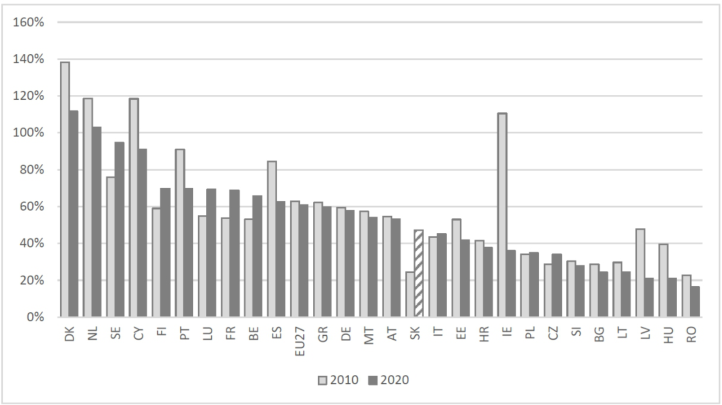
Figure 3: EU-27 household debt to GDP in 2010 and 2020. (Source: Dedinsky, 2022.)
factors, mortgage growth would have been around 2.4 percentage points lower.
Debt growth in recent years has been mainly associated with the growth of housing loans and consumer loans to households. This growth trend has accelerated to 8.0% year on year, putting Slovakia at the top of the euro area in terms of growth rate. When comparing the year-over-year evolution of cumulative lending in Slovakia and other EU countries, it is evident that this growth has been above average for a long time (see Figure 3). The highest year-on-year change over the period was achieved in Slovakia in 2016, when it amounted to around 13%.
The volume of new housing loans in the Slovak Republic has long represented almost 70% of all loans taken out by households for various purposes.
CONCLUSION
Acquiring housing is a demanding investment and proceeding to it presup- poses a thorough assessment of the current and expected income situation of the individual and the entire household that commits to such an investment. From the current development of the housing market in Slovakia, it can be concluded that a substantial part of the available funds has already been spent and, in recent years, a decisive part of the housing procurement has been car- ried out through credit sources (Car, 2014). Households are looking for ways to secure their homes through credit, while the constant increase in debt cre- ates a significant risk of default. We also see a risk factor in the possibility of using forbearance in housing mortgage repayments during a pandemic situ- ation (COVID_19). This grace period was authorized to be extended to a maximum of nine monthly instalments, with the final maturity of the loan extended by the grace period. However, the deferment of repayments did
not entail their forgiveness, and the loan was further extended during the deferment period, while insurance charges were not affected. From the above situation, it can be assumed that those who finance their housing through mortgages today will cease to be able to repay them and will lose their cur- rent housing. Within a few years, a new group of people will emerge who will have a problem with the affordability of housing in Slovakia (Spirkova, 2020), the cause of which we also see in the lack of rental housing.
ACKNOWLEDGMENT
This paper is supported by the Operational Program Integrated Infrastru- cture for the project: National infrastructure for the support of technology transfer in Slovakia II, co-financed from the resources of the European Regi- onal Development Fund and VEGA grant no. 1/0604/18, entitled ‘Economic aspects of Sustainable Construction within intelligent urban structures’. and KEGA no. 018STU-4/2023: Preparation of the real estate engineering study program.
REFERENCES
Adamuscin, Andrej. Panik, Miroslav, and Golej, Julius. (2022). Economic Impact of COVID-19 on Real Estate Prices in Slovakia. In Human Factors, Business Mana- gement and Society. New York, NY : AHFE Open Access, 2022, S. 336–344. ISBN 978-1-958651-32-2. Car, Mikulas. (2014). Real estate market in the context. Slovak University of
Technology in Bratislava. Chen, James. (July 21, 2022) FIRE Economy. Available on the Investopedia website: https://www.investopedia.com/terms/f/fire-economy.asp. Dedinsky, Juraj. (2022). Development of loans and indebtedness of households in
Slovakia in comparison to other countries of European Union. Financial Market, Bratislava, Derivat, Volume 1/2022. Fejes, Martin. Gavura, Miroslav, and Marencak, Michal. (2022). Where does such inflation come from in Slovakia (or the Slovak ranking of inflation factors). Avai- lable on NBS website: https://nbs.sk/aktuality/odkial-sa-na-slovensku-berie-taka -inflacia-alebo-slovensky-rebricek-inflacnych-faktorov/ Golej, Julius. (2022). Slovak Republic. In Global Compendium of Land Value
Capture Policies: OECD Regional Development Studies. Paris: Lincoln Institute of Land Policy, OECD Publishing, 2022, S. 208–211. ISBN 978-92-64-51699-1. Kaynak, Selahattin. Ekinci, Aykut and Kaya, Havvanur Feyza. (2021). The effect of the COVID-19 pandemic on residential real estate prices: Turkish case. Quantita- tive Finance and Economics, 5.4: 623–639. National Bank of Slovakia. (2022). Economic and Monetary Developments. Availa-
ble on the NBS website: https://nbs.sk/publikacie/ekonomicky-a-menovy-vyvoj/. National Bank of Slovakia. (2022). Financial stability report. Available on the NBS website: https://nbs.sk/publikacie/sprava-o-financnej-stabilite/ National Bank of Slovakia. (2022). Mortgage Credit and Indebtedness Data.
Available on the NBS website: https://nbs.sk/dohlad-nad-financnym-trhom-prak ticke-informacie/publikacie-a-vybrane-udaje/vybrane-udaje/informacie-o-uvero ch-na-byvanie/. National Bank of Slovakia. (2022). Working Papers. Available on the NBS website: https://nbs.sk/en/publications/research-publications/ ISSN 2585–9269.
Determinants Influencing the Current Real Estate Market in the Slovak Republic 83
Spirkova, Daniela. (2020). Rental housing is not only social. Eurostav. Volume 2/2020. Spirkova, Daniela. Zubkova, Maria. Machajdkova, Jarmila. (2017). Housing policy.
1. ed. Bratislava Publisher STU 2017. 164 p. ISBN 978-80-227-4396-9. Spirkova, Daniela. Ivanicka, Koloman. Finka, Maros. (2009). Housing and housing policy: Development, determinants of housing development and new approaches in rental housing policy in Slovakia. Bratislava: STU in Bratislava, 2009. 191 p. ISBN 978-80-227-3173-7.
LISTED IN THE AHFE DIGITAL BOOKSTORE CATALOGUE
Explore the complete digital volume
Human Factors in Architecture, Sustainable Urban Planning and Infrastructure
Read this individual research paper free through the original publisher, or explore the full digital proceedings book.
ISBN 978-1-958651-65-0
Explore this ISBN in the AHFE Bookstore ↗Listed in the July 2026 bookstore catalogue; search by ISBN to confirm current availability · Digital book purchase optional