Gabriela Cervantes Alarcón, Sergio Navarro Tuch, Ariel Lopez Aguilar, Lili Marlene Camacho Bustamante, Rogelio Bustamante-Bello (2023). Detecting and monitoring wandering in AD patients with an integrated device based on Humanitude. In: Health Informatics and Biomedical Engineering Applications. AHFE Open Access, vol. 78, pp. 120–130. https://doi.org/10.54941/ahfe1003463
Alzheimer is a neurodegenerative type of dementia, that has progressive impairment of cognitive and behavioral functions, most commonly presented above 65 years old and it is divided in three stages. Wandering is the most frightening symptom for familiars and caregivers in the mild stage (second stage of the disease) because it can cause from a minor damage to death. Detecting and monitoring wandering is a complex task and has become a strong research line for several research projects. This paper focuses in proposing, developing and testing a support system for monitoring trajectories to identify direction changes alterations and positioning. The proposed system is called Motion acquisition system + Global positioning system(SAM + GPS). The system integrates an accelerometer, magnetometer, gyroscope and a GPS module. To address this challenge, after the development of the device, a pilot test was conducted with 9 young adult healthy subjects instrumented with the SAM + GPS. Each subject needed to route 2 specific trajectories to prove that the integrated device was able to measure different direction changes and map an accurate trajectory for future wandering detection. It was found that the SAM + GPS had an acceptable error of 12.29% measuring the direction changes in the first trajectory and a 27.44% critical error in the second trajectory. In addition, the device was able to map most of the trajectories with high similarities to an ideal pattern traced with the expected horizontal accuracy of 2.5m of the GPS Neo 6m module. It is worth mentioning that the device had a better performance in outdoor environments than in indoor environments, so in future work, more tests are considered with a larger population sample with the integration of an indoor positioning system and Humanitude methodologyprinciples.
Alzheimer’s disease (AD) is the most common type of dementia; it is a neurodegenerative disease with a progressive impairment of cognitive and behavioral functions. It is more commonly presented above 65 years old and there is no cure for Alzheimer’s disease, although there are treatments available that may improve some symptoms (Kumar et al., 2022).
Detecting and Monitoring Wandering in AD Patients With an Integrated Device 121
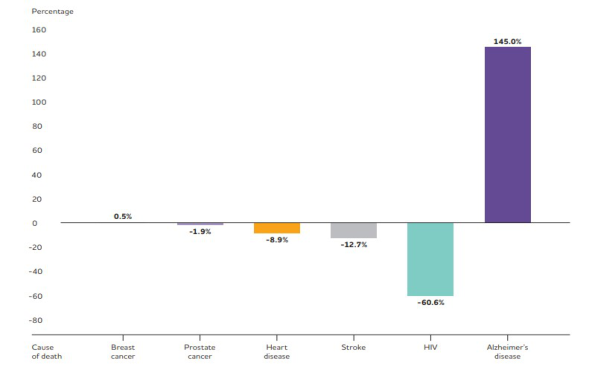
Figure 1: Percentage Changes in Selected Causes of Death (All ages) Between 2000 and 2017. (Alzheimer’s Association, 2019).
Alzheimer is becoming a more common cause of death. Deaths from AD have increased significantly. Between 2000 and 2017, the number of deaths from AD has increased 145 percent, while the number of deaths from the number one cause of death (heart disease) decreased 9 percent (see Figure 1) (Alzheimer’s Association, 2019).
The number of new cases of dementia anticipated each year all over the world is almost 7.7 million. Revealing this by region, it means that there are 3.6 million (46%) new cases per year in Asia, 2.3 million (31%) in Europe, 1.2 million (16%) in the Americas, and 0.5 million (7%) in Africa (Brito- Aguilar, 2019).
The Mexican Health and Aging Study (MHAS), used a sample of 7,166 subjects older than 60 years to estimate the prevalence and incidence of dementia and cognitive impairment without dementia (CIND). Results sho- wed a prevalence of 6.1% for dementia and 28.7% for CIND(Brito-Aguilar, 2019). Alzheimer’s symptoms depend on the stage of the disease. It is classified in three stages depending on the degree of cognitive impairment (Kumar et al., 2022), such as PR symptomatic, mild, and dementia. Symptoms like apathy, isolation, agitation, psychosis, and wandering are presented in mid to late stages. Wandering is one of the most frightening symptoms for relatives and careers. Wandering can be defined as “moving within an area with no logi- cal movements”(Batista et al., 2016a). Consequences of wandering could be fatal, starting from a minor injury to a severe one and ending in death (Rowe & Bennett, 2003). It can lead to falls, fractures, and accidents in people with dementia (Wick & Zanni, 2006). It was also found that patients who wander often are unable to sit down for meals and can suffer malnutrition, weight loss, and fatigue (Vellas et al., 1999).
Wandering goes hand to hand with “elopement.” It is described as “leaving one’s dwelling unescorted” (Chung & Lai, 2011). The persistent wandering
and elopement are linked to the high morbidity and mortality rates among people with dementia (Ali et al., 2016). The common cause of death in people who wander or elope because of some type of dementia, is fatal accidental hypothermia, orthopedic injuries, soft tissue injuries, malnutrition, weight loss, and accidents (Woolford et al., 2017). Other consequences of wandering are the increase of caregiver burden and increase costs of care (Stevenson & Studdert, 2017).
Studies points out that, people aged 65 and older survive an average of 4 to 8 years after a diagnosis of AD, however some people live up to 20 years with AD. Of the total number of years that they live with AD, individuals will spend an average of 40 percent of this time in dementia’s most severe stage (Alzheimer’s Association, 2019).
Inside the field of AD attention, costs and economic consequences for every country are involved. If treatment improves survival, but prolongs the time spent with severe dementia, it might bring only partial health benefits for patients, but increase care costs substantially, for the family and for the respe- ctive government. However, if patients spend more time in less severe states, thanks to the early detection, monitoring and possible treatment in this case of wandering, cost savings could be substantial. Thus, the goal of therapy is not merely to slow disease progression, but to minimize the time spent with severe dementia and maximize the time with conserved cognitive resources, autonomy in activities of daily living (ADL), and quality of life (Winblad et al., 2016). Early intervention is the optimal strategy because the patient’s level of function is preserved for longer.
BACKGROUND
In the initial steps of this research it was found that, sometimes, wandering is detected by the caregiver’s interaction with the AD patient. This could lead to imprecise detection, and a late diagnosis.
There have been different proposals for wandering detection and monito- ring, based on video surveillance, fluorescent dye–based image processing, GPS technology, wandering analysis with mobile phones, smartphone with a speaking system, among other ideas, but there is currently no standardi- zed approach to objectively measure and quantify the wandering behavior itself.
This report focuses in the current needs identified, needs such as, the early detection and wandering monitoring in AD patients, based on the previous R&D work related to Alzheimer behaviors, the early detection of wandering in Alzheimer patients, and the AD stages based on wandering. This, to maxi- mize the time with conserved cognitive resources through cognitive therapy on time, to maintain a quality and safe care for them, avoid fatal outcomes and reduce fatigue and stress in caregivers.
To address those needs, two specific objectives are set for the first 5 mon- ths of the project. To propose and develop a support system for monitoring trajectories, to identify alterations and positioning and run a pilot test of the support system proposed in this case, the integrated device “SAM + GPS”.
Detecting and Monitoring Wandering in AD Patients With an Integrated Device 123
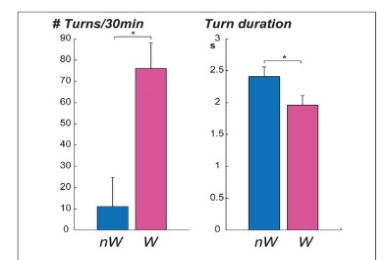
STATE OF THE ART Recent studies presented their proposals and results for wandering detection and monitoring. For example, a wandering analysis with mobile phones on the relation between randomness and wandering in Mild Cognitive Impair- ment patients (MCI), which could be described as a precursor of early stages of AD; the experimental results of this study show that there is a relation between the amount of randomness and the presence of wandering, with premature evidence of the idea that the percentage of short-cycles in a graph might be a good indicator of the randomness of a trajectory (Solanas et al., 2015). Another study provided preliminary evidence that monitoring in patients with some kind of dementia is feasible using a wearable inertial sensor Opal (APDM, Portland, OR); noticing that participants who wandered had higher number of turns in 30 min and, shorter mean turn duration (see Figure 2). Even though this was a small study made with a small sample (12 parti- cipants), it proves the feasibility of continuous monitoring in patients with cognitive impairment and the potential of using inertial measurement units (IMU) to define and quantify wandering behavior. Now assuming that, pati- ents who wander appear to make more frequent, shorter turns, in comparison to patients who do not wander (Kamil et al., 2021).
Figure 2: Comparison of turning metrics between participants who wandered (W) and who did not wander (nW). (Kamil et al., 2021).
Worth mentioning this work was written taking into consideration the positive language form the Alzheimer’s Society guide to talking about demen- tia (Alzheimer’s Society, 2018).
In the work by Batista et al. (Batista et al., 2016a), it is concluded that the combination of the analysis of length cycles and the consecutive direction changes, allows a more accurate wandering detection, letting the possibility to label a trajectory as wandering when: a) there are several short cycles or, b) there are few short cycles but many direction changes.
DEVELOPMENT AND EVALUATION OF THE TOOLS The goal is to develop a wearable device able for monitoring trajecto- ries, to identify alterations and positioning; integrating an inertial sensor
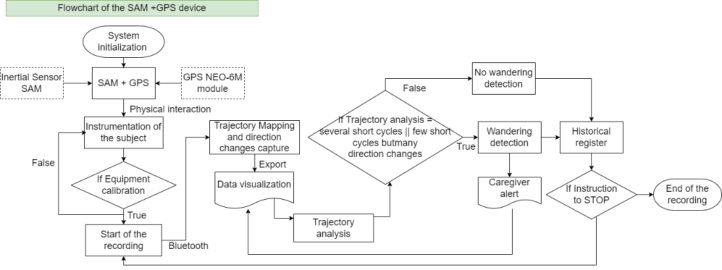
Figure 3: Flowchart of the integrated device “SAM+GPS”: inertial sensor (accelerome- ter, gyroscope, and magnetometer) with a GPS module for AD patients.
(accelerometer, gyroscope, and magnetometer) with a GPS module for AD patients for future wandering detection (see Figure 3).
The ideal device intends to achieve an accurate wandering detection and the possibility of labeling the type of trajectory like in the work by Batista et al. (Batista et al., 2016b), mapping the users indoor and outdoor trajecto- ries for the analysis of length cycles as in the study of Solanas et al. (Solanas et al., 2015) but, with a GPS Neo 6m module and the analysis of the conse- cutive direction changes as in the work of Kamil et al. (Kamil et al., 2021) and Lin et al. (Lin et al., 2012), but instead of performing such analysis with a vector angle calculation form the GPS location, the present work proposes an inertial sensor called SAM.
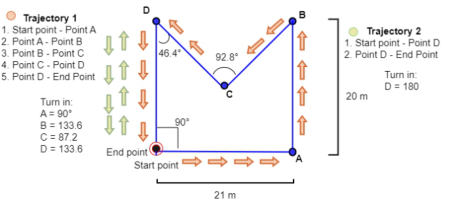
To validate the first prototype of the device called SAM + GPS, a pilot test was designed. It consisted in a delimited controlled area with a rectangular territory zone (Batista et al., 2016a) of 21 × 20 meters, with at least three locations (Solanas et al., 2015), at the terrace in front CEDETEC building in Tecnologico de Monterrey-Mexico City Campus with 9 healthy young adults ages from 18 to 30 years old (volunteers). The subjects were going to follow two specific trajectories shown in Figure 4 left diagram.
The trajectories were designed to prove that the integrated device pro- posed, is capable of measuring rotational body angles (β) when changing
Figure 4: Left diagram: Trajectory 1 (orange arrows) and Trajectory 2 (green arrows). Right diagram: Instrumentation of the subjects: Position of two SAM and GPS module.
Detecting and Monitoring Wandering in AD Patients With an Integrated Device 125
directions and the trajectory lengths between one location and the other. When β ≈0
the subject is walking straight (from the Start point to Point A in Trajectory 1), when β ≈90
it is a determined change of direction (the turn at Point A to the left in Trajectory 1), when β ≈180
, it represents a pacing movement (the user has reached a point and returned back using the same way) (from Start point to Point D in trajectory 2). Finally β ≈133.6
, β ≈ 87.2
, β ≈133.6
, area measured from Point B to Point C, Point C To Point D and Point D to the End point respectively, because if β > 90
, consecutively, this might indicate wandering behavior, pacing or lapping (repetitive travel characterized by circling a large areas) travels (Batista et al., 2016a)(Lin et al., 2012). The subjects were instrumented with two sensors, the first sensor SAM in the forehead and the second one in the torso between the 6th, 7th true ribs or 8th false rib with the GPS module as well (see Figure 4 right diagram) and the initial position of the sensors was 90
Pitch.
The GPS Neo 6M module was connected to an Arduino MEGA 2560 to be able to visualize the latitude and longitude data received from satellite communication in the Arduino’s serial port at first. Then, an SD card like in the SAM sensors with a MicroSD card adapter was used to save the data and have access to it, so that the data could be manipulated to elaborate the efficient code in MATLAB.
Eventually, the pilot test was conducted with the 9 healthy young adults routing the two trajectories, obtaining the direction changes and trajectory mapping results of each trajectory of each subject. After that, a lower-pass filter was implemented with a cut-off frequency of 12 Hz. This cut-off fre- quency was chosen because it corresponds to a human movement frequency top speed while running, meaning, that a person at his/her top speed gives 12 steps in a second. Because it was important to not over-filter and the tra- jectories of the pilot test were expected to be performed in a slower speed, the 12 Hz frequency was ultimate to ensure clean results and visualize the desirable changes of direction which will be performed under 12Hz.
The 12 steps given in a second data was obtained thanks to the literature, which reports different gait speeds in response to slow, preferred, and fast walking prompts. In this case the speed range of interest is “slow”, because the healthy young adults who performed the pilot test, where asked to walk in a slow mode trying to imitate an average speed of older people (above 60 years old). Studies report slow gait speed in healthy young adults ranging from 0.5 m/s to 0.90 m/s (Brinkerhoff et al., 2022). On the other hand, in another study, the mechanics of 33 subjects of different sprinting abilities running at their top speeds on a level treadmill where compared for other purposes obtaining 6.2 to 11.1 m/s (Weyand et al., 1991). In addition, an article reported that 837,000 km is equal to 1,156 million steps, to appraise the potential physical activity benefits of making some short trips by foot instead of by a motorized mode. So, this means that, 1 km is equal to 1,381.12 steps and that the average top speed of running on a level treadmill is 8.65 m/s (31.14 km/h). Then, 31.14 km/h times 1,381.12 steps/h is equal to 43,008.08 steps/h (11.95 steps/s), which is the frequency of human movement at top speed.
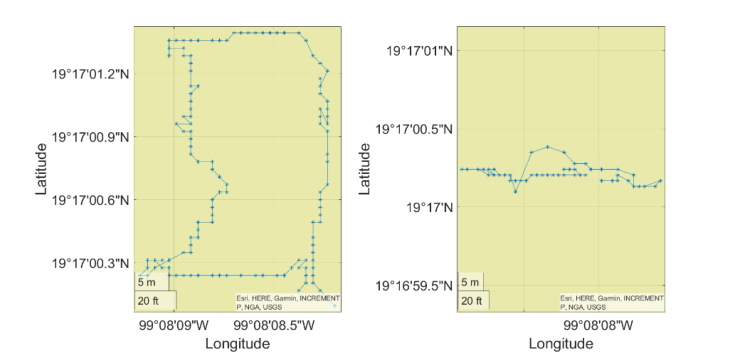
The visual evaluation of the performance of the Neo 6m module in the pilot test, is consistent with the GPS Neo 6m accuracy documented in its data sheet, which is 2.5 meters horizontal accuracy. There is some variation in the latitude and longitude data that produced a varied trajectory mapping but it does not exceed even the 2 meters. Later, the inertial sensor error was calculated with the percentage error formula obtaining 12.29% of error in the results from trajectory 1 and 27.44% for trajectory 2.
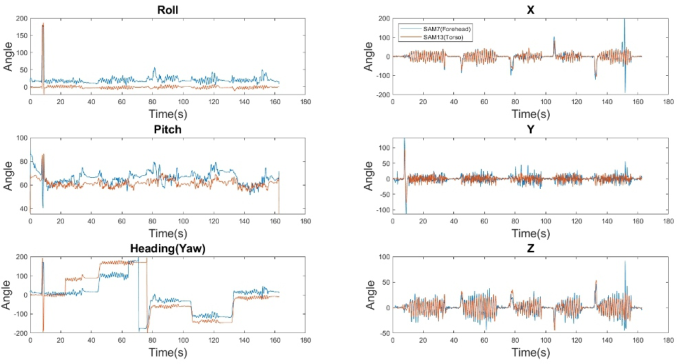
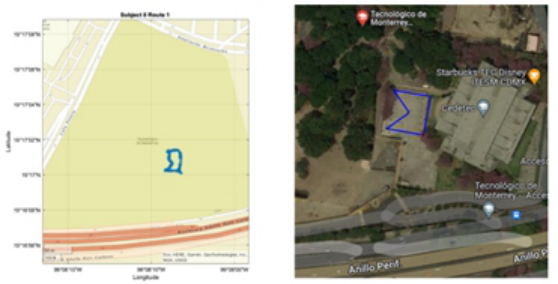
Two types of results were obtained from the SAM +GPS device in the pilot test. The first type is about the mapping of the trajectory shown in Figure 5 and the direction changes results shown in figure 6. To show that the trajectory one was similar to the ideal pattern traced from the trajectory designs, the two images were placed together in Figure 7.
Figure 5: Mapping of the trajectory 1 and 2 of Subject 8.Figure 6: Direction changes results of Subject 8 of Trajectory 1.
Detecting and Monitoring Wandering in AD Patients With an Integrated Device 127
Figure 7: GPS module mapping of Subject 8 trajectory 1 in comparison to the ideal pattern traced from the trajectory designs.
ANALYSIS AND DISCUSSION OF THE RESULTS After the performance of the first 5 subjects of the pilot test, it can be said that the inertial sensor implemented was able to measure different direction chan- ges with an acceptable 12.29% of error in the first trajectory and a critical error of 27.44% in the second trajectory.
In further tests, a variation of the results was presented generating new percentage error. For the first trajectory it was calculated and error of 11.75% and for the second trajectory an error of 37.80%. This, could be because of the variation in the dynamic route tracking of the subject, because people are not robots and they do not perform an exact 180
turn when returning. In fact, in the pilot test, it was discovered that human turns (changes of dire- ction) can vary a lot. Sometimes, the turn can reflect a lower angle variation because the person started turning before reaching point D, for example in the second trajectory of the pilot test or for some other reasons. If the person starts turning and gives an extra step forward or backwards, or turns around with pauses, the direction changes data will vary, but this does not mean that the device is measuring incorrectly, this means that some other aspects need to be considered in future work, such as the turn dynamic analysis.
Talking about the GPS module selected, it was able to map 6 trajectories out of 9 with high similarities to the two proposed trajectories with the expe- cted horizontal accuracy of 2.5m according to the data sheet of the module. The other 3 trajectories had a lot variation due to the fact that, that a few subjects did some abrupt movements while performing the test or because of some antenna interference. Besides, in the inspection of two data-sets of different subjects, the research uncovered one atypical value of latitude and longitude in each data-set. They were easy to identify while running the pro- gram to map the trajectory, because the map routed a trajectory from Mexico City to Africa continent. These values were removed manually, and taken into consideration to create a solution if the incident continuous happening.
Additionally, in the graphic results of the inertial sensor SAM in the x graphic related to the roll movements, it is very easy to identify the changes of direction of the subjects, noticing that, the left turns can be seen as negative
variations of the angle and the right turns are the positive variations of the angle, thanks to the filtration of 12 Hz of these results.
While performing the pilot test and analyzing the results, it was discovered that, the device has a weak performance in indoor environments because of its satellite communication, as consequence of some factors mentioned before in this reports, like the weather conditions or interferences in the building. The integra- tion of Wi-Fi communication for indoor environments or any other indoor positioning system is considered to overcome this problem.
CONCLUSION AND CONTRIBUTION To conclude, the specific objectives were reached, the work proposed an deve- loped a support system for monitoring trajectories, to identify alterations and positioning, and to run a pilot test of the integrated device SAM + GPS with the development of its appropriate protocol.
Moreover, the results from the pilot test were positive in matter of lear- nings, obtaining 12.29% of error for the first trajectory with 27.44% of error in the second trajectory, the first time the error was calculated, and 11.75% of error in the first trajectory with 37.80% of error in the second trajectory, the second time the error was calculated. Coming by with the idea that, other aspects need to be considered in future work, like the turn dynamic analy- sis, to have an specific explanation of how a human cannot change his/her direction with exact degree variations.
The exploration of the GPS module selected helped to define that it had a better performance in outdoor environments because of its satellite communi- cation, that it created a consistent mapping in the majority of the trajectories, with its expected horizontal accuracy of 2.5 meters and that it is useful for tracking a person.
FUTURE WORK
Finally, more studies are required to completely validate that the SAM + GPS device is an excellent candidate for analysis of length cycles and consecu- tive direction changes as expected both in wandering and eloping behaviors. Additionally, a comparison of the results with other studies is needed to say for sure that, the combination of the outputs of both direction changes analy- sis and cycle analysis increases the pattern analysis precision and for that, it could increase the wandering detection rate. But up to now, it can be said that this project is following a strong research line.
Besides, there is a plan to try the device on AD patients vs normal controls, working hand to hand with Dementia Friends Mexico which is a Mexican federation of Alzheimer initiative, in order to assess the developments.
REFERENCES
Ali, N., Luther, S. L., Volicer, L., Algase, D., Beattie, E., Brown, L. M., Molinari, V., Moore, H., & Joseph, I. (2016). Risk assessment of wandering behavior in mild
Detecting and Monitoring Wandering in AD Patients With an Integrated Device 129
dementia. International Journal of Geriatric Psychiatry, 31(4), 367–374. https: //doi.org/10.1002/GPS.4336 Alzheimer’s Association. (2019). 2019 ALZHEIMER’S DISEASE FACTS AND FIGURES Includes a Special Report on Alzheimer’s Detection in the Primary Care Setting: Connecting Patients and Physicians. Alzheimer’s Society. (2018). wanderanguage-Style guidelines Positive language. Batista, E., Borras, F., Casino, F., & Solanas, A. (2016a, January 20). A study
on the detection of wandering patterns in human trajectories. IISA 2015 - 6th International Conference on Information, Intelligence, Systems and Applications. https://doi.org/10.1109/IISA.2015.7387995 Batista, E., Borras, F., Casino, F., & Solanas, A. (2016b, January 20). A study on the detection of wandering patterns in human trajectories. IISA 2015 - 6th International Conference on Information, Intelligence, Systems and Applications. https://doi.org/10.1109/IISA.2015.7387995 Brinkerhoff, S. A., Murrah, W. M., Hutchison, Z., Miller, M., & Roper, J. A. (2022).
Words matter: instructions dictate “self-selected” walking speed in young adults. Gait and Posture, 95, 223–226. https://doi.org/10.1016/j.gaitpost.2019.07.379 Brito-Aguilar, R. (2019). Dementia around the World and the Latin America and Mexican Scenarios. In Journal of Alzheimer’s Disease (Vol. 71, Issue 1, pp. 1–5). IOS Press. https://doi.org/10.3233/JAD-190177 Chung, J. C. C., & Lai, C. K. Y. (2011). Elopement among community-dwelling
older adults with dementia. International Psychogeriatrics, 23(1), 65–72. https: //doi.org/10.1017/S1041610210000657 Kamil, R. J., Bakar, D., Ehrenburg, M., Wei, E. X., Pletnikova, A., Xiao, G., Oh, E.
S., Mancini, M., & Agrawal, Y. (2021). Detection of Wandering Behaviors Using a Body-Worn Inertial Sensor in Patients With Cognitive Impairment: A Feasibi- lity Study. Frontiers in Neurology, 12, 148. https://doi.org/10.3389/FNEUR.2021. 529661/XML/NLM Kumar, A., Sidhu, J., Goyal, A., & Tsao, J. W. (2022). Alzheimer Disease. In StatPearls. StatPearls Publishing. https://www.ncbi.nlm.nih.gov/pubmed/30102884 Lin, Q., Zhang, D., Huang, X., Ni, H., & Zhou, X. (2012). Detecting wandering
behavior based on GPS traces for elders with dementia. 2012 12th Internatio- nal Conference on Control Automation Robotics & Vision (ICARCV), 672–677. https://doi.org/10.1109/ICARCV.2012.6485238 Rowe, M. A., & Bennett, V. (2003). Deaths occurring in persons with dementia.
American Journal of Alzheimer’s Disease and Other Dementias, 18(6), 343–348. Solanas, A., Batista, E., Borras, F., Martínez Ballesté, A., & Patsakis, C. (2015).
Wandering analysis with mobile phones: On the relation between randomness and wandering | IEEE Conference Publication | IEEE Xplore. https://ieeexplore.i eee.org/abstract/document/7483747 Stevenson, D. G., & Studdert, D. M. (2017). The Rise of Nursing Home Litigation: Findings From a National Survey of Attorneys. Https://Doi. Org/10.1377/Hlthaff.22.2.219, 22(2), 219–229. https: //doi.org/10.1377/HLTHAFF.22.2.219 Vellas, B., Guigoz, Y., Garry, P. J., Nourhashemi, F., Bennahum, D., Lauque, S., & Albarede, J.-L. (1999). The Mini Nutritional Assessment (MNA) and Its Use in Grading the Nutritional State of Elderly Patients. In APPLIED NUTRITIONAL INVESTIGATION Nutrition (Vol. 15, Issue 2). Weyand, P. G., Sternlight, D. B., Bellizzi, M. J., Wright, S., & Weyand, P. G. (1991).
Faster top running speeds are achieved with greater ground forces not more rapid leg movements. In J Appl Physiol (Vol. 89). https://www.jap.org
Wick, J. Y., & Zanni, G. R. (2006). Aimless Excursions: Wandering in the Elderly.
The Consultant Pharmacist, 21(8), 608–618. Winblad, B., Amouyel, P., Andrieu, S., Ballard, C., Brayne, C., Brodaty, H., Cedazo- Minguez, A., Dubois, B., Edvardsson, D., Feldman, H., Fratiglioni, L., Frisoni, G. B., Gauthier, S., Georges, J., Graff, C., Iqbal, K., Jessen, F., Johansson, G., Jönsson, L., … Zetterberg, H. (2016). Defeating Alzheimer’s disease and other dementias: a priority for European science and society. The Lancet Neurology, 15(5), 455–532. https://doi.org/10.1016/S1474-4422(16)00062-4 Woolford, M. H., Weller, C., & Ibrahim, J. E. (2017). Unexplained Absences
and Risk of Death and Injury Among Nursing Home Residents: A Systematic Review. In Journal of the American Medical Directors Association (Vol. 18, Issue 4,pp. 366.e1-366.e15). Elsevier Inc. https://doi.org/10.1016/j.jamda.2017.01.007
LISTED IN THE AHFE DIGITAL BOOKSTORE CATALOGUE
Explore the complete digital volume
Health Informatics and Biomedical Engineering Applications
Read this individual research paper free through the original publisher, or explore the full digital proceedings book.
ISBN 978-1-958651-54-4
Explore this ISBN in the AHFE Bookstore ↗Listed in the July 2026 bookstore catalogue; search by ISBN to confirm current availability · Digital book purchase optional