Ana Alvarez Sanchez, Alex Geovanny Farinango Tupiza, Alexis Suarez Del Villar Labastida, Eric Martínez (2022). Ergonomic risk reduction in the balance unloading area in a poultry microenterprise. In: Human Interaction & Emerging Technologies (IHIET 2022): Artificial Intelligence & Future Applications. AHFE Open Access, vol. 68, pp. 650–657. https://doi.org/10.54941/ahfe1002789
An ergonomic study was carried out to evaluate the manual handling of loads and identify possible musculoskeletal conditions to establish preventive measures to reduce the risk in the worker in the balancing unloading area. To identify risk factors, information was collected through direct observation and photographs. To establish the ergonomic risk in the manual handling of loads, the OWAS (Ovako Working Analysis System) evaluation method was applied with respect to the postures to which it is exposed. By conducting the evaluation, sixteen postures were analyzed using the encodings of the back, arms, legs and load postures. Positions 9, 10 and 11 are the ones with the highest risk for the worker, obtaining a risk category 4, this means that it is necessary to adopt corrective actions as soon as possible. In addition, the Snook and Ciriello method was applied for the evaluation of load handling, for this method the ERGOSoft PRO software for Windows used in Ergonomics is used to facilitate the work of the prevention specialist with data collection from mobile technology. The results for the initial force gave a risk level between 1.5 - 2.0 with a value of 1.82 having a high risk due to being exposed to a significantly high force, for the sustained force the risk level is> 2.0 with a value of 3.33 having a very high risk due to being exposed to high force and overexertion, it is recommended that you include in your budget the performance of complementary examinations every six months for the control and prevention of musculoskeletal injuries due to activities that they involve efforts in the postures of the back, arms and legs.
Ergonomics is a discipline that involves the interaction between people and work, tools and the work environment in genera (Velázquez, Caballero, & Espinoza, 2020) that allows us to understand the functioning and behavior of man (Cisneros Rodríguez, 2016). One of its objectives is to adapt devices, tasks and tools to the needs and abilities of human beings, improve their effi- ciency and comfort, thus reducing injuries and illnesses, reducing disability
Ergonomic Risk Reduction in the Balanced Unloading Area in a Poultry Microenterprise 651
Figure 1: Sixteen postures that the worker adopts when carrying out the balancing unloading activity in the poultry microenterprise.
Figure available in the original PDF paper.
and compensation costs, improving productivity, quality and safety (Sánchez, 2016) (Stashchuk, 2021) There are characteristics within the work environment that can cause a series of disorders or injuries: the so-called ergonomic risks, these can be of different types, such as excessive physical and physical effort, psychosocial aspects related to poor work organization (Pons Castillo, 2019) (LiangTan- gun, Volumen 87, 2022). Ergonomic Risk Factors are a set of multifactorial characteristics of the work or activity carried out by employees who may have injuries, which we will call Musculoskeletal Disorders (Estuardo, 2018) (Panigrahi, 2021). Los estudios ergonómicos han demostrado que una mala postura puede conducir a un trastorno de trauma acumulativo (ATD), which occurs when people perform repetitive and stressful exercises (Melania, 2016) (Boriboonsuksri, Taptagaporn, & Kaewdok).
In the workplace, a “forced posture”is defined as a work position in which one or more anatomical areas are no longer in a natural comfortable posi- tion to move into a (forced) position, the obsessive posture that is generated by making hypotheses (qualitative research) or guiding questions (qualita- tive research), if necessary, can cause musculoskeletal diseases in different parts of the body: neck, shoulders, spine, upper and lower limbs, in various impacts more or less in their occupations or work tasks (Alexander, 2017)
(Saeid Yazdanirad, 2022). The OWAS Method is an excellent postural loa- ding method based on the simple and systematic classification of work postures and the observation of tasks (Marcelo, 2019) (Alexander, 2017). La manual handling of loads is considered one of the main risk factors in the appearance of back injuries (Piedrabuena, 2017). With the research methodology, researchers can demonstrate that the basic data can use the corresponding evaluation method (Irene, 2016).
OWAS, SNOOK AND CIRIELLO METHODS The classification by the OWAS method covers the most common and easily recognizable work postures, which are described below in Table 1. Each com- bined digital code related to work posture and use of force is accompanied by work phase information, which is also encoded. Several techniques can be used to distribute the observations over time, for the OWAS method a system of equal intervals is recommended, where the interval is 30 or 60 seconds, when it is continuous it should last from 20 to 40 minutes. There should be at least 10 minutes of rest between each observation period, calculate the frequency of the working posture and its relative proportion (%) during the working time based on the observation results. The random system formula is used to calculate the error limit related to the average relative proportion of the working posture with a probability of 95%. The error limit decreases as the total number of observations increases. The error range based on the average of 100 observations is 10%. The error ranges based on the average of 200, 300, and 400 observations are 7%, 6%, and 5%, respectively. When the error limit is less than 10%, the mean value obtained by observation can be considered sufficiently reliable.
RESULTS
Ergonomic Risk in the Manual Handling of Loads With the OWAS Assessment Method Based on the coding of Table 1, the results of Table 2 were obtained after making several observations that satisfied the sampling error of the sixteen postures of Figure 1 in the positions of the back, arms, legs and the load or force. In the case of postures 3, 6, 13, 14, 15 and 16 the risk category of 1 indicates that it has a normal natural postural effect and has no harmful effects on the musculoskeletal system, therefore no actions are required. The risk category of postures 1, 2, 4, 5, 7, 8 and 12 is 3, they have harmful effects on the musculoskeletal system and it is necessary to take corrective actions as soon as possible. Risk category 4 of postures 9, 10 and 11 is a very devastating effect on the musculoskeletal system, therefore immediate corrective actions are required.
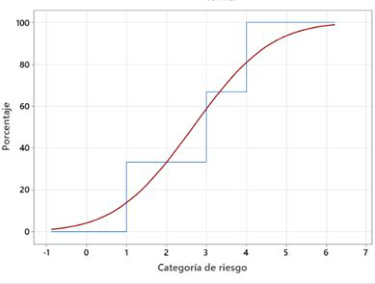
Table 3 shows that risk category 3 has the highest percentage, being 43.75%, with harmful effects on the musculoskeletal system as it is a high category.
Ergonomic Risk Reduction in the Balanced Unloading Area in a Poultry Microenterprise 653
Table 1. Position coding: back, arms, legs and load or force.
Table available in the original PDF paper.
Code Arm
Code Leg position Code Load or Code
Back position position
force
Right back
1 Both arms lowered
1 Sitting 1 Less than 10kg 1
2
2 Stand with both legs straight
2 Between 10 and 20kg
Bent back 2 One arm low and the other raised Twisted back
3 Both arms raised
3 More than 20kg 3
3 Stand with one leg straight and the other one bent
4
Bent back with twist
4 Standing or squatting with both legs bent and weight balanced between both
5
Standing or squatting with both legs bent and weight unbalanced Kneeling 6 Walking 7
The points in Figure 2 are connected with a stepped line, and the plot inclu- des a fitted line corresponding to the fitted cumulative distribution function (CDF).
Table 3. Summary of the results of the posture analysis with the OWAS method.
Table available in the original PDF paper.
Risk category Percentage
1 37.50% 3 43.75% 4 18.75%
Figure 2: CDF intuitive empirical of risk.Table 4. Risk Levels.
Table available in the original PDF paper.
Risk level Risk Exposition Recommended action
Job improvement, medical supervision and training are recommended
≤0.50 Inappreciable No exposure It is not required 0.5 - 1.0 Low Very low exposure It is not required 1.0 - 1.5 Medium Significantly high strength. Probable overexertion for people with reduced capacity Job improvement actions are essential.
1.5 - 2.0 High Significantly high strength. Probable overexertion for people with normal capacity.
> 2.0 Very high High force. Very likely overexertion
There are urgent actions to improve the position
Analysis Based on the Snook and Ciriello Tables Method The ERGOSoft PRO Software was used to evaluate the level of risk in the forces, that the value of the initial force is 22 kg and the sustained force is 12 kg are recommended, the processed data was that the sex of the worker is Female, starts the process with a load of 40 kg and it is sustained throughout the study process, the height of application of the force is 160 cm, the dista- nce traveled is 5 m with a frequency of 12 movements per hour. The result obtained from a risk level value of 1.82 was analyzed according to Table 4 to identify the risk and the recommended actions.
Ergonomic Risk Reduction in the Balanced Unloading Area in a Poultry Microenterprise 655
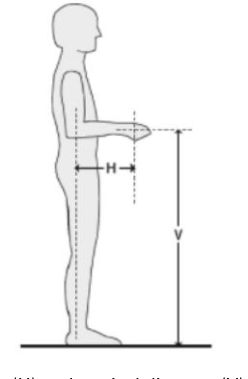
Figure 3: Horizontal distance (H) and vertical distance (V).Figure 4: Lifting of loads by the international labor organization.
Figure available in the original PDF paper.
When the load is close to the person’s center of gravity, the basic factor in the dangerous appearance due to manual handling of the load is the dista- nce between the load and the person’s center of gravity. Two factors affect this distance: In Figure 3, we see the horizontal distance (H) and the vertical distance (V), which will give us the “coordinates” of the load situation. The further the load is from the body, the greater the compressive force genera- ted in the spine and, therefore, the greater the risk of injury, which is what happens in this case study. The ideal vertical displacement of the load is a maximum of 25 cm, the displacement between “the height of the shoulders and the height of the middle of the legs” is acceptable. Whenever possible, the task should be designed to handle the load without turning. The twisting of the torso will increase the pressure on the lower back.
CONCLUSION
Sixteen postures were analyzed by means of the OWAS method using the encodings of both the back, arms, legs and in the load, postures 9, 10 and 11 are the ones with the highest risk for the worker, obtaining a category of risk 4 whose effect is extremely harmful on the worker. musculoskeletal system. When evaluating the risk levels in the ERGOSoft PRO Software, two inci- dent forces were obtained, in the initial force the risk level was 1.82 which is significantly high with a probable overexertion for people of normal capa- city, for the sustained force it gave a value of 3.33 having a very high risk due to being exposed to a force of 40 Kg and very probable overexertion, the recommended actions are to immediately redesign the job using auxiliary mechanical equipment or lift the current weight between two people by redu- cing the weight of the load even with the same frequency of movements and using correct ways to lift, load and collect the balancing quintals as shown in Figure 4.
ACKNOWLEDGEMENT
To the authorities of the Indoamerica Technological University who open spaces for joint work between students and professors, so that teaching can move from a passive presentation of knowledge to research with transcen- dence in time, with the aim of developing the generic capacities of students, with a social benefit and the scientific community.
REFERENCES
Alexander, L. G. (2017). Evaluación ergonómica en los trabajadores abastecedores de molino de la Empresa Minera Beloro y propuesta de mejora. Guayaquil: Facultad de Ingeniería industrial. Boriboonsuksri, P., Taptagaporn, S., & Kaewdok, T. (s.f.). Análisis de tareas ergo-
nómicas para la priorización de trastornos musculoesqueléticos relacionados con el trabajo entre agricultores de cosecha de mango. Obtenido de Seguridad 2022, 8, 6: https://doi.org/10.3390/safety8010006 Cisneros Rodríguez, Y. (2016). Procedimiento para la gestión sistémica y por procesos de los riesgos ergonómicos. Aplicación en el joven club de computación y electrónica Nr. 1 municipio holguín. Holguín, Cuba: Departamento de Ingeniería industrial. Estuardo, T. A. (2018). Determinación de trastornos músculo esqueléticos asociados
a riesgos ergonómicos en los trabajadores del Hospital Cantonal de l de Girón. Universidad del Azuay. Irene, V. (2016). Estrategias de investigación cualitativa. Barcelona:Gedisa. LiangTangun, G. W. (enero de Volumen 87, 2022). La prevalencia de TME y los factores de riesgo asociados en enfermeras de China. Obtenido de Revista Inter- nacional de Ergonomía Industrial: https://www.sciencedirect.com/science/article/ abs/pii/S0169814121001578 Marcelo, U. Y. (2019). Gestión técnica de los factores de riesgo ergonómico para el
proceso de corte de malla en la empresa ANDEC. Quito: Universidad Tecnológica Indoamérica.
Ergonomic Risk Reduction in the Balanced Unloading Area in a Poultry Microenterprise 657
Melania, C. M. (2016). Correlación entre el nivel de conocimiento sobre ergonomía de las posturas de trabajo odontológico y las posturas adoptadas por los estu- diantes de la clínica de 4to y 5to año de la Escuela Académico Profesional de Odontología. Universidad Nacional Jorge Basadre Grohmann. Panigrahi, S. R. (2021). Posture analysis of women involved in papad making process
in Ganjam district of Odisha. Obtenido de https://www.thepharmajournal.com/ archives/2021/vol10issue5S/PartB/S-10-4-94-303.pdf Piedrabuena, C. A. (2017). Cómo hacer fácil la evaluación de la manipulación manual de cargas. Biomecánica, no 62, p. 79–85. Pons Castillo, A. V. (2019). Gestión de riesgos ergonómicos en el Centro para la
Investigación y Rehabilitación de las Ataxias Hereditarias “Carlos Juan Finlay”. Holguin: Grupo editorial Patria. Saeid Yazdanirad, G. P. (2022). Desarrollo del método de evaluación rápida modificada de todo el cuerpo (MOREBA) para predecir el riesgo de trastornos muscu- loesqueléticos en los lugares de trabajo. Obtenido de BMC Musculoskelet Disord 23, 82: https://doi.org/10.1186/s12891-022-05011-7 Sánchez, M. G. (2016). Fundamentos de ergonomía. Grupo editorial Patria. Stashchuk, O. S. (2021). Modelo para la evaluación de la eficiencia de la gestión de la
seguridad financiera de las sociedades anónimas que operan en el sector agrícola: un estudio de caso de Ucrania. Obtenido de Artículos Científicos "Gestión, Ingeniería Económica en agricultura y desarrollo rural, 21(1), 715–728. Velázquez, C. A., Caballero, J. R., & Espinoza, G. A. (2020). La ergonomía en la prevención de problemas de salud en los trabajadores y su impacto social. Revista Cubana de Ingeniería, vol. 10, no 2, p. 3–1.
Read this individual research paper free through the original publisher, or explore the full digital proceedings book.
ISBN 978-1-958651-44-5
Explore this ISBN in the AHFE Bookstore ↗Listed in the July 2026 bookstore catalogue; search by ISBN to confirm current availability · Digital book purchase optional