Shun Coney, Yasunobu Ito (2022). The production process of films from a relational perspective: A case study of independent films about Parkinson's disease in Japan. In: The Human Side of Service Engineering. AHFE Open Access, vol. 62, pp. 167–175. https://doi.org/10.54941/ahfe1002555
The purpose of this paper is to clarify how creativity is produced in filmmaking from a relational perspective. Creativity here refers to the fact that films that contain original ideas and evoke sympathy in the audience are not produced solely through the internal mechanisms of individuals, but rather as a result of the collective actions and activities of various people.In recent years, movies have moved beyond the confines of theaters, and infrastructures such as Amazon Prime and Netflix are rapidly expanding. Against this backdrop, independent Japanese films have been receiving high acclaim overseas. The so-called independent films are not films that come out with huge budgets and a fixed release destination like the major film systems, but films that are planned and produced by the filmmakers themselves without any financial resources. Independent films can have an impact on people despite the risk of completion and release, but their reputation is focused on the director and producer. For this reason, the relationship between actors other than the director and producer in filmmaking is not fully clarified.Filmmaking is a multi-layered and contingent creativity that is created through the long-term interaction of not only the director, producer, and cast, but also various other actors such as equipment, script, and location. While independent films allow for a greater degree of freedom in planning, they are also subject to complexities and volatility, such as difficulties in obtaining financing and differences in the image of the film among the staff, which can prevent the project from proceeding as planned at the outset.The subject of the study is Parkinson's disease (PD) patients and movies about it. PD is an intractable disease for which there is currently no curative treatment, and which causes progressive symptoms such as tremors in the limbs and stiffness in the muscles that interfere with daily life. In order to control the progression of the disease, it is said that regular exercise therapy and rehabilitation are essential, along with daily medication. The film will be produced with the cooperation of the PD Patients Association, which has 8,000 members, and will consist of two parts: a drama about the life of the main character who was diagnosed with PD in his 40s, and a documentary about several PD patients in their 30s to 60s. The research was conducted by one of the authors (a filmmaker) using ethnography: from December 2020 to November 2021, he conducted participant observation of the relationships between the actors involved in the project and the living conditions of the PD parties, and interviewed them. Based on these observations, we conducted a series of interviews. The PD parties who would become the informants and the filmmakers had numerous dialogues. As a result, their social and living environments were unraveled.
According to anthropologist Rosaldo (2018) and others, creative objects are not produced by the talents and labors of individuals, but by the pra- ctical activities of communities. Film is also not a representation produced by the filmmaker alone. It is a communal product created by the inciden- tal combination of filmmakers, subjects, equipment, and funds (Rollwagen, 1988). Because of the unique closed nature of the Japanese film industry, it is very difficult to scrupulously follow up and analyze how film works are produced (Takano, 2005). In the Japanese film industry, there are two main types of films: major studio films and independent films. Major studio films are those that are produced by major distribution companies that have many theaters in various locations and form partnerships with TV stations, newspapers, etc. to jointly finance the production. Independent films start from scratch in terms of financing, and carry the risk that the film will not be completed due to difficulties in fund raising or unresolved conflicts among the parties involved,
or not finding an exhibit venue. On the other hand, the major advantage of independent films is the freedom of planning. However, in the Japanese film industry, the power of the media, such as distributors and TV stations, is strong (Ito, 2014), and the number of independent films that see the light of day, even if they are of good quality, are very limited. Independent films face the difficulty of finding theaters for its release, and the situation is similar not only in Japan but also in the United States (Elberse, 2008).
In this study, we will analyze the production process of an independent film using ethnography. As a concrete example, we will use a new film (hereafter referred to as “the new film”) to be released in theaters, directed by one of the authors, as the subject. The film is about Parkinson’s disease (hereinafter referred to as “PD”). The new film captures the work and living environment of people with PD, and depicts their suffering and struggles.
The analysis of the process of film making using ANT has academic signi- ficance. Moreover, one of the authors is a filmmaker who has been making independent films on the theme of social issues for about 20 years; so the process of creating a film can be described and analyzed from an insider’s perspective. In this respect, this study breaks new ground.
METHOD
The research period is from January 2020 to January 2022. One of the auth- ors researched Mr. A and the actors surrounding him. The research method used was ethnography with a focus on participant observation. However, it is somewhat different from conventional ethnography conducted by anthro- pologists. This is because one of the authors (a film director) interacted with the actors while describing and analyzing them.
Because of the Covid-19, there were times when face-to-face research was not possible, so interviews were partially conducted using the online conference system ZOOM.
RESULT
How the Film Was Planned Mr. A had worked for a Japanese securities company for a number of years and contacted PD in 2010 at the age of 54. He kept working until the age of 65 and retired in December 2019. He now lives alone and has been a member of the PD community α since 2016, which is led by Mr. B, a physical therapist who runs classes at 10 locations in Japan. A total of 300 members meet once a month for exercise training to slow down the decline of physical functions as PD progresses. Due to the impact of Covid-19, he is now shifting his focus to online activities.
The plan for the new movie was initiated by Mr. A who approached Mr. B, the leader of α. Initially, all the members of α were not comfortable with the idea of making a film; but Mr. B had a different idea towards film making; which was to distribute their training activities through the film. The four members from α and Mr. B established a voluntary association group β in January 2020. β collaborated with the new movie for the purpose of hosting
The Production Process of Films From a Relational Perspective 169
movie screenings at companies, conducting training activities and promoting the employment of people with PD in companies.
Expanding From a Short Film to Medium-Length and a Feature-Length Film Mr. A had an ardent desire to make a film about PD. In December 2019, he confided his plan to one of the authors (the film director) who has been his friend since 2014. At the same time, Mr. A had started a fund-raising campaign in community α. Even though he had no idea how much it would cost to make this film, the fund-raising campaign is a sign of his positive attitude and determination to make a film.
In the planning stage of a film, there is a procedure in creating a script, a flow starting from an “original draft to original story, and then, original story to script”. In early March 2020, Mr. A was instructed by the director to create an original draft of the short film. The original draft that Mr. A created was to become the draft of the film’s original storyline. When the director received the original draft prepared by Mr. A, he checked the contents and told Mr. A that he would then take on the original story himself. The original draft may be used exactly as it is for the original story, or it may be revised or altered significantly. In late March 2020, the director submitted the manuscript of the original story he wrote to Mr. A. Mr. A shared the original story written by the director with the members of β.
The protagonist of the film had to be a specific person to be spotlighted, and β members felt uncomfortable with the fact that the original story devi- ated from Mr. A’s original draft. In particular, Ms. C, a woman in her thirties, was dissatisfied with the social situation surrounding the main character in the original story presented by the director.
In May 2020, in response to β members’ impressions of the original story, the director held a discussion for about an hour via ZOOM with a total of nine people: seven PD members α, Mr. B as an organizer of α, and a neurologist who is the medical supervisor of the film. In the process, the director rewrote the original story, focusing on Mr. D who is a member of α, as the concept of the film’s main character.
Mr. D is 47 years old as of 2021 and lives with his wife, two children, and his parents. The PD symptoms first appeared in 2015, although he went to various institutions for diagnosis, he was at a loss for three years until he was finally diagnosed with PD. At the time, Mr. D worked strenuously from morning till late at night and hardly had any days off. He drank late at night to relieve his stress, and because of his disordered eating habits, the PD medication was not effective at all.
In June 2020, the director submitted a revised version of the original story to Mr. A. The new revised version of the original story was well received by the β members. The director’s in-depth interviews with PD patients provided him with a vast amount of information about PD that he needed in crea- ting the original story, and he succeeded in incorporating it into the original story. The interviews were a necessary part of the process not only to enrich
170 Coney and Ito
the quality of the story, but also to solidify the relationship with the film collaborators.
Films can be divided into short films, medium films, and feature films depending on the length of the completed film. In general, a short film is within 30 minutes, a medium film, 30 to 60 minutes, and a feature film, more than 60 minutes. The revised original story was well received, but the director had done a lot of interviews, and the contents of the film could not be contained in a short film. Therefore, Mr. A and the other members of group β wished to proceed with the project as a medium-length film in July 2021. The budget of US$50,000 originally projected for a short film has surged to US$130,000 for a medium-length film. As of the end of July 2020, it was decided that Mr. A would receive a sponsorship of US$25,000 from the company due to his connection with the old business. Because of this, β members were not afraid of the project expanding into a medium- length film. However, since the project was still not fully funded, the director suggested to Mr. A and Mr. B to have some influential supporters participate in the film. Through this, we met Dr. E, who is considered one of the top ten skilled PD physicians in the world, and asked him to be the first to endorse the film at the end of October 2020. With Mr. E’s participation, medical and pharmaceutical companies with which he has close affiliation came forward to sponsor the new film, bringing in an additional sponsorship of approxi- mately US$50,000. Including the individual sponsorship solicited by Mr. A, about US$82,000 had been raised as of the end of November 2020.
In January 2021, the director proposed to Mr. A to produce a teaser video for the new film. A teaser video refers to a short video created in advance that conveys the concept and world view of a movie before it is released. The teaser video will be used to promote awareness of the film and as a presenta- tion material for sponsors. In the same month, the director approached Ms. F to participate in the new film as a new producer. Ms. F understood the director’s presentation and plan, and participated in the project. On Janu- ary 19th, 2021, the project team launched a crowdfunding campaign to raise funds. At this point, the scale of the film had grown from a medium-length film to a feature-length film. The director informed Mr. A and others that US$260,000 would be needed to produce a feature film.
DISCUSSION
The subject of this research, the new film, was conceived with Mr. A’s desire to expand the social awareness of PD, which took off when he approached the director about making a film. However, how the film grew into the feature film project it is today cannot be explained by the relevance of Mr. A and the director. Therefore, the mutual actions of the various actors surrounding Mr. A and the director will be examined through ANT.
Interpretation of “Translation” in ANT According to the ANT concept, social events are composed of networks. The concept is that networks are composed of various heterogeneous actors such
The Production Process of Films From a Relational Perspective 171
as people, things, ideas, and technologies interacting with each other (Law, 1992). According to M. Callon, the process of changing and adapting the relation- ships between actors to fulfill the purpose of the network while maintaining their mutual actions is called “translation”. Callon (1986) organized the translation process into four stages based on an experimental case of intro- ducing Japanese technology to a scallop farm in Saint-Brieuc Bay. In the first stage, problematization, the main actor raises the issue then the perceived problem, and defines its relevance to other actors. In order to fulfill the pur- pose of the main actor, the network built to maintain the status of the various actors, mediates the obligatory passage point (OPP). Each actor is presented with its own purpose for this obligatory passage point. In the second stage, interessement, the main actor brings out interesting materials to other actors in order to create a closer relationship in the network. In the third stage, enrollment, the main actor solidifies the relationships between the main actor and other actors through negotiating amongst actors and adjusting actors’ roles according to the situation. In the fourth stage, mobilization, the main actor selects a representative actor from the network to make sure the repre- sentative has the legitimacy to accept all actors in the network. In this way, translation is a dynamic process for prescribing the practices and conducts of actors through their interactions with each other in order to achieve a specific goal.
Establishing the Obligatory Passage Point Through the community α, Mr. A found buddies who were in a similar situ- ation as he, and through contribution to α, established a sense of his place in society. He aspired to make PD known via film as a means to solve similar concerns to what he had and to convey the joy of life.
The director’s idea of filmmaking philosophy is how to highlight social issues and create a breakthrough so that issues can be solved through films.
While β members showed their understanding of Mr. A’s filmmaking, they had in their mind to play a PD role themselves. Their participation in the film production for the purpose of training activities fulfills its social significance.
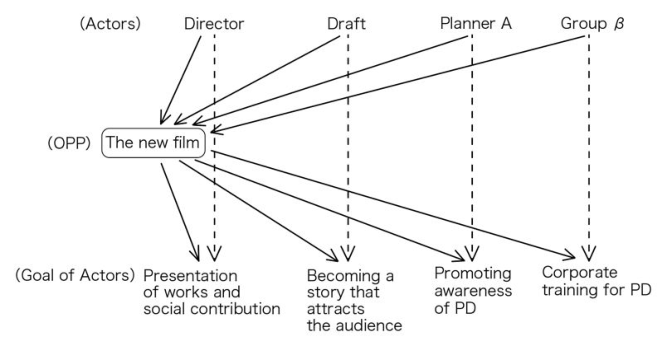
In light of the above, we focus our obligatory passage point analysis of the new film (See Figure 1).
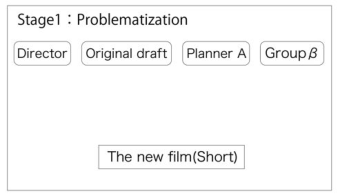
First of all, in the problematization stage, Mr. A would like to distribute his message of loneliness and concerns that he had been facing to a wide audience, with a goal to create a society where people with PD can live more comfortably. In order to achieve this, the film itself had to appeal strongly to the audience and be made into a newsworthy film. At the beginning of the project, the director did not have any knowledge of PD, so he needed a draft from Mr. A. So we pointed out the non-human actor, the “original draft” in juxtaposition with the human actor. Although group β is interested in Mr. A’s filmmaking, Mr. A is the only one directly responsible for the filmmaking and does not possess the awareness to take on the risks including procuring funds (See Figure 21).
1The figure of translation was suggested by Asano et al. (2017).
172 Coney and Ito
Figure 1: Problem statement and the obligatory passage point. Created by the author based on Callon (1986).Figure 2: Relationship with actors in problematization.
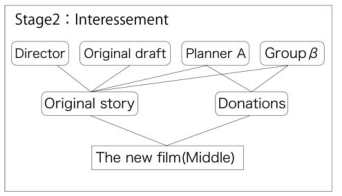
In the interessement stage, in order to promote the project, the director thoroughly interviewed Mr. A and other members of β to gain a better under- standing of PD and to build relationships with β members. The director was able to obtain a more in-depth understanding of the various conflicts and the circumstances of PD patients which did not exist in Mr. A’s draft. This allo- wed the director to transform the draft into an original story. At this time, we had raised about US$30,000 in donations to produce the short film, and if we were to add the crowdfunding that we planned to implement in the future, we would be able to meet the expected budget. In the meantime, β members showed strong interest in the original story’s thought-provoking contents that could not be contained in a short film. Naturally, the scale of the project expanded from a short film to a medium-length film. It can be recognized that the new non-human actor, the original story exerted itself as an agency to Mr. A and β (See Figure 3).
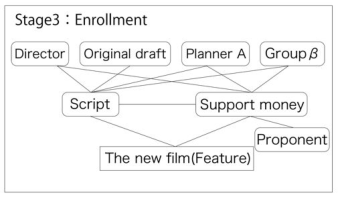
In the enrollment stage, actors are expected to strengthen their relationsh- ips with each other. Mr. A’s initial wish to have the film released as a feature film was transformed into a script from the original story completed by the director, which further signified Mr. A and β’s involvement in the film pro- duction. At the same time, the director himself came forward to become the
The Production Process of Films From a Relational Perspective 173
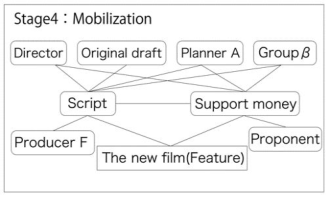
Figure 3: Relationship with actors in interessement.Figure 4: Relationship with actors in enrollment.Figure 5: Relationship with actors in mobilization.
producer. Instead of directing the film as “contract work”, he proactively made himself responsible for the financing, which was five times larger than the original budget of US$260,000. Here a new actor, “a proponent”, was conceived (See Figure 4).
Finally, in the mobilization stage, the participation of a new producer was essential to enrich the script. The new producer, Ms. F, who had a different perspective from Mr. A and the director, was able to refine the script and manage the budget objectively and carefully. Thereafter, all revisions of the script were first done by Ms. F and shared with Mr. A and group β. As the script improved, concrete images of the completed film were formed in detail. This clarity of the images became the material to persuade sponsors to fund the film, and new supporters were brought into the network. These non- human actors of scriptwriting and funding formed a “nested relationship” as the project was carried out (See Figure 5).
174 Coney and Ito
CONCLUDING REMARKS In the process of filmmaking, there are two notable non-human actors: the original story and the financing. The original story is the imaginative guide- post of the film’s production, while the financing is the necessary driving force in the journey of making the intangible original story to turn into a tangible film. The original story and funding are two sides of the same coin. But the process of translation shows that the agency of the human actors, surroun- ding the two sides, interacts with the non-human actors and transforms the human actors. As the original story improved, Mr. A and group β, who were affected by it, expanded the scale of the film from a short to a medium, then to a feature length film. As the film became a feature length film, the director, while accepting the risk, came forward as the producer himself and became the actor responsible for financing the film. The director took on the role of original story writer and producer, and Mr. A, whose existence was initially limited to collecting donations, took on the role of original draft writer and producer. As the agency of actors is transformed and solidarity among actors is strengthened, the scale of the film, which is the obligatory passage point, expands. As the actors mediate the obligatory passage point, they mature, as recursive development occurs. As Latour (2005) argues, networks generate assemblages through recombination and regrouping. In the new film, whene- ver the relationship between actors and obligatory passage points undergoes changes in the network, as seen in the transformation from a short film to a medium film, then on to a feature film, the actors, with a certain level of stress, go through the recombination and regrouping. As a result, a high-density relationship was formed in the network.
In this study, we examine how independent films are produced through ANT based on a relational perspective. As a result, it became clear that the non-human actor, the original story, strengthened the solidarity with the human actor, formed a hybrid collective, extended the significance of the obligatory passage point and constructed a mutually constitutive relationship.
ACKNOWLEDGMENT
The authors would like to acknowledge those who are involved in the new film for their cooperation in the research. This work was supported in part by JSPS KAKENHI Grant Numbers JP 18H00782/19H05469.
REFERENCES
Asano, Y., Tanaka H., Wakasugi, R. (2017). “Applying Actor-Network Theory into Fab Projects”, Keio SFC Journal. Volume 17 No.1. 260–275. Callon, M. (1986). “Some Elements of a Sociology of Translation: Domestication of
the Scallops and the Fishermen of St Brieuc Bay”, in: Power, Action and Belief: A New Sociology of Knowledge, London: Routledge and Kegan Paul, Law, John (Ed.). pp. 196–223. Elberse, A. (2008). “Should you Invest in the Long-tail?”, Harvard Business Review.
The Production Process of Films From a Relational Perspective 175
Ito, T. (2014). “Prevalence of the Media-Consortium Approach to Film Production in Japan and Dominant Powers in the Japanese Content Industry”, Sociologica Volume 38 No.1. pp. 3–27. Latour, B. (2005). Reassembling the Social: An Introduction to Actor-Network
Theory: Oxford University Press. Law,J. (1992). “Notes on the Theory of the Actor Network: Ordering, Strategy and Heterogeneity”, Systems Practice. Volume 5. pp. 379–393. Rollwagen, J.R. (1988). Anthropological Filmmaking: Anthropological Perspectives
on the Production of Film and Video for General Public Audiences, Harwood Academic Publishers. Rosaldo, R., Smadar, L, Kirin, N., eds. (2018). Creativity Anthropology, Cornell University Press. Takano, H. (2005). “A Study on the Consortium of Movie Making in Japan”, Mita
Business Review Volume 48 No.1. pp. 199–207.
LISTED IN THE AHFE DIGITAL BOOKSTORE CATALOGUE
Explore the complete digital volume
The Human Side of Service Engineering
Read this individual research paper free through the original publisher, or explore the full digital proceedings book.
ISBN 978-1-958651-38-4
Explore this ISBN in the AHFE Bookstore ↗Listed in the July 2026 bookstore catalogue; search by ISBN to confirm current availability · Digital book purchase optional