Oksana Kravchenko, Marina Mishchenko, Olena Soroka, Anna Levenets, Valentyna Korolchuk, Serhii Myronets, Svitlana Tsymbal, Iryna Vahotska, Natalia Hotsuliak (2022). Development of Specialists’ Stress Tolerance in the Process of Their Professional Activity. In: Human Factors, Business Management and Society. AHFE Open Access, vol. 56, pp. 196–204. https://doi.org/10.54941/ahfe1002269
The process social workers of different ages develop their high stress tolerance is the subject of study analysis in the article. A theoretical analysis of the phenomenon of "stress" is carried out, the content and essence of high stress tolerance and the essence of the concept of “high stress tolerance of the personality of social workers” are determined as an integrative dynamic structure that activates the ability to comprehend the specifics of a stressful situation and its own capabilities to overcome it, adequately react emotionally to various stressors, to change stressful (stress-producing) conditions and maintain the effectiveness of the activities performed.The features of the professional activity of social workers are considered. It was found that the overwhelming majority of social workers of all age categories have an average level of high stress tolerance, which indicates that in many stressful situations associated with the characteristics of their professional activities, they are able to regulate their own emotions, perform professional tasks at the proper level and maintain an optimal operability level.
At the present stage of development of society, the problem of stress worries not only psychologists, physiologists and physicians, but also ordinary citi- zens, because stress is a phenomenon every day involving everyone to some extent. The mental health of a person is a prerequisite for his effective activity in general and professional in particular. Currently, a revision of ideas about a person as a person, his unique value is being carried out, and this requires the solution of new problems. The most important among them is the pro- blem of maintaining human health, and not only physical, but also mental (Kravchenko, Mishchenko, Klymenko, Kuzmenko, Potapchuk. 2021).
Development of Specialists’ Stress Tolerance in the Process 197
The professional activity of social workers belongs to the group of profes- sions with a high moral responsibility for the health and life of people and requires the development of specialists in the social sphere of stress resista- nce, the presence of which increases the efficiency of their performance of professional tasks, contributes to their ability to maintain high resistance to negative stressful influences and expediency of behavior, and also the ability to maintain one’s own psychophysical well-being.
ANALYSIS OF THEORETICAL AND EMPIRICAL RESEARCH Recently, scientists have been thoroughly investigating stress resistance as one of the most important competencies of social workers (H.M. Dubchak, A.M. Liovochkina). They also focus on identifying personality traits that contribute to the effective fight against the main stress factors in the professional activity of social workers (O.S. Asmakovets, P.D. Pavlienok, O.P. Patynok). V. A. Bodrov defined psychological stress as the subject’s reaction to the threat of the influence of an extreme signal or situation, thus perceived purely individually using the mechanisms of mental reflection (Bodrov, 2006).
Many psychologists have considered synonymous with psychological concepts such as “stress tolerance”, “emotional resilience”, “psychological resilience”, “stress resistance” and “frustration tolerance”. Subbotin S.V. defined stress tolerance as a complex individual feature, which consists in a specific relationship of different-level qualities of individuality, which pro- vides biological, physiological and psychological homeostasis of the system and leads to optimal interaction with the environment in various living con- ditions (Subbotin, 1992). Vodopyanova N.Ye. took a similar position on the perception of the above psychological concepts as identical. The scientist for- mulated the following definition of tolerance for stress: “Stress tolerance is a systemic dynamic characteristic that determines a person’s ability to with- stand stress and cope with many stressful situations, actively changing them or adapting to them without compromising their health and quality of work” (Vodopyanova, 2009).
Summarizing the main provisions of theoretical models of stress, taking into account perceptual and cognitive processes, we can draw the following conclusions. First, the same external stimuli may or may not be stres- sful for different people, because personal cognitive assessments of external events determine the degree of their stress affect for a particular subject. Secondly, one and the same person is able to perceive the same events in one case as stressful, and in another case - as normal, depending on changes in his/her physiological and psychological state. Stress resistance is defined as a conscious or unconscious response to stress, during which the threat of the situation is assessed, the individual significance of vari- ous elements of the situation and one’s own ability to overcome stress are determined.
The purpose of this article is to study empirically the features of the development of stress tolerance of social workers.
RESEARCH METHODS The experimental study was conducted on the basis of 8 district centers of social services for families, children and youth and 9 district territorial centers of social services in Kyiv, as well as Uman district center of social services for families, children and youth, Uman district territorial center social servi- ces and the Department of Labor and Social Protection of the Uman City Council. The total number of subjects was 177 people.
To conduct an ascertaining experiment, we used a package of intercomple- mentary techniques, which were selected in accordance with the reasonable components of the structure and psychological conditions of stress develo- pment of social workers (“Test of self-assessment of stress tolerance” (ada- pted by Yu.V. Shcherbatykh), “Test to determine personality stress tolerance” (V.A. Semichenko).
Presentation of the main material (Research results). For representatives of professions of the “person-to-person” type, in particular, specialists in the social sphere, one of the main stressors is the increased emotional load associated with long-term and often negatively emotionally colored commu- nication with socially inert (poorly socialized) clients. Since the provision of social services to different categories of the population, in particular, in stres- sful situations, requires a social worker to regulate his own behavior, then for the successful fulfillment of professional tasks it must be based on moral principles. Thus, based on the above, we believe that the stress tolerance of social workers is an integrative dynamic formation that activates the ability to understand the specifics of a stressful situation and its own ability to ove- rcome it, adequately respond to various stressors, actively change stressful conditions and maintain efficiency of the performed activities.
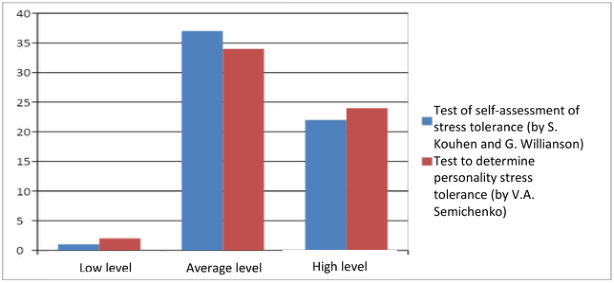
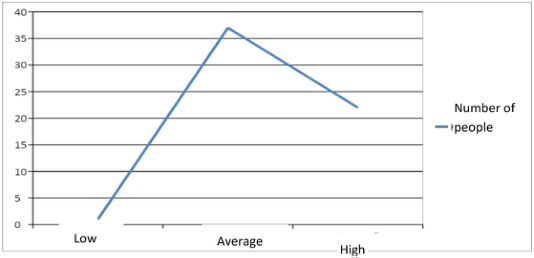
To determine the level of stress resistance of social workers in early adul- thood, we used two psychodiagnostics methods: “Test of self-assessment of stress tolerance” (by S. Kouhen and G. Willianson, adapted by Yu.V. Shcherbatykh) and “Test to determine personality stress tolerance” (by V. A. Semichenko). Comparison of the obtained results using both methods is shown in Fig. 1. Comparing the results of the study of stress resistance using two different psychodiagnostics techniques allows us to determine that, despite the slight difference between the number of subjects with the level of this personality trait by both methods (maximum deviation is 5%), there is a certain trend. In this regard, for the convenience of analyzing the results obtai- ned, further we will use the data obtained using the “Test of self-assessment of stress tolerance” (by S. Kouhen and G. Willianson, adapted by Yu.V. Shch- erbatykh), which shows a more general differentiation of levels of resistance to stress, which is demonstrated in Fig. 2. The diagram shows that a high level of stress tolerance is inherent in 36.67% of the cases studied, an ave- rage level - 61.67%, and a low level - 1.67%. A high level is inherent in more than a third of social workers aged 20 to 39 years old, characterized by emo- tional balance, a rapid rate of renewal of lost resources of stress resistance, stable adaptability to various stressful situations in professional activity, as a result - by high efficiency. This means that they successfully fulfil themselves in the social sphere, are able to communicate without conflict with clients,
Development of Specialists’ Stress Tolerance in the Process 199
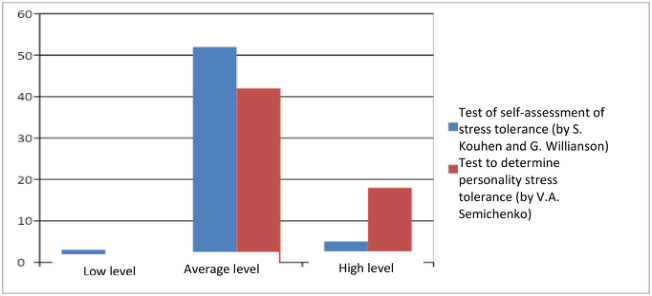
Figure 1: Differential-comparative diagram of the ratio of levels of stress resistance (stress tolerance) of social workers in early adulthood.Figure 2: Quantitative indicators of stress tolerance levels of social workers aged 20 to 39 years.
colleagues and management, which ensures high efficiency of professional activities in general. But, in our opinion, it is always worth remembering that the stress tolerance of a person is a dynamic property, that is, depending on many factors, it can change both for the better and vice versa. Therefore, even social workers with a high level of stress tolerance need to maintain it systematically, both independently and through the exchange of positive experience in overcoming stressful situations with colleagues.
Most of the studied social workers of early adult age are characterized by an average level of stress tolerance, which indicates that they are able to regulate their own emotions, perform professional tasks at the proper level, and maintain an optimal level of performance in most of stressful situations.
A low level of stress tolerance is associated with an undeveloped ability to consciously influence one’s own emotional state in various stressful situati- ons that may arise when performing professional tasks, significantly reducing the performance of a social worker, which in the worst case can lead to personality disintegration. Among the people studied aged 20 to 39 years, only one person was identified, whose level of stress tolerance corresponded to the lowest. This may be due to manifestations of emotional immaturity in professional activity in general, inadequacy of personal qualities to the
requirements of the profession, and lack of work experience in the social sphere, etc.
As we highlighted in the previous section, an important factor influencing the characteristics of the manifestation of stress tolerance is also the chara- cteristics of the professional activity of the individual. It was found that the provision of social services to different categories of the population is asso- ciated with the occurrence of a large number of stressful situations, which requires the social worker to develop his/her stress tolerance. In order to be able to investigate which factors they consider as the most stressful, let us analyze their answers to each individual question of the “Test to determine personality stress tolerance” (by V. A. Semichenko).
We observed a certain negative trend, which indicated that almost half of the respondents (48.33%) often work even when they feel bad, and many (35.00%) do not have enough time for a good rest. Although many workers under the age of 40 are still characterized by satisfactory physical health, as indicated by the fact that two thirds rarely suffer from insomnia (66.67%), a systematic violation of the optimal work/rest regimen over time can not only reduce the level of stress resistance, but also cause a variety of psychosomatic and chronic diseases. Therefore, in order to increase stress resilience, it is necessary to train early adult social workers timely in the skills of planning an effective daily routine and regularly monitor their own health in general.
Most young professionals sometimes show concerns about the quality of work performed (36.67%), feelings about failures (38.33%) and fear of their possible occurrence (43.33%). This may be due to the peculiarities of the nervous system and temperament of the individual, as well as insufficient work experience, stressfulness of this professional activity in general. More than half (53.33%) of respondents indicated that they are often conside- red hard workers and expressed confidence in their ability to repel enemies (56.67%) and show leadership skills in case of necessity (36.67%). Also, only 13.33% of young social workers regularly feel that they lack the power for realization of their personal potential. These results indicate the optimism of the majority of professionals aged 20 to 39 years regarding their own abi- lities to cope with difficulties and to show the necessary personal qualities for this, which, in turn, has a positive effect on their stress tolerance. Alth- ough the majority (53.33%) of early adult social workers noted that they often do everything at a fast pace, few of them (10.00%) worry about their own actions committed impulsively. As mentioned above, the respondents feel a lack of time for rest and are aware of the presence of a large amount of work. Although the need to perform professional tasks quickly is not one of the main factors in reducing the stress tolerance of young professionals in the social sphere, effective time management skills will help optimize their professional activities and increase their stress resistance.
It can be concluded that the majority of social workers between the ages of 20 and 39 have an average level of stress resistance. This indicates that in most stressful situations, they are able to regulate their own emotions, perform professional tasks at the appropriate level and maintain an optimal level of performance. However, there is a high probability that in stressful situations unfamiliar to them, they may not be able to focus on their own
Development of Specialists’ Stress Tolerance in the Process 201
Figure 3: Differential-comparative diagram of the ratio of levels of stress resistance (stress tolerance) of social workers in middle adulthood.
actions required in a particular case, which, in turn, can lead to temporary disorientation of the individual and a significant reduction in his/her ability to work.
A systematic violation of the optimal mode of work / rest was identified as the most significant factor in reducing the stress resistance of young profes- sionals; timely training in skills to plan an effective daily routine and regular monitoring of their own health in general is required to overcome it. Figure 3. demonstrates more differences in the results of the methods aimed at determi- ning the level of development of stress tolerance of social workers in middle adulthood.
Just as in the case of psychodiagnostics of specialists of early adult age, a single trend of distribution according to the levels of development of the studied personality traits remains, therefore, in the future, we will con- duct a more detailed analysis of the characteristics of stress tolerance in accordance with the results obtained using the “Test of self-assessment of stress tolerance” (by S. Kouhen and a G. Willianson, adapted by Yu.V. Shcherbatykh).
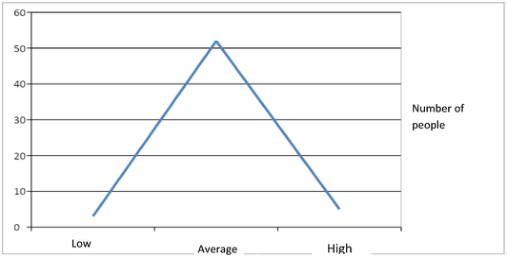
In Figure 4. it is possible to observe a significant decrease in the num- ber of subjects with a high level of tolerance for stress (only 8.34%), which in comparison with specialists in early adulthood is less by 28.33%. They demonstrate an optimistic attitude as for their ability to overcome difficul- ties, show a developed ability to control their emotional manifestations in difficult situations, and the skills to resist stressors effectively. It was also revealed that the level of stress resistance of the overwhelming majority of social workers aged 40 to 59 is average (86.67%), which is 25% higher than that of their colleagues aged 20 to 39. A low level is peculiar to the respon- dents with a negative evaluation of their abilities to counteract the influence of stressors, a tendency to worry about minor difficulties, lack of purposeful activity in solving problems, identified for 5.00% of specialists in the period of middle adulthood.
Thus, there is a general unfavorable trend of decreasing stress tolerance of social workers with age. Possible reasons for such a significant decrease
Figure 4: Quantitative indicators of stress tolerance levels of social workers aged 40 to 59 years.
in stress resistance shown by respondents aged 40 to 59 are that the vast majority of social workers rarely or sometimes feel that they are underesti- mated by others (91.66%), are unable to adequately respond to criticism to their address (91.67%), are irritated (85.00%) or aggressive (96.67%), cause conflict situations (95.00%) and act passionately and then regret their acti- ons (86,66%). These results indicate the ability of the majority of subjects at the age of middle adult to build and maintain constructive relationships with others, which is a predisposing factor of resistance to stress. In comparison with their colleagues aged 20 to 39, we can note that with age they are less likely to be aggressive, which demonstrates positive changes in self-control behavior.
Like respondents aged 20 to 39, social workers aged 40 to 59 often try to study or work, even if they feel unwell (41.67%) and lack time to rest (40.00%), which can lead to the development of chronic stress and deterioration of physical condition in general. Also, compared to the sub- jects of early adulthood, they have a significant increase in the number of complaints of insomnia (20.00% indicated “often”), which is the result of experiencing chronic stress, and frequent (30.00%) emotional and painful experience of trouble, which negatively affects the development of stress resistance. Almost half of social workers indicated that colleagues often consider them hard workers (46.67%), they feel their ability to repel ene- mies (46.67%), they rarely lack the power for self-realization (48.33%). Respondents much seldom than their colleagues under the age of 39 try to be leaders in every possible situation (33.33%) and rebuff rivals (20.00%); this can be interpreted, on the one hand, as a more adequate assessment their personal and professional qualities, and, on the other hand, as a desire to avoid responsibility and reduce personal interest as a result of work.
The following conclusion can be drawn: the overwhelming majority of social workers aged 40 to 59 have an inherent average level of stress tolerance. It means that in most stressful situations in professional activities, they can regulate their own emotions and control their behavior. It will also enable them to perform their professional tasks at the appropriate level and maintain the optimal level of efficiency. During late adulthood, almost half (47.37%)
Development of Specialists’ Stress Tolerance in the Process 203
of late adult social workers have a high level of stress tolerance development, which indicates the ability to regulate their emotional state and behavior, interact with clients, colleagues and management effectively, as well as high quality of their professional duties performance in general.
More than half (50.88%) of social workers over the age of 60 have an average level of development of stress tolerance. Thus, despite cer- tain difficulties in professional activities, namely: a large number of social services recipients, significant difficulties in communicating with problem customers, lack of time, low monetary rewards, etc., most respondents are able to perform professional tasks at the appropriate level. Only one per- son (1.75%) among those over 60 years of age showed indicators of low level of stress resistance, which is characterized by a pessimistic prognosis about his (her) own ability to solve problems, difficulties in controlling the emotional state, lack of ability to act constructively in difficult life situa- tions. The reason for this may be the development of emotional burnout as a result of a large number of stresses and occupational deformation in general.
In general, it can be concluded that although there is an unfavorable trend of decreasing the level of stress tolerance of social workers in the period from 40 to 60 years, compared with the respondents aged 20 to 39 years, speci- alists older than 60 years showed the highest results of the development of stress resistance. Such ambiguous results can be explained by the fact that stress resistance is a complex dynamic personality formation and there is a fairly large number of different indicators in its structure having individual differences and develop with age with different intensity and speed, which has a holistic and different effect on its development.
CONCLUSION
Thus, we can conclude that the vast majority of social workers of all ages have an average level of stress resistance, which indicates that in many stres- sful situations associated with the peculiarities of their professional activities, they are able to regulate their emotions, perform properly their professi- onal tasks and maintain an optimal level of efficiency. More than a third of respondents aged 20 to 39 years, almost a tenth of those being in the period of middle adulthood and about half of employees over 60 years of age demonstrated a high level of stress tolerance, characterized by emoti- onal balance, rapid recovery of lost resources of stress resistance, stable adaptability to various stressful situations in professional activities, and as a result - high efficiency; this can be interpreted as the acquisition by senior social workers of a high level of development of such a personal quality as professionalism.
REFERENCES
Bodrov, V. A. (2006). Psihologicheskiy stress: razvitie i preodolenie [Psychological stress: development and overcoming]. Moskva: PER-SE [in Russian].
Kravchenko, O., Mishchenko, M., Klymenko, Y., Kuzmenko, M., Potapchuk, N.
(2021). Inclusive-Resource Center Specialists’ Mental Health. Advances in Human Factors and Ergonomics in Healthcare and Medical Devices. AHFE 2021, vol 263. Springer, Cham. pp. 40–47: https://doi.org/10.1007/978-3-030-80744-3_6 Subbotin, S. V. (1992). Ustoychivost k psihicheskomu stressu kak harakteristiki metaindividualnosti uchitelya [Resistance to mental stress as a characteristic of the teacher’s meta-individuality]. Candidate’s thesis Perm [in Russian]. Vodopyanova, N. E. (2009). Psihodiagnostika stressa [Psychodiagnostics of stress].
SPB: Piter [in Russian].
LISTED IN THE AHFE DIGITAL BOOKSTORE CATALOGUE
Explore the complete digital volume
Human Factors, Business Management and Society
Read this individual research paper free through the original publisher, or explore the full digital proceedings book.
ISBN 978-1-958651-32-2
Explore this ISBN in the AHFE Bookstore ↗Listed in the July 2026 bookstore catalogue; search by ISBN to confirm current availability · Digital book purchase optional