Sandra Neves, Vera Oliveira, Maria Guarino (2022). Using Co-Design Methods to Develop a Patient Monitoring System in Hospital Emergency Care to Support Patient Safety. In: Human Dynamics and Design for the Development of Contemporary Societies. AHFE Open Access, vol. 25, pp. 330–338. https://doi.org/10.54941/ahfe1001405
Efforts have been made to develop a collaborative model to engage healthcare professionals and patients in healthcare services and resources improvement (Neves et al. 2021) This paper aims to understand how a collaborative model can enhance how design researchers work with healthcare communities in Portugal. Within relation to the development of a patient monitoring system to support patient safety for hospitalised people, this paper reports how design researchers are collaborating with the more traditional healthcare support specialisms in the research team. The design researchers are introducing methods and tools to involve all key stakeholders (i.e., nurses, doctors and patient and public representatives) in the design of the new patient monitoring system, which involves the continuous monitoring of vital signs for early detection of clinical deterioration to ensure patient safety in emergency care at the hospital. Specifically, through the nature of co-design workshops and the use of participative tools, these approaches are intended to better empower patients and healthcare professionals in this co-development process, to allow them to mediate the decision-making process in this context. This paper presents the first phase of this co-development process, highlighting the importance of using a participatory co-design approach to enable healthcare professionals and patients to voice their issues when developing a patient monitoring system.
Using Co-Design Methods to Develop a Patient Monitoring System 331
during patients’ hospitalisation. Research shows that emergency department ward staff are under a tremendous amount of pressure (CHKS 2015). As a result, healthcare professionals find it difficult to consistently treat patients quickly. This situation produces an increase in the number of complaints rela- ting to patients’ dissatisfaction with care services and long waiting times. In turn, patients tend to subsequently leave ED without any notice (Johnson et al. 2009; Pielsticker et al. 2015; Ortíz-Barrios and Alfaro-Saíz 2020). The SAFETRACK programme comprised six separate but interlinked workstre- ams (SAFETRACK, 2020). In this paper, we describe the first phase of the participatory co-design approach and how design researchers, based in the Laboratório de Investigação em Design e Artes (LIDA) at Escola Superior de Artes e Design das Caldas da Rainha (ESAD.CR), Polytechnic of Leiria, have contributed the SAFETRACK project’s multidisciplinary team. We par- ticularly focus on the challenges, benefits, and implications of conducting a participatory co-design approach in workstream 1.
CONTEXT: CLINICAL DETERIORATION IN EMERGENCY DEPARTMENTS Research focused on understanding patient safety risks in the emergency department (Källberg et al. 2017) has highlighted that emergency department ward staff (EDWS) should be involved in helping to identify strategies to faci- litate patient safety during emergency care. Involving EDWS is specifically important when designing healthcare service and systems improvements that will have an impact on clinical practice. Portuguese EDs are struggling to treat patients quickly and safely due to the increased number of patients going into EDs (Brazão et al. 2016). Health reports highlight that “Going into hospital is an anxious time for any patient, but particularly those who may be in need of emergency care” (CHKS 2015, p. 6). These individuals are more unwell and more likely to be waiting longer hours to be treated, admitted, or disch- arged. Overcrowding and staff shortage has the potential to impact patient safety (Brazão et al. 2016; Källberg et al. 2017; Flowerdew et al. 2012). It is particularly important for EDWDS to detect clinical deterioration (Jones et al. 2013) to ensure patient safety in emergency care. If such early dete- ction by professionals, is needed, new resources need to be considered to support clinical practice for early detection of clinical deterioration (Hands et al. 2013). Therefore, in the SAFETRACK programme, our research aimed to contribute to the issue of engaging EDWS and patient and public repre- sentatives in co-designing a new patient monitoring system to address these issues in Portuguese EDs. This paper now describes in detail the development of the first phase of this participatory process, which started by obtaining a better understanding of the current patient monitoring system used in EDs.
WORKING COLLABORATIVELY – THE EMERGENCY DEPARTMENT The SAFETRACK study, involving a participatory co-design approach, was developed in collaboration with a hospital emergency care department within
Table 1. The PPRs who participated in workshop 2.
Table available in the original PDF paper.
PPRs Health conditions Monitoring Age Gender
34 Man
P1 Fracture in the tibia/fibula Blood pressure and oxygen saturation
87 Woman
P2 Urinary infection/fever/lack of appetite
Temperature Blood pressure
27 Man
P3 Sprained foot - 52 Woman P4 Feeling sick/pain in the esophagus
Blood pressure and palpation performed
the National Health Service in Portugal. An ethics application was submit- ted to Ethics in Health Committee at the Centro Hospitalar de Leiria (CHL) and was approved. In this, the criteria for recruitment were clearly defined: EDWS who worked at the hospital on a daily basis; working at the hospital and patient and public representatives (PPRs) who were recently outpatients of the emergency department; and, of those, patients who had been monito- red at some point during their time in emergency care. Potential healthcare professionals were identified through the senior nurses, who informed the researchers who the potential participants were. A doctor and 3 nurses were invited to participate in the workshop 1. Senior nurses tend to have busy schedules and it was difficult for them at the time to support us to identify patient and public representatives at the hospital. So, we were advised to explore within the local community who had been recently discharged from emergency care at the CHL hospital. In doing so, we invited two women and two men. The figure below (see Table 1) provides details about the PPRs who participated in workshop 2, illustrating their characteristics.
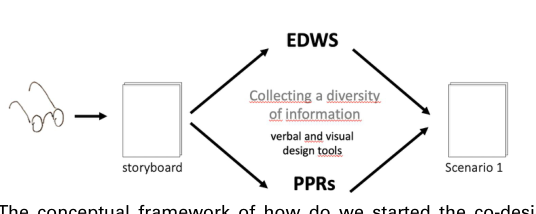
The first phase of the co-development of the new patient monitoring system was to build a scenario of the current patient monitoring system at the emergency care service in hospital. In doing so, we started by collecting a diverse range of information from: 1) our observations at the ED to get a better understanding of what was going on, 2) a workshop with the group of EDWS to obtain an understanding from their perspectives through their experiences of their work practices, for example monitoring patients, and 3) a workshop with the group of PPRs to obtain a better understanding of the patients’ experiences at ED, for example when they were temporarily being monitored during emergency care (see Figure 1). Design methods such as dia- grams and a storyboard were used to enable all relevant stakeholder groups to participate in a range of discussions.
With such an approach, we were able to observe practices and then, in discussing these with EDWS and PPRs to clarify practices as a way to pro- vide information to develop a storyboard and consequently help to build a scenario.
Phase 1: Observations The design researchers had the opportunity to meet twice with the senior nurse and the emergency department manager at the hospital to discuss the aims of the study and the importance of starting by observing the emergency department to get a better understanding of the complexity of the context
Using Co-Design Methods to Develop a Patient Monitoring System 333
Figure 1: The conceptual framework of how do we started the co-design process to build a scenario of the present situation at patient monitoring in emergency department involving: the design researchers as visitors observing the emergency department in hospital to capture what was going on at the time and place (e.g., by writing, making notes and illustrating situations using a notebook) in order to build a storyboard of the patient monitoring system at emergency care service; the clinicians expressing their views and experiences through verbal and visual design tools (e.g., prompt questions, diagrams and a storyboard) and the patient and public representa- tives expressing their views and experiences through verbal and visual design tools (e.g., prompt questions, diagrams and a storyboard).
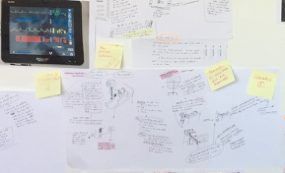
that we were going to work with. Before starting the observations, we discus- sed our intended plans first-hand with the senior nurse and the emergency department manager in order to obtain their permission. The purpose of this meeting was also to ensure that the methods was appropriate. Thereafter, observations were performed during the day over 3 days, in different areas of the ED (e.g., triage, wards in different priority areas, ward staff workstations and the corridors where patients wait to be treated). Most importantly, we looked at the patients who were being monitored. Observations were refle- ctive situations about things that were happening at the time. In doing so, the design researcher was sketching and writing. This observation process was designed to use a notebook as a collectors’ tool. For example, during observa- tions in the corridor, looking at patients’ experiences of waiting to be treated, the designer used the notebook to illustrate this temporal experience in this context. A digital camara was used for a particular purpose, collecting ima- ges of the monitoring equipment and its interfaces that are used for patient monitoring. With such a conceptualisation, we were able to illustrate what happened before, during and after a patient goes into ED (see Figure 2). The idea of participating as a visitor was to be guided, when possible, by a nurse, when observing the ward, who was asked to show the design researcher how things usually happened every day and which situations were problematic.
Phase 1: Exploring the Present Situation With Healthcare Professionals The first workshop was designed with the important point of exploring the present situation from the emergency department ward staff’s’ perspectives and then using these views to generate insights to help to build the cur- rent patient monitoring scenario. In doing so, the workshop entailed four activities to obtain a better understanding of the role of the EDWS within emergency care, the patient care journey at the ED, the emergency care within the triage system, and the present patient monitoring system. This was seen
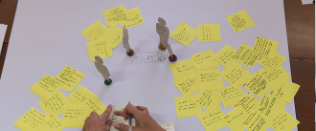
Figure 2: Mapping the information collected by observations at the emergency depar- tment while focusing on patients being admitted through the triage system; waiting to be attended on corridors and being monitored in the yellow ward.Figure 3: Tools developed showing a “3D sketchy” map to collect EDWS views about their interactions and role with patient in emergency care.
as a process that allowed the continuing exploration of the current situation within three stages of the emergency care provided (before, during and after). The first activity was focused on understanding who is with patients, doing what and at what stage. To facilitate this activity, a large-format printed dia- gram was provided onto which their comments and issues were located. This resulted in a “3D sketchy” map, revealing a range of professional roles and service “touch-points” issues (see Figure 3).
The second activity was focused on understanding the patient care journey. Here, the large format printed diagram was used to clarify some issues with the participants. The third activity aimed to obtain a better understanding of how the ED performed the triage system. We invited participants to talk about each priority area within the triage system. The discussions indicated that yellow (urgent) and green (semi urgent) wards were problematic due to the increased number of people going into these wards with multiple con- ditions. This revealed demotivating issues such as high workloads, lack of communication and the demands of the organisation on the staff administra- tion (Källberg et al. 2017). Having discussed and revealed some problematic issues in the yellow ward, the fourth activity was focused on encouraging par- ticipants to think about the current patient monitoring system in that ward. A storyboard was created to invite EDWS to tell us what happens at diffe- rent stages of the patient journey. This helped to open up a discussion around key aspects, e.g., environment, key staff interactions, appropriate technology and equipment for patient monitoring, organisation and communication. In doing so, this also helped the design researchers to generate directions to build the current scenario of the patient monitoring system at emergency care based on the EDWS’s contributions, facilitated through outcomes devised from the discussions.
Using Co-Design Methods to Develop a Patient Monitoring System 335
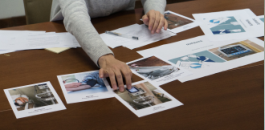
Figure 4: Tools developed showing prompt cards (left) and a storyboard (right) to map PPRs’ experiences in emergency care throughout three stages – before, during and after being monitored.
Phase 1: Exploring the Patients’ Experiences The second workshop was designed with the important point of collecting the patients’ experiences of temporarily being inpatients in the emergency depar- tment and then using these experiences to support the development of the present scenario of the patient monitoring system in emergency care. In doing so, the workshop with patient and public representatives entailed discussions to understand the main reasons for people going to hospital and their expe- riences of being monitored at some point during their emergency care. As in the previous workshop, this was also a process that allowed the continuing exploration of the current situation at emergency care. We started the first discussion by prompting a range of questions, such as: “What were the main reasons for you need to go to emergency department in hospital? How did you get there? What was the priority area of the ward that you were in? Did you remember how long were you there? What was the most annoying thing that you encountered during your stay? Were you monitored in any way?” The intention was to capture a diverse range of information as a way of identifying the diversity of patients’ journeys in emergency care. The second discussion was focused on encouraging participants to think about their experiences of being monitored through three stages (before, during and after). To facilitate this activity, several prompt cards were placed on the table and a large-format printed storyboard was provided onto which their comments were located (see Figure 4). Exploring PPRs’ experiences were to capture their emotions and motivations when receiving care and being monitored in ED in hospital. This resulted in a rudimentary “experience” map creating a visual picture of positive and negative aspects of the status quo, identifying some key issues for potential improvement of the emergency care, and revealing a range of tangible interactions with the patient monitoring system. For example, the PPRs’ voices revealed the importance of patients visually see their progress while they are waiting in ED. Patients can feel ignored and stressed without knowing what is happening. This also helped the design researchers to fur- ther develop the present scenario of the patient monitoring in emergency care service based on PPRs’ contributions.
DISCUSSION
Improving patient monitoring has been largely created by engineers and tech- nologists (Gao et al. 2005). At SAFETRACK we are involving the emergency department ward staff of a hospital within the Portuguese National Health Service and patient and public representatives in co-designing a patient
monitoring system in the emergency care service. We have just described the first phase, which placed a focus on obtaining a better understanding of the status quo. Undertaking a participatory co-design approach in collabo- ration with healthcare communities in Portugal presented certain challenges. We had to be adaptable, flexible, and clear about our intentions and the purpose of involving key stakeholders within a hospital setting to under- stand the current patient monitoring system. Despite design research based on healthcare improvements is well known in the UK (Robert et al. 2015), in Portugal, this approach seems quite new, even when the Organisation for Economic Co-operation and Development (OECD) reports that promoting patient involvement and learning from patient feedback needs to be a prio- rity to improve the quality of care in Portugal (OECD 2015). Although our research is contributing to the issue of engaging key stakeholders within the Portuguese healthcare community to co-design a patient monitoring system, a number of practical considerations still remain that make a participatory co-design approach quite challenging.
For observations, we were only allowed to do observations in the ED alongside with nurses. There remains the question of whether the design rese- archer would benefit by sometimes being less guided or supervised by the nurses in order to have more time to reflect while observing. Based on our experiences, it became clear to us that design researchers were first seen as being “not trusted” and it was important to demonstrate and build up a level of trustworthiness with the healthcare community. In doing so, it helped to create strong links with some EDWS and this encouraged them to participate in the first workshop.
The second workshop had its limitations. The initial idea was for the senior nurse at the ED in the hospital to support us with the recruitment of a group of outpatients, as discussed previously. However, the increasing number of patients going to emergency care and, consequently, the increasing number of people with COVID-19 going to hospital at that time, created difficulties for the senior nurse be able to support us. When faced with this scenario, we were advised to do the recruitment ourselves. Recruiting a group of patient and public representatives was possible through strong links with our local community (e.g., work colleagues, friends, students, people we meet at cafés, etc). Here we were communicating the study to everyone we knew while at the same time explaining the benefits of engaging people in this study. People spread the word to others, and, after a couple of weeks, we received a range of contacts for people who might be interested in participating. The next step was to contact everyone to see whether they met any of the criteria and to send them the information about the study. After a week we went back to them to confirm that they were still happy to participate and to arrange a date to attend the workshop. Some of them were unsure, while others were willing to contribute. Finding a day and time that everyone could attend was quite challenge, and, consequently, due to issues relating to prophylactic isolation measures, we had to postpone the workshop once.
We initially discussed wether we should conduct both of the workshops online, but we knew that it would be important to engage with healthcare professionals away from their workspace. In addition, in workshop 2 we had a group of a range of ages, and it might be difficult for older people
Using Co-Design Methods to Develop a Patient Monitoring System 337
to participate online. We know from previous experience in other studies that older people are not always are familiar with digital resources (Neves et al. 2020). Under the current restrictions of COVID-19, a more presen- tial collaborative workshop experience was created, as this afforded a better opportunity to create strong links with the hospital and local community.
CONCLUSION
Developing a participatory co-design approach to develop a patient moni- toring system around the complexities of emergency care services, with all the additional issues of ethical, trust and time issues remains a considerable challenge. The aim of this paper has been to demonstrate the value of using a participatory co-design approach to enable and encourage the participation of emergency department ward staff and patient and public representatives in design research in the context of improving patient safety in emergency care in hospital. Rather than presenting outcomes, our exploratory process is creating opportunities to enable key stakeholders, the wider SAFETRACK team, the hospital and local community to probe, comprehend and highlight some of the issues encountered in the present scenario of a patient moni- toring system in an emergency care service within such a complex setting as exploring patient safety issues in emergency care services in hospital. Overall, a partnership between EDWS, PPRs and design researchers indicated that a collaborative model would not only positively address the intended pur- pose of design become a learning experience for healthcare communities, but also be helpful for design researchers when using participatory approaches in contexts where co-designing is unfamiliar.
ETHICS APPROVAL Ethical approval was gained from the Centro Hospitalar de Leiria (CHL) Ethics in Health Committee (CA_15.09.2021).
ACKNOWLEDGMENT
This article presents research funded by Programa Operacional Regional do Centro (Centro 2020), under the programme Portugal 2020, through Fundo Europeu de Desenvolvimento Regional (FEDER) - CENTRO-01- 0247-FEDER-070111 and supported by Fundação para a Ciência e a Tecno- logia (FCT) (UIDB/05468/2020), Laboratório de Investigação em Design e Artes (LIDA), (UI/05704/2020),Center for Innovative Care and Health Tech- nology (ciTechcare) and Politécnico de Leiria. We are very grateful to all participants for their time and enthusiasm.
REFERENCES
Brazão, M. Nóbrega, S. Bebiano, G. and Carvalho, E. (2016). Atividade dos serviços de urgência hospitalares. Sociedade Portuguesa de Medicina Interna, Volume 23, No. 3, pp. 8–14. CHKS (2015) What makes a top hospital? Accident and emergency care. Availa-
ble at: https://www.chks.co.uk/icompare/userfiles/files/What-makes-a-top-hospi tal-A&E.pdf.
Flowerdew, L. Brown, R. Russ, S. Vicent, C. and Woloshynowych. (2012). Teams under pressure in the emergency department: an interview study. Emerg Med J. Volume 29, No. 12. Gao, T. Greenspan, D. and Welsh, Matt. (2005). Improving patient monitoring and
tracking in emergency response. In: Proceedings of the International Conference on Information Communication Technologies in Health. Hands, C. Reid, E. Meredith, P. Smith, G. B. Prytherch, D. R. Schmidt, P. E. and Featherstone, P. I. (2013). Patterns in the recording of vital signs and early warning scores: Compliance with a clinical escalation protocol. BMJ Quality and Safety, Volume 22, No. 9, pp. 719–726. https://doi.org/10.1136/BMJQS-2013-001954 Johnson, M. Myers, S. Wineholt, J. Pollack, M. and Kusmiesz, A. L. (2009). Patients
who leave the emergency department without being seen. Journal of Emergency Nursing, Volume 35, No. 2, pp. 105–108. Jones, D. Mitchell, I. Hillman, K. and Story, D. (2013). Defining clinical deterioration.
Resuscitation, Volume 84, No. 8, pp. 1029–1034. https://doi.org/10.1016/J.RESU SCITATION.2013.01.013 Källberg, Ann-Sofie. Ehrenberg, A. Florin, J. Östergren, J. and Göransson, K. (2017).
Physicians’ and nurses’ perceptions of patient safety risks in the emergency department. International Emergency Nursing Volume 33, pp. 14–19. Neves, S., Macdonald, A., Poole, M., and Harrison-Dening, K. (2021). Participatory Co-design: Approaches to Enable People Living with Challenging Health Con- ditions to Participate in Design Research. In: Martins N., Brandão D., Moreira da Silva F. (eds) Perspectives on Design and Digital Communication II. Springer Series in Design and Innovation, Volume 14. Springer, Cham. https://doi.org/10. 1007/978-3-030-75867-7_13 Neves, S., Macdonald, A., McLellan, E., Poole, M., Harrison-Dening, K., Tucker,
S., Bamford, C. and Robinson, L. (2020). Co-designing a care plan guide app to support early conversations about end-of-life care in dementia. In: Martins N., Brandão, D. (eds) Advances in Design and Digital Communication. Digicom 2020. Springer Series in Design and Innovation, Volume 12. https://doi.org/10. 1007/978-3-030-61671-7_31 OECD (2015). OECD Reviews of Health Care Quality: Portugal 2015: Raising Standarts (OECD Reviews of Health Care Quality). OECD. https://doi.org/10.1787/ 22270485 Ortíz-Barrios, M. A., and Alfaro-Saíz, J.-J. (2020). Methodological Approaches to
Support Process Improvement in Emergency Departments: A Systematic Review. International Journal of Environmental Research and Public Health, Volume 17, No. 8, p. 2664. https://doi.org/10.3390/IJERPH17082664 Pielsticker, S., Whelan, L., Arthur, A. O., and Thomas, S. (2015). Identifying patient door-to-room goals to minimize left-without-being-seen rates. Western Journal of Emergency Medicine, Volume 16, No. 5, p. 611. Robert, G., Cornwell, J., Locock, L., Purushotham, A., Sturmey, G. and Gager, M.
(2015). Patients and staff as codesigners of healthcare services. BMJ, Volume 350, pp. 1–6. https://doi.org/10.1136/BMJ.G7714 SAFETRACK (2020) Dispositivos sem fios miniaturizados para monitorização contínua de utentes no serviço de urgência. Available at: http://safetrack.wisewareso lutions.com/ Tsekleves, E. and Cooper, E. (eds) (2017). Design for health. Design for social
responsibility series. London, Routledge
LISTED IN THE AHFE DIGITAL BOOKSTORE CATALOGUE
Explore the complete digital volume
Human Dynamics and Design for the Development of Contemporary Societies
Read this individual research paper free through the original publisher, or explore the full digital proceedings book.
ISBN 978-1-958651-01-8
Explore this ISBN in the AHFE Bookstore ↗Listed in the July 2026 bookstore catalogue; search by ISBN to confirm current availability · Digital book purchase optional