Davide Parilli, Daniela Moreira, Patricia Estanqueiro, Rodrigo Ramirez, Hande Ayanoglu (2022). Wearable Design for Epilepsy Patients: Human-Centered Design and Speculative Design for a Positive User Experience. In: Human Dynamics and Design for the Development of Contemporary Societies. AHFE Open Access, vol. 25, pp. 297–304. https://doi.org/10.54941/ahfe1001401
1 Universidade Europeia, IADE, Faculdade de Design, Tecnologia e Comunicação Av. D. Carlos I, 4, 1200-649 Lisboa, Portugal ↗
2 UNIDCOM/IADE, Unidade de Investigação em Design e Comunicação, Av. D. Carlos I 4, 1200-649 Lisboa, Portugal; Universidade Europeia, IADE, Faculdade de Design, Tecnologia e Comunicação Av. D. Carlos I, 4, 1200-649 Lisboa, Portugal ↗
Despite encouraging indicators that epilepsy cases can be prevented with low-cost, efficient drugs, a significant number of patients are resistant to treatment. Constant monitoring is one technique to get around this problem. Wearables are a suitable alternative, but they must deliver a positive user experience; hence, they must consider “material” and functional factors. Human-Centred Design (HCD) is an effective method to achieve that because it focuses on users’ needs. However, HCD is concerned with the potential problem space but overlooks some essential features of technological use. Speculative design is a method for investigating potential design outcomes and possibilities that may arise in the future (i.e., problems concerning privacy). In this sense, the paper argues that speculative design can extend HCD to create wearables for epilepsy patients who require constant monitoring.Keywords: Epilepsy, Human-Centered Design, Privacy, Speculative Design, User Experience, Wearables
Epilepsy is one of the most common neurological diseases, affecting appro- ximately 50 million people of all ages (WHO, 2019). Many people suffering from this condition (about one-third of them) are resistant to drug therapy and require constant monitoring. Currently, the preferred approach is Video Encephalogram (Video EEG) within a hospital to capture seizures and corre- late these events with patients’ brainwave activity to improve their potential treatment. However, the devices used for carrying out these measurements tend to be cumbersome. A viable alternative involves using a combination of Electrodermal Activity (EDA) sensors—which measure patients’ skin sweat levels on two contact points (electrodes)—and photoplethysmography (PPG) sensors—which measure the heart rate by directing a light beam at the skin— together with an accelerometer sensor to detect motion. The problem is how to integrate these sensors into a solution that meets the technical requirements
of the team conducting the tests and the needs of the people wearing them.
Wearable technologies have shown to be good alternatives for monitoring patients in healthcare contexts (Johansson, Malmgren, & Murphy, 2018; Lewy, 2015). Research shows that wearable technology has sparked the curiosity of epilepsy patients (e.g., Bruno et al., 2018; Meritam, Ryvlin, & Beniczky, 2018; Simblett et al., 2019). However, as Bruno et al. (2020) note, it is still unclear how well patients can manage these technologies independently and which factors influence whether they are successful in helping them improve. Also, there is the problem of anticipating poten- tial issues that may arise from the interplay between these devices and users.
This paper argues that wearables need to provide a good User Experie- nce (UX) for epilepsy patients. We will assess how design can bring effective solutions through the lens of Human-Centered Design (HCD) and Specula- tive Design. We contend that HCD designs for the way the world is since it looks at the existing situation and the current human needs of users. Whereas Speculative Design involves designing for the way the world could be. Specu- lative design emerged in the last decade in the context of, and as a response to, neoliberal reforms—implemented first in the United States and the UK and was inspired by the ideas of Milton Friedman (2007)—and of an increasin- gly individualistic society (Bauman, 2000). Speculative design starts from the assumption that good design is necessarily critical and that designers should start by assessing what does not work well in the product they are redesigning to improve it (Dunne & Raby, 2013). Hence the ambition to design better products for a better world.
A comprehensive understanding of product requirements is essential to further the integration of such wearables with end users’ daily lives. Furth- ermore, it is also essential to clarify that the monitoring device will comprise two dimensions: a physical product (i.e., the wearable device) and a digital product (i.e., the interface that will allow visualizing the resulting data to patients, caregivers, and health practitioners). Consequently, to better inte- grate wearables as a tool for epilepsy patients, a thorough understanding of their positive aspects, downsides, and associated risks is crucial. This paper will tackle some critical issues commonly disregarded by Human-Centered Design, such as privacy and security.
UX FOR WEARABLES FOR EPILEPSY PATIENTS: THE HCD APPROACH Over the last decades, healthcare has become one of the most important industries globally, with enormous demand. Various healthcare providers have recently competed in the smart healthcare market to provide mature and sophisticated services that rely on technologies with high accuracy, dependability, and cheap cost (Muhammad, Rahman, Alelaiwi & Alamri, 2017). Epilepsy causes neurological, cognitive, psychological, and social issues and accounts for a significant proportion of the world’s burden of disease.
Wearable Design for Epilepsy Patients: Human-Centered Design 299
The report on Epilepsy (WHO, 2019) uncovers encouraging evidence, noting that almost a quarter of epilepsy cases are preventable, and 70% of peo- ple with epilepsy can live seizure-free with low-cost and effective medication (WHO, 2019). However, many patients suffering from this condition are resi- stant to drug therapy (Dalic & Cook, 2016), and a way to overcome this is constant monitoring. Remote healthcare monitoring allows people to stay at home rather than inexpensive healthcare facilities such as hospitals or nursing homes (Majumder, Mondal, & Deen, 2017). Healthcare monitoring should effectively provide a higher quality of life for epileptic patients and could solve the problem of drug therapy.
One technology that emerged in the last years across multiple sectors, including health, is wearables. The literature comments that wearable tech- nologies represent good alternatives for monitoring patients in healthcare contexts (Johansson, Malmgren, & Murphy, 2018; Lewy, 2015). Resea- rch shows that wearable technology has sparked the curiosity of epilepsy patients (e.g., Bruno et al., 2018; Meritam, Ryvlin, & Beniczky, 2018; Sim- blett et al., 2019). However, as Bruno et al. (2020) note, it is still unclear how well patients can manage these technologies independently and which factors influence whether they are successful in helping them improve. Besi- des, a study (Askamp & van Putten, 2014) showed that the majority of the patients were pleased with the home EEG procedure, although many felt uncomfortable wearing it in public.
According to Bruno, Viana, Sperling, and Richardson (2020), the critical issues for seizure-detection devices are to improve safety, clinical and self- management, and provide confidence to users. The authors highlight design (attractive appearance, low visibility, low intrusiveness), the comfort of use, the confidentiality of collected data, and fast support from both technical and clinical ends as significant aspects determining a device’s usage. Accordin- gly, understanding the needs of users (patients and caregivers) is critical for improving adherence and eliminating obstacles to long-term wearable use. This paper compares two approaches and methods, HCD and Speculative Design, to identify user needs and product requirements and, ultimately, build a good UX for patients and users. It is essential to clarify that the monitoring device will comprise two dimensions: a physical product (i.e., the wearable device) and a digital product (i.e., the interface that will visualize the resulting data to patients, caregivers, and health practitioners).
As a general approach for designing digital artefacts, HCD seeks to ensure that the features of a given device meet the end-user’s needs (Norman, 2013). HCD is an umbrella term encompassing a cluster of methods and techniques that have in common the assumption that technological artefacts are not just objects but things where sociotechnical intersections happen.
HCD advocates for a significant amount of pre-development research and analysis. HCD is fundamentally empirical; it seeks to understand actual, pre- sent users, not future ones. The design that emerges from HCD responds to a present context/situation. It focuses on the users and their tasks from the outset, understanding who they are and the nature of their work by studying their behaviour through direct contact and research. Second, HCD designers conduct empirical measurements while testing prototypes with actual users
early in the design process, focusing on their reactions and suggestions. Third, HCD embraces iterative design, testing, and redesigning cycles.
Further, HCD is not concerned with crucial aspects that may jeopardize the benefits and, consequently, the overall UX of wearables, such as privacy and security. For these reasons, one may legitimately argue that HCD is not the best approach to build and assess the UX of wearables for epilepsy patients. In the next section, we propose a different method: Speculative Design.
SPECULATIVE DESIGN FOR BETTER WEARABLES FOR EPILEPSY Speculative design is an approach for bringing a future dimension of design into the present and generating responses for the present (Dunne & Raby, 2013). Speculative design employs the concept of possible futures to conce- ptualize and imagine artefacts in a future alternative (utopian or dystopian) scenario. Speculative design is situated between two major ways of approa- ching design: 1) as a problem-solving activity that seeks to change the world; and 2) a more recent critical or commentary approach that seeks not to bring change into the world through a new thing but by changing the attitudes or viewpoints of people regarding a given problem.
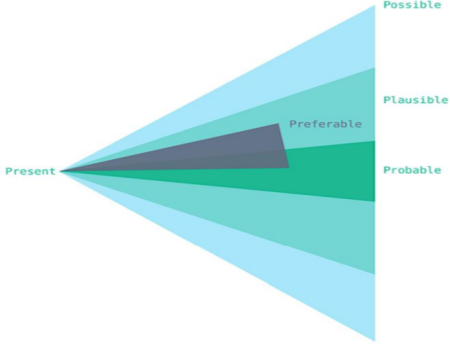
Speculative design focuses on the “what ifs” of design practice; it brings together the optimism of design as a potential world-changing activity and the type of reflection that is more common in other fields such as philoso- phy, literature, and audiovisual narrative. Therefore, speculative design aims not to make plans for solving a given problem but to shape different ways of thinking about a problem space through methods common to design, such as prototyping. Therefore, speculative design is about experimenting with the possibilities of making to find alternatives for how things are. It represents a shift of focus from thinking about how things are towards how things could (but not necessarily should) be to spark discussions. To put it diagrammati- cally (see Figure 1), while design practice usually focuses on the space of the probable, speculative design focuses on the space of the preferable, hence it is a form of practical reflection that seeks to understand what the preferable futures are. It is important to note that speculative design is not futurism; it does not seek to predict the future but imagine, or rather visualize (i.e., make visible) possible futures. From a methodological standpoint, specula- tive design is a kind of “playground”to try out techniques and processes from other areas.
Although problem-solving is a core aspect of design, through speculation and imaginary scenarios, it is possible to create new spaces for thinking about issues and gain new perspectives on current societal topics, to start discussi- ons on possible problematic design instances, look beyond what is, and ideate on what could be. Speculative design and speculation could not exist without imagination—the “ability to literally imagine other words and alternatives” (Dunne & Raby, 2013, p. 70). Imagination, however, is a complex world that refers to several kinds of imagination, being it social, mathematical, artistic, sociological, and design imagination. The latter can only exist in connection with the other sorts of imagination. Design exists by and for human beings in cultural and historical contexts. Hence design imagination cannot—nor
Wearable Design for Epilepsy Patients: Human-Centered Design 301
should—prescind from social and sociological imagination: better products in and for a better word.
Speculative design is about investigating the space of possibilities of any given problem. However, the ideal playfield of speculative designs is techno- logy: they are “a form of speculative philosophy of technology that question the meaning of technology itself” (Dunne & Raby, 2013, p. 102). Hence spe- culative design is particularly apt to investigate and imagine design solutions to wearable devices and interfaces in the health sector. Speculative design has been extensively employed in Human-Computer Interaction (HCI) research to reflect on future technologies or critique current practice. The main obje- ctive is to speculate on the potential desirable and undesirable implications of innovative technological devices and services regarding epilepsy monitoring wearable. According to Auger (2013), it is critical to set some boundaries for speculation to avoid portraying unrealistic and abstract scenarios that the target population would find unrelatable.
Speculative design should be used to build narratives on wearable devi- ces, such as through the deployment of experience design to develop new forms (physical matter) and practices of use (digital matter). The Speculative Design approach is to explore how the trends and themes that emerged from the current data could potentially inform the design of future technological devices and services. Speculative Design fiction must be created by projecting the trends and themes into possible future scenarios.
SPECULATING WEARABLES FOR EPILEPSY: PRIVACY CONCERNS Wearable devices imply that users are constantly and silently tracked and che- cked. The constant monitoring of patients is one of the several faces of the so-called “surveillance capitalism” (Zuboff, 2019) or “surveillance society” (Capurro, 2005), although for a good cause. Surveillance capitalism refers to the phenomenon of the massive collection, extraction, and processing of users’ and citizens’ data to reach business and political targets, including
the manipulation and prediction of their choices and behaviours. Surveil- lance society indicates the broader context where all of us, data subjects, are constantly tracked and monitored through technology. Monitoring patients for their good—and with their full knowledge and consent—undoubtedly represents a positive use of tracking technologies.
However, this use is not without risks. First, wearable products, like all devices connected to the Internet or other appliances through Bluetooth (Cil- liers, 2020), are prone to security risks. The connection used by the wearable devices can be used by criminals to steal or destroy the patient’s health data or, worse, to access the system where patients’ information is stored and pro- cessed to corrupt or destroy it. Security threats, thus, affect both the wearable device and the interface. Further, there should be strong contractual and tech- nical guarantees that the patients’ data collected through the wearable devices are not used for other purposes, including commercial ones, without the data subjects’ acknowledgement and consent. One of the main uncertainties rela- ted to personal data is its use: once personal information is collected, it is difficult to verify that it will not be used (and abused) for different purposes (Solove, 2006). Legislation such as the EU General Data Protection Regula- tion (GDPR) protects health information as sensitive data. As a principle, the processing of health data is prohibited unless it is justified by a valid legal rea- son, including the data subject’s explicit consent and the need to protect the data subject’s vital interests or of a third party when the data subject cannot give her consent.
The literature warns that personal information is a toxic asset, for it can be potentially misused with malice by third parties (Véliz, 2020). This is espe- cially true for health data and other sensitive information that reveals very intimate aspects of a person. In the last decade, various authors, including the philosopher Luciano Floridi, have claimed that we are our data, i.e., that our personal information ontologically defines who we are (2014). It derives that health data, for it refers to the most intimate characteristics of a person, should be considered—and treated accordingly—as uber-personal identifiers. In this sense, information about the type of car owned by a data subject, alth- ough it is (logically and legally) personal information, is less personal than information about her health condition. In practice, it is more likely that a person will be discriminated against during a recruitment process because she has epilepsy rather than because she drives a BMW. Hence privacy aspects are fundamental to build a satisfactory UX for health wearables users.
CONCLUSION
A design method must be chosen early in the design process. This decision is frequently based on past techniques rather than an open selection process. The goal is to figure out which approach is ideal for the problem. If a system is to be constructed, it must eventually be fully described by considering pos- sible futures. From a Human-Centered Design (HCD) perspective, practical monitoring wearables require early consideration of perceptual, behaviou- ral, and cognitive components. Rather than allowing technology to define what kind of information a user will encounter, technology can be tailored to
Wearable Design for Epilepsy Patients: Human-Centered Design 303
efficiently provide the information a user requires. Speculative design is more apt to incorporate privacy and security concerns. Although these two proces- ses take very different approaches to obtain requirements and the amount of upfront design recommended, there are some parallels between them. The ite- rative nature of both techniques is evident. The word ‘fiction’ before design, according to Auger (2013), immediately alerts the observer that the pro- duct is not authentic. This word detaches the product from everyday life by revealing its fictional or intellectual status. Despite evidence that the Specu- lative Design approach is a sort of “playground,” some facts (such as privacy concerns) should not be neglected during the design process. Although Spe- culative Design can bring valuable insight towards designing wearables for epilepsy, it is concluded that some areas need to be researched further. To draw more general findings, a deeper empirical base is required.
ACKNOWLEDGMENT
This study was supported by UNIDCOM under a Grant by the Portugu- ese Fundação para a Ciência e Tecnologia (FCT) no. UIDB/DES/00711/2020 attributed to UNIDCOM/IADE – Universidade Europeia, Lisbon, Portugal.
REFERENCES
Auger, J. (2013). Speculative design: crafting the speculation. Digital Creativity, 24(1), 11–35. Dalic, L., & Cook, M. J. (2016). Managing drug-resistant epilepsy: challenges and solutions. Neuropsychiatric disease and treatment, 12, 2605–2616. https://doi.org/10.2147/NDT.S84852 Askamp, J., & van Putten, M. J. (2014). Mobile EEG in epilepsy. International
journal of psychophysiology, 91(1), 30–35. Bauman, Z. (2000). Liquid modernity. Polity Press; Blackwell. Bruno, E., Biondi, A., Thorpe, S., Richardson, M. P., & RADAR-CNS Consortium.
(2020). Patients’ self-mastery of wearable devices for seizure detection: a direct user-experience. Seizure, 81, 236–240. Bruno, E., Simblett, S., Lang, A., Biondi, A., Odoi, C., Schulze-Bonhage, A., ... & RADAR-CNS Consortium. (2018). Wearable technology in epilepsy: the views of patients, caregivers, and healthcare professionals. Epilepsy & Behavior, 85, 141–149. Bruno, E., Viana, P. F., Sperling, M. R., & Richardson, M. P. (2020). Seizure detection
at home: Do devices on the market match the needs of people living with epilepsy and their caregivers?. Epilepsia, 61, S11–S24. Capurro, R. (2005). Privacy. An Intercultural Perspective. Ethics and Information Technology, 7, 37–47. https://doi.org/10.1007/s10676-005-4407-4 Cilliers, L. (2020). Wearable devices in healthcare: Privacy and information security
issues. Health Information Management Journal, 49(2–3), 150–156. https://doi. org/10.1177/1833358319851684 Dunne, A., & Raby, F. (2013). Speculative everything: design, fiction, and social dreaming. MIT press. Floridi, L. (2014). The 4th revolution: How the infosphere is reshaping human reality
(First edition). Oxford University Press. Friedman, M. (2007). The Social Responsibility of Business Is to Increase Its Profits.
Em W. C. Zimmerli, M. Holzinger, & K. Richter (Eds.), Corporate Ethics and
Corporate Governance (pp. 173–178). Springer Berlin Heidelberg. https://doi.or g/10.1007/978-3-540-70818-6_14 Johansson, D., Malmgren, K., & Murphy, M. A. (2018). Wearable sensors for clinical applications in epilepsy, Parkinson’s disease, and stroke: a mixed-methods systematic review. Journal of neurology, 265(8), 1740–1752. Lewy, H. (2015). Wearable technologies–future challenges for implementation in
healthcare services. Healthcare technology letters, 2(1), 2–5. Majumder, S., Mondal, T., & Deen, M. J. (2017). Wearable sensors for remote health monitoring. In Sensors (Switzerland) (Vol. 17, Issue 1). MDPI AG. https://doi.or g/10.3390/s17010130 Meritam, P., Ryvlin, P., & Beniczky, S. (2018). User⣳based evaluation of appli-
cability and usability of a wearable accelerometer device for detecting bilateral tonic-clonic seizures: a field study. Epilepsia, 59, 48–52. Muhammad, G., Rahman, S. M. M., Alelaiwi, A., & Alamri, A. (2017). Smart health solution integrating IoT and cloud: A case study of voice pathology monitoring. IEEE Communications Magazine, 55(1), 69–73. Norman, D. A. (2013). The design of everyday things (Revised and expanded edition).
Basic Books. (Original work published 1990) Simblett, S. K., Bruno, E., Siddi, S., Matcham, F., Giuliano, L., López, J. H., ...
& RADAR-CNS Consortium. (2019). Patient perspectives on the acceptability of mHealth technology for remote measurement and management of epilepsy: a qualitative analysis. Epilepsy & Behavior, 97, 123–129. Solove, D. J. (2006). The Digital Person: Technology and Privacy in the Information Age. New York University Press. Véliz, C. (2020). Privacy is Power: Reclaiming democracy in the digital age.
BANTAM Press. World Health Organization. (2019). Epilepsy: a public health imperative. World Health Organization. Zuboff, S. (2019). The age of surveillance capitalism: The fight for a human future
at the new frontier of power (First edition). PublicAffairs.
LISTED IN THE AHFE DIGITAL BOOKSTORE CATALOGUE
Explore the complete digital volume
Human Dynamics and Design for the Development of Contemporary Societies
Read this individual research paper free through the original publisher, or explore the full digital proceedings book.
ISBN 978-1-958651-01-8
Explore this ISBN in the AHFE Bookstore ↗Listed in the July 2026 bookstore catalogue; search by ISBN to confirm current availability · Digital book purchase optional