Aleksandar Zunjic, Vladimir Lesnikov (2022). Evaluation of an Optimal Width of a Rear Seat of Sedans. In: Advances in Ergonomics In Design, Usability & Special Populations: Part I. AHFE Open Access, vol. 18. https://doi.org/10.54941/ahfe100828
A relatively large number of papers have been published on the topic of designing and evaluation of ergonomic convenience of the driver's seat of passenger cars. However, in the scientific and technical literature, it is extremely difficult to find an article that relates to the anthropometric determination of the width of the rear seats of sedans. The primary objective of this article is to consider the possibilities of positioning of passengers with different anthropometric dimensions on the rear seat of sedans. To make this possible, the research was necessary to start with the analysis of the current situation in the global auto industry from the aforementioned aspect. Analytical procedure was initiated by specifying the identical maximal percentiles of persons that can be accommodated on the rear seat of selected models of sedans. An additional, more complex analysis has included different combinations of accommodation of adults and children. Different combinations of 55 human dimensions and the possibilities of their positioning in various types of sedans were considered. This analysis was the basis that enabled the creation of diagrams of comfortable accommodation of passengers, depending on the width of the available space on the rear seat of a sedan.
A relatively large number of papers have been published on the topic of designing and evaluation of anthropometric convenience of the driver's seat of passenger cars. However, in the scientific literature, it is extremely difficult or even impossible to find an article that deals with ergonomic designing of the rear seats of passenger cars, from the anthropometric viewpoint. This segment of researching the passenger car has so far been neglected, probably due to the fact that is of particular importance that the drivers' seat be adequately designed, since from the comfort of drivers largely depend the safety of driving, as well as fulfillment of prerequisites for long lasting driving (especially if one takes into account the population of professional drivers).
Sedan type of passenger vehicle is a type of vehicle that is typically intended to transport five passengers, including the driver. Primarily, sedans are used as a family vehicle, or as official vehicles for the transport of business people. In a case of buying a car, future private owner of the vehicle will rarely take into account the factor of accommodation of all potential users of the new vehicle. A similar or even worse situation usually occurs when the sedan is purchased as an official vehicle. Owner, or person in the firm who is responsible for the purchase of a new vehicle, most often when buying does not take into account anthropometric dimensions of official persons who will be transported by this vehicle. As a result of these circumstances, it is often the case that the passengers complain about the lack of comfort in the vehicle, when at the same time are transporting all five passengers. Given their purpose, it is particularly important to design this type of vehicle in a way that allows comfortable transport of all passengers. If the width of the rear seat of sedans is not adequately determined, the passenger comfort will be understandably reduced.
Determination of the width of the rear seat, in essence, relates to the determination of the required width of the area in the rear of the car, at a location that is designed for transport of passengers in a sitting position. This includes the provision of sufficient room for accommodation of all parts of the body in the coronal plane.
Goal of the Research Industrial designers primarily try to make a great-looking vehicle, which will have a low coefficient of air resistance. However, with that approach, they usually neglect some important aspects of the anthropometric and ergonomic design. In other words, with such an approach they ignore the need of the car users, regarding the comfortable transport. As a result of this approach, many concept vehicles that have an attractive look never go out from design bureaus or factories to the street. Given the above, the primary objective of this article is to consider the possibilities for positioning the subjects with different anthropometric dimensions on the back seats of sedans.
In this regard, it is necessary to determine the width in the area of the rear seat, which will allow comfortable transport of all passengers for which the vehicle is intended for. With that in mind, it is necessary to perform the assessment of the width of space at the back seat for accommodation of passengers, taking into account as many different models of sedans. In this way, the insight into the existing solutions of this problem in the automotive industry can be obtained.
For this purpose, it should be involved the wide range of percentiles of persons for the selected anthropometric dimensions. Since that passengers on the rear seat of sedans can be males, females and children, the assessment should involve all these three categories of users. Such approach can lead to the creation of diagrams of the comfortable accommodations of passengers.
METHOD
Selection of Sedans In accordance with the goal of the research, this study included all vehicle brands and majority of types of sedans that are produced by different companies for the U.S. market in 2013, and some are from 2014. From the consideration are excluded subtypes of vehicles from the same manufacturer with the same initial name of the model, as the type that has already selected for analysis. From the consideration were also excluded types of sedans for which we could not obtain all necessary dimensions for the analysis. However, the global dimensions of these cars are within boundaries of the global dimensions of cars that were selected for further analysis. In this way, 92 different sedans were selected for the analysis of convenience of passenger accommodation on the back seat. This number represents approximately 75% of all models that are manufactured for the U.S. market in the 2013.
Selection of Anthropometric Dimensions At the beginning, it is important to perform selection of proper anthropometric dimensions, which will serve as a basis for evaluation of car design, in terms of ensuring the optimal width on the rear seat for the accommodation of passengers. Most of the textbooks and other literature that considers the problem of designing the chair indicate that most important human dimension for designing the width of a chair is the hip breadth. However, given the specific circumstance that on the rear seat of sedan should be positioned three people side by side, the previously mentioned recommendation can be considered justified only in the case when looking at whether is it possible in any way to accommodate three people on a rear seat. In the mentioned case, passengers do not have the possibility for comfortable transportation, because it is not foreseen the space for adequate accommodation of upper extremities of all passengers. Such a situation would lead to a distortion of the torso of passengers and the appearance of other unpleasant positions that are inconsistent with the principles of correct ergonomic seating. For this reason, in addition to the aforementioned anthropometric dimension as the starting point for consideration of passenger accommodation, shoulder breadth in a sitting position has been adopted as the anthropometric dimension which adequately foresees the possibility of comfortable accommodation of passengers in the back seat of a sedan.
Selection of Subjects and Percentiles In order to assess the adequacy of available space on the position of the rear seat of sedans that were produced for the U.S. market, the population of U.S. residents has been selected. For the purpose of analysis, it will be used data for adult males and females (18 to 79 years) that relate to the hip width, sitting (Woodson, 1981). In order to estimate the area in the shoulder zone on the rear seat, the data relating the shoulder width (bideltoid) will be used for adult males and females, in the range of 17 to 51 years (Gordon et al., 1989). In addition to these data for adults, additional data will be used for the hip width and shoulder width for children aged of 4, 7 and 10 years (Weber et al., 1985). The calculation will cover 1th, 2.5th, 5th, 10th, 25th, 50th, 75th, 90th, 95th, 97.5th and 99th percentiles of both anthropometric dimensions, for all three categories of subjects. Therefore, different combinations of 55 human dimensions and the possibility of their positioning in the 92 types of sedans will be analyzed.
Selection of Measurement Points In the automotive industry, hip width and shoulder width are dimensions that are also recognized as important for designing the room on the back seat. In connection with that, by designers it is foreseen certain space on the rear seat for accommodation of hips, as well as shoulders. Hip room is determined by width of the rear seat cushion. Basically, determining the shoulder room involves measurement of a distance from one door to another, inside the car. According to the reccommendations, shoulder room is measured at the starting point that is 254 mm abowe the H-point (Macey and Wardle, 2008). For calculation, the data for hip room and shoulder room that are provided by TACH (http://www.theautochannel.com/) for all 92 models of sedans will be used in the analysis.
RESULTS
To gain insight into the convenience of the width of the rear seats of actual models of sedans for accommodations of passengers, four cases will be analyzed. The first case relates to the assessment of the available space in the area of the hips, for the situation when on the rear seat are accommodated three persons of identical percentiles (hips). The second case relates to the assessment of the available space in the shoulder area, when on the rear seat are accommodated three persons of identical percentiles (shoulders). The third and fourth case involves a more detailed analysis, which includes the placement of individuals with different percentiles. In this regard, the third case refers to the estimation of the available space in the area of the hips, for the case when on the rear seat are placed three people of different percentiles (hips). The fourth case refers to the estimation of the available space in the shoulder area, when on the rear seat are placed three people of different percentiles (shoulders).
Evaluation of the Hip Room for Equal Percentiles Taking into account the values of percentiles for hips of male and female subjects, as well as the dimensions of the available space in the hip area for models of sedans that are considered, the results indicate the following:
- 19.56 % of models enable accommodation of three females of 99th percentile - 39.13 % of models enable accommodation of three females of 97.5th percentile - 26.08 % of models enable accommodation of three females of 95th percentile - 5.43 % of models enable accommodation of three males of 99th percentile - 1.08 % of models enable accommodation of three females of 90th percentile - 2.17 % of models enable accommodation of three males of 97.5th percentile - 2.17 % of models enable accommodation of three males of 90th percentile - 1.08 % of models enable accommodation of three females of 75th percentile - 1.08 % of models enable accommodation of three males of 75th percentile - 1.08 % of models enable accommodation of three females of 50th percentile - 1.08 % of models enable accommodation of three males of 50th percentile.
Evaluation of the Shoulder Room for Equal Percentiles Taking into account the values of percentiles for shoulders of male and female subjects, as well as the dimensions of the available space in the shoulder area for models of sedans that are considered, the results indicate the following:
- 1.08 % of models enable accommodation of three males of 75th percentile - 2.17 % of models enable accommodation of three females of 99th percentile - 1.08 % of models enable accommodation of three males of 50th percentile - 15.22 % of models enable accommodation of three females of 97.5th percentile - 28.26 % of models enable accommodation of three males of 25th percentile - 3.26 % of models enable accommodation of three females of 95th percentile - 15.21 % of models enable accommodation of three females of 90th percentile - 3.26 % of models enable accommodation of three males of 10th percentile - 14.13 % of models enable accommodation of three males of 5th percentile - 5.43 % of models enable accommodation of three females of 75th percentile - 6.52 % of models enable accommodation of three males of 1th percentile - 1.08 % of models enable accommodation of three females of 50th percentile - 2.17 % of models enable accommodation of three females of 25th percentile - 1.08 % of models enable accommodation of three females of 10th percentile.
Evaluation of the Hip Room for Unequal Percentiles The analyzes that are related to the two previous cases enable acquiring a general insight into the availability of free space in the areas of the hip and shoulder. However, in practice, it is very rare that are positioned on the rear seat three persons of identical percentile. It is understandable that there is a very large number of possible combinations of three persons of different percentiles. For this reason, in order to assess the available space on the back seat of the actual models of sedans, the criterion has been adopted to accommodate people of different percentiles. In that respect, firstly is performed a selection of a person of certain percentile, who we want to place on the rear seat. After that, selection of the second person of the maximum possible percentile is performed, but that there is a third person of any percentile who can still be accommodated in the available width оn the rear seat.
Here the female person of 95th percentile will be chosen as the first person. The following list in addition to the name of the evaluated models contains the marks of percentiles of the second and third subject, who may be accommodated in accordance with the adopted criterion. Mark m refers to men, mark w refers to women and mark c refers to children. Number beside the mark c refers to the years of age (4,7 or 10). The third person is the person with the highest possible percentile, who can be placed next to the first and second person.
2013 Maserati Quattroporte S P99(W),P99(W) 2013 Bentley Continental Flying Spur Speed P99(W),P99(W) 2013 Mercedes-Benz S-Class S550 P99(W),P99(W) 2013 Mercedes-Benz S-Class S600 P99(W),P99(W) 2013 Mercedes-Benz CLS-Class CLS550 P99(W),P99(W) 2013 Chevrolet Impala LS P99(W),P99(W) 2014 Chrysler 300 C AWD P99(W),P99(W) 2014 Chrysler 300 C John Varvatos Luxury AWD P99(W),P99(W) 2014 Dodge Charger R/T AWD P99(W),P99(W) 2014 Mazda MAZDA6 i Sport MT P99(W),P99(W) 2014 Mazda MAZDA6 i Touring MT P99(W),P99(W) 2013 Mazda MAZDA6 i Sport P99(W),P99(W) 2013 Mazda MAZDA6 i Touring P99(W),P99(W) 2013 Ford Taurus SHO AWD P99(W),P99(W) 2014 Ford Taurus SE FWD P99(W),P99(W) 2013 Lexus LS 460 RWD P99(W),P99(W) 2013 Lexus LS 600h L P99(W),P99(W) 2013 Lincoln MKS FWD P99(W),P99(W) 2014 Hyundai Equus Ultimate P99(W),P99(W) 2013 Hyundai Sonata GLS Auto P99(W),P99(W) 2013 Acura TL 6-Spd AT P99(W),P99(W) 2013 Honda Accord Sedan LX CVT P99(W),P99(W) 2013 Tesla Model S Base P99(W),P99(W) 2013 Volvo S80 T6 P99(W),P99(W) 2014 Kia Cadenza Premium P99(W),P99(W) 2013 Toyota Avalon Hybrid XLE Premium P99(W),P99(W) 2013 Toyota Avalon XLE P99(W),P99(W)
2013 Kia Optima Hybrid LX P99(W),P99(W) 2013 Kia Optima LX P99(W),P99(W) 2013 Toyota Camry L P99(W),P99(W) 2014 Acura RLX 6-Spd AT P99(W),P99(W) 2014 Ford Fusion S P99(W),P99(W) 2013 Chevrolet Malibu LS P99(W),P99(W) 2013 Hyundai Genesis 3.8L P99(W),P99(W) 2014 Cadillac XTS TT Platinum Collection AWD P99(W),P99(W) 2013 Acura TSX 5-Spd AT P99(W),P99(W) 2013 Hyundai Azera 3.3L P99(W),P99(W) 2013 Lexus GS 350 RWD P99(W),P99(W) 2013 Mitsubishi Lancer DE P99(W),P99(W) 2014 Chevrolet Impala 1LS P99(W),P99(W) 2014 Lexus IS 250 RWD P99(W),P99(W) 2013 Nissan Maxima 3.5 SV P99(W),P97.5(W) 2014 Buick LaCrosse Base P99(W),P97.5(W) 2014 Subaru Legacy 3.6R Limited P99(W),P97.5(W) 2013 Lexus ES 300h P99(W),P97.5(W) 2014 Lincoln MKZ FWD P99(W),P97.5(W) 2013 Infiniti G Sedan 37 Journey P99(W),P97.5(W) 2013 Lexus IS 250 RWD P99(W),P97.5(W) 2013 Infiniti M 35h P99(W),P97.5(W) 2013 Infiniti M 37 P99(W),P97.5(W) 2013 Infiniti M 56 P99(W),P97.5(W) 2013 Volvo S60 T5 AWD P99(W),P97.5(W) 2013 Kia Forte LX P99(W),P97.5(W) 2013 Subaru Impreza WRX 4-Door P99(W),P97.5(W) 2013 Subaru Impreza 2.0i 4-Door P99(W),P95(W) 2014 Kia Forte EX P99(W),P95(W) 2013 Cadillac CTS Sport Sedan Luxury RWD P99(W),P95(W) 2013 Chrysler 200 Sedan LX P99(W),P95(W) 2013 Chrysler 200 Sedan Touring P99(W),P95(W) 2013 Dodge Avenger SE P99(W),P95(W) 2014 Dodge Avenger SE P99(W),P95(W) 2013 Ford Focus S P99(W),P95(W) 2013 Hyundai Elantra Limited P99(W),P95(W) 2013 Dodge Dart SE P99(W),P99(M) 2014 Infiniti Q50 Base P99(W),P99(M) 2013 Chevrolet Cruze 1LT Manual P99(W),P99(M) 2014 Chevrolet Cruze Diesel P99(W),P99(M) 2013 Buick Regal GS P99(W),P99(M) 2014 Cadillac ATS 2.5L Standard RWD P99(W),P99(M) 2013 Mazda MAZDA3 i Grand Touring AT 4-Door P99(W),P99(M) 2013 Mazda MAZDA3 i SV MT 4-Door P99(W),P99(M) 2013 Nissan Altima Sedan 3.5 SV P99(W),P99(M) 2013 Suzuki Kizashi FWD P99(W),P99(M) 2013 Buick Verano Premium P99(W),P97.5(M) 2014 Acura ILX 5-Spd AT P99(W),P97.5(M) 2013 Chevrolet Sonic LS Manual Sedan P99(W),P95(M) 2013 Honda Civic Sedan LX 5-Spd MT P99(W),P90(M) 2013 Honda Fit 5-Spd MT P99(W),P90(M) 2013 Chevrolet Volt Base P99(W),P90(M) 2013 Kia Rio LX P99(W),P90(M) 2013 Toyota Prius Two P99(W),P90(M) 2013 Nissan Sentra S 6MT P99(W),P50(W) 2014 Toyota Yaris L 5-Door 4AT P99(W),P50(W) 2014 Ford Fiesta SE Sedan P99(W),P25(W) 2014 Nissan Versa Note S P99(W),P25(M) 2013 Honda Insight Base P99(W),P10(W)
2014 Chevrolet Spark LS Manual P99(W),P2.5(W) 2013 Hyundai Accent GLS 4-Door P99(W),P1(W) 2013 Nissan Versa Sedan 1.6 S 5M P99(W),P97.5(C,7) 2013 Honda Fit EV 1AT w/ Navigation (Limited Availability) P99(W),P75(C,7) 2013 Toyota Corolla L 5-Spd MT P99(W),P25(C,7) 2013 Suzuki SX4 Sedan LE P99(W),P5(C,4) Evaluation of the Hip Room For Unequal Percentiles
Here the male person of 95th percentile will be chosen as the first person. Evaluation of models given in the list below also has been performed in accordance with the criterion that is described in the evaluation of the hip area.
2013 Bentley Continental Flying Spur Speed P99(M),P75(W) 2013 Mercedes-Benz S-Class S550 P99(M),P10(W) 2013 Chevrolet Impala LS P99(M),P5(W) 2014 Hyundai Equus Ultimate P99(M),P1(W) 2013 Hyundai Genesis 5.0L R-Spec P99(M),P1(W) 2014 Dodge Charger R/T AWD P99(M),P1(W) 2014 Chrysler 300 C AWD P99(M),P97.5(C,10) 2014 Chrysler 300 C John Varvatos Luxury AWD P99(M),P97.5(C,10) 2013 Lincoln MKS FWD P99(M),P95(C,10) 2013 Chevrolet Malibu LS P99(M),P90(C,10) 2014 Acura RLX 6-Spd AT P99(M),P90(C,10) 2013 Ford Taurus SHO AWD P99(M),P75(C,10) 2013 Lexus LS 460 RWD P99(M),P75(C,10) 2013 Mercedes-Benz S-Class S600 P99(M),P75(C,10) 2013 Toyota Avalon XLE P99(M),P75(C,10) 2014 Chevrolet Impala 1LS P99(M),P75(C,10) 2014 Ford Fusion S P99(M),P75(C,10) 2014 Ford Taurus SE FWD P99(M),P75(C,10) 2013 Hyundai Sonata GLS Auto P99(M),P75(C,10) 2013 Infiniti M 35h P99(M),P75(C,10) 2013 Infiniti M 37 P99(M),P75(C,10) 2013 Infiniti M 56 P99(M),P75(C,10) 2013 Toyota Camry L P99(M),P75(C,10) 2013 Honda Accord Sedan LX CVT P99(M),P75(C,10) 2013 Mazda MAZDA6 i Sport P99(M),P75(C,10) 2013 Mazda MAZDA6 i Touring P99(M),P75(C,10) 2013 Mercedes-Benz CLS-Class CLS550 P99(M),P75(C,10) 2013 Toyota Avalon Hybrid XLE Premium P99(M),P75(C,10) 2014 Kia Cadenza Premium P99(M),P75(C,10) 2013 Hyundai Azera 3.3L P99(M),P75(C,10) 2013 Lexus LS 600h L P99(M),P75(C,10) 2013 Nissan Altima Sedan 3.5 S P99(M),P75(C,10) 2013 Volvo S80 T6 P99(M),P99(C,7) 2014 Cadillac XTS TT Platinum Collection AWD P99(M),P99(C,7) 2013 Acura TL 6-Spd AT P99(M),P99(C,7) 2013 Acura TSX 5-Spd AT P99(M),P99(C,7) 2013 Dodge Dart SE P99(M),P99(C,7) 2014 Infiniti Q50 Base P99(M),P99(C,7) 2014 Subaru Legacy 3.6R Limited P99(M),P99(C,7) 2013 Chrysler 200 Sedan LX P99(M),P97.5(C,7) 2013 Chrysler 200 Sedan Touring P99(M),P97.5(C,7) 2013 Dodge Avenger SE P99(M),P97.5(C,7) 2014 Buick LaCrosse Base P99(M),P97.5(C,7) 2014 Dodge Avenger SE P99(M),P97.5(C,7) 2013 Kia Optima Hybrid LX P99(M),P95(C,7) 2013 Kia Optima LX P99(M),P95(C,7) 2013 Lexus GS 350 RWD P99(M),P95(C,7)
2014 Mazda MAZDA6 i Sport MT P99(M),P90(C,7) 2014 Mazda MAZDA6 i Touring MT P99(M),P90(C,7) 2014 Lincoln MKZ FWD P99(M),P90(C,7) 2013 Infiniti G Sedan 37 Journey P99(M),P25(C,10) 2013 Volvo S60 T5 AWD P99(M),P25(C,10) 2013 Nissan Maxima 3.5 SV P99(M),P25(C,10) 2013 Lexus ES 300h P99(M),P75(C,7) 2013 Tesla Model S Base P99(M),P75(C,7) 2014 Kia Forte EX P99(M),P75(C,7) 2013 Hyundai Elantra Limited P99(M),P75(C,7) 2013 Cadillac CTS Sport Sedan Luxury RWD P99(M),P10(C,10) 2013 Kia Forte LX P99(M),P10(C,10) 2013 Suzuki Kizashi FWD P99(M),P10(C,10) 2013 Toyota Corolla L 5-Spd MT P99(M),P10(C,10) 2013 Buick Regal GS P99(M),P50(C,7) 2013 Mitsubishi Lancer DE P99(M),P50(C,7) 2013 Subaru Impreza 2.0i 4-Door P99(M),P5(C,10) 2013 Mazda MAZDA3 i Grand Touring MT 4-Door P99(M),P97.5(C,4) 2013 Mazda MAZDA3 i SV MT 4-Door P99(M),P97.5(C,4) 2013 Chevrolet Cruze LS Manual P99(M),P95(C,4) 2013 Chevrolet Volt Base P99(M),P95(C,4) 2013 Nissan Sentra S 6MT P99(M),P95(C,4) 2014 Cadillac ATS 2.5L Standard RWD P99(M),P95(C,4) 2014 Chevrolet Cruze Diesel P99(M),P95(C,4) 2013 Ford Focus S P99(M),P25(C,7) 2014 Acura ILX 5-Spd AT P99(M),P1(C,10) 2013 Hyundai Accent GLS 4-Door P99(M),P1(C,10) 2014 Lexus IS 250 RWD P99(M),P1(C,10) 2013 Honda Civic Sedan LX 5-Spd MT P99(M),P75(C,4) 2013 Subaru Impreza WRX 4-Door P99(M),P10(C,7) 2013 Toyota Prius Two P99(M),P5(C,7) 2013 Chevrolet Sonic LS Manual Sedan P99(M),P5(C,7) 2013 Buick Verano Premium P99(M),P50(C,4) 2013 Suzuki SX4 Sedan LE P99(M),P2.5(C,7) 2013 Lexus IS 250 RWD P99(M),P2.5(C,7) 2013 Kia Rio LX P99(M),P10(C,4) 2013 Maserati Quattroporte S P99(M),P10(C,4) 2013 Nissan Versa Sedan 1.6 S 5M P99(M),P5(C,4) 2014 Nissan Versa Note S P99(M),P5(C,4) 2014 Toyota Yaris L 5-Door 4AT P99(M),P2.5(C,4) 2013 Honda Fit 5-Spd MT P97,5(M),P1(C,4) 2013 Honda Fit EV 1AT w/ Navigation (Limited Availability) P97,5(M),P1(C,4) 2013 Honda Insight Base P75(M),P1(C,4) 2014 Chevrolet Spark LS Manual P99(W),P1(C,4) 2014 Ford Fiesta SE Sedan P97,5(W),P1(C,4)
DISCUSSION
Based on the results of the third analyzed case, it can be seen that the most of the models of sedans enable the accommodation of three adults of different percentiles on the back seat. Only four models of sedans from the bottom of the list do not allow accommodation of three adults on the rear seat, if the first person is P95(W) , and when the second person is P99(w) (hips). However, the fourth analyzed case reveals a somewhat dramatic situation, when considering the free space in the back seat in the field of the shoulder. Therefore, 93.47% of the considered models do not enable accommodation of three adults on the rear seat, when the first person is P95(М), and when the second person is P99(М) (shoulder).
In the literature cannot be found a recommendation which precisely determines the width of the space оn the rear seat. The data that can be found, refer to the global recommendations for designers, how much approximately should amount the width of the rear seat (Macey and Wardle, 2008) in the region of the hips and shoulders. With just these two numerical data, the designers certainly can not accurately plan the number of people that can comfortably be accommodated on the back seat of a sedan. It is necessary to establish more precise and comprehensive recommendations that will help designers to plan the space for the accommodation of passengers on the rear seats.
Bearing in mind the foregoing, in the continuation will be formed and presented diagrams of comfortable accommodation of passengers. If the dimensions of one of the three persons that should be placed on the back seat of a sedan are known, these diagrams allow determination of the maximum dimensions of two other persons who may be accommodated on the rear seat. In addition, if the design solution specifies certain percentiles of persons who should be accommodated on the back seat, based on these diagrams it is possible in a quick way to determine the required optimum width of the back seat, in the area of the hips and shoulders.
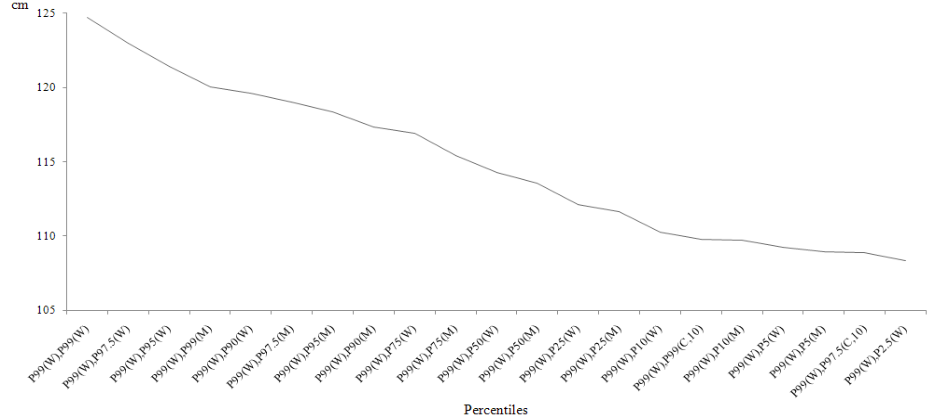
Figure 1 shows a diagram of the comfortable accommodation of passengers in the area of the hips, when it is known that the fixed person who we wish to transport on the rear seat is the 5th percentile female.
Figure 1. Diagram of comfortable accommodation for the area of hips, for three passengers on the rear seat of a sedan, when the first person on the seat is 5th percentile woman.
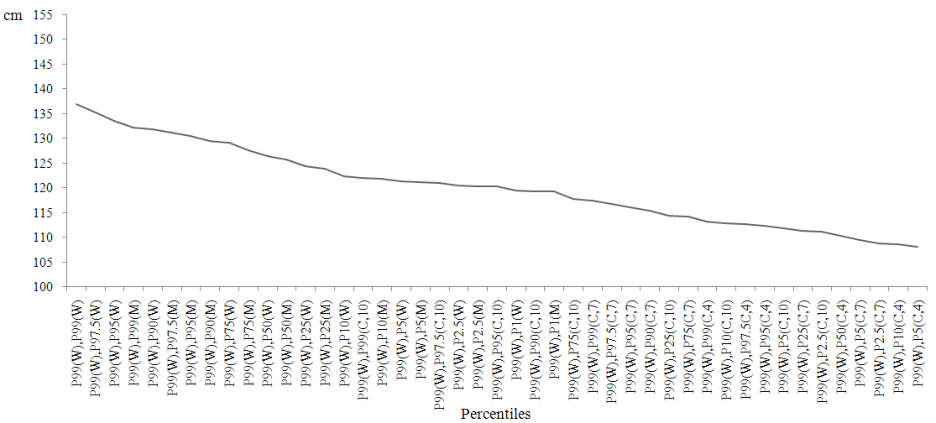
Figure 2 shows a diagram of the comfortable accommodation of passengers in the area of the hips, when it is known that the fixed person who we wish to transport on the rear seat is the 95th percentile female.
Figure 2. Diagram of comfortable accommodation for the area of hips, for three passengers on the rear seat of a sedan, when the first person on the seat is 95th percentile woman.
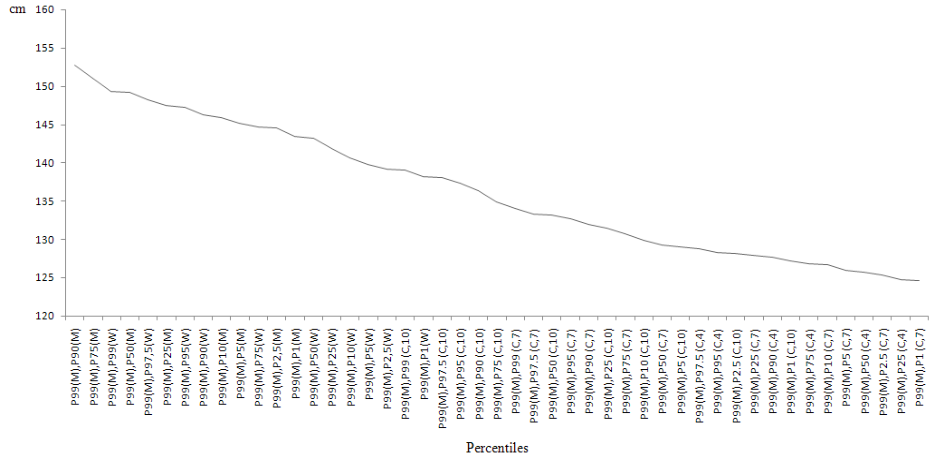
Figure 3 shows a diagram of the comfortable accommodation of passengers in the area of the shoulders, when it is known that the fixed person who we wish to transport on the rear seat is the 5th percentile male.
Figure 3. Diagram of comfortable accommodation for the area of shoulders, for three passengers on the rear seat of a sedan, when the first person on the seat is 5th percentile man.
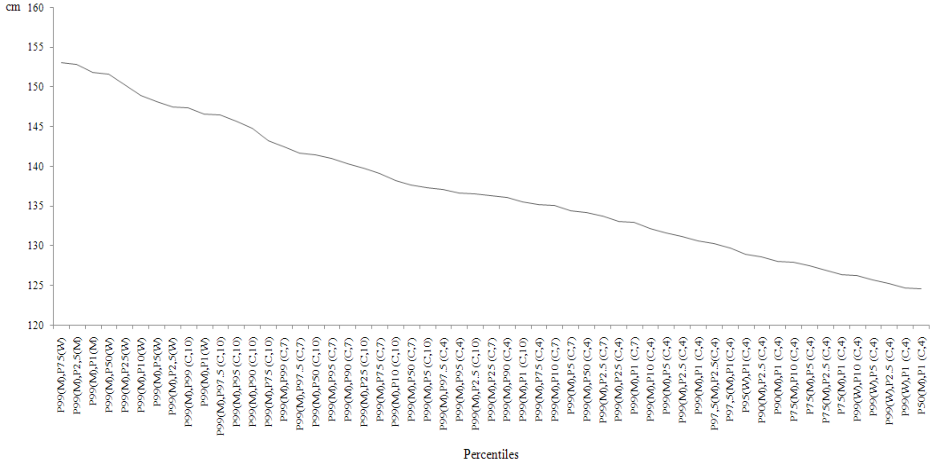
Figure 4 shows a diagram of the comfortable accommodation of passengers in the area of the shoulders, when it is known that the fixed person who we wish to transport on the rear seat is the 95th percentile male.
Figure 4. Diagram of comfortable accommodation for the area of shoulders, for three passengers on the rear seat of a sedan, when the first person on the seat is 95th percentile man.
Diagrams of comfortable accommodation of passengers can be formed for each percentile (e.g. 50th). The use of these diagrams is relatively simple. In connection with the Figure 4, an example is given for determining the maximum percentile of people that can be transported, if the foreseen width on the back seat in the shoulder area is 137.1 cm, and it is known that the person who will certainly be transported is 95th percentile male (shoulder). From the figure it can be seen that percentiles of other two persons are P99 (M) and P97.5 (C, 4). So, for the planned width of 137.1 cm, the maximum percentiles of persons who can comfortably be accommodated in addition to the first P 95 (M) passenger are P99 (M) and P97.5 (C, 4). This means that all individuals of smaller percentile than the above mentioned can be comfortably transported together.
CONCLUSION
The results of the research show that most models of sedans have enough space on the rear seat in the area of the hips. However, in the area of the shoulders, the situation is different. There is no model that can accommodate three males of 90th percentile. Only one model allows the positioning of the three males of 75th percentile, when the shoulder breadth in a sitting position was adopted as a criterion for the comfortable accommodation of passengers. So, the basic recommendation for designers is to pay more attention to the provision of sufficient width of space on the rear seat in the area of shoulders. It can be assumed that the lack of published research on this topic is one of the reasons for the aforementioned omission. Diagrams of comfortable accommodation of passengers that are created in this study allow designers to determine easy and quickly the required width of a car in the area of the hips and shoulders, according to the percentile of people that need to be accommodated on the back seat. Implementation of this approach provides a comfortable transport for all passengers, in terms of the width of the rear seat of a sedan.
REFERENCES
Gordon, C.C., Bradtmiller, B., Churchill, T., Clauser, C.E., McConille, J.T., Tebbetts, I., Walker, R.A. (1989), “1998 Anthropometric Survey of U.S. Army Personel: Methods and Summary Statistics”, NATICK/TR-89/044, U.S. Army Natick RD&E Center. Macey, S., Wardle, G. (2008), “H-POINT, The fundamentals of Car Design & Packaging”, Design Studio Press. TACH (2013). “Rank cars by Specs”, Website: http://www.theautochannel.com/. Weber, K., Lehman, R.J., Schneider, L.W. (1985), “Child Anthropometry for Restraint System Design”, UMTRI-85-23, The
University of Michigan, Transportation Research Institute.
Woodson, W.E. (1981), “Human Factors Design Handbook”, McGraw-Hill, Inc.
LISTED IN THE AHFE DIGITAL BOOKSTORE CATALOGUE
Explore the complete digital volume
Advances in Ergonomics In Design, Usability & Special Populations: Part I
Read this individual research paper free through the original publisher, or explore the full digital proceedings book.
ISBN 978-1-4951-2106-7
Explore this ISBN in the AHFE Bookstore ↗Listed in the July 2026 bookstore catalogue; search by ISBN to confirm current availability · Digital book purchase optional