Patrizia Serra, Alessandro Murru, Simone Podda, Mattia Porta, Gianfranco Fancello (2026). Investigating the impact of driving workload on fatigue and performance for the purpose of road safety. In: Advances in Human Factors of Transportation. AHFE Open Access, vol. 224, pp. 241–250. https://doi.org/10.54941/ahfe1007851
Driver fatigue is a major contributor to road accidents, yet it remains difficult to quantify due to its subjective nature and inconsistent reporting. This experimental study investigates how fluctuations in driving workload influence fatigue development and driving performance. Utilizing a high-fidelity car simulator, thirty non-professional drivers participated in a controlled experimental protocol comparing optimal driving scenarios with stressful driving conditions characterized by heavy traffic and adverse weather. To ensure a comprehensive assessment, an integrated multimodal approach was adopted, combining continuous physiological monitoring (electroencephalography - EEG, electrocardiography - ECG) with psychomotor tests such as Flicker Fusion test, and reaction times. Subjective workload was further assessed using the NASA-TLX questionnaire. Preliminary results indicate a statistically significant reduction in the Flicker Fusion metrics during stressful driving sessions, consistent with the onset of mental fatigue. These findings are corroborated by increased NASA-TLX scores and a decrease in EEG-derived attention and stress metrics. Other measured parameters showed no significant differences between the two sessions, suggesting the need for further experimentation to investigate the underlying causes and potentially refine the experimental design. The proposed holistic framework for assessing driver state can offer valuable insights for the design of targeted road safety interventions, infrastructure improvements, and tailored driver training programs aimed at enhancing overall drivers’ well-being and safety.
In the domain of road safety, fatigue is a critical and widely recognized factor that contributes to diminished attention, delayed reactions, and an elevated risk of accidents. According to international estimates, driver fatigue may be a contributory factor in up to 20% of all road crashes (Jackson et al., 2011). However, official figures are likely underestimated due to inherent methodological limitations, such as non-standardized data recording approaches, inconsistencies in how officers identify the condition, and the Received February 6, 2026; Revised April 7, 2026; Accepted April 23, 2026; Available online July 20, 2026
intrinsic difficulty in securing definitive evidence post-incident (Robertson et al., 2009).
Driving is a demanding cognitive task that requires the seamless integration of attention, perception, and motor control over extended periods. When environmental complexity increases (due to heavy traffic, poor signage, or adverse weather), the resulting surge in external stimuli can lead to cognitive overload that manifests physically as stress and fatigue. Research has also demonstrated that excessive cognitive load can accelerate the onset of drowsiness, particularly during nocturnal driving (Merlhiot and Bueno, 2022). These multifaceted conditions are recognized to worsen both reaction times and visual perception (Khan et al., 2025; Arutyunova et al., 2024).
Extensive literature has established that rising mental workload, whether deriving from multitasking, responding to unpredictable events, or sustained vigilance, leads to measurable alterations in physiological parameters (see. a.o., Hidalgo-Muñoz et al., 2019; Lazaro et al., 2022; Vicente et al., 2016). Consequently, monitoring biometric and psychophysiological signals can provide a proactive means of detecting driver overload before overt signs of fatigue emerge. In this regard, physiological assessment is largely recognized as a primary tool for fatigue detection. Metrics such as Heart rate (HR), Heart Rate Variability (HRV) and Electrodermal Activity (EDA) are broadly used as proxies for sympathetic arousal and mental workload (Peruzzini et al., 2019; Reimer and Mehler, 2011). These are often complemented by Electroencephalography (EEG) to monitor cortical engagement. However, as fatigue also manifests through degraded motor control, metrics like Reaction Time (RT) and Flicker Fusion thresholds are frequently used to quantify the decay in cognitive processing speed and central nervous system arousal, while physical readiness is often assessed through peripheral muscle fatigue indicators like the Hand Grip test (Aghamiri et al., 2022).
Despite the abundance of non-invasive monitoring tools, current research often treats these parameters in isolation, lacking a holistic perspective. This study addresses this gap by employing an integrated framework to quantify the impact of environmental stressors on driver states. By triangulating objective biometric markers and psychomotor outputs with subjective assessments, this research aims to provide a comprehensive evaluation of driver state. To validate this approach, the paper presents a series of high- fidelity simulation trials involving thirty non-professional car drivers. These trials compare optimal driving scenarios against stressful conditions, such as heavy traffic and adverse weather.
The remainder of this paper is organized as follows. Section 2 reviews established non-invasive metrics for driver fatigue monitoring, categorized into physiological, psychomotor, exposure, and subjective indicators. Section 3 outlines the experimental methodology, covering the simulation protocol, participant demographics, and the integrated sensing framework. Section 4 presents the results, examining the impact of critical driving conditions on biometric and performance indicators. Finally, Section 5 discusses the implications and offers concluding remarks.
Investigating the Impact of Driving Workload on Fatigue and Performance 243 EVALUATING DRIVER STATE: ESTABLISHED METRICS IN LITERATURE
The literature extensively documents various non-invasive metrics to monitor driver fatigue. From a scholarly perspective, these metrics can be divided into four main categories: physiological markers, psychomotor performance, exposure variables, and subjective perception. A brief description follows: Physiological markers of stress and workload: the first category of metrics focuses on the autonomic and central nervous system. ECG is a standard for monitoring HR and HRV in the context of car driving, where a decrease in HRV is recognized to be a primary indicator of high mental workload and stress (Peruzzini et al., 2019; Arutyunova et al., 2024). Holter monitors and medical smartwatches are among the most used ECG devices in these applications.
Complementing cardiovascular data, EDA is broadly used to track skin conductance as a proxy for sympathetic arousal and cognitive orthostatic response (Reimer and Mehler, 2011; Steinberger et al., 2017).
To directly monitor brain-level stimuli and reactions during driving, EEG, which provides high-temporal resolution data on cortical engagement, is widely used to assess cognitive load (Aminosharieh Najafi et al., 2023).
Physical and psychomotor performance: since fatigue manifests not only physiologically but also through the degradation of motor control, this second category comprises the metrics most frequently employed in the literature to evaluate drivers’ motor and cognitive outputs.
Reaction Time (RT), defined as the temporal interval between the onset of a stimulus and the initiation of a motor response, is widely recognized as a critical indicator of cognitive processing speed, with studies showing significant variance based on the driver’s psychophysiological state. Existing research suggests that driving experience may act as a mediating factor, where expert drivers may exhibit shorter reaction times due to the automation of motor tasks. However, as documented by Mahajan and Velaga (2020), this compensatory advantage diminishes with progressing fatigue, leading to increased latency and performance degradation regardless of expertise.
To assess central nervous system arousal, RT metrics are frequently paired in the literature with the Flicker Fusion test, where a decline in the related thresholds is typically cited as an indicator of reduced alertness and the onset of mental fatigue. Among the various metrics utilized in literature to evaluate peripheral muscle fatigue, the Hand Grip test is frequently employed as an objective indicator of physical readiness (e.g., Aghamiri et al., 2022). By measuring fluctuations in average and maximum strength relative to baseline, this method exemplifies how performance-based assessments can track physiological fatigue.
Exposure variables: exposure variables, particularly vibrations, represent the third category. While vibrations are known to induce physical fatigue during prolonged shifts (Aghamiri et al., 2022), they are also essential in simulation for haptic realism. In the context of simulated driving, vibrations serve a dual role: increasing the ecological validity of the driving task and mitigating the effects of simulator sickness, ensuring that the gathered biometric data reflects driving-related stress rather than motion-induced discomfort.
Subjective assessment: the fourth category encompasses parameters designed to triangulate objective data with the driver’s internal experience. Within the
framework of cognitive load measurement, self-administered questionnaires represent a cornerstone of human factors research. Specifically, the NASA-TLX (Task Load Index) stands among the most frequently employed instruments in the literature for multidimensional workload assessment (von Janczewski et al., 2022). This instrument evaluates workload through six dimensions: mental demand, physical demand, temporal demand, performance, effort, and frustration. Each dimension is scored on a 20-point scale according to subjective task demands. To ensure linguistic and cultural psychometric consistency, the application proposed in this study utilizes the Italian version validated by Bracco and Chiorri (2006). NASA-TLX scores can serve as a critical qualitative baseline for the quantitative biometric markers.
While current literature extensively documents various non-invasive metrics for fatigue monitoring, existing studies frequently rely on a limited subset of indicators. This research addresses this limitation by adopting a multimodal framework designed to correlate fluctuations in driving workload, driven by traffic and weather conditions, with the physiological and psychomotor onset of fatigue. By triangulating physiological, physical, and subjective metrics, this application offers a holistic characterization of the driver’s state and fatigue.
MATERIALS AND METHODS
This section outlines the materials and methods employed in this study. Specifically, it details the experimental design and protocol, characterizes the experimental group, describes the instrumentation used for data acquisition, and defines the metrics analyzed.
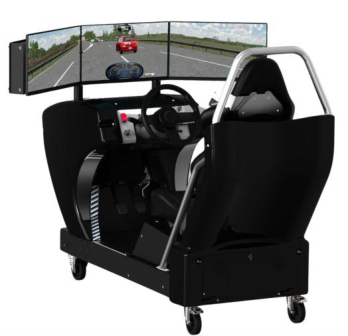
Experimental Design and Protocol The experimental study employed a high-fidelity car driving simulator (Figure 1) to investigate driver behavior and psychophysiological responses under varying operational conditions. This controlled environment ensured synchronous multimodal data acquisition and repeatable conditions across all participants. Participants were asked to drive on a predefined route in compliance with traffic regulations and scenario constraints, while maintaining a natural driving style.
The experiment utilized a within-subjects experimental framework involving two driving conditions:
- optimal conditions: characterized by regular traffic, favorable weather, and high visibility, serving as a low-complexity baseline. - critical conditions: defined by increased scenario complexity, including high traffic density, unpredictable events, and degraded environmental and visibility conditions.
To mitigate learning effects, the protocol was divided into three sessions conducted on separate days:
- familiarization: an unmonitored drive to acclimate participants to the car simulator,
- baseline session (optimal driving conditions): a monitored drive under optimal conditions, - stress session (critical driving conditions): a monitored drive under critical conditions to evaluate the impact of environmental stressors on driver fatigue.
The order of the monitored sessions was counterbalanced across participants to avoid order effects. Each driving session lasted approximately 90 minutes and followed a standardized three-phase structure: i) instructions, instrument calibration and pre-task assessments; ii) driving with continuous data acquisition; iii) post-task assessments.
All procedures were standardized to ensure maximum data comparability.
Figure 1: Car simulator used in the experiment.
Experimental Group The experiment involved 30 healthy adult volunteers (20 males, 10 females; mean age = 34 years, SD = 5). All participants held a valid car driving license with a mean driving experience of 14 years and reported regular driving activity (approximately 40 hours per month). Inclusion criteria required the absence of known neurological, cardiovascular, or musculoskeletal conditions. Individuals with conditions incompatible with simulated driving or with high susceptibility to simulator sickness were excluded. Before starting with the experimentation, participants were all informed about full compliance with the national privacy legislation (Regulation EU 2016/679 and Legislative Decree 101/2018) in processing the data collected during the test. The study was conducted in accordance with the Declaration of Helsinki and all subjects gave their informed consent for inclusion before they participated in the study.
Data Acquisition and Instrumentation To capture a comprehensive profile of driver psychophysical conditions, a multi-sensor configuration was integrated with the simulator for the synchronous acquisition of physiological, neurocognitive, and performance data. The performed monitoring followed a dual approach:
1. continuous recording during the driving sessions, 2. point-in-time assessments administered pre- and post-session.
Continuous monitoring included EEG via the Emotiv EPOC X system, the recording of whole-body vibrations via accelerometers positioned under the driver’s seat, and cardiac metrics (HR and HRV) via holter band. As for electroencephalography measures, primary data extracted from the EEG provided insights into the operator’s cognitive Stress Score (SS) and Attention Score (AS). The former can be intended as a measure of comfort with the current challenge, while the second as an indicator of alertness and the deliberate allocation of cognitive resources toward task-relevant stimuli.
Continuous monitoring was complemented by pre- and post-test functional assessments, specifically the Flicker Fusion test, and RT tests.
Finally, subjective mental workload was evaluated after each monitored driving session using the NASA-TLX questionnaire thus enabling a robust triangulation between physiological stimulation, psychomotor performance, and the participants perceived cognitive effort across the experimental conditions.
Table 1 provides a comprehensive overview of the experimental metrics, including their categorization, description, units of measure, and respective data sources.
Table 1: Experimental metrics.
Table available in the original PDF paper.
Heart Rate (HR) Number of heart beats per minute
bpm ECG holter band Heart Rate Variability (HRV)
ms ECG holter band
Category Metric Description Unit Source Physiological markers and cognitive indicators
Variation in the time interval between consecutive heartbeats
EEG helmet
Average Attention Score (AAS)
Score (0–100)
Attention score derived from EEG alpha and beta wave modulation
EEG helmet
Average Stress Score (ASS)
Score (0–100)
Stress score derived from EEG alpha and beta wave modulation Reaction Time (RT) Time between stimulus and reaction
Physical and psychomotor performance
Hz Flicker Fusion Test
ms Reaction Time test Flicker Fusion Ascending threshold (FF)
Lowest frequency at which an intermittent stimulus is perceived as a continuous light
Hz Flicker Fusion Test
Flicker Fusion Descending threshold (VF)
Highest frequency at which the flicker is detected starting from a steady light
m/s2 Accelerometer
Exposure factors
Whole-body vibrations
Vibrations transmitted to the driver via the seat surface.
NASA-TLX Global Score
Subjective workload reported after task
Score (0–100)
NASA-TLX questionnaire
Cognitive workload (subjective assessment)
RESULTS
The experimental comparison between driving sessions under optimal and critical conditions provided preliminary insights into how scenario complexity influences physical and cognitive workload. This section presents the results across effect metrics, exposure measures, and subjective assessment.
Effect Metrics: Physiological Markers and Cognitive Indicators The analysis of physiological and cognitive effect metrics suggests a nuanced response to driving task demands (Table 2). While HR and HRV (derived from RMSSD - Root Mean Square of Successive Differences) changes were not statistically significant, the data points to a parasympathetic recovery following optimal sessions that was absent in critical conditions. This suggests that in stressful conditions drivers were probably working harder physiologically just to keep their performance steady under pressure.
To evaluate neurophysiological activation during the driving task, cognitive state metrics were derived from EEG recordings. Specifically, the ASS and AAS were analyzed to quantify variations in arousal, cognitive load, and affective engagement. As detailed in Table 3, these EEG-derived metrics exhibited only limited fluctuations between the two driving conditions. The slight reductions in ASS and AAS observed during the critical driving scenario might reflect inter-individual variability or a progressive familiarization with the task; additional tests would be beneficial to fully elucidate this phenomenon.
Effect Metrics: Physical and Psychomotor Performance Analysis of effect metrics related to physical and psychomotor performance (Table 4) revealed that while RT changes showed a slight albeit not statistically significant increase in critical conditions, the Flicker Fusion FF metric showed a marked and statistically significant reduction under stressful conditions. This decrease is indicative of central nervous system fatigue and a diminished efficiency in perceptual discrimination. Ultimately, these findings underscore the efficacy of perceptual testing in identifying latent cognitive overload.
Exposure Metrics Exposure metrics, specifically maximum whole-body vibrations (A(w)max) served as an objective indicator of mechanical load. Measured via a seat- mounted accelerometer along the vertical axis, vibration levels exhibited a modest but consistent increase under critical driving conditions (Table 5). Although the difference in mean values appears limited, the greater amplitude of variation observed in stressful driving conditions suggests an increased mechanical burden in more demanding driving scenarios. This may reflect the combined effects of increased traffic density and more frequent maneuvering events required in the stressful scenario.
Driving Session Mean Range Optimal conditions 0.077 m/s² 0.049 – 0.118 Critical conditions 0.080 m/s² 0.057 – 0.162
Subjective Assessment To assess perceived mental workload, NASA-TLX scores were collected post-session. As shown in Table 6, average scores increased under critical driving conditions. Although this mean increase was slight, the maximum values reached in the critical sessions indicate that some drivers experienced a much more intense subjective workload than the averages might suggest.
Table 6: Subjective assessment: NASA-TLX score.
Table available in the original PDF paper.
Driving Session Mean Range Optimal conditions 37.6 5.0 – 61.3 Critical conditions 40.4 5.0 – 86.7
Overall, the findings indicate that the transition from optimal to critical driving conditions produces a multi-layered increase in driver workload. RT metrics showed a slight albeit not significant increase. Whole-body vibrations served as a robust objective proxy for increased mechanical load, while the NASA-TLX confirmed a corresponding rise in subjective mental workload. The statistically significant reduction in the Flicker Fusion FF metric is particularly critical, as it provides clear evidence of central nervous system fatigue and diminished perceptual efficiency. These physiological trends,
Investigating the Impact of Driving Workload on Fatigue and Performance 249 supported by EEG and ECG stabilization patterns, may suggest that drivers maintained their driving performance through an increase in compensatory effort. For road safety practitioners, these results highlight the importance of monitoring latent strain, as the absence of immediate performance degradation may mask a heightened risk of sudden failure under sustained or increased complexity.
CONCLUSION
This study investigated the impact of environmental stressors on driver fatigue and cognitive workload through a comprehensive, multimodal framework. By integrating physiological metrics (EEG, ECG), psychomotor performance (Flicker Fusion measures, RT), exposure metrics (whole-body vibrations) and subjective self-reporting (NASA-TLX), the paper provided a holistic evaluation of the human factor in simulated driving environments. Preliminary results, calculated by comparing data variations between driving session in good conditions and in critical conditions, demonstrate that environmental complexity, specifically the combination of heavy traffic and adverse weather, accelerates the onset of mental fatigue. The observed reduction in the Flicker Fusion FF metric aligns with increased cognitive demand and the onset of mental fatigue. This trend was corroborated by a concurrent increase in RT and NASA-TLX scores, alongside a reduction in both average attention and stress metrics derived from EEG data. Other parameters yielded no statistically significant differences between the two sessions, indicating that further research is required to elucidate the underlying mechanisms and potentially refine the experimental protocol.
The integration of simulation methodologies with the measurement of biomedical parameters offers an effective approach for investigating potential correlations between driving difficulty levels, performance degradation, and fatigue increase. By integrating physiological, physical, and subjective data, this study moves beyond isolated metric analysis, offering a more robust framework for mapping fatigue-induced performance degradation. Such insights can be helpful for developing targeted improvements in the road environment and for designing tailored training programs aimed at optimizing driver well-being and enhancing road safety. Future research will focus on the development of real-time data synchronization algorithms that can combine information from multiple sensors at the exact same moment.
ACKNOWLEDGMENT
This study was carried out within the MOST – Sustainable Mobility National Research Center and received funding from the European Union Next-GenerationEU (PIANO NAZIONALE DI RIPRESA E RESILIENZA (PNRR) – MISSIONE 4 COMPONENTE 2, INVESTIMENTO 1.4 – D.D. 1033 17/06/2022, CN00000023). This manuscript reflects only the authors’ views and opinions, neither the European Union nor the European Commission can be considered responsible for them.
REFERENCES
Aghamiri, Z. S., Aliabadi, M., Farhadian, M., Golmohammadi, R., Motlagh, M. S.
(2022). The simultaneous exposure to heat and whole-body vibration on some motor skill functions of city taxi drivers. La Medicina Del Lavoro, 113(5). Aminosharieh Najafi, T., Affanni, A., Rinaldo, R., Zontone, P. (2023). Driver Attention Assessment Using Physiological Measures from EEG, ECG, and EDA Signals †. Sensors, 23(4). Arutyunova, K. R., Bakhchina, A. V., Konovalov, D. I., Margaryan, M., Filimonov, A.
V., Shishalov, I. S. (2024). Heart rate dynamics for cognitive load estimation in a driving simulation task. Scientific Reports, 14(1), 31656. Bracco, F., and Chiorri, C. (2006). Validazione italiana del NASA-TLX su un campione di motociclisti [Italian validation of the NASA-TLX on a sample of bikers], in Proceedings of the XV National Congress of the Italian Association of Psychology, Experimental Psychology Section, Rovereto, Italy. Hidalgo-Muñoz, A.R., Béquet, A.J., Astier-Juvenon, M., Pépin, G., Fort, A., Jallais,
C., Tattegrain, H. and Gabaude, C. (2019). Respiration and heart rate modulation due to competing cognitive tasks while driving. Frontiers in Human Neuroscience, 12, 525. Jackson, P., Hilditch, C., Holmes, A., Reed, N., Merat, N., Smith, L. (2011). Fatigue and road safety: A critical analysis of recent evidence. Department for Transport, Road Safety Web Publication, 21, 44. Khan, M.A., Asadi, H., Qazani, M.R.C., Arogbonlo, A., Nahavandi, S. and Lim,
C.P. (2025). Predicting cognitive load in immersive driving scenarios with a hybrid CNN-RNN model. In International Conference on Neural Information Processing (pp. 224–240). Singapore: Springer Nature Singapore. Lazaro, M.J., Yun, M.H. and Kim, S., 2022. Stress-level and attentional functions of experienced and novice young adult drivers in intersection-related hazard situations. International Journal of Industrial Ergonomics, 90, 103315. Mahajan, K., and Velaga, N. R. (2020). Effects of Partial Sleep Deprivation on Braking
Response of Drivers in Hazard Scenarios. Accident Analysis & Prevention, 142, 105545. Merlhiot, G., Bueno, M. (2022). How drowsiness and distraction can interfere with take-over performance: A systematic and meta-analysis review. Accident Analysis and Prevention, 170. Peruzzini, M., Tonietti, M., Iani, C. (2019). Transdisciplinary design approach based
on driver’s workload monitoring. Journal of Industrial Information Integration, 15, 91–102 Reimer, B., and Mehler, B. (2011). The impact of cognitive workload on physiological arousal in young adult drivers: A field study and simulation validation. Ergonomics, 54(10) Robertson, R. D., Holmes, E. A., Vanlaar, W. (2009). The facts about fatigued driving
in Ontario: A guidebook for police. Traffic Injury Research Foundation. Steinberger, F., Schroeter, R., Watling, C. N. (2017). From road distraction to safe driving: Evaluating the effects of boredom and gamification on driving behaviour, physiological arousal, and subjective experience. Computers in Human Behavior, 75, 714–726 Vicente, J., Laguna, P., Bartra, A. and Bailón, R. (2016). Drowsiness detection using
heart rate variability. Medical & biological engineering & computing, 54(6), pp. 927–937. Von Janczewski, N., Kraus, J., Engeln, A., Baumann, M. (2022). A subjective oneitem measure based on NASA-TLX to assess cognitive workload in driver-vehicle interaction. Transportation Research Part F: Traffic Psychology and Behaviour, 86, 210–225
LISTED IN THE AHFE DIGITAL BOOKSTORE CATALOGUE
Explore the complete digital volume
Advances in Human Factors of Transportation
Read this individual research paper free through the original publisher, or explore the full digital proceedings book.
ISBN 979-8-950676-00-0
Explore this ISBN in the AHFE Bookstore ↗Listed in the July 2026 bookstore catalogue; search by ISBN to confirm current availability · Digital book purchase optional