Hedvig Aminoff (2025). Mapping Human-Centred Design in innovation-driven Projects: an HRL assessment of an autonomous ferry and remote operations centre concept. In: Human Interaction and Emerging Technologies (IHIET 2025). AHFE Open Access, vol. 197, pp. 541–549. https://doi.org/10.54941/ahfe1006747
The rapid pace of technological development in the maritime sector is driving transformative changes across sociotechnical systems,as autonomous vessel, remote operations, and control infrastructures are developed. However, innovation efforts often focus on the technology itself, leaving critical human factors (HF) aspects underdeveloped. This extended abstract presents a case study from the development of an autonomous urban passenger ferry and its associated remote operations center (ROC), in which the Human Readiness Level (HRL) framework (HFES/ANSI 400-2021) was applied to assess human-system readiness, consolidate earlier Human-Centered Design (HCD) efforts, and guide future development.Although the ferry system had reached Technology Readiness Level (TRL) 4–5, our HRL assessment revealed that human readiness had not kept pace. HRL 1 and 2 activities—such as defining user needs, human roles, operational contexts, and early interaction concepts—had been partially addressed across various HCD efforts. However, HRL 3 activities are intended to establish validated human-system interaction concepts through structured analyses of tasks, cognitive demands, operational scenarios, and human performance metrics. In this case, HRL 3 was not fully met: key gaps included the absence of formal task and cognitive task analyses, limited definition of supervisory roles and transitions between automation modes, and a lack of traceable performance measures related to operator workload, situation awareness, and risk-critical scenarios.Extensive HCD and HF activities had been carried out throughout the project, often by different contributors at different times, with a certain fragmentation as a result. The HRL framework, even though it was in part used as a retrospective checklist, provided a structured mechanism to consolidate insights, identify latent risks, and re-establish a baseline for continued HCD and human-system integration work. Its staged exit criteria helped the team see where human readiness had failed to keep pace with system development, and where further work was needed in usability, safety, and regulatory compliance.To build on HRL 1–2 progress, structured HF methods, including CRIOP scenario analysis, operator workload mapping, scenario desciptions, and documentation of design assumptions were conducted to begin fulfilling HRL 3 requirements. These activities clarified cognitive demands, roles, and safety-critical transitions, and created a compiled evidence base that can support continued validation efforts toward HRL 4 and beyond.As part of this work, a preliminary set of human factors design guidelines was derived from the HRL mapping process. These address safety, efficiency, and user acceptance concerns, and aim to support future iterations through clear principles for interface design, operator training, situational awareness, emergency protocols, accessibility. The guidelines are intended as a living reference for designers and engineers working on remote and autonomous maritime systems. Even in projects with strong HCD ambition, the absence of structured integration and traceability mechanisms can make it difficult to maintain continuity, especially in innovation-driven or academic environments where project goals evolve and team members may change over time. In this case, the HRL framework helped tie fragmented contributions together and provided a foundation for planned, traceable HF integration. It also supported cross-team alignment, and a form of quality assurance , capabilities that can be increasingly valuable in AI-enabled, high-tech development settings such as maritime autonomy, where there are also eveloving regulations. Our findings reinforce the growing view that HRL is not only a diagnostic tool but also a forward-looking framework that makes human-system integration more visible, traceable, and auditable throughout complex development processes.
The maritime sector is rapidly transforming as increased automation, autonomous vessels, and remote operations infrastructures are reshaping sociotechnical systems. These changes challenge traditional design models and demand effective integration of human factors (HF) and Human Centred Design (HCD). In safety-critical domains like maritime transport, poor HF integration can lead to unclear supervisory roles, cognitive overload, and poor usability. Such issues can undermine operator performance and introduce latent safety risks, and ultimately risk eroding public and stakeholder trust in otherwise promising innovations.
These challenges are especially acute in innovation-driven environments (e.g., academia–industry collaborations, startup R&D), where shifting goals, distributed teams, and extended timelines can often lead to fragmented HCD efforts. Although HF integration (HFI) offers clear lifecycle benefits (improved safety, reduced rework), it can often get sidelined in engineering projects. HF metrics may be harder to quantify and more difficult to communicate within traditional engineering processes. Structured mechanisms are needed so that HF and HCD are managed systematically
within project milestones and decision processes, like technical performance, cybersecurity, or regulatory compliance, which are typically integrated into formal risk and quality management frameworks.
To address these pervasive issues, the Human Readiness Level (HRL) framework was introduced through the ANSI/HFES Standard 400- 2021(HFES/ANSI, 2021). HRLs complement Technology Readiness Levels (TRLs) by evaluating human-use readiness: can people use the system effectively and safely?
HRL is gaining policy traction, such as in the 2025 U.S. National Defense Authorization Act (NDAA), which mandates HRL reporting in major acquisition programs. There are indications it is being adopted or piloted by other major stakeholders such as the FAA, and Eurocontrol, reflecting a growing recognition of its value for risk management and lifecycle assurance in complex and innovative development settings. However, practical case studies still remain limited. Handley (2024), Savage-Knepshield et al. (2021) stress the need for real-world applications.
This article contributes to that effort by presenting a case study of HRL application in the development of an autonomous urban passenger ferry and its associated remote operations centre (ROC). Although the technical system had reached TRL 5–6, our assessment revealed that HF integration lagged behind. We used the HRL framework as both a retrospective checklist and a prospective planning tool to consolidate fragmented HCD work, identify latent risks, and establish a baseline for structured, traceable HF development. The results demonstrate HRL’s value in complex, multidisciplinary development and spotlight its role as a forward- looking tool for HFI quality assurance.
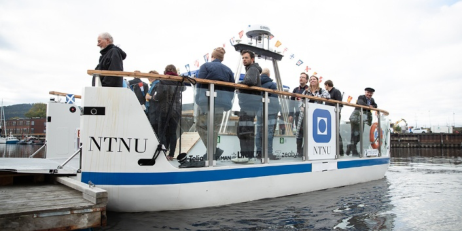
Figure 1: The Milliampere2 autonomous passenger ferry prototype.
The HRL Framework The HRL framework was conceptualized as a way to ensure that human capabilities are considered as part of technology maturity assessments (Kosnik and Acosta, 2010) and further developed through defence acquisition research at the Naval Postgraduate School. The final scale, published in 2021 was a result of multi-agency working groups that included experts from the DOD, FAA, NASA, and industry.
Mapping Human-Centred Design in Innovation-Driven Projects 543
The nine-level scale spans the system lifecycle, from early concept formation to full operational use. Appendix C in the HRL standard HRL provides support for HRL assessment by describing evaluation activities (e.g., task analyses, scenario modelling); trigger questions that guide inquiry; types of supporting evidence and exit criteria to justify level advancement. Appendix D provides illustrative case studies offers concrete scenarios that can guide practitioners in tailoring HRL use to their specific project needs and contexts. Appendix E discusses how the HRL framework can be integrated into broader system development processes.
As noted by See (2022) HRL provides a “single number to communicate readiness for human use.” This clarity helps HF issues be communicated and understood across engineering, program management, to support milestone decisions, risk reviews, and quality checks.
HRL Description
Production/
9 System successfully used in operations with systematic
Deployment
monitoring of human-system performance. 8 Human systems design fully tested, verified, and approved in mission operations. 7 Human systems design fully tested and verified in an
operational environment with system hardware and representative users. Technology
6 Human systems design matured and demonstrated in a
Demonstration
high-fidelity simulated or operational environment. 5 Human-centred evaluation of prototypes in mission-relevant part-task simulations. 4 Modelling, part-task testing, and trade studies of
human-system design concepts completed. Research &
3 Human-centred requirements for performance and
Development
interaction established. 2 Human-centred concepts, applications, and guidelines defined. 1 Basic principles for human characteristics,
performance, and behaviour observed and reported.
The Case Study: An Autonomous Ferry & ROC This case study examines the human readiness levels of an urban autonomous ferry paired with a Remote Operations Centre. Developed through interdisciplinary efforts (academia, startups, industry), the ferry had reached TRL 4–5 and was undergoing real-world prototyping.
From the beginning, HCD had been high on the agenda: over the period 2019-2024, the project generated 12 academic publications and 9 student thesis projects specifically related to the MilliAmpere ferry. Previous work included observations, interviews, mock-ups, operator role studies, simulation trials, and participatory workshops. Contributions had been made by various actors over this extended period, including academic researchers,
544 Aminoff
student teams, and industrial partners. However, HF efforts remained fragmented, as no central framework compiled or traced work, what gaps remained, or critical decisions around operator roles, cognitive workload, and safety.
Yet the system was rapidly maturing technically, and it became increasingly important to ensure that operator roles, cognitive demands, and safety- critical transitions were adequately understood and addressed. In this context the HRL framework appeared to be a relevant mechanism to structure and consolidate prior HCD efforts, diagnose gaps in HF work, and latent risks, and thereby create a baseline for future, traceable HF development. Rationale for HRL application The decision to apply the HRL framework was motivated by three converging challenges:
1. The difficulty of gaining a comprehensive overview of HF knowledge generated by multiple contributors over several years of development 2. Ensuring systematic application of HF insights rather than isolated studies 3. The need to find a way to demonstrate evidence of systematic human factors consideration for future regulatory compliance, particularly emerging human oversight mandates for autonomous maritime systems.
While the HRL framework is still emerging, with limited examples of practical applications, the MilliAmpere project provided an opportunity to both solve project challenges and contribute to understanding of this standard’s practical value.
Method
The HRL evaluation was conducted by the author through review of both specific studies related to the autonomous ferry and broader autonomous ship literature. Sources included peer-reviewed publications (n=12), master’s theses (n=3), ad studetn projects (n=6) and technical reports spanning 2019- 2024. Key MilliAmpere-specific sources included work by Alsos et al., Veitch & Alsos, Petermann et al., and Park (2022). Broader autonomous ship research included studies by Ramos et al. (2019), the AUTOSAFE framework (Fjørtoft & Holte, 2021), and risk assessment methodologies (Hoem et al., 2022). Each identified source was analyzed for HF-relevant findings and systematically mapped against HFES/ANSI Standard 400-2021 evaluation questions and exit criteria.
Applying the Standard’s Guidance HRL 1 Foundational understanding Dispersed knowledge from project-specific research (Park, 2022; Alsos et al., 2022; Veitch and Alsos, 2023; Petermann et al., 2023) and broader autonomous shipping literature (AUTOSAFE reports, Hoem et al., 2022) was synthesised to establish baseline human factors understanding (table 1). This synthesis bridged fragmented insights, identified latent vulnerabilities, and highlighted areas requiring future study.
Mapping Human-Centred Design in Innovation-Driven Projects 545
HRL 2 HRL 2 shifts from foundational understanding to applied analysis. In our case, key outputs included:
Mapping of user roles (remote operator, shore technician, passenger) with associated skills, limitations, and training needs.
Usage scenarios refined into structured “user journeys”and timelines that mapped user tasks and interactions across automation phases.
Guidelines for interface design, trust-building, situation awareness, and accessibility—developed through thematic synthesis of relevant literature and usability feedback.
Proposed candidate metrics for human performance (workload, task time, trust scores).
We also identified human performance issues from comparable systems (e.g. (Fjørtoft and Holte, 2021)), and began identifying potential sources of human error, particularly from scenarios. See Table 1 for more details about supporting evidence that was identified or generated.
Table 1: Summary of supporting evidence for HRL 1 and 2.
Table available in the original PDF paper.
Evaluation question (HFES
Examples of findings
400–2021 Appendix C) Supporting evidence for exit criteria Synthesized data from published
(Hoem, Veitch and Vasstein,
C.1.1.1 Have key human behaviours, capabilities, and limitations been identified?
studies, ferry observations, and stakeholder interviews to develop structured user characteristics across operator and passenger roles.
Created high-level user journeys Mapped phases
2022) found trust calibration essential; Alsos et al. (2022) noted interface legibility issues. Findings formed a consolidated reference point for key human factors insights, such as user characteristics, cognitive demands, interface challenges, and limitations. C.1.1.2 Have preliminary usage scenarios for potential users been identified?
describing boarding, monitoring, transitions, and emergency handling phases.
Compiled performance risks
Identified key risks in ROC
(manual–remote–autonomous) to specific user tasks and responsibilities. C.1.1.3 Have potential key human performance issues and risks been identified?
(e.g., mode confusion, passive monitoring fatigue) from AUTOSAFE and project-specific scenarios.
Synthesized findings from
User studies and interface
operations and passenger interpretation of autonomy, e.g. (Petermann, Alsos and Papachristou, 2023). C.1.1.4 Has basic human research relevant to the concept been conducted?
reviewed research articles, linking them to potential design implications.
evaluations by Park (2022), Alsos et al. (2022), and Veitch & Alsos (2023), provided insights into usability, workload, and passenger perceptions. Petermann et al. (2023) further contributed trust and acceptance data from early trials. Ramos, Utne, and Mosleh (2019) addressed cognitive demands and role definition for remote operators in more general maritime autonomy settings.
Continued
546 Aminoff
Table 1: Continued Evaluation question (HFES
Table available in the original PDF paper.
Examples of findings
400–2021 Appendix C) Supporting evidence for exit criteria Mapped operator and passenger
Simulator observations and user
C.2.1.1 Has knowledge of
feedback from (Veitch & Alsos 2022).
roles and characteristics, including attentional needs and interaction demands.
relevant human characteristics, capabilities, and limitations been refined?
Derived domain-relevant HF
C.2.1.2 Have key human-centred
(Alsos et al. 2022) identified
design principles, standards, and guidance been established?
guidelines from literature and design feedback (trust, cognitive load, redundancy).
Developed task-centred scenarios
Clarification of timing, decision
challenges in visual hierarchy and emphasized the need for clear and consistent feedback mechanisms in ferry interfaces. C.2.1.3 Have usage scenarios
for all roles, including ROC operator and emergency responder.
been updated to include basic task descriptions for user roles?
Compiled insights from maritime
Mode ambiguity and unclear
points, and overlapping roles across different autonomous phases. C.2.1.4 Has human performance supervisory roles flagged as critical concerns.
on legacy or comparable systems been analysed?
incident reports (e.g., Fjørtoft & Holte, 2021) and other previous research, such as empirical studies on passenger feedback regarding the information provided during the ferry journey (Claes, Liavaag and Simic, 2022).
Synthesized human error risks
Operator: over trust in
C.2.1.5 Have potential sources of human error and misuse been identified?
from literature and conducted a targeted HAZOP for the autonomous ferry system to identify potential operator and system misuse scenarios across phases of operation.
Suggested early metrics tied to
E.g., task duration, trust scores.
automation; HAZOP revealed that unclear alarm prioritization and delayed takeover procedures pose significant risk during remote operation transitions. C.2.1.6 Are appropriate metrics
usage phases.
for successful human performance being identified?
HRL 3 HRL 3 marks a transition from understanding user needs to formalizing human-centred requirements that inform design and development. It calls for structured analyses such as Cognitive Task Analysis (CTA) and function allocation and beginning to define traceable system requirements for human use. Our contributions included:
Hierarchical Task Analysis and Cognitive Task Analysis (CTA) for ROC operator roles
Timeline work/load assessments for remote takeover
Alarm design aligned with IEC standards
HAZOP analysis for control, propulsion, and communication failures
Preliminary human–machine function allocations
Preliminary guidelines addressing alarm presentation, automation mode transitions, and passenger experience, and situation awareness needs across teams and systems.
Notes on environmental effects (e.g., glare, noise).
While we conducted substantial work toward meeting HRL 3, we determined that the level could not be considered fulfilled: no requirements
Mapping Human-Centred Design in Innovation-Driven Projects 547
were traced into system specifications, proof-of-concept validation was incomplete, and many aspects of HF integration across typical domains such as maintenance, training, staffing were not finalized. Table 2 reflects where criteria were met and where they were not.
Table 2: Summary of supporting evidence for HRL 3.
Table available in the original PDF paper.
Evaluation question (HFES
Examples of findings
400–2021 Appendix C) Supporting evidence for HRL 3 exit criteria HCD experts involved.
C.3.1.1 Have human systems experts been engaged?
Developed detailed user journeys
Scenarios described remote
C.3.1.2 Have usage scenarios
with operational timelines.
been updated based on human needs?
HTA and CTA conducted for
Identified critical tasks, decision
supervision, emergency responses. C.3.1.3 Have cognitive and task analyses been completed?
remote operator tasks.
Partially analysed. Preliminary function allocations
points, and cognitive demands. C.3.1.4 Have function allocations been evaluated?
Partially analysed. Partial analysis of information
suggested for ROC–autonomy interaction Highlighted need for dynamic allocation during degraded modes. C.3.1.5 Have information flow requirements been identified?
HAZOP performed for
Identified failure modes, e.g.,
needs for remote control roles. Situation awareness gaps noted for team coordination under alarms. C.3.1.6 Have initial safety analyses been completed?
communication loss and response risks.
propulsion, control, and communication systems. CRIOP scenario analysis conducted.
Partially analysed. Role definitions and initial
C.3.1.7 Have manpower, personnel, training analyses begun?
Not systematically analysed. Informal notes on ROC glare,
training needs outlined for ROC operators. C.3.1.8 Have environmental factors been analysed?
noise, and visibility impacts. Interface readability under sunlight was flagged as an issue. C.3.1.9 Have other HSI domains
Not yet addressed in systematic
No documentation of human
been addressed? C.3.1.10 Have maintenance interactions been considered?
maintenance interaction needs.
fashion. Partially addressed in preliminary CONOPS.
Roles described in terms of
Operator and passenger profiles
C.3.1.11 Have user characteristics been specified?
cognitive and physical demands.
Not achieved. Partial mapping through CTA
outlined; gaps in full specification. C.3.1.12 Are human needs mapped to system demands?
Not achieved.
and workload analysis. C.3.1.13 Have human performance data and metrics been evaluated?
Alarm requirements and
Suggested redundancy in alarms;
C.3.1.14 Have design features to
interface principles proposed.
accommodate humans been recommended?
Not achieved. Human-centred requirements
call for clearer mode indicators. C.3.1.15 Have requirements not traced into system specs.
been flowed into system requirements?
548 Aminoff
DISCUSSION
HRL 3 was not considered fulfilled, despite the substantial human factors work conducted. Key gaps remained as there was no clear evidence that human-centred requirements had been integrated into system specifications; no finalized proof of concept existed to validate human performance metrics; and critical cross-domain analyses such as training, staffing, and maintainability were still in early stages. These limitations reflect a common challenge in complex, innovation-driven projects: while significant HCD can be conducted and important HF insights may emerge, they often remain fragmented unless embedded into structured systems engineering processes.
This case reinforces the value of the HRL framework. By applying it as both a retrospective diagnostic and a forward-planning tool, we were able to consolidate disparate HCD activities, identify maturity gaps, and establish a traceable path forward. The HRL framework provided a shared language that made human readiness intelligible to diverse stakeholders.
As Austrian et al. (2024) note, most HRL applications to date are retrospective. While useful, such analyses are not enough. To fully realize HRL’s potential as a proactive tool guiding design, risk management, and acquisition decisions more prospective applications are needed. We hope to apply HRLs earlier and more systematically in future settings, particularly within defence acquisition programs where lifecycle integration and traceability are critical.
ACKNOWLEDGMENT
This work was supported by the MAS project (Meaningful Human Control of digitalization in safety critical systems), a knowledge-building project for Industry under the PETROMAKS 2 program, managed by Stig Ole Johnsen at SINTEF Digital. The author would also like to acknowledge the Shore Control Lab at NTNU, including Ole Andreas Alsos, Jooyoung Park, Felix Petermann, and Eric Veitch, whose prior work formed an essential foundation for this study.
REFERENCES
Alsos, O. A. et al. (2022) ‘NTNU Shore Control Lab: Designing shore control centres in the age of autonomous ships’, Journal of Physics: Conference Series (JPCS) [Preprint]. Available at: https://ntnuopen.ntnu.no/ntnu-xmlui/handle/ 11250/3058367 (Accessed: 29 February 2024). Austrian, E. et al. (2024) ‘Systematic Approach to Assessing the Readiness of a
Technology for Safe and Effective Human Use’, in. SESAR Innovation Days, Seville, Spain. Claes, H. N., Liavaag, M. and Simic, V.(2022) Design an autonomous passenger ferry for urban areas. Master thesis. NTNU. Available at: https://ntnuopen.ntnu.no/ ntnu-xmlui/handle/11250/3023103 (Accessed: 25 March 2024). Fjørtoft, K. E. and Holte, E. A. (2021) ‘AutoSafe-D1. 1–Rammeverk for vurdering av farer ved operasjon av autonome passasjerskip’. Available at: https://sintef.brage.unit.no/sintef-xmlui/handle/11250/3116373 (Accessed: 16 April 2024).
Mapping Human-Centred Design in Innovation-Driven Projects 549
Handley, H. A. H., See, J. E. and Savage-Knepshield, P. A. (2024) ‘Human readiness levels and Human Views as tools for user-centered design’, Systems Engineering, 27(6), pp. 1089–1102. Available at: https://doi.org/10.1002/sys.21773. HFES/ANSI (2021) ‘Human readiness level scale in the system development process’.
HFES/ANSI. Available at: https://www.hfes.org/publications/ technical-standards. Hoem, Å. S., Veitch, E. and Vasstein, K. (2022) ‘Human-centred risk assessment for a land-based control interface for an autonomous vessel’, WMU Journal of Maritime Affairs, 21(2), pp. 179–211. Available at: https://doi.org/10.1007/ s13437-022-00278-y. Kosnik, W. and Acosta, H. (2010) ‘HSI as a Method for Embedding Human-
Centered Design in Air Force Rapid Acquisition Programs’, Proceedings of the Human Factors and Ergonomics Society Annual Meeting, 54(25), pp. 2165–2168. Available at: https://doi.org/10.1177/154193121005402509. Park, J. (2022) Graphical User Interface Design for a Remote Operator to Monitor and Control Multiple Autonomous Ferries. Master’s Thesis. NTNU. Available at: https://ntnuopen.ntnu.no/ntnu-xmlui/bitstream/handle/11250/3012210/ no.ntnu_inspera_97656036_47107342.pdf?sequence=5 (Accessed: 24 March 2024). Petermann, F., Alsos, O. A. and Papachristou, E. (2023) ‘Interaction between
humans and autonomous systems: Human facing explanatory interface for an urban autonomous passenger ferry’, in Intelligent Human Systems Integration (IHSI 2023): Integrating People and Intelligent Systems. AHFE (2023) International Conference, AHFE Open Access. Available at: https://doi.org/ 10.54941/ahfe1002821. Ramos, M. A., Utne, I. B. and Mosleh, A. (2019) ‘Collision avoidance on maritime autonomous surface ships: Operators’ tasks and human failure events’, Safety science, 116, pp. 33–44. Savage-Knepshield, P. A., Hernandez, C. L. and Sines, S. O. (2021) ‘Exploring
the Synergy Between Human Systems Integration and Human Readiness Levels: A Retrospective Analysis’, Ergonomics in Design: The Quarterly of Human Factors Applications, 29(4), pp. 16–24. Available at: https://doi.org/10.1177/ 10648046211009718. See, J. E. (2021) ‘Human Readiness Levels Explained’, Ergonomics in design, 29(4), pp. 5–10. Available at: https://doi.org/10.1177/10648046211017410. See, J. E. (2022) ‘Applying the Human Readiness Level (HRL) Scale in the
Systems Engineering Process’. INCOSE Enchantment Chapter Meeting. Available at: https://www.incose.org/docs/default-source/enchantment/ applyinghrlscaleintheseprocessjudisee220511.pdf?sfvrsn=2a61c7_2. Veitch, E. and Alsos, O. A. (2023) ‘Gorillas on a boat: Inattentional blindness during supervisory control of autonomous vessels’, Journal of Physics: Conference Series, 2618(1), p. 012010. Available at: https://doi.org/10.1088/1742-6596/2618/1/ 012010.
LISTED IN THE AHFE DIGITAL BOOKSTORE CATALOGUE
Explore the complete digital volume
Human Interaction and Emerging Technologies (IHIET 2025)
Read this individual research paper free through the original publisher, or explore the full digital proceedings book.
ISBN 978-1-964867-73-1
Explore this ISBN in the AHFE Bookstore ↗Listed in the July 2026 bookstore catalogue; search by ISBN to confirm current availability · Digital book purchase optional