Caila Deabreu, Eric Osorio, Hong Liu (2025). Curiosity Games: Enhancing STEM Education in a VR Math Game Through GIFT Integration. In: Human Factors and Simulation. AHFE Open Access, vol. 180, pp. 52–60. https://doi.org/10.54941/ahfe1006388
The proposed integration of the Generalized Intelligent Framework for Tutoring (GIFT) into Curiosity Games, our Mars-based VR math game, represents a transformative approach to STEM education and training. Designed to engage middle and high school students, the game immerses learners in a dynamic educational experience while fostering skills critical for future careers in defense, aerospace, and STEM fields. Developed by the U.S. Army and its collaborators, GIFT provides advanced adaptive learning capabilities, real-time assessments, and robust monitoring tools that align seamlessly with the game’s structured classroom and exploratory open-world design. Students are able to use the game using VR or a desktop based application. The classroom component, set within a Martian observatory, will leverage GIFT to support a traditional adaptive course design. Students will follow a structured step-by-step process aligned with the 5E model: Math Conceptual Exercises (Engage and Explore), Apply Arithmetic (Explain and Elaborate), Test Questions (Evaluate), and culminating in Hands-On Activities (Elaborate). Progression is tied to performance, with students required to achieve a passing score of 80% or higher to move to the next stage. GIFT will issue credits as students successfully complete activities, tying in-game rewards to academic achievement.GIFT Integration Highlights:1. Real-Time Adaptive Support:-GIFT will provide tiered intervention to assist students who struggle with tasks, increasing teacher efficiency by prioritizing resources. These tiers include:-The AutoTutor Support is used first for immediate assistance.-Peer-to-Peer Support, where GIFT identifies proficient students to mentor peers, is the next intervention employed.-Small Group Support, where GIFT groups students with similar needs and facilitates teacher-hosted sessions, can be further employed.-One-on-One Teacher Support, dynamically pairing individual students with teachers based on real-time data to optimize outcomes, is the final intervention employed after the previous more time efficient options have been exhausted.2. Game Master Interface:-Teachers monitor progress, control adaptive exercises, and provide feedback through Objectives, Assessment, and Teams and Roles panels.3. After-Action Reviews (AAR):-Time-synced playback and video panels enable detailed reviews and targeted feedback.4. Open-World Exploration:-Students use credits to build Martian civilizations, solve tactical scenarios, and complete engineering challenges, with adaptive difficulty based on performance.Expected Outcomes:The integration of GIFT will enhance learning outcomes through personalized, adaptive support, improve teacher efficiency by optimizing resource allocation, and inspire the next generation of STEM professionals. This project aligns with the Department of Defense’s goals of fostering a technically skilled workforce and demonstrates the potential of integrating intelligent tutoring systems into immersive educational platforms.Lessons Learned:Leveraging GIFT’s existing tools minimizes development time for features such as teacher dashboards, multiplayer support, and scenario authoring. Utilizing these resources allows for efficient implementation and scalability, ensuring maximum return on investment.
According to the National Assessment of Educational Progress, in 2024, only 27% of eighth-grade public school students in the United States performed at or above the “Proficient” level in mathematics, highlighting a growing educational crisis. Teachers are facing limited resources, student engagement is at an all-time low, and academic performance is struggling. In response, we present Curiosity Games: Project Mars, an innovative solution designed to boost learning progress, increase student engagement, and enhance accessibility both in the classroom and at home—ultimately leading to improved academic outcomes.
Over the past decade, the surge in online learning and instructional platforms has been driven by increased demand for higher education, teacher shortages, and advancements in AI and information technology. AI, once a niche tool, is now a mainstream part of the educational landscape. It enables personalized learning experiences by adapting to each student’s unique needs. AI-powered systems analyze real-time learner data and offer tailored
Curiosity Games: Enhancing STEM Education in a VR Math Game Through GIFT Integration 53
instruction, while learning analytics and data mining uncover individual characteristics, guiding students toward success.
This paper explores how the Generalized Intelligent Framework for Tutoring (GIFT) enhances STEM education within Curiosity Games: Project Mars by combining adaptive learning and virtual reality (VR). Through integration into Learning Management Systems (LMS), we enable effective progress tracking and targeted educator intervention to ensure that students receive the support they need at the right time, driving better educational outcomes.
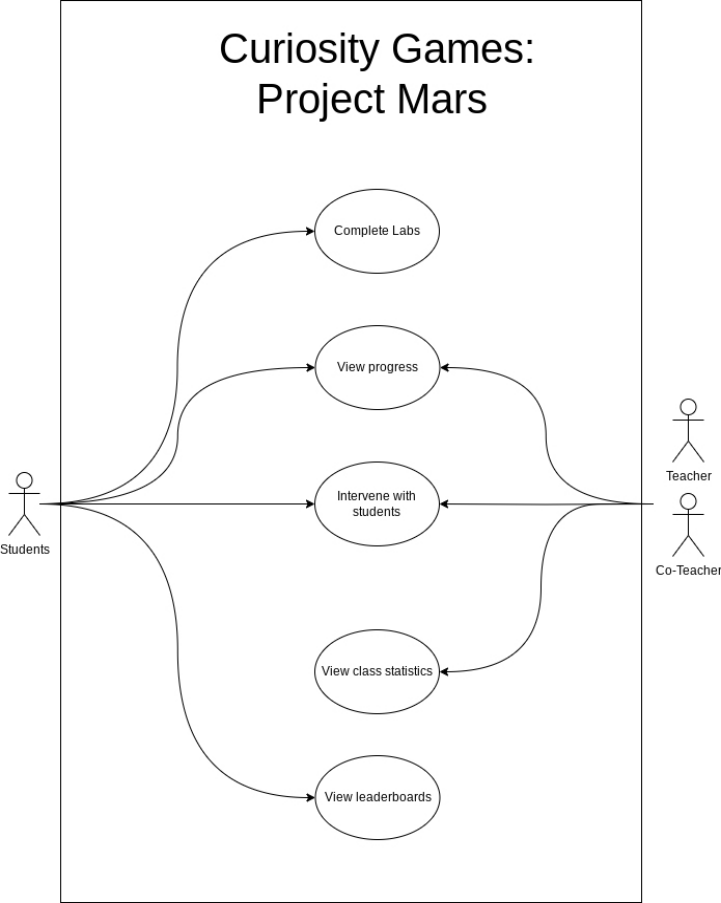
Figure 1: Use case diagram of the system.Figure 2: Curiosity games: project mars advanced VR & digital learning environment.
CURIOSITY GAMES OVERVIEW Game Description
Curiosity Games is a Mars-based VR math game designed for middle and high school students. Students can engage with the game using either VR or desktop access via app (PC, Chromebook, or Mac). The game features a structured curriculum that includes both classroom-based learning and open- world exploration, ensuring a dynamic learning experience. Students can learn not just in the classroom but also at home, solving algebraic problems, progressing through educational stages, and applying mathematical concepts in real-world, game-based scenarios.
Educational Objective The game focuses on helping students master Pre-algebra, Algebra, and Geometry, core topics in middle and high school curricula, alongside other critical STEM concepts like Physical Science. By combining structured lessons with exploratory activities, the game offers a holistic educational experience. With the integration of GIFT, the game provides real-time adaptive interventions, ensuring personalized support based on each student’s unique needs. This approach is particularly important considering that, according to the National Assessment of Educational Progress (NAEP), only 27% of eighth-grade public school students in the United States performed at or above the “Proficient” level in mathematics in 2024.
GIFT INTEGRATION What is GIFT?
The Generalized Intelligent Framework for Tutoring (GIFT) is a robust system developed by the U.S. Army to enable adaptive learning environments. GIFT dynamically adjusts learning experiences based on learner performance,
Curiosity Games: Enhancing STEM Education in a VR Math Game Through GIFT Integration 55
tailoring instruction to the needs of each student. This ensures personalized support and enables real-time interventions that are aligned with the student’s learning progress.
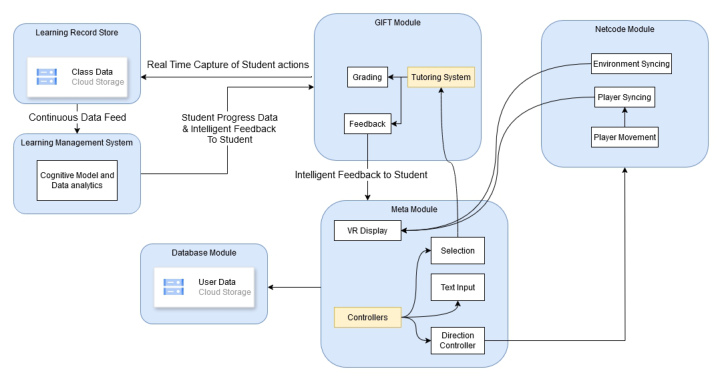
Integration into Curiosity Games Curiosity Games integrates GIFT’s advanced capabilities into its VR environment, offering a personalized learning experience that adapts in real-time to each student’s needs. The game uses GIFT to provide step-by- step guidance and immediate assistance through the AutoTutor-style EMT (expectation and misconception tailored dialogue). The Learning Record Store (LRS) is integrated to track interactions, helping refine learning pathways and providing insights into student performance.
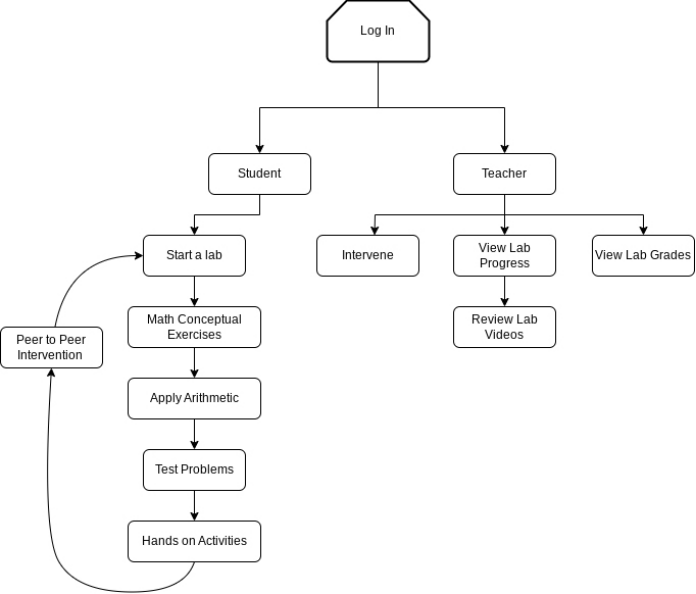
Course Design Students will follow a structured, step-by-step process based on the 5 E model:
Math Conceptual Exercises (Engage/Explore)
Apply Arithmetic (Explain/Elaborate)
Test Questions (Evaluate)
Hands-on Activities (Elaborate).
As students progress through each stage of Curiosity Games, they will earn “Curiosity Bucks” and must achieve a passing score to move on to the next one. These credits will be used in the final stage (H), an immersive multiplayer scenario where students use their earned credits to purchase in-game items and participate in activities necessary to survive and build a civilization on Mars. This scenario not only motivates students to succeed but also reinforces the skills they’ll need to innovate and help humanity become interplanetary— a real-world problem students in the math classroom will be tasked to solve in their future careers.
GIFT Integration Highlights Real-Time Adaptive Support
GIFT provides a tiered system of support, including:
AutoTutor Support for immediate assistance with conceptual issues.
Peer-to-Peer Support, where proficient students help others.
Small Group Support for students with similar learning challenges.
One-on-One Teacher Support when personalized intervention is necessary.
Game Master Interface Educators can monitor student progress through an intuitive interface. Real- time data from GIFT and the LRS allows teachers to adjust learning content, assess student performance, and provide timely interventions. Integration with LMS platforms ensures that this data is captured and accessible for further analysis.
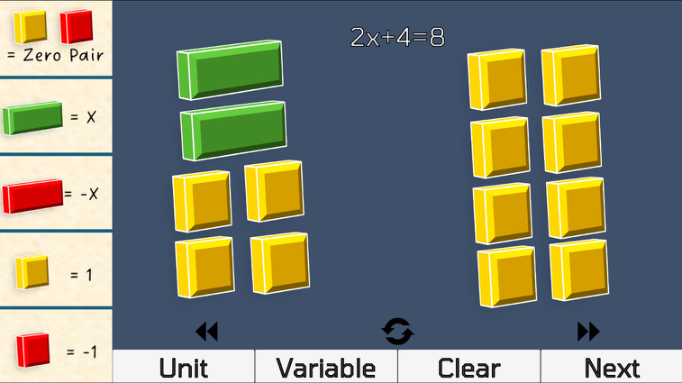
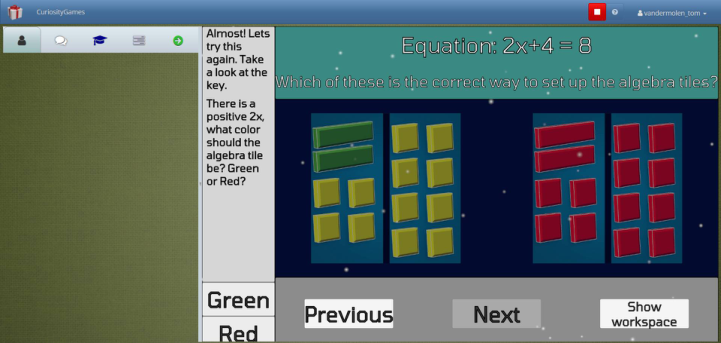
Figure 3: State model. Options for students and teachers once logged into curiosity games: project mars.Figure 4: Implementation of 2-Step equations lab in GIFT. The virtual co-teacher provides differentiated levels of support, guiding students step-by-step through problem-solving via audio and text. Students can replay and practice at their own pace, adjusting the level of guidance according to their needs.
Curiosity Games: Enhancing STEM Education in a VR Math Game Through GIFT Integration 57
Figure 5: Implementation of 2-Step equations lab in GIFT. The AutoTutor (left) asks personalized questions when students answer incorrectly, guiding them towards the correct solution.
After-Action Reviews (AAR) Time-synced playback and video panels allow for detailed feedback, ensuring that students can reflect on their mistakes and improve their performance. Teachers can access these videos when intervening with struggling students. LMS platforms support this process by tracking student progress and assisting in organizing targeted interventions.
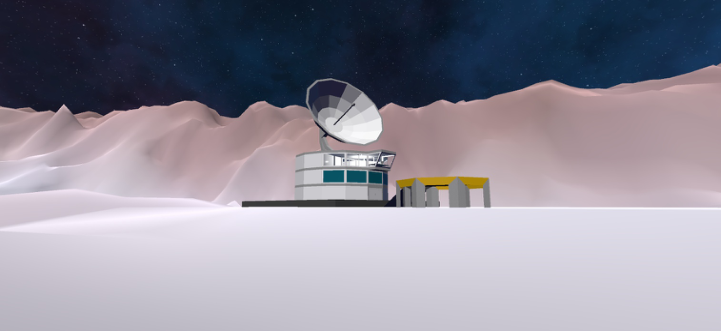
Open-World Exploration In addition to structured lessons, students explore the Martian world, solving tactical challenges and building virtual civilizations. The game applies concepts learned in the classroom to real-world scenarios, and the LMS tracks progress in these exploratory activities, ensuring that the learning experience remains dynamic and responsive.
Figure 6: Real Martian open world generated using geospatial satellite data.
EXPECTED OUTCOMES Enhanced Learning Outcomes Through the integration of GIFT’s adaptive learning system, students receive personalized interventions that cater to their individual learning needs. This personalization is expected to lead to improved mastery of key STEM concepts and better overall learning outcomes.
Improved Teacher Efficiency The integration of GIFT and the LRS allows teachers to focus on students who need the most support, while GIFT handles real-time assessments and tracking. The use of LMS platforms like Canvas, Schoology, and Blackboard ensures that teachers can monitor overall progress and intervene effectively.
Inspiration for Future STEM Professionals By offering an engaging, immersive learning experience, Curiosity Games encourages students to pursue careers in STEM fields, particularly in defense, aerospace, and engineering.
Alignment With Department of Defense Goals This project aligns with the Department of Defense’s objectives of developing a technically skilled workforce, demonstrating the potential of adaptive learning technologies to foster STEM proficiency.
Lessons Learned Efficiency Through Existing Tools By using Unity for content creation and integrating GIFT for adaptive learning, we have reduced development time and ensured scalability. The use of LMS platforms such as Canvas, Schoology, and Blackboard further streamlines student progress tracking and feedback, optimizing resource management.
Maximizing Return on Investment The modular, open-source nature of GIFT and the use of the LRS ensure scalability and flexibility. This allows the platform to be continuously updated and refined, improving its effectiveness while maximizing return on investment for educators and institutions.
Hosting on Amazon S3 Once the content is developed, it is uploaded to Amazon Simple Storage Service (S3), a reliable and scalable cloud storage service managed through CloudBerry Explorer. This step involves configuring storage buckets in S3, ensuring that the content is securely stored and readily accessible. Amazon S3 serves as a centralized repository for the adaptive learning materials, offering robust data protection, high availability, and seamless content delivery.
Curiosity Games: Enhancing STEM Education in a VR Math Game Through GIFT Integration 59
CONCLUSION
Summary The integration of GIFT into Curiosity Games creates a dynamic, immersive, and adaptive learning environment for middle and high school students, helping them master pre-algebra, geometry, algebra, and STEM subjects such as Physical Science. The personalized support offered by GIFT, combined with real-time progress tracking via LMS platforms, ensures that each student receives the right level of intervention. This innovation prepares students for future careers in STEM fields by providing them with the tools and skills necessary to succeed in these disciplines.
Future Research Directions Future research will focus on refining the adaptive learning system, expanding the curriculum to cover additional STEM topics, and exploring further integration with AI technologies. Longitudinal studies with John Hopkins School of Education Center for Research and Reform in Education are currently being conducted to assess the long-term impact of the system on student performance and retention rates.
ABOUT THE AUTHORS Caila DeAbreu
Caila, an Embry-Riddle graduate in Engineering Physics with a minor in Applied Mathematics, holds a Master’s in Education from Johns Hopkins. She is the founder of Curiosity Games: Project Mars and a current secondary math educator with five years of experience at an international baccalaureate school. Caila leads curriculum development for Curiosity Games, gathering feedback and collaborating with Embry-Riddle’s senior design and data science students.
Eric Osorio Eric, an Embry-Riddle graduate, holds a B.S. in Mechanical Engineering and a minor in Applied Mathematics. He is currently employed as an Avionic Systems Engineer for Aero Simulation Inc. He collaborates with electrical engineering and computer science senior design and data science capstone students on Curiosity Games development.
Dr. Hong Liu Dr. Hong Liu was awarded a Ph.D. in Mathematics and MS in Computer Science at the University of Arkansas, Fayetteville in 2000. He serves as a professor in Mathematics and Computing at Embry-Riddle Aeronautical University. He served as PI and Co-PI of 14 sponsored projects and published numerous articles in mathematics, data science, and STEM education. His current research interest is to develop a smart learning environment to promote peer learning.
ACKNOWLEDGMENT
The authors would like to thank the following senior design students— Charlie Cooper, Michael Harrison, Scott Nicholson, and Thomas Van Der Molen—from the Electrical Engineering and Computer Science program, as well as the Data Science capstone students, for their contributions to the development of Curiosity Games: Project Mars. We also extend our gratitude to their faculty advisors: Dr. M. Ilhan Akbas, Dr. Hong Liu, Dr. Yongxin Liu, Rajagopal Sugumar, and Dr. Fan Yang from Embry-Riddle Aeronautical University for their guidance. Additionally, we would like to thank Lisa Townsend and Anne Sinatra from the SFC Paul Ray Smith Simulation & Training Technology Center for their support and expertise.
REFERENCES
Fadjimata Anaroua, Qing Li, and Hong Liu. “Enhancing Data Science Courses Pedagogy through GIFT-Enabled Adaptive Learning Pathways.”https:// drive.google.com/file/d/18hlrQMUqvKbsCTaTpnTx4I4i2KVL8ZGP/ view?usp=sharing. Accessed 28 Jan. 2025. GIFT Unity Embedded Application Developer Guide 2019–1 - GIFT - GIFT
Portal. https://gifttutoring.org/projects/gift/wiki/GIFT_Unity_Embedded_ Application_Developer_Guide_2019-1#Importing-the-GIFT-Unity-SDK. Accessed 21 Nov. 2024. Logic Model, Curiosity Games. Caila Deabreu and Eric Osorio. Version 1.0. 12 October 2024. https://www.canva.com/design/DAGF38POTI8/ ICKIYIyzroTJ7odsC0XWIQ/edit?utm_content=DAGF38POTI8&utm_campaig n=designshare&utm_medium=link2&utm_source=sharebutton Ruiz-Martín, Héctor, and Rodger W. Bybee. “The Cognitive Principles of Learning Underlying the 5E Model of Instruction.” International Journal of STEM Education, vol. 9, no. 1, Mar. 2022, p. 21. BioMed Central, https://doi.org/ 10.1186/s40594-022-00337-z. Accessed 24 Sept. 2024. Sinatra, A. M., Ososky, S., Sottilare, R., & Moss, J. (Year). Recommendations for Use of Adaptive Tutoring Systems in the Classroom and in Educational Research. U.S. Army Research Laboratory, Orlando, FL, USA. Retrieved from https://docs.google.com/document/d/ 1yW_TWGS2hT2KoR8pLzsJG08UAIGqtsrIxaCi1ILUEwA/edit?usp=sharing. System Design Requirements, Curiosity Games. Scott Nicholson, Michael Harrison,
Charli Cooper, Thomas van der Molen. Version 1. 15 October 2024. SRSv1.docx. System Requirements Specifications, Curiosity Games. Scott Nicholson, Michael Harrison, Charli Cooper, Thomas van der Molen. Version 2. 15 October 2024. SRSv2.docx. Tucker, Geri Coleman. “What Is Differentiated Instruction?” Understood, https://www.understood.org/en/articles/differentiated-instruction-what-you- need-to-know. Accessed 13 Sept. 2024. Virtual Math Education System Test Plan, Curiosity Games. Scott Nicholson,
Michael Harrison, Charli Cooper, Thomas van der Molen. Version 1. 01 December 2024. TestPlan.docx.
LISTED IN THE AHFE DIGITAL BOOKSTORE CATALOGUE
Explore the complete digital volume
Human Factors and Simulation
Read this individual research paper free through the original publisher, or explore the full digital proceedings book.
ISBN 978-1-964867-56-4
Explore this ISBN in the AHFE Bookstore ↗Listed in the July 2026 bookstore catalogue; search by ISBN to confirm current availability · Digital book purchase optional