Arman Daliri, Maryam Khoshbakhti, Mahdi Karimi Samadi, Mohammad Rahiminia, Mahdieh Zabihimayvan, Reza Sadeghi (2024). Equilateral Active Learning (EAL): A novel framework for predicting autism spectrum disorder based on active fuzzy federated learning. In: Artificial Intelligence and Social Computing. AHFE Open Access, vol. 122, pp. 182–192. https://doi.org/10.54941/ahfe1004655
Autism Spectrum Disorder has a significant impact on society, and psychologists face a crucial challenge in identifying individuals with this condition. However, there is no definitive medical test for autism, and artificial intelligence can assist in diagnosis. A recent study outlines a framework for diagnosing autism spectrum disorders using Equilateral Active Learning (EAL). EAL incorporates three commonly used machine learning techniques: active learning, federated learning, and fuzzy deep learning. The framework integrates four robust datasets of children, teenagers, young adults, and adults using federated and fuzzy deep learning. Using EAL, autism spectrum disorder can be diagnosed with 90% accuracy, which is comparable to several machine learning methods, including statistical, traditional, modern, and fuzzy approaches.
Neurodevelopmental disorders are closely linked to autism spectrum disor- ders, as they both stem from irregularities in brain development and function (Livingston and Happé, 2017). Unfortunately, individuals with autism spec- trum disorders often struggle with social interactions, which can have a significant impact on their daily lives and relationships within their com- munities (Piven et al., 2011). Given the many challenges associated with this disorder, researchers and medical professionals are working to develop effec- tive treatments and interventions. Individuals with autism spectrum disorders may experience a range of negative effects, including depression, anxiety, attention deficit hyperactivity disorder, sleep disturbances, emotional and behavioral problems, and sensory abnormalities (Gontard et al., 2022).
Predictive challenges often involve the use of various screening techniques, such as the autism spectrum disorder screening method utilizing Achenbach’s experimental system and assessment scales (ASEBA). Studies have exam- ined the effectiveness of school child behavior checklists (CBCL) and teacher report forms (TRF) in this method (Woods and Waldock, 2021). Additionally, face-based diagnoses of autism spectrum disorder through domain match- ing can present other challenges. Fortunately, artificial intelligence has the potential to address these issues (Woods and Waldock, 2021).
Autism spectrum disorder diagnosis can be a time-consuming challenge for psychologists (Shinde and Patil, 2023). Detecting this disorder early on can minimize its severity and long-term consequences for those affected. How- ever, the diagnostic process can be gradual (Jiang et al., 2022). Computer science and artificial intelligence can play a pivotal role in aiding medical science at this crucial stage. By utilizing machine learning techniques, AI spe- cialists and psychologists can develop early diagnosis methods. This research addresses concerns in the realm of artificial intelligence by examining the use of AI to detect autism spectrum disorder (Albahri et al., 2023).
Effective diagnostic methods are available for this disorder. One approach outlined in the article is data preprocessing, which is both convenient and accurate. Another practical solution in this field involves developing an appli- cation that uses a questionnaire to diagnose the disorder, with reference to (Bisht and Bisht, 2022). While the article is a valuable initiative, user com- ments reveal issues with the application’s low accuracy. One challenge of using artificial intelligence to diagnose this disorder is measuring criteria accurately (Bickman, 2020). Moreover, the AI methods used for autism diag- nosis lack interpretability (Supekar et al., 2022). In light of these challenges, a framework has been developed to diagnose autism spectrum disorders based on the cases discussed in this research.
In this study, a cutting-edge approach to predicting autism spectrum dis- orders has been introduced. The methodology involves utilizing various machine-learning techniques to address issues related to data processing, security, and model interpretability in order to achieve accurate diagnosis of the disorder. To address these challenges, the Equilateral Active Learning (EAL) framework has been developed. This novel approach leverages active fuzzy federated learning to automate data cleaning and ensure privacy and security while combining different data sources. Additionally, the framework incorporates an iterative review process using an active learning method to enhance accuracy. To increase interpretability, the framework involves step- by-step validation with input from an autism spectrum disorder specialist. Finally, the framework employs fuzzy prediction to account for the inherent uncertainty in the disease, further improving the accuracy of diagnosis.
The subsequent sections of the article will delve into the structure through the use of data. Section “LITERATURE REVIEW” provides an overview of autism spectrum disorder, while section “EQUILATERAL ACTIVE LEARN- ING (EAL)” presents the proposed method and explains the framework. Moving on to section “EXPERIMENTAL EVALUATION”, the results of the proposed framework and the analysis of those results are discussed. Lastly, section “CONCLUSION” offers a conclusion and further discussion.
LITERATURE REVIEW
This section delves into the three key contributions of the article and pro- vides insightful background information. Firstly, sub-section “About Autism” provides a comprehensive explanation of autism spectrum disorder. Subse- quently, sub-section “Artificial Intelligence Methods For Prediction” intro- duces the application of artificial intelligence methods. Lastly, sub-section “Application Of Federated Learning” sheds light on the various types of federated learning for different diseases and autism spectrum disorders.
About Autism Detecting autism spectrum disorder at an early stage can significantly reduce its severity and long-term impact on patients. There are various methods available to predict autism, and one of them is the use of Achenbach’s experi- mental system for autism spectrum disorder screening. This approach utilizes the ASEBA assessment scales, which have been studied in conjunction with the CBCL school child behavior checklist and the TRF teacher report form. Based on a mixed sample of clinically referred children and adolescents aged 6 to 18, the ASEBA scale, particularly when completed by parents, is the most effective diagnostic tool for ASD (Deckers et al., 2020).
The objective of the test is to enhance early detection and access to autism diagnosis in a culturally diverse community that has partnered with an EI early intervention program and reliable providers trained on the T-RITA. Toddlers underwent various assessments, such as the Revised Inventory for Autism in Toddlers F/R-MCHAT, T-RITA, Test of Development and Autism, and the best clinical diagnosis. The T-RITA showed a high correlation with autism measures, and the EI staff of this model was seamlessly integrated, leading to significant improvements in detection and waiting time for ASD in this population (Jussila et al., 2020).
Artificial Intelligence Methods for Prediction Several methods exist for diagnosing autism, including a new approach pre- sented in article (Bonawitz et al., 2019). The first step in this method involves utilizing four datasets, two for children and two for adults. The second stage is the pre-processing stage, where ten characteristics are considered for both age groups. Next, patients complete a checklist which includes over 30 questions. Based on their answers, patients receive points, and if their score is above 3, they may have ASD, indicated by a Flag value of one (Bonawitz et al., 2019).
Data Transformation is required for machine learning to prepare and ana- lyze the labeled data, due to problems with the data in the Response dataset. Labels must be encoded for classification, and binary values are typically used. Meta-classifiers determine the appropriate model for autism diagno- sis and prepare the global model (Daliri et al., 2024). Ultimately, the Global Model serves as a standalone diagnostic tool for clients (Daliri et al., 2022). A machine learning approach has also been applied to the ADOS Autism Diagnostic Observation Table, resulting in a more efficient diagnosis for children (Bonawitz et al., 2019).
Equilateral Active Learning (EAL) 185
Application of Federated Learning Federated learning (FL) is a technique that has found applications in various IoT domains, such as medical care. The Internet of Things (IoT) includes devices that gather, process, and exchange data to monitor users’ health. Meanwhile, the Internet of Health Things (IoHT) leverages information tech- nology (IT) to improve medical care. This technology generates vast amounts of sensitive data from users and patients, which are stored in electronic medical records and can be easily analyzed using machine learning (ML) algo- rithms. In federated IoHT learning methods, the focus is on storing learning model data that enables learning about data from medical records on servers, rather than storing user data (Coelho et al., 2023).
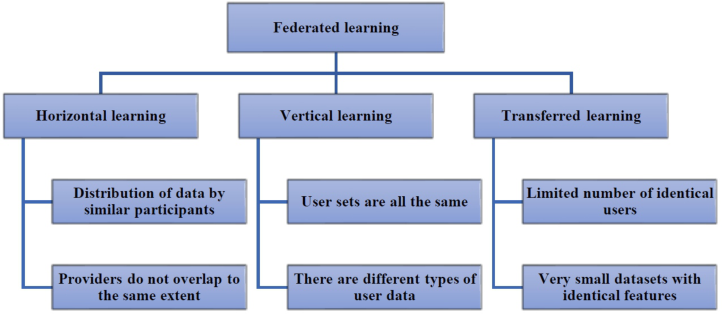
Federated learning is typically categorized into three types: horizontal, vertical, and transfer federated learning (Zhang et al., 2022). Horizontally federated learning involves participants with similar data distributions, but without complete overlap. In this approach, each machine learning model is complete and identical, allowing for independent prediction. This process can be considered a distributed training method in comparison to vertical feder- ated learning. With vertical federated learning, the user sets are the same, but the data types differ between users. For example, airlines and hotels may have different data from the same user. As a result, vertical federated learning requires sample alignment and model encoding. The strict transfer feder- ated learning approach is used when there are a limited number of identical users and a small dataset with identical characteristics (Zhang et al., 2022). Figure 1 illustrates the different types of federated learning.
Figure 1: Classification of federated learning.
The cost of federal learning can be a significant challenge and drawback. Raw data cannot be sent to Federated Learning due to privacy concerns, so it must be kept on individual devices. This can lead to communication issues and a bottleneck in the federated learning process. In real-world situa- tions, where millions of devices may be involved, the time spent training the model locally on each device may be far less than the time spent on network communication (Zhang et al., 2022).
Equilateral Active Learning (EAL) This study aims to develop an advanced framework that can accurately pre- dict autism spectrum disorder in its early stages. To achieve this, we have combined various artificial intelligence techniques from the field of machine learning into a hybrid model. Specifically, we have integrated three popular areas of machine learning, namely active learning, federated learning, and supervised learning. The methodology we propose has undergone thorough review, and we provide a detailed explanation of its workings in this section.
The Data Preparation Phase (Step 1) In the realm of artificial intelligence and processing datasets, there are key considerations to keep in mind. For instance, medical software designed to predict a variety of diseases must prioritize privacy, data cleanliness, and proper structure (Xu et al., 2023). Additionally, it’s important to approach sensitive topics such as autism with care, recognizing that public access to information on this condition can perpetuate harmful stereotypes (Ibrahim, 2023). In addition to privacy concerns, it’s essential to work with a clean and well-organized dataset when utilizing artificial intelligence (Jain et al., 2023). As such, it’s crucial to carefully evaluate the limitations and shortcomings of any given database.
In order to protect patient privacy, EAL removes all personal details such as addresses, personal numbers, telephone, and identity codes from clinic records. This is also done to enhance the accuracy of predictive algorithms. The accuracy of these algorithms hinges on the type of dataset used, and for medical predictions, non-medical attributes are generally not relevant unless they impact specific diseases based on clinical characteristics like age or lifestyle type (Shah and Solanki, 2023).
In addition, inaccuracies in algorithms may arise from databases that contain null, corrupted, unbalanced, or incompatible data types (Akhtar et al., 2023). To address these issues, the EAL framework has been developed to handle all potential data problems. The framework includes five critical tasks, beginning with patient privacy considerations, followed by the selection and storage of essential features. Next, correction of null samples and data type errors is performed. Finally, the data is organized in an inte- grated and structured manner to prepare for subsequent steps. As such, step two of the framework covers the preface of the databases.
Federal Learning Phase (Step 2) The EAL’s second phase is known as federated learning, which involves offering reasons and ideas to support its implementation. When it comes to predicting disorders that affect a broad range of individuals, such as autism spectrum disorder, multiple databases are typically required to ensure accu- racy (Matrone and Ferretti, 2023). Additionally, a potential approach to addressing autism spectrum disorder is suggested. This stage of the EAL framework begins by introducing the datasets that pertain to autism spec- trum disorder, followed by a thorough explanation of the federated learning technique.
Equilateral Active Learning (EAL) 187
In this study, the prediction of ASD was based on four datasets, including one that was inspired by an article (Farooq et al., 2023) that provided the data. However, the data used in this analysis had several flaws that were not mentioned in the reference article. For instance, we found that two of the reference datasets were duplicates of four other datasets, and many features were missing values that could not be imputed using statistical methods. To address these issues, we made several changes to the data and integrated them in a cohesive manner. Following Q-chart 10, which ensured that the adult and child datasets were treated on the same scale, we identified ten key factors for distinguishing extremely introverted patients from regular patients. These findings are presented in Table 1.
Table 1. The datasets implemented in this research.
Table available in the original PDF paper.
Categories Source Instances Attributes Adults (“Autism Screening on Adults,” n.d.) 700 19 Youth (Thabtah, 2017a) 704 21 Children (“Autism screening data for toddlers,” n.d.) 654 19 Toddlers (Thabtah, 2017b) 692 21
Our article presents a unique federated learning-based showcase, examin- ing four distinct datasets for adults and children. These local models were consolidated on a centralized server to construct a universal meta-classifier, aimed at preventing extreme introversion in individuals. Our research was founded on the “Quantitative Checklist for Extreme Introversion in Chil- dren” (Q-CHART-10) screening approach, which has been endorsed by the Changing Extreme Introverted Ness Venture in the United Kingdom (Farooq et al., 2023).
If the ASD highlighting score is above three, the weight of the highlight is increased by one and “Yes” is added to the response set, while “No” is stored in the reaction sentence. To ensure that each price variable is close to the values specified in the Q-CHART-10 checklist, it is compared to multiple questions. The class answer set stores data in a parallel array, indicating “yes” as 1 and “no” as 0.
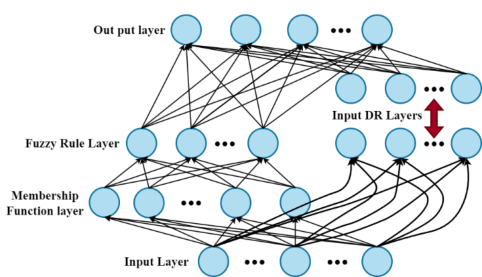
Prediction of Autism Spectrum Disease (Step 3) The final modeling stage, which is the fourth step of the EAL frame- work, involves comparing the results of the classification algorithms used and evaluating them based on different measures (Alimoradi et al., 2022). The algorithm that performs the best is then selected for decision-making. To organize the best outcomes, a hybrid active federated learning method is used. For a more detailed overview of the framework, please refer to Figure 2, which provides a visual representation of the EAL framework’s per- formance in the form of a graphical abstract. Based on the results obtained from implementing the Hierarchical Fused Fuzzy Deep Neural Network for Data Classification (HFFDNN) algorithm (Deng et al., 2016), it was found to outperform others in the classification process.
Figure 2: Fused fuzzy deep neural network (FDNN).
Active Learning Phase (Step 4) Due to the lack of medical tests like blood tests, autism spectrum disor- ders require specialized psychological evaluation for diagnosis (Joudar et al., 2023). When developing prediction methods for such disorders, artificial intelligence experts often utilize Active Learning techniques (Sun et al., 2023). Active Learning is a machine learning subset that involves an expert in the studied field interacting with the model to enhance prediction accuracy through information addition (Mosqueira-Rey et al., 2023). The third stage of the EAL framework involves investigating the Active Learning approach.
The primary purpose of this framework is to accurately predict and diag- nose autism spectrum disorders. As its name suggests, the fuzzy deep learning algorithm aligns well with the nature of the disorder being studied. This is due to the fact that fuzzy logic, which is at the core of the algorithm, inherently deals with uncertainty (Zadeh, 2009). Given that the diagnosis of autism spectrum disorders is also subject to uncertainty among psychologists (Bosman and Thijs, 2023), this approach holds particular promise.
In the event that additional information is required and any shortcom- ings are detected in the findings, the dataset will undergo a thorough re-evaluation, followed by a repetition of the data preparation stage. This meticulous review process is carried out by a seasoned psychology expert, who will then re-apply the machine learning algorithms. Upon receiving the final approval from the psychologist, the results from phase three are for- mally presented and transferred to the ultimate stage, which entails a final classification between individuals with autism spectrum disorder and those without.
Experimental Evaluation Several classification algorithms were compared to evaluate the proposed method. four classification algorithms, including deep learning methods and a fuzzy deep model, were used for prediction. These algorithms included the Multi-Layer Perceptron algorithm (MLP) (Khalil Alsmadi et al., 2009), the Recurrent Neural Network Algorithm (RNN) (Williams and Zipser, 1989), the Convolutional Neural Network algorithm (CNN) (Lavin and Gray,
Equilateral Active Learning (EAL) 189
2016), and the Hierarchical Fused Fuzzy Deep Neural Network for Data Classification (HFFDNN) (Deng et al., 2016). To ensure fairness and select the most suitable algorithm for autism prediction, each algorithm was implemented using standard parameters.
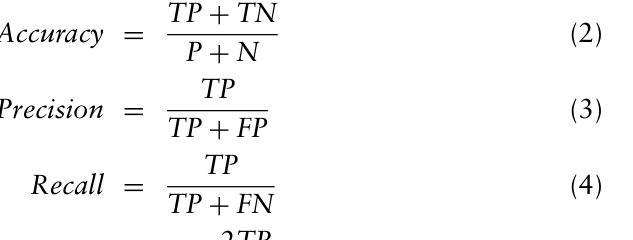
Upon implementing various methods, the algorithms are evaluated against each other using different metrics, such as Accuracy, Precision, Recall, and F1-Score. In Relationships 2, 3, 4, and 5, the size of the positive class is indicated, while N indicates the size of the hostile class. TP represents the number of samples in the positive class, TN represents the number of samples in the negative class, FP represents the number of samples that are erro- neously classified as positive, and FN represents the number of samples that are erroneously classified as negative.
Accuracy = TP + TN
Equation reproduced from the original PDF.
According to Table 4, the classification performance of the ten algorithms varies significantly. The Not ASD group, which represents the minority class, is particularly affected by all algorithms. It is important to achieve a bal- anced and coordinated prediction of diseases in both the sick and healthy classes. The EAL method, which considers all performance measurement cri- teria, yields better answers than individual algorithms. The proposed method achieves balanced results by utilizing federated learning in data preparation, which is a significant advantage over other methods. As expected, modern algorithms outperform traditional machine learning methods in this prob- lem. Ultimately, the proposed method surpasses all other algorithms in terms of performance.
Table 2. Performance of the classification algorithm.
The k-fold model has been employed to enhance the accuracy of the algo- rithms, even though the statistical division is not taken into account in the results. Table 5 presents the outcomes, which were based on both 5-fold and
10-fold accuracy. Notably, the proposed method achieved the highest accu- racy rate of 89%. As with prior findings, the comparison between traditional and modern algorithms indicates a range of accuracy levels.
Table 3. 5-fold and 10-fold accuracy for ten classification algorithms.
This study introduces a cutting-edge framework for predicting autism spec- trum disorder using Equilateral Active Learning (EAL). EAL combines three different scopes of machine learning, including federated learning, deep fuzzy learning, and active learning, to produce reliable results for autism spectrum disorder prediction. The proposed framework boasts an impressive accuracy rate of 90%, which is competitive with other algorithms and methods. To evaluate EAL’s performance, it was compared to four other classification algorithms, including traditional, modern, and fuzzy methods.
Given the complexity of autism spectrum disorder and the variability in diagnosing it, this study suggests several future perspectives for improving prediction. Collecting accurate data to contribute to federated learning is crucial for enhancing prediction accuracy. Additionally, creating intelligent assistants that can make decisions like a psychologist is a promising area for continued research in active learning. Finally, online versions of this frame- work could help serve communities in need of accurate autism spectrum disorder prediction.
REFERENCES
Akhtar, M. A., Qadri, S. M. O., Siddiqui, M. A., Mustafa, S. M. N., Javaid, S., Ali, S. A., 2023. Robust genetic machine learning ensemble model for intrusion detection in network traffic. Sci. Rep. 13, 17227. Albahri, A. S., Duhaim, A. M., Fadhel, M. A., Alnoor, A., Baqer, N. S., Alzubaidi, L.,
Albahri, O. S., Alamoodi, A. H., Bai, J., Salhi, A., 2023. A systematic review of trustworthy and explainable artificial intelligence in healthcare: Assessment of quality, bias risk, and data fusion. Inf. Fusion. Alimoradi, M., Zabihimayvan, M., Daliri, A., Sledzik, R., Sadeghi, R., 2022. Deep Neural Classification of Darknet Traffic, in: Cortés, A., Grimaldo, F., Flaminio, T. (Eds.), Frontiers in Artificial Intelligence and Applications. IOS Press. https://doi. org/10.3233/FAIA220323 Autism screening data for toddlers [WWW Document], n.d. URL https://www.kagg
Bickman, L., 2020. Improving mental health services: A 50-year journey from randomized experiments to artificial intelligence and precision mental health. Adm. Policy Ment. Health Ment. Health Serv. Res. 47, 795–843. Bisht, S., Bisht, N., 2022. A Machine Learning Approach for Detecting Autism Spec-
trum Disorder Using Classifier Techniques, in: Artificial Intelligence for Societal Development and Global Well-Being. IGI Global, pp. 1–21. Bonawitz, K., Eichner, H., Grieskamp, W., Huba, D., Ingerman, A., Ivanov, V., Kiddon, C., Koneˇcn`y, J., Mazzocchi, S., McMahan, B., 2019. Towards federated learning at scale: System design. Proc. Mach. Learn. Syst. 1, 374–388. Bosman, R., Thijs, J., 2023. Language Preferences in the Dutch Autism Community:
A Social Psychological Approach. J. Autism Dev. Disord. https://doi.org/10.1007/ s10803-023-05903-0 Coelho, K. K., Nogueira, M., Vieira, A. B., Silva, E. F., Nacif, J. A., 2023. A survey on federated learning for security and privacy in healthcare applications. Comput. Commun. Daliri, A., Alimoradi, M., Zabihimayvan, M., Sadeghi, R., 2024. World Hyper-
Heuristic: A novel reinforcement learning approach for dynamic exploration and exploitation. Expert Syst. Appl. 244, 122931. Daliri, A., Asghari, A., Azgomi, H., Alimoradi, M., 2022. The water optimization algorithm: a novel metaheuristic for solving optimization problems. Appl. Intell. 52, 17990–18029. https://doi.org/10.1007/s10489-022-03397-4 Deckers, A., Muris, P., Roelofs, J., 2020. Screening for autism spectrum disorder
with the achenbach system of empirically based assessment scales. J. Psychopathol. Behav. Assess. 42, 25–37. Deng, Y., Ren, Z., Kong, Y., Bao, F., Dai, Q., 2016. A hierarchical fused fuzzy deep neural network for data classification. IEEE Trans. Fuzzy Syst. 25, 1006–1012. Farooq, M. S., Tehseen, R., Sabir, M., Atal, Z., 2023. Detection of autism spectrum
disorder (ASD) in children and adults using machine learning. Sci. Rep. 13, 9605. Ibrahim, E. A., 2023. Imago Dei in Eastern Orthodox Statements and Implications for Inclusion of People with Disabilities in the Church: A Dissonant Relationship. Horizons 50, 62–109. Jain, P., Tripathi, V., Malladi, R., Khang, A., 2023. Data-Driven Artificial Intelligence
(AI) Models in the Workforce Development Planning, in: Designing Workforce Management Systems for Industry 4.0. CRC Press, pp. 159–176. Jiang, C.-C., Lin, L.-S., Long, S., Ke, X.-Y., Fukunaga, K., Lu, Y.-M., Han, F., 2022.
Signalling pathways in autism spectrum disorder: mechanisms and therapeutic implications. Signal Transduct. Target. Ther. 7, 229. Joudar, S. S., Albahri, A. S., Hamid, R. A., 2023. Intelligent triage method for early diagnosis autism spectrum disorder (ASD) based on integrated fuzzy multi-criteria decision-making methods. Inform. Med. Unlocked 36, 101131. Jussila, K., Junttila, M., Kielinen, M., Ebeling, H., Joskitt, L., Moilanen, I., Mattila,
M.-L., 2020. Sensory abnormality and quantitative autism traits in children with and without autism spectrum disorder in an epidemiological population. J. Autism Dev. Disord. 50, 180–188. Khalil Alsmadi, M., Omar, K. B., Noah, S. A., Almarashdah, I., 2009. Performance comparison of multi-layer perceptron (Back Propagation, Delta Rule and Perceptron) algorithms in neural networks, in:2009 IEEE International Advance Computing Conference. IEEE, pp. 296–299. Lavin, A., Gray, S., 2016. Fast algorithms for convolutional neural networks, in:
Proceedings of the IEEE Conference on Computer Vision and Pattern Recognition. pp. 4013–4021.
Livingston, L. A., Happé, F., 2017. Conceptualising compensation in neurodevelopmental disorders: Reflections from autism spectrum disorder. Neurosci. Biobehav. Rev. 80, 729–742. Matrone, C., Ferretti, G., 2023. Semaphorin 3 A influences neuronal processes that
are altered in patients with autism spectrum disorder: potential diagnostic and therapeutic implications. Neurosci. Biobehav. Rev. 105338. Mosqueira-Rey, E., Hernández-Pereira, E., Alonso-Ríos, D., Bobes-Bascarán, J., Fernández-Leal, Á., 2023. Human-in-the-loop machine learning: a state of the art. Artif. Intell. Rev. 56, 3005–3054. https://doi.org/10.1007/s10462-022-10246-w Piven, J., Rabins, P., Group, A.-O. A. W., 2011. Autism spectrum disorders in older
adults: Toward defining a research agenda. J. Am. Geriatr. Soc. 59, 2151–2155. Shah, R., Solanki, P., 2023. Recent Developments In Machine Learning Approach For Liver Disease Prediction. J. Namib. Stud. Hist. Polit. Cult. 35, 2278–2301. Shinde, A. V., Patil, D. D., 2023. A Multi-Classifier-Based Recommender System
for Early Autism Spectrum Disorder Detection using Machine Learning. Healthc. Anal. 4, 100211. Sun, J., Dong, Q.-X., Wang, S.-W., Zheng, Y.-B., Liu, X.-X., Lu, T.-S., Yuan, K., Shi, J., Hu, B., Lu, L., 2023. Artificial intelligence in psychiatry research, diagnosis, and therapy. Asian J. Psychiatry 103705. Supekar, K., Ryali, S., Yuan, R., Kumar, D., de Los Angeles, C., Menon, V., 2022.
Robust, generalizable, and interpretable artificial intelligence–derived brain fin- gerprints of autism and social communication symptom severity. Biol. Psychiatry 92, 643–653. Thabtah, F., 2017a. Autism Screening Adult. https://doi.org/10.24432/C5F019 Thabtah, F., 2017b. Autistic Spectrum Disorder Screening Data for Children. https: //doi.org/10.24432/C5659W von Gontard, A., Hussong, J., Yang, S. S., Chase, J., Franco, I., Wright, A., 2022.
Neurodevelopmental disorders and incontinence in children and adolescents: Attention-deficit/hyperactivity disorder, autism spectrum disorder, and intellec- tual disability—A consensus document of the International Children’s Continence Society. Neurourol. Urodyn. 41, 102–114. Williams, R. J., Zipser, D., 1989. A learning algorithm for continually running fully recurrent neural networks. Neural Comput. 1, 270–280. Woods, R., Waldock, K. E., 2021. Critical autism studies. Encycl. Autism Spectr.
Disord. 1240–1248. Xu, Y., Zheng, X., Li, Y., Ye, X., Cheng, H., Wang, H., Lyu, J., 2023. Exploring patient medication adherence and data mining methods in clinical big data: A contemporary review. J. Evid.-Based Med. 16, 342–375. https://doi.org/10.1111/ jebm.12548 Zadeh, L. A., 2009. Fuzzy Logic, in: Lin, T.-Y., Liau, C.-J., Kacprzyk, J. (Eds.),
Granular, Fuzzy, and Soft Computing, Encyclopedia of Complexity and Systems Science Series. Springer US, New York, NY, pp. 19–49. https://doi.org/10.1007/ 978-1-0716-2628-3_234 Zhang, K., Song, X., Zhang, C., Yu, S., 2022. Challenges and future directions of secure federated learning: a survey. Front. Comput. Sci. 16, 1–8.
LISTED IN THE AHFE DIGITAL BOOKSTORE CATALOGUE
Explore the complete digital volume
Artificial Intelligence and Social Computing
Read this individual research paper free through the original publisher, or explore the full digital proceedings book.
ISBN 978-1-958651-98-8
Explore this ISBN in the AHFE Bookstore ↗Listed in the July 2026 bookstore catalogue; search by ISBN to confirm current availability · Digital book purchase optional