Eleni Mangina, Hrishikesh Mulay, Konstantinos Amplianitis, Jan Ondřej, Rafael Pagés, Charalambos Vrasidas, Eftychia Xerou, Filippos Tzortzoglou, Alivizos Sofos (2024). Vol3DEdu: Volograms' Integration in Education. In: Intelligent Human Systems Integration (IHSI 2024): Integrating People and Intelligent Systems. AHFE Open Access, vol. 119, pp. 748–756. https://doi.org/10.54941/ahfe1004539
Despite the promises and obvious advantages to distance learning, there are concerns that need to be resolved. Not all students are suited for this type of learning with lack of interaction in real space. Also, teachers have expressed major concerns in terms of their passive role in the educational content delivery and their digital skills readiness. Modern technology like smart boards and student iPads have become the norm in the typical classroom. From ensuring a student’s full participation to greater ease in grading exams, many educators’ jobs have become easier through these technologies. However, the tools we’ve seen are just the tip of the iceberg for Generation Z students. This paper presents an effort to support the teachers and students (tomorrow’s educators) towards immersive learning, to inform them about the technological state of the art and the most promising learning app (Volu) for 3D Volumetric assets and to embed these within their educational practices. Vol3DEdu project aims to support teachers towards the incorporation of XR assets in their lesson plans and storytelling. Extended Reality (XR) can be a powerful educational tool as it enables students to experience a learning environment combining real-life physical and virtual objects. This combination not only augments what is possible with physical learning material alone but also makes use of the real world as a frame of reference for digital content. Nonetheless, creating an XR lesson requires specific digital skills and expertise that can be very challenging for many educators who have no or little relevant background. This paper will provide a description of the Vol3DEdu project and the evaluation from the initial feedback from the EU teachers involved.
Digital skills are becoming increasingly essential for getting access to a range of products and services within the educational sector. According to the Edu- cation and Training Monitor (European Commission, 2020), teachers need to be equipped with the necessary skills to take advantage of the potential of digital technologies to improve teaching and learning and to prepare their
pupils for life in a digital society. The future classroom technology predic- tions and the recent COVID-19 crisis have emphasised the increased need to harness the potential of XR digital technologies for teaching and learn- ing and to develop digital skills for all while at the same time providing open-source XR digital content and lesson plans to share good practices. In October 2021, to mark World Teachers Day, the EU has launched a new online tool for teachers in the EU and beyond to reflect on how they use dig- ital technologies in their teaching activities (European Commission, 2021). Within the Digital Education Action Plan (2021-2027) the challenges and opportunities for the use of intelligent technology for education and training purposes denote the need for stronger cooperation at the EU level on digital education and the importance of working together across sectors (Academia, Industry, Research Centers and Schools) to bring education into the digital age including improved quality and quantity of teaching concerning XR dig- ital technologies, support for the XR digitalisation of teaching methods and pedagogies and the provision of toolkits required for inclusive and resilient remote learning (European Commission, 2020a). The need for improvement of distance learning seems bright but investment should be made towards the design of cost-effective and educationally effective intelligent digital content that permits 3D teachers’ input in the educational reality.
The Vol3DEdu project is a transational partnership between University College Dublin (UCD), Volograms Limited, University of Aegean (UAegean) and CARDET organisation. It is co-funded by the Erasmus+ Programme of the European Union (Vol3DEdu, 2022). Vol3DEdu aims to enhance the purposeful use of eXtended Reality (XR) digital technologies in education for teaching, learning, assessment and engagement. This includes the devel- opment of Volumetric 3D educational teaching content, advance digital pedagogy and expertise in the use of digital tools for teachers, including accessible and assistive technologies and the creation and innovative use of 3D digital education content in current practices. Equally, it includes devel- oping the XR digital skills and competences for teachers in EU and beyond. Particular attention will be given to the free accessibility of toolkits and use from teachers by underrepresented regions to contribute to the “Opening up Education” initiative. Furthermore, the project supports multilingualism within the educational content production, which is a forefront aspiration for diversity and inclusion. Vol3DEdu aims to achieve the objectives outlined in Table 1.
Table 1. Vol3DEdu project objectives.
Table available in the original PDF paper.
No Objective 1 Address the digital transformation of teachers through eXtended Reality (XR) content development. 2 Support teachers in Europe and beyond to enhance their education in terms of XR applications in education, and apply innovative XR based curricula in their pedagogical strategies. 3 Support the diversity of students’ learning styles through stimulating innovative learning and teaching practices.
This study is carried out in collaboration with ∼100 teachers from Bel- gium, Cyprus, Germany, Greece, Republic of Ireland, Slovenia, and Ukraine after an open call for teachers’ participation from Europe. By taking part in this study, the teachers contribute to evaluating novel XR interactive tech- nologies for teaching. This includes the development of their own Volumetric 3D educational teaching content, advanced digital pedagogy and expertise in the use of digital tools for teachers, including accessible and assistive tech- nologies and the creation and innovative use of 3D digital education content in current practices. The created digital content will contribute to improving XR Open Educational Resources. For this purpose, the participants of this project create interactive Augmented Reality (AR)-based educational con- tent through reality capture using the Volu app provided from Volograms (Volograms, 2022) partner of the consortium with AI powered 3D Volumet- ric holograms. Research data of this project will be collected throughout the entire duration of Vol3DEdu via pre and post experience online surveys, and interviews of selected teachers. Vol3DEdu aims to implement three (3) Work packages (Table 2) and produce the results as outlined in Table 3.
Table 2. Vol3DEdu work packages.
Table available in the original PDF paper.
No Objective 1 WP1: Project Management 2 WP2: Ethics Requirements & Volu App Training 3 WP3: Pedagogical lesson plans with implemented Volumetric 3D assets 4 WP4: Evaluation of Volometric 3D assets in Education and dissemination
Table 3. Vol3DEdu project results.
Table available in the original PDF paper.
No Objective 1 GDPR Compliant and Ethics considerations report for XR in Education and increase of Ethics in Education awareness (Obj. 1 - WP2) 2 Open access to training workshops for all teachers who will be interested in XR Education and how to apply storytelling for pedagogical purposes and creation of lesson plans. (Obj.2 & 3 WP2, WP3 & WP4) 3 Teachers’ training materials for the creation of lesson plans and storytelling in XR for education (Obj.1 & 2 WP2 & WP3). 4 Advance teachers’ digital skills (evaluation pre and post project duration) (Obj.1, 2 & 3 - WP2, WP3 & WP4) 5 Open access XR digital repository with content and lesson plans created within the duration of the project (Obj. 2 & 3, WP2, WP3 & WP4) 6 Inform Digital Education Action Plan (2021-2027) policy through the project final report for the (Obj. 3 – WP4)
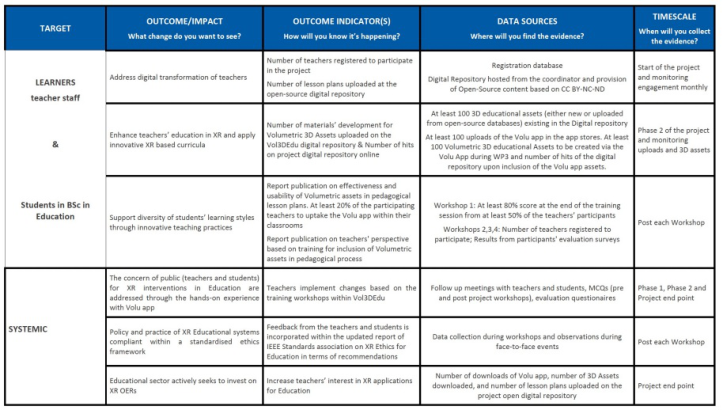
Figure 1 represents the matrix of Vol3DEdu project goal in advanc- ing teachers’ digital skills in educational reality. This matrix highlights the expected outcomes and outcome indicators along with the data collection and resources, with a timeline.
Vol3DEdu: Volograms’ Integration in Education 751
Figure 1: Project goal: advance teachers’ digital skills through volumetric 3D in educational reality.
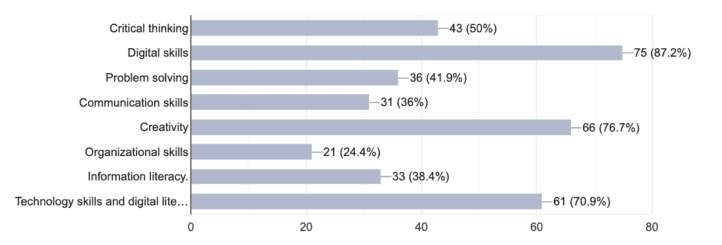
VOLOGRAM’S INTEGRATION IN EDUCATION - ACTIVITIES All teachers participating in the project, have contributed to an anonymous survey at the start of the project, to evaluate their perspectives related to the Volumetric 3D assets development. This survey included questions related to teachers’ demographic characteristics, their experience and familiarity in technology, digital tools, and their experiences and familiarity with Aug- mented Reality (AR) and Virtual Reality (VR). Additionally, this survey helped in evaluating the teachers’ comfort level and proficiency in using digi- tal tools and modern XR technologies. The correspondents were 62% female and 50% between 36–45 years old with a Masters’ degree (77%). 97.7% of the respondents use technology for educational purposes. The responses have indicated that the teachers involved have specific expectations from Vol3DEdu, as shown in Figure 2, with 87.2% expecting to learn new digital skills.
Figure 2: Teachers’ expectations in terms of skills they will acquire through their participation at the Vol3DEdu project (86 respondents, January 2023).
Several interactive workshops with the participants recruited for this project have been conducted during 2023. These workshops focussed on edu- cating the teachers on the XR Ethics and Open Educational Resources (OER). Moreover, the workshops also enabled the teachers in using necessary tools to create XR Lesson plans, which involved the creation of interactive Aug- mented Reality (AR) -based educational content through reality capture using the Volu mobile application. The workshops conducted so far are as follows:
Workshop 1: XR Ethics in Education
Workshop 2: Open Educational Resources (OER)
Workshop 3: Volu App Training
Workshop 4: Effective Lesson Plans The details of these workshops and the feedback received in relation to those is discussed below.
Workshop 1: XR Ethics in Education The purpose of this session was to introduce the participants to XR con- cepts along with ethical considerations and standards for XR education. In doing so, we aimed to instil in them a sense of self-responsibility for their further education and development, particularly in a landscape where dig- italization of teaching is still emerging. By the end of this workshop, the participants were well-versed in the main forms of immersive technologies and be able to employ key technical terminology accurately. Additionally, the workshop aimed to raise awareness among them about potential barriers they may face when utilizing XR and empower them with strategies to over- come these challenges effectively and enhancing participants’ comprehension of the processes of ensuring and building an ethically aligned application, and application of the Public Intelligence Ethics Matrix (Public Intelligence, 2021). Furthermore, the importance of ethical considerations while using XR in education was highlighted by discussing issues such as addiction, virtual harassment and bullying, algorithmic bias and accessibility. The participants were introduced to XR ethical frameworks [E3XR (Joey, 2021), ARLEAN (Christopoulos, 2021)], XR ethical risk assessments (XRSI, 2019) and IEEE XR ethical recommendations for education (Mangina, 2021).
Workshop 2: Open Educational Resources (OER) Workshop 2 focussed on educating the participants on Open Educational Resources (OER). Session 1 focussed on developing a comprehensive under- standing of critical aspects related to OER. The session initially focussed on providing a clear and concise definition of OER, highlighting its distinc- tiveness when compared to other free educational materials. Moreover, the participants were exposed to both the challenges and the advantages of incor- porating OER into their classrooms, shedding light on its multifaceted impact on education. The session further delved into the four different components of Creative Commons (CC) Licenses, and explanations on why some con- tent under CC licenses may not fall under the OER umbrella, allowing for a nuanced understanding of OER. The session also enabled them to evaluate
Vol3DEdu: Volograms’ Integration in Education 753
OERs for their adaptability and acceptance. Session 2 focussed on develop- ing ability to make informed decisions and take meaningful actions while handling Open Educational Resources (OER), assessing existing teaching materials, and identifying their potential for release as OER. Additionally, guidance was provided in key considerations to keep in mind while assess- ing an OER for adoption. Moreover, participants were introduced to the idea of open pedagogy with the expectation of proficiency in defining open pedagogy. They were further equipped to describe the fundamental com- ponents that constitute a renewable assignment and introduced to common tools used to create renewable assignments. Finally, teachers were introduced to the concepts on OER accessibility and Universal Design for Learning to ensure participants explore accessibility of their Open Educational Resources (OER) and understand the invaluable connection between accessibility and pedagogical effectiveness. Furthermore, the significance of Universal Design for Learning (UDL) as a best practice for pedagogy and accessibility was discussed.
Workshop 3: Volu App Training The participants were introduced to the tool they would be using to create their educational content. Volu is an AR-based platform that creates volu- metric 3D videos of individuals being recorded using simple devices such as mobile phones. It uses AI to estimate a 3D model for every frame of the video, textures them using a combination of what the camera sees and what the neural network has estimated and compresses them, so they are tempo- rally coherent and allow for the optimal use of storage on the mobile phone or similar portable devices. The concept of volumetric videos was presented along with the requirement of this technology and basics of how the Volu app works. Following this, they were provided with a user manual (Vol3dEdu Digital Repository, 2023) highlighting the installation process, and actions to perform within the app, on how to successfully record a 3D volumetric video using it. In addition to the user manual, all participants were provided with in-person guidance on how to use the app, and how they can record and project AR videos of individuals using Volu.
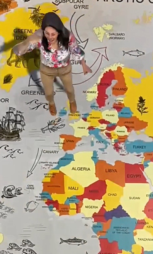
Figure 3: Examples of teachers’ Volograms development during the Vol3DEdu Face to Face workshop (June 2023).
Workshop 4: Effective Lesson Plan This workshop provided an overview of effective lesson planning, highlight- ing its importance and components. The participants were first introduced to the concept and definition of a lesson plan, as a detailed guide that outlines a teacher’s intentions for a single class, including objectives, instruc- tional content, activities, and assessments to ensure effective teaching and learning. Importance of Lesson Planning was discussed for increased stu- dent engagement and enhancing classroom management and time utilization. Components of an Effective Lesson Plan were highlighted in terms of Spe- cific, Measurable, Achievable, Relevant, and Time-bound (SMART) learning objectives, instructional content, materials, teaching strategies, lesson plan activities, and assessment methods. Collaboration and team lesson plan- ning were discussed, and their advantages in acquiring diverse perspectives, sharing best practices, efficient resource use, increased student engagement and specialization were highlighted. Storytelling in Extended Reality (XR) emphasized the significance of effective storytelling, and the intersection of immersion and storytelling. Storytelling enables sharing knowledge and expressing tacit knowledge, grounding facts in a narrative structure, and pro- vides a broader context for knowledge-sharing and increases the potential for meaningful engagement. The topic of combining immersion and story- telling was discussed, while pointing out that achieving a sense of presence is crucial for engagement in XR experiences. Immersion must be interactive to maintain audience engagement and placing them as protagonists is essential. Reimagining story structures and dynamic content creation are key challenges in storytelling. Guidance was provided on how participants can improve their storytelling abilities, specifically in XR environments and the teachers created their own lesson plans and incorporated their ideas into Volograms to enrich the content of the lesson plans.
CONCLUSION
In recent years, comprehensive progress has been made in the provision of digital learning solutions. Among the most innovative and forward-looking are certainly applications based on Virtual Reality (VR; 2D/3D computer- generated immersive environments), Augmented Reality (AR; real world environments overlaid with computer-generated inputs) and the combination and extension of both to Extended Reality (XR). These technologies allow the simulation of almost any process carried out in the physical world and their potential for education is enormous. The main needs this project addresses include:
Educators want more time to spend helping their students. With the increasing trend in “flipped”learning models, video becomes an incredibly useful tool and Volumetric 3D captured videos can enhance the existing content delivered to the students.
Immersive Mixed Reality Experiences: With augmented and virtual reality, students are able to “step outside” of their classroom and straight into the lesson through the 3D guidance of their teacher at home.
Vol3DEdu: Volograms’ Integration in Education 755
Better Use of Existing Resources: Considering that schools are still behind the tech curve, educators are going to get better at using innovative tech resources for educational purposes.
Pedagogical use of digital technologies depends on the availability, acces- sibility and quality of ICT resources. Democratisation of content creation to promote capacity, participation and adoption of XR technology in edu- cation. Content creation is one of the largest barriers to adoption of XR technologies. This project provides free access to all 3D educational con- tent created and the associated lesson that often stands in the way of learning innovation (Vol3DEdu Digital Repository, 2023).
Empirical evidence suggests that improvements in infrastructure alone do not systematically lead to the integration and pedagogical use of digital technology in schools across Europe. If digital technology is to benefit pupils and educators, the training support is needed.
Revolutionizing XR training for teachers, which is a critical area for devel- opment and future work and complements the rapid adoption of online and hybrid learning. Making better use of digital technology for teaching and learning is essential to reap the benefits of technological innovation and improve education.
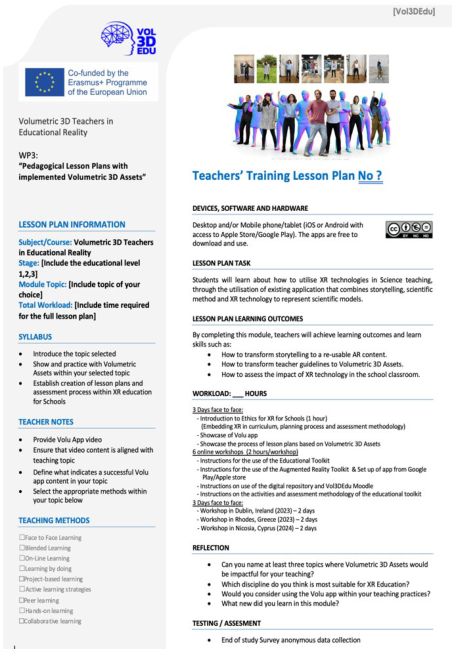
Figure 4: Vol3DEdu lesson plan template.
Outcomes of the use of XR digital technologies in education depend on a variety of conditions, both individual and systemic. This project addresses the support of XR digital education at teacher level, such as curricula and learning outcomes to facilitate teachers’ XR digital competence and use of XR digital tools for teaching.
ACKNOWLEDGMENT
The authors would like to acknowledge Erasmus+, The Higher Education Authority, Cooperation for innovation and the exchange of good practices, Strategic Partnerships for higher education call 2022 for the financial support of this project under the Grant Agreement Number: 2022-1-IE02-KA220- HED-000085129.
REFERENCES
Christopoulos, A.; Mystakidis, S.; Pellas, N.; Laakso, M.-J. (2021), ARLEAN: An Augmented Reality Learning Analytics Ethical Framework. Computers 2021, 10, 92. https://doi.org/10.3390/computers10080092. European Commission (2020), Education and Training Monitor 2020, https://op.e
uropa.eu/webpub/eac/education-and-training-monitor-2020/en/. European Commission (2020a), Digital Education Action Plan (2021-2027) Resetting Education and training for the digital age, https://education.ec.europa.eu/foc us-topics/digital-education/action-plan. European Commission (2021), World Teachers Day: Commission launches tool to
support primary and secondary teachers in using digital technologies, https://ec.e uropa.eu/commission/presscorner/detail/en/IP_21_4964. Lee Joey J., Hu-Au Elliot (2021), E3XR: An Analytical Framework for Ethical, Educational and Eudaimonic XR Design, Frontiers in Virtual Reality, Vol. 2, 2021, DOI: 10.3389/frvir.2021.697667. Mangina; Eleni, “The IEEE Global Initiative on Ethics of Extended Reality (XR)
Report--Extended Reality (XR) Ethics in Education,” in The IEEE Global Initia- tive on Ethics of Extended Reality (XR) Report--Extended Reality (XR) Ethics in Education , vol., no., pp. 1–27, 15 Dec. 2021, https://ieeexplore.ieee.org/docume nt/9650798. Public Intelligence (2021), Public Intelligence Ethics Matrix, https://publicintelligen ce.org/. Vol3DEdu (2022), https://vol3dedu.eu/. Vol3DEdu (2022), Erasmus+, The Higher Education Authority, Cooperation for
innovation and the exchange of good practices, Strategic Partnerships for higher education, Call: 2022, Grant Agreement Number: 2022-1-IE02-KA220-HED- 000085129. Vol3DEdu Digital Repository (2023), https://vol3dedu.ucd.ie/. Volograms (2022), https://www.volograms.com/. XRSI (2019), X Reality Safety Intelligence (XRSI) 2019, https://xrsi.org/.
LISTED IN THE AHFE DIGITAL BOOKSTORE CATALOGUE
Explore the complete digital volume
Intelligent Human Systems Integration (IHSI 2024): Integrating People and Intelligent Systems
Read this individual research paper free through the original publisher, or explore the full digital proceedings book.
ISBN 978-1-958651-95-7
Explore this ISBN in the AHFE Bookstore ↗Listed in the July 2026 bookstore catalogue; search by ISBN to confirm current availability · Digital book purchase optional