Umer Asgher, Sara Ali, Tahir Ali, Yasar Ayaz, Sofia Scataglini, Salman Nazir, Usama Rashed, Ellie Abdi, Fahad Iqbal Khawaja, Redha Taiar, José Arzola-Ruiz (2023). Socio-Cultural Factors of Industrial Workers in Low-Middle Income Countries (LMIC): Pilot Study. In: Cognitive Computing and Internet of Things. AHFE Open Access, vol. 73, pp. 188–201. https://doi.org/10.54941/ahfe1003296
1 Department of Robotics and Artificial Intelligence, School of Mechanical and Manufacturing Engineering (SMME), National University of Sciences and Technology (NUST), Islamabad, Pakistan ↗
2 Department of Special Education, Allama Iqbal Open University (AIOU), Islamabad, Pakistan ↗
3 Faculty of Medicine and Health Sciences, Department of Rehabilitation Sciences and Physiotherapy, University of Antwerp, Belgium ↗
4 Department of Maritime Operations, Faculty of Technology, Natural Sciences and Maritime Sciences, University of South-Eastern Norway, Postboks 4 3199, Borre Norway ↗
5 Quality Assurance & NUST International Office Directorate (QA & NIO Dte), National, University of Sciences and Technology (NUST), Islamabad, Pakistan ↗
6 Centre of Pedagogy. Montclair State University. Upper Montclair, NJ, USA ↗
7 MATériaux et Ingénierie Mécanique (MATIM), Université de Reims, Champagne-Ardenne, 51100 Reims, France ↗
8 Studies Center of Mathematics for Technical Sciences - (CEMAT), Universidad Tecnológica de La Habana, “Jose Antonio Echevarria” (CUJAE), Habana, Cuba ↗
The role of industrial workers is a significant element of any society and a vital stakeholder in an industrial setup. Their roles and existence in an organization affect the organizational culture, working environment, and quality of Life (QoL). In the same way, modern organizational culture and its environment affect the employee's psychology and behavior and bring new challenges daily. This paper is a pilot study that aims to review, confer, and analyze the organizational, social, and cultural challenges faced by industrial workers of Low-Middle Income Countries (LMIC) and how these factors affect psychology, personal, and professional Quality of Life (QoL). To ensure a better Quality of Life (QOL) among individuals, each industry should address these factors systematically to plan work-related issues that affect the industrial worker properly. In the first phase, a dedicated 25-item questionnaire on a Likert scale was used for investigating four socio-cultural factors (the individual, the relationship with their family, and social and organizational factors) among 50 industrial workers (data modelling and hypothesized data) with some assumptions. Sequentially, in the second phase, the study statistically analyzes how these factors influence their behavior and psychology. Results show that family, social, individual, and organizational factors are correlated with Cronbach's alpha of 0.916.
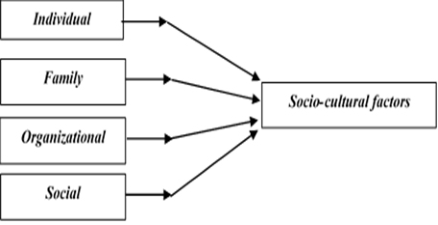
Industrial workers are a significant population of an industry that plays a unique role in the world’s socio-economic system. Previous industrial pra- ctices do not accommodate employees and their contributions as significant stakeholders of their industry in a justified manner (Dubin, 1956; Lem and Marcus, 2017). Employees’ empowerment is a critical issue for industrial gro- wth, especially in Low-Middle Income Countries (LMIC), as socio-cultural factors affect the goals of employees’ Quality of Life (QoL) (Garcia, Boix and Canosa, 2004; Yaakob and Watada, 2009). Equal opportunity in employ- ment for both male and female genders is also a significant challenge in industries (Pinchbeck, 2013). Over the centuries, workers have struggled to secure the correct position according to their skills and qualifications. With every passing day, there have been developments in all sectors, especially in empowerment and social justice, and these developments generate oppor- tunities that workers are keen to get their share (Nur, Dawal and Dahari, 2014). In recent years, equity in job opportunities has become a significant concern for industrial employee empowerment, specifically in LMIC (Yaakob and Watada, 2009; Akintayo, 2012). In many developing countries, during the last five years, statistics indicate massive progress in industrial workers’ empowerment (Desai et al., 1990; Greer, Ciupijus and Lillie, 2013). In deve- loped countries, the progress of empowerment is measurable, but in the case of developing countries, there is a significant need for improvement (Brown, 1975; Chen, 2003). In a socio-cultural model, multiple factors and con- straints influence the worker’s personal and professional life. Stereotypical behaviour of management has adverse effects on employee-manager relation- ships (Stoker, Van der Velde and Lammers, 2012). It refers to identity work whereby managers enact stereotypical conceptions of other employees to bol- ster their self-image and diminish others. The managers aim to renegotiate the proposed social arrangement for their benefit and attempt to go beyond the social arrangement generated through stereotypical behaviour, thereby distancing it from essentialist cultural conceptions (Koveshnikov, Vaara and Ehrnrooth, 2016). These constraints are based on different features characte- rized by four major contributing socio-cultural factors, as shown in Figure 1 (Kossek, Noe and DeMarr, 1999a; Lee and Kartika, 2014).
Figure 1: Socio-cultural factors related to industrial workers.
Individual Factor At the individual level, industrial employees face massive challenges like health, self-development, power distance, mental workload, overload, and work-related stress. Various scales are designed to measure purpose orien- tation among working adults (Yukhymenko-Lescroart and Sharma, 2022). Employee health is noteworthy, including both mental and physical health. Their jobs demand different practices, and sometimes they have exposure to physical health challenges like heat, chemical, and biological hazards (Ani- mashaun and Odeku, 2014). Most of the time, there are psychological and mental workload issues. Their health not only affects their professional obli- gations but also spoils their QoL. Hypertension, asthma, and diabetes are common ailments caused by unhealthy environments that can affect their well-being (Costa, 2010; Prüss-Ustün et al., 2017).
Family Factor Second-generation industrialization is famous for converting the family into a consumption unit from a production unit (Petit, 1959; Yang et al., 2015). When an employee tries to perform multiple roles along with family responsi- bilities, the family-life balance can negatively impact job performance (Koch and Fox, 1978; Gonzalo, 2016). Families of industrial workers with infants and young children also face significant health challenges resulting in physical and mental depression due to the stress of balancing work hours and private life (De Vries, 1994; Chopra, 2009a; Lagomarsino et al., 2012; Susanty and Miradipta, 2013; Kronfol, Saleh and Al-Ghafry, 2014). This is of particu- lar concern in rural to urban migrant workers of LMIC (Harter, Schmidt and Hayes, 2002a); this concern is further exponentially increasing in the case of transnational migrant workers moving from LMIC to the gulf region (Harpe, 2015a). Remedial measures to prevent work-family conflicts have been suggested by various experts that are necessary to provide flexible wor- king hours. Reasonable mediatory recreational or compensation leaves, child support programs, and work-life balance policies are missing elements in developing countries’ organizations. Some researchers point out that a flexi- ble working hours routine benefits employee retention and addresses family issues amicably (Kelliher and Anderson, 2008; Koldijk, Neerincx and Kraaij, 2018). These studies also show that rigid and inflexible routines can bring depression and anxiety in individuals, their families, and QoL (Van der Klink et al., 2001; Joyce et al., 2010; Susanty and Miradipta, 2013), (Wechsler et al., 2022). Therefore an excellent industrial policy should provide fle- xible working hours to balance work-home equilibrium (Kossek, Noe and DeMarr, 1999b; Allen et al., 2000; Greenhaus, Collins and Shaw, 2003; Joyce et al., 2010). Such policies can improve productivity and create a conducive working environment in organizations.
Organizational Factor The main objective of any industry is to enhance its performance, efficiency, and productivity. Employees would contribute to the best of their abilities if comfortable with the organization’s culture (Costa, 2010; Galy, Cariou
Socio-Cultural Factors of Industrial Workers 191
and Mélan, 2012). Research shows that work stress, whether positive or negative, will certainly affect the efficiency of an individual, which in turn impacts the organization’s overall productivity (Van der Klink et al., 2001; Nakao, 2010). Individual employees and the overall organization’s performa- nce are interlinked as they are directly proportional (Anderzén and Arnetz, 2005). Numerous factors in the workplace harm job performance and an individual’s health (Lerner et al., 2003). The individual attitude of collea- gues, seniors, and subordinates towards the worker also matters. Therefore, to increase the efficiency and productivity of an employee heading toward the industry, it is necessary to create a friendly environment between the employee and the organization (Harter, Schmidt and Hayes, 2002b). The presence of a trade union in the workplace and union membership also affe- cts the workers’ overall satisfaction (Lee, 2022). A highly demanding job decreases employee happiness, affecting the Quality of Life (QoL) (Thomp- son and Bruk-Lee, 2021). A prevalent practice in the workplace is the negative assumptions related to any employee without any solid proof or information that negatively affects the well-being and self-esteem of an employee (Bagozzi and Burnkrant, 1979; Sarode and Shirsath, 2014). Therefore, this research evaluates the attitude of co-workers via questionnaires.
Social Factor Every region has its own traditional, social, and cultural values affecting wor- kers’ daily social life and cultural norms. Various cultural barriers may affect their occupational safety during work (Cunningham et al., 2002). Equity in decision-making, management behaviour, equal opportunities in education, and an appropriate working environment can affect the employee’s family, work-life balance, and employee-employee relationship, with more appreci- ation and recognition developing because of job satisfaction (Aguenza and Som, 2012). Starting from the previous assumption and constraints that affected the industrial workers, this paper presents an analytical study to highlight the social and cultural challenges being faced by the 50 industrial workers (30 males and 20 females) in Pakistan’s manufacturing organization are hypothesized using data modelling, looking to:
a) Determine employees’ struggles in industry and society. b) Assessing the attitude of colleagues, seniors, and subordinates towards the worker. c) Analyzing the adverse effects on employees’ personal and professional life. d) Identifying stereotype approach of management. e) Reducing employees’ social and organizational constraints.
METHODS
Socio-cultural factors (familial, social, individual, and organizational) were investigated among 50 industrial Pakistan workers (30 males and 20 females) aged between 25 to 50 years from automotive, energy, and textile sectors with
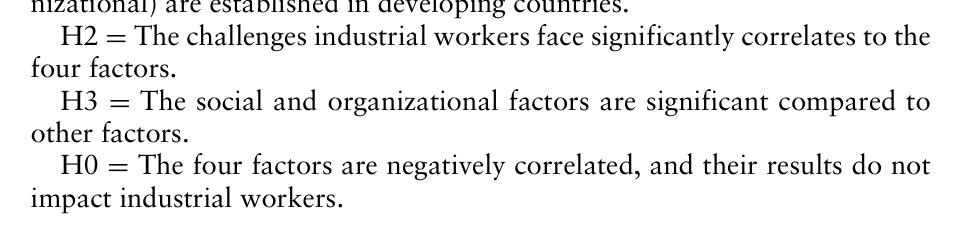
low to middle income are hypothesized. The industrial experience of emplo- yees is diverse, ranging from 5 years to 18 years. There data modelling is also applied and assumptions in modelling participant’s data. The socio-economic status of most employees is middle class, with average salaries ranging from 40–80 USD per week. Experts reviewed a dedicated 25-item questionnaire for relevance and validity to comprehensively capture the topic under investiga- tion. The organizational aspect of the questionnaire covered the topics of job satisfaction, wages/salaries, working environment, etc., while the individual aspects included self-perception, financial problems, health, and well-being relating to quality of life (QOL). The questionnaire also inquired about social and familial aspects, including marital life, domestic responsibilities, and community. The questionnaire was based on a Likert scale (Chopra, 2009b), (Cooper and Essex, 1977a)for investigating their socio-cultural issues and factors, establishing the following four hypotheses that were successively analysed using IBM SPSS software: H1 = The four socio-cultural factors (family, social, individual, and orga- nizational) are established in developing countries.
Equation reproduced from the original PDF.
RESULTS
A total of 1200 responses were collected during the study attributing a score based on four levels (strongly agree, agree, disagree, strongly disagree) of the Likert scale in the questionnaire (Beglar and Nemoto, 2014; Harpe, 2015b). Data were processed using Cronbach’s approach with Cronbach’s alpha for internal consistency of 0.916, suggesting a high degree of relevance of the four factors, as shown in Table 1 (Ho Yu, 2001; Gliem and Gliem, 2003; Ercan et al., 2007).
The links between the four factors were investigated, showing a positive correlation that confirmed hypothesis H-1, as shown in Table 2. The mean value of the four factors “family, individual, organizational, and social” are 2.98, 3.00, 2.32, and 2.10, respectively. The numerical statistics are shown below in Table 3. The statistical data shows that the organizational and social factors are below 3.00 compared to the other two factors.
The mean value of a family factor is 2.98, and the individual factor is precisely 3.00, which indicates that the individual factor is less challenging
Table 1. Cronbach’s alpha for internal consistency.
Table available in the original PDF paper.
Reliability Statistics Cronbach’s alpha No. of Items .916 4
Socio-Cultural Factors of Industrial Workers 193
Table 2. Correlation between the four factors.
Table available in the original PDF paper.
Family Individual Organizational Social 1 .948** .649** .550**
Family Pearson Correlation
.948** 1 .725** .600**
Sig. (2-tailed) .000 .000 .000 N 50 50 50 50 Individual Pearson Correlation
.649** .725** 1 .922**
Sig. (2-tailed) .000 .000 .000 N 50 50 50 50 Organizational Pearson Correlation
.550** .600** .922** 1
Sig. (2-tailed) .000 .000 .000 N 50 50 50 50 Social Pear son Correlation Sig. (2-tailed) .000 .000 .000 N 50 50 50 50
**. Correlation is significant at the 0.01 level (2-tailed)
Table 3. Statistical data of the four factors.
Table available in the original PDF paper.
Family Individual Organizational Social N 50 50 50 50 Mean 2.98 3.00 2.32 2.10 Median 4.00 4.00 2.00 1.00 Std. Deviation 1.597 1.578 1.463 1.488 Variance 2.551 2.490 2.140 2.214 Minimum 1 1 1 1 Maximum 5 5 5 5
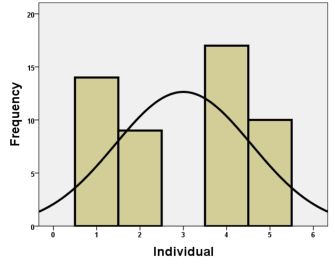
for industrial workers than the other factors, as shown in Table 3. Table 4 and Figure 2 describe the individual factor and the distribution of responses for the questionaries. 14 out of 50 workers strongly agreed with the contribution of individual factors, and the cumulative percentage effect of workers having strongly agreed opinion was 46%. Hence most industrial workers disagree with the contribution of individual factors.
Table 5 and Figure 2 describe the family factor showing that 14 indu- strial employee workers out of 50 strongly agreed, and with the addition of agreeing, the cumulative percentage increased to 48%, which shows the contribution of this factor is slightly more significant than the individual factor.
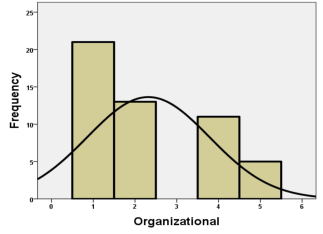
An individual employee’s performance must be judged based on the organi- zational environment and its culture, as shown in Table 6 and Table 7. While Table 6, Table 6 and Figure 3 highlight the importance of organizational factors, with 42% of industrial workers strongly agreeing. This cumula- tive percentage of agree with strongly agree is raised to 68%. The bimodal
Table 4. Frequency distribution of individual factor.
distribution is because the middle point (neutral) of the Likert scale was not considered as it was the 4-point Likert scale filled by the participant. Table 7 and Figure 3 express the social factor, which is a significant aspect among all the challenges or factors for industrial employees, as it shows that 27 out of 50 workers strongly agree. In addition, considering agree and strongly agree, the cumulative percentage rises to 74%, the highest among all the factors.
Figure 3: Frequency distribution of organizational factor (left) and social factor (right).
DISCUSSION
A significant challenge in the professional life of industrial employees in deve- loping countries (LMIC) is adjusting to their organizational environment and culture (Tharp, 2009; Belias and Koustelios, 2014). As a result of the impact of the organizational environment, the career progression and growth of workers are decided. This pilot study is based on a survey carried out via a questionnaire that includes a sample size of 50 participants. By collecting information from the questionnaire, we tried to predict participants’ response patterns to assess the hypothesis’s validity based on an analysis of workers’ feedback. The main objective of a pilot survey was to test the research tools, including the questionnaire, their structure, and distribution channels with the primary data collection process. From the results and analysis, it has emerged that all four factors (family, social, individual, and organizational) are correlated, demonstrating Cronbach’s alpha of 0.916. In particular, the challenges faced by industrial workers are significantly correlated to the four factors, as shown in Table 2, where social and organizational factors exhibit more challenges than other factors. Consequently, the null H0 hypothesis is not valid. The results from Table 3, Table 4, and Figure 2 in our study and the review survey determine that family and individual challenges inflate the worker’s professional responsibilities and often pressurize them to leave or change their job because of economic and professional dichotomy.
Another important aspect of this study is highlighting the importance of social and organizational factors, as evident in Table 5, Table 6, and Figure 3. The study reveals that the organizational factor has a significant impact on individual performance, such as some studies showing that the ability to con- tribute towards decision-making directly or indirectly impacts employees’
social life (Cooper and Essex, 1977b; Lam, Chen and Schaubroeck, 2002). These studies reflect the concept of encouraging the industrial employee to participate and contribute to the process of decision-making that can subse- quently improve the results (Leana, Ahlbrandt and Murrell, 1992). Coupling the parameters of social and organizational factors, these are proportional to employees’ decision-making in an organization or society (Shikdar and Das, 2003; Joseph and Dai, 2009). Among many dimensions of organizational factors, one of them is the enablement of decision-making and the involve- ment of employees in significant decisions. Various studies (Doucouliagos, 1995; Baas and Boons, 2004) reveal that industrial workers’ participation in decision-making is essential for employees’ empowerment and dynamic enabling.
CONCLUSION
This research study analyses four essential factors, i.e., family, social, indivi- dual, and organizational creating different challenges for industrial workers of LMIC. Data showed that the four factors (family, social, individual, and organizational) were correlated, demonstrating Cronbach’s alpha of 0.916. Cope with these challenges, each industrial organization should address these factors systematically and properly plan work-related issues that affect the industrial worker. There is a need for new proposed organizational standards which may cater to some flexibilities like flexible job timings for workers, stress management workshops, and child support programs at the organiza- tional level that may increase their efficiency to cope with the challenges at the organizational level in a better way. Social networking and social com- munities are also essential to handling social issues in the industrial working environment. Organizations can arrange workshops and social awareness seminars to address the social aspects of employees and resolve their social issues through two-way communication.
Conflict of interest: The authors declare no conflict of interest, and the study is carried out without any commercial or financial relationships.
Data availability statement: The data and analysis supporting this study’s findings are available in the manuscript.
ACKNOWLEDGMENT
The authors would like to acknowledge National University of Sciences and Technology (NUST), Islamabad, Pakistan and other collaborative universities in this study.
REFERENCES
Aguenza, B. B. and Som, A. P. M. (2012) ‘A Conceptual Analysis of Social Networking and its Impact on Employee Productivity’, IOSR Journal of Business and Management, 1(2), pp. 48–52. Available at: https://doi.org/10.9790/487X -0124852.
Socio-Cultural Factors of Industrial Workers 197
Akintayo, D. (2012) ‘Working environment, workers’ morale and perceived productivity in industrial organizations in Nigeria.’, Education Research Journal, 2(3), pp. 87–93. Allen, T. D. et al. (2000) ‘Consequences associated with work-to-family conflict: a
review and agenda for future research.’, Journal of occupational health psychology [Preprint]. Available at: https://doi.org/10.1037/1076-8998.5.2.278. Anderzén, I. and Arnetz, B. B. (2005) ‘The impact of a prospective survey-based workplace intervention program on employee health, biologic stress markers, and organizational productivity’, Journal of Occupational and Environmental Medi- cine, pp. 671–682. Available at: https://doi.org/10.1097/01.jom.0000167259. 03247.1e. Animashaun, O. and Odeku, K. O. (2014) ‘An overview of neglected, But important
factors affecting employee’s productivity, Health and safety in the workplace’, Mediterranean Journal of Social Sciences, 5(20), pp. 2967–2975. Available at: ht tps://doi.org/10.5901/mjss.2014.v5n20p2967. Baas, L. W. and Boons, F. A. (2004) ‘An industrial ecology project in practice: Exploring the boundaries of decision-making levels in regional industrial systems’, Journal of Cleaner Production, 12(8–10), pp. 1073–1085. Available at: https: //doi.org/10.1016/j.jclepro.2004.02.005. Bagozzi, R. P. and Burnkrant, R. B. (1979) ‘Attitude measurement and behavior
change: a reconsideration of attitute organization and its relationship to behavior’, Advances in Consumer Research, 6(1), pp. 295–302. Beglar, D. and Nemoto, T. (2014) ‘Developing Likert-scale questionnaires’, JALT2013 Conference Proceedings [Preprint]. Belias, D. and Koustelios, A. (2014) ‘Organizational Culture and Job Satisfaction : A Review’, International Review of Management and Marketing [Preprint]. Brown, J. R. (1975) ‘Factors contributing to the development of low back pain
in industrial workers.’, American Industrial Hygiene Association journal, 36(1), pp. 26–31. Available at: https://doi.org/10.1080/0002889758507203. Chen, F. (2003) ‘Industrial restructuring and workers’ resistance in China’, Modern China, 29(2), pp. 237–262. Available at: https://doi.org/10.1177/ 0097700402250742. Chopra, P. (2009a) ‘Mental health and the workplace: Issues for developing countries’, International Journal of Mental Health Systems. Available at: https://doi.or g/10.1186/1752-4458-3-4. Chopra, P. (2009b) ‘Mental health and the workplace: Issues for developing coun-
tries’, International Journal of Mental Health Systems. Available at: https://doi.or g/10.1186/1752-4458-3-4. Cooper, D. and Essex, S. (1977a) ‘Accounting information and employee decision making’, Accounting, Organizations and Society [Preprint]. Available at: https://doi.org/10.1016/0361-3682(77)90012-5. Cooper, D. and Essex, S. (1977b) ‘Accounting information and employee deci-
sion making’, Accounting, Organizations and Society [Preprint]. Available at: https://doi.org/10.1016/0361-3682(77)90012-5. Costa, G. (2010) ‘Shift work and health: Current problems and preventive actions’, Safety and Health at Work [Preprint]. Available at: https://doi.org/10.5491/SH AW.2010.1.2.112. Cunningham, C. E. et al. (2002) ‘Readiness for organizational change: A longi-
tudinal study of workplace, psychological and behavioural correlates’, Journal of Occupational and Organizational Psychology [Preprint]. Available at: https: //doi.org/10.1348/096317902321119637.
Desai, R. et al. (1990) ‘Visual status of industrial workers.’, Indian journal of ophthalmology, 38(2), pp. 64–65. Doucouliagos, C. (1995) ‘Worker Participation and Productivity in Labor-Managed
and Participatory Capitalist Firms: A Meta-Analysis’, ILR Review [Preprint]. Available at: https://doi.org/10.1177/001979399504900104. Dubin, R. (1956) ‘Industrial workers’ worlds: a study of the “central life interests” of industrial worker’, Social Problems, 3, pp. 131–142. Available at: https://doi. org/10.1525/sp.1956.3.3.03a00010. Ercan, I. et al. (2007) ‘Examining cronbach alpha, theta, omega reliability coeffici-
ents according to the sample size’, Journal of Modern Applied Statistical Methods [Preprint]. Available at: https://doi.org/10.22237/jmasm/1177993560. Galy, E., Cariou, M. and Mélan, C. (2012) ‘What is the relationship between mental workload factors and cognitive load types?’, International Journal of Psychophysi- ology, 83(3), pp. 269–275. Available at: https://doi.org/10.1016/j.ijpsycho.2011. 09.023. Garcia, A. M., Boix, P. and Canosa, C. (2004) ‘Why do workers behave unsafely at
work? Determinants of safe work practices in industrial workers.’, Occupational and environmental medicine, 61(3), pp. 239–246. Available at: https://doi.org/10. 1136/oem.2002.005629. Gliem, J. A. and Gliem, R. R. (2003) ‘Calculating, Interpreting, and Reporting Cronbach’s Alpha Reliability Coefficient for Likert-Type Scales,’ 2003 Midwest Research to Practice Conference in Adult, Continuing, and Community Education [Preprint]. Available at: https://doi.org/10.1109/PROC.1975.9792. Gonzalo, D. C. (2016) ‘Influence of Cushioning Variables in the Workplace and in
the Family on the Probability of Suffering Stress’, Safety and Health at Work [Preprint]. Available at: https://doi.org/10.1016/j.shaw.2016.02.003. Greenhaus, J. H., Collins, K. M. and Shaw, J. D. (2003) ‘The relation between workfamily balance and quality of life’, Journal of Vocational Behavior [Preprint]. Available at: https://doi.org/10.1016/S0001-8791(02)00042-8. Greer, I., Ciupijus, Z. and Lillie, N. (2013) ‘The European Migrant Workers
Union and the barriers to transnational industrial citizenship’, European Jour- nal of Industrial Relations, 19(1), pp. 5–20. Available at: https://doi.org/10.1177/ 0959680112474748. Harpe, S. E. (2015a) ‘How to analyze Likert and other rating scale data’, Currents in Pharmacy Teaching and Learning [Preprint]. Available at: https://doi.org/10. 1016/j.cptl.2015.08.001. Harpe, S. E. (2015b) ‘How to analyze Likert and other rating scale data’, Currents
in Pharmacy Teaching and Learning [Preprint]. Available at: https://doi.org/10. 1016/j.cptl.2015.08.001. Harter, J. K., Schmidt, F. L. and Hayes, T. L. (2002a) ‘Business-unit-level relationship between employee satisfaction, employee engagement, and business outcomes: A meta-analysis’, Journal of Applied Psychology, 87(2), pp. 268–279. Available at: https://doi.org/10.1037//0021-9010.87.2.268. Harter, J. K., Schmidt, F. L. and Hayes, T. L. (2002b) ‘Business-unit-level relationship
between employee satisfaction, employee engagement, and business outcomes: A meta-analysis’, Journal of Applied Psychology, 87(2), pp. 268–279. Available at: https://doi.org/10.1037//0021-9010.87.2.268. Ho Yu, C. (2001) ‘An introduction to computing and interpreting Cronbach Coefficient Alpha in SAS’, in Proceedings of the Twenty-Six Annual SAS Users Group International Conference,.
Socio-Cultural Factors of Industrial Workers 199
Joseph, K. E. and Dai, C. (2009) ‘The Influence of Organizational Culture on Organizational Learning, Worker Involvement and Worker Productivity’, International Journal of Business and Management, 4(9), pp. 243–250. Joyce, K. et al. (2010) ‘Flexible working conditions and their effects on emplo-
yee health and wellbeing’, Cochrane Database of Systematic Reviews [Preprint]. Available at: https://doi.org/10.1002/14651858.cd008009.pub2. Kelliher, C. and Anderson, D. (2008) ‘For better or for worse? An analysis of how flexible working practices influence employees’ perceptions of job quality’, International Journal of Human Resource Management [Preprint]. Available at: https://doi.org/10.1080/09585190801895502. Van der Klink, J. J. L. et al. (2001) ‘The benefits of interventions for work-related
stress’, American Journal of Public Health [Preprint]. Available at: https://doi.or g/10.2105/AJPH.91.2.270. Koch, J. L. and Fox, C. L. (1978) ‘The Industrial Relations Setting, Organizational Forces, and the Form and Content of Worker Participation.’, Academy of Management Review [Preprint]. Available at: https://doi.org/10.5465/amr.1978. 4305767. Koldijk, S., Neerincx, M. A. and Kraaij, W. (2018) ‘Detecting Work Stress in Offices
by Combining Unobtrusive Sensors’, IEEE Transactions on Affective Computing [Preprint]. Available at: https://doi.org/10.1109/TAFFC.2016.2610975. Kossek, E. E., Noe, R. A. and DeMarr, B. J. (1999a) ‘Work-family role synthesis: Individualand organizational determinants’, International Journal of Conflict Management [Preprint]. Available at: https://doi.org/10.1108/eb022820. Kossek, E. E., Noe, R. A. and DeMarr, B. J. (1999b) ‘Work-family role synthe-
sis: Individualand organizational determinants’, International Journal of Conflict Management [Preprint]. Available at: https://doi.org/10.1108/eb022820. Koveshnikov, A., Vaara, E. and Ehrnrooth, M. (2016) ‘Stereotype-Based Managerial Identity Work in Multinational Corporations’, Organization Studies [Preprint]. Available at: https://doi.org/10.1177/0170840616634129. Kronfol, Z., Saleh, M. and Al-Ghafry, M. (2014) ‘Mental health issues among
migrant workers in Gulf Cooperation Council countries: Literature review and case illustrations’, Asian Journal of Psychiatry, pp. 109–113. Available at: https: //doi.org/10.1016/j.ajp.2014.03.003. Lagomarsino, G. et al. (2012) ‘Moving towards universal health coverage: Health insurance reforms in nine developing countries in Africa and Asia’, The Lancet, pp. 933–943. Available at: https://doi.org/10.1016/S0140-6736(12)61147-7. Lam, S. S. K., Chen, X. P. and Schaubroeck, J. (2002) ‘Participative decision making
and employee performance in different cultures: The moderating effects of allo- centrism/idiocentrism and efficacy’, Academy of Management Journal [Preprint]. Available at: https://doi.org/10.2307/3069321. Leana, C. R., Ahlbrandt, R. S. and Murrell, a. J. (1992) ‘the Effects of Employee Involvement Programs on Unionized Workers’ Attitudes, Perceptions, and Prefere- nces in Decision Making.’, Academy of Management Journal, 35(4), pp. 861–873. Available at: https://doi.org/10.2307/256319. Lee, L. Y. and Kartika, N. (2014) ‘The influence of individual, family, and social
capital factors on expatriate adjustment and performance: The moderating effect of psychology contract and organizational support’, Expert Systems with Appli- cations [Preprint]. Available at: https://doi.org/10.1016/j.eswa.2014.02.030. Lee, Y. W. (2022) ‘Trade Unions and Workers’ Life Satisfaction in South Korea’, Applied Research in Quality of Life, 17(1), pp. 277–298. Available at: https://do i.org/10.1007/S11482-020-09892-5/TABLES/9.
Lem, W. and Marcus, A. (2017) ‘Workers of the World!’, Dialectical Anthropology, pp. 1–2. Available at: https://doi.org/10.1007/s10624-017-9473-6. Lerner, D. et al. (2003) ‘Relationship of employee-reported work limitations to work
productivity’, Medical Care, 41(5), pp. 649–659. Available at: https://doi.org/10. 1097/00005650-200305000-00012. Nakao, M. (2010) ‘Work-related stress and psychosomatic medicine’, BioPsychoSocial Medicine [Preprint]. Available at: https://doi.org/10.1186/1751-0759-4-4. Nur, N. M., Dawal, S. Z. and Dahari, M. (2014) ‘The Prevalence of Work Rela-
ted Musculoskeletal Disorders Among Workers Performing Industrial Repetitive Tasks in the Automotive Manufacturing Companies’, International Conference on Industrial Engineering and Operations Management Bali, Indonesia, pp. 1–8. Petit, T. A. (1959) ‘Industrial Democracy, Worker Status, and Economic Efficiency’, California Management Review, 1(2), pp. 66–75. Pinchbeck, I. (2013) Women workers and the industrial revolution 1750-1850,
Women Workers and the Industrial Revolution 1750-1850. Available at: https: //doi.org/10.4324/9781315031828. Prüss-Ustün, A. et al. (2017) ‘Diseases due to unhealthy environments: An updated estimate of the global burden of disease attributable to environmental determi- nants of health’, Journal of Public Health (United Kingdom) [Preprint]. Available at: https://doi.org/10.1093/pubmed/fdw085. Sarode, A. P. and Shirsath, M. (2014) ‘The Factors Affecting Employee Work Envi-
ronment & It’s Relation with Employee Productivity’, International Journal of Science and Research (IJSR), 3(11), pp. 2735–2737. Shikdar, A. A. and Das, B. (2003) ‘The relationship between worker satisfaction and productivity in a repetitive industrial task’, Applied Ergonomics, 34(6), pp. 603–610. Available at: https://doi.org/10.1016/S0003-6870(03)00057-7. Stoker, J. I., Van der Velde, M. and Lammers, J. (2012) ‘Factors Relating to
Managerial Stereotypes: The Role of Gender of the Employee and the Mana- ger and Management Gender Ratio’, Journal of Business and Psychology, 27(1), pp. 31–42. Available at: https://doi.org/10.1007/s10869-011-9210-0. Susanty, A. and Miradipta, R. (2013) ‘Employee’s Job Performance: The Effect of Attitude toward Works, Organizational Commitment, and Job Satisfaction’, Jurnal Teknik Industri, 15(1). Available at: https://doi.org/10.9744/jti.15.1.13-24. Tharp, B. M. (2009) ‘Defining “Culture” and “Organizational Culture”: From
Anthropology to the Office’, Interpretation a Journal of Bible and Theology [Preprint]. Thompson, A. and Bruk-Lee, V. (2021) ‘Employee Happiness: Why We Should Care’, Applied Research in Quality of Life, 16(4), pp. 1419–1437. Available at: https: //doi.org/10.1007/S11482-019-09807-Z/TABLES/2. De Vries, J. (1994) ‘The Industrial Revolution and the Industrious Revolution’, The
Journal of Economic History, 54(2), pp. 249–270. Available at: https://doi.org/ 10.1017/S0022050700014467. Wechsler, K. et al. (2022) ‘Dual-task interference in simulated car driving: The psychological refractory period effect when not only the second, but also the first task is ecologically relevant’, Applied Ergonomics, 102, p. 103722. Available at: https://doi.org/10.1016/J. APERGO.2022.103722. Yaakob, S. B. and Watada, J. (2009) ‘Optimal workers’ placement in an indu-
strial environment’, Studies in Fuzziness and Soft Computing, 243, pp. 547–565. Available at: https://doi.org/10.1007/978-3-540-93802-6_27.
Socio-Cultural Factors of Industrial Workers 201
Yang, Y. et al. (2015) ‘Socio-economic impacts of algae-derived biodiesel industrial development in China: An input-output analysis’, Algal Research, 9, pp. 74–81. Available at: https://doi.org/10.1016/j.algal.2015.02.010. Yukhymenko-Lescroart, M. A. and Sharma, G. (2022) ‘Measuring Specific Purpose
Orientations in Working Adults’, Applied Research in Quality of Life, 17(3), pp. 1615–1633. Available at: https://doi.org/10.1007/s11482-021-09980-0.
LISTED IN THE AHFE DIGITAL BOOKSTORE CATALOGUE
Explore the complete digital volume
Cognitive Computing and Internet of Things
Read this individual research paper free through the original publisher, or explore the full digital proceedings book.
ISBN 978-1-958651-49-0
Explore this ISBN in the AHFE Bookstore ↗Listed in the July 2026 bookstore catalogue; search by ISBN to confirm current availability · Digital book purchase optional