Fabio Lo Castro, Sergio Iarossi, Massimiliano De Luca (2022). Evaluation of the exposure risk to ultrasound emitted by ultrasonic cleaner machines: a case study. In: Safety Management and Human Factors. AHFE Open Access, vol. 64, pp. 206–213. https://doi.org/10.54941/ahfe1002647
This paper presents a study on the ultrasonic emissions of some ultrasonic washing machines for both industrial and domestic use, which are now increasingly widespread, and their evaluation in compliance with current regulations. Since no threshold values or exposure limits for ultrasound are defined in the Italian and European legislation, criteria that are valid in other European and non-European countries among the most stringent have been adopted for the evaluation.For the evaluation, a methodology has been developed in the context of the collaboration between Eni - CNR. As a case study, an analysis of various ultrasonic washers machines of different sizes and power will be presented.MethodIn this study, 6 ultrasonic cleaner machines of different models and brands were examined. For each of them, it was measured the equivalent sound level not weighted in the ultrasonic bands and the peak level, Lpeak, at the receiver, close the operator at the ears height, generally in front of the device standing at 0.5 m from it. The instrumentation used for the measurements includes a 204 kHz acquisition card, and a class I microphone with a band up to 70 kHz, all certified as a class I sound level meter.Results and discussionFor each ultrasonic cleaner, the ultrasonic level was measured for each 1/3 octave band from 20 kHz to 80 kHz. The uncertainty level was 2.8 dB for the equivalent level and 2.4 dB for the peak level. The presence of the lid, depending on the model, performs several main functions: quickly raise the temperature inside the tank, prevent the lowering of the solution due to evaporation, and protect from any splashes during operation.Some models, even if was covered by the lids, exceeded the exposure limits established by us for the evaluation, and will be described in the paper. It should be noted that the peak level, Lpeak, was never exceeded. The evaluation criterion we have chosen is one of the most restrictive criteria, chosen to safeguard the worker as much as possible. Although the criterion is stringent, it is possible to find simple and economical solutions to be implemented in case of exceeding the limit.ConclusionThe study has shown that most of the devices if the tank is shielded, with a screen or simply the lid, they fall into the class of absence of risk. Otherwise, it is possible to reduce the exposure time or increase the distance spent near the washing machine to reduce the risk.
Ultrasounds are sound waves with frequencies above human hearing, starting from around 20 kHz. They can be emitted by both natural and man-made events, especially in the industrial sector. Their detection requires instruments with more advanced characteristics than the sound level meters used in the acoustic field.
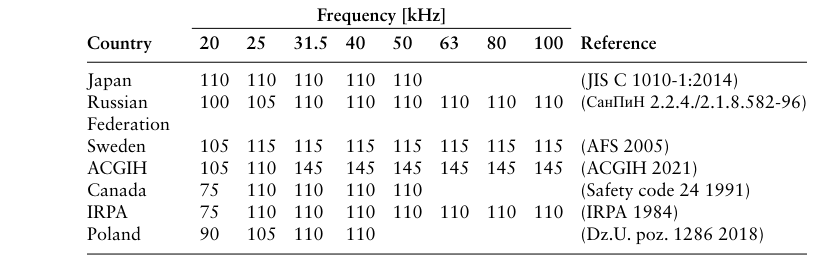
For their assessment, we referred to the methodology developed in the con- text of our collaboration Eni - CNR in 2015 (F. Lo Castro et al. 2018a, F. Lo Castro et al. 2018b, F. Lo Castro et al. 2018c, F. Lo Castro et al. 2019). To date, the Italian legislation, especially the Legislative Decree 81/2008 (D.Lgs 81/2008), does not specify the criterium that has to be followed for the risk evaluation, even if it names ultrasounds among the physical agents to be considered in the assessment. However, there are regulations and legislation present in Europe and non-European countries, as shown in Table 1. Here limits are specified only for the third-octave band because most ultrasounds are emitted by human activities or machinery, which have tonal and nar- rowband emissions. But looking at the values of the limits defined in the different countries there is no absolute convergence and a spread in SPL (Sound Pressure Levels) is present between them. At 20 kHz, the maximum audible frequency, SPL values are between 75 dB and 110 dB, while from
Evaluation of the Exposure Risk to Ultrasound Emitted by Ultrasonic Cleaner Machines 207
Table 1. Maximum permitted SPL in dB re 20 µPa for airborne ultrasound in various countries with no contact of the body with other means.
frequencies above 25 kHz they are between 105 dB and 145 dB. Therefore, we have studied each of them and considered their positive aspects to safegu- ard the worker, establishing threshold values and exposure limits between the most restrictive ones, but do not in contrast with other national legislation, especially in acoustic frequencies close to the ultrasound where the threshold limit is 85 dBA or 80 dBA without any activation of actions to protect the workers (ISO 9612:2011, UNI 9432:2011).
Several studies on the human auditory and extra-auditory effects of air- borne ultrasound conducted between the 1950s and the 1980s show that the adverse health effects are directly correlated to their level and exposure time, but their results have been insufficient to finalize a unique international occu- pational health and safety guideline for ultrasound risk (Leighton 2016). For example, the literature does not analyze always eight hours of exposure, the frequency range of the source also includes audible sound few subjects were selected for the tests, experiments were conducted sometimes on animals, or there is no evidence of related effects to the presence of particular substances. The ACGIH, the American Conference of Governmental Industrial Hygieni- sts, citing precedent studies states that subjective annoyance and discomfort may occur at SPL levels between 75 and 105 dB for the frequency bands from 10 kHz to 20 kHz especially if are tonal in nature (ACGIH 2021). Increasing the SPL over 110 dB at these frequencies can cause severe auditory and sub- jective effects such as headaches, nausea, tinnitus, and sensation of pressure in the ears (Acton 1974, Acton 1975). For frequencies in one-third-octave bands equal to or greater than 20 kHz and the SPL higher than 110 dB, the risk is an increase of the auditory threshold (Parrack 1966). Dobroserdov observes a temporary threshold shift (TTS) after 1-h exposure to SPL of 120 dB at 20.6 kHz (Dobroserdov 1966); Dallos et al. observe that the TTS is due also to sub-harmonics (Dallos et al. 1966). At SPL greater than 145 dB at 20 kHz Danner et al. found that mouse skin exposed to airborne ultrasound increases in temperature over time. At 150 dB the temperature increases by approximately 1°C/min; after 15 minutes at 155 dB, the temperature of the mouse reached about 50°C, killing it. (Dallos et al. 1954). Parrack, conside- ring the skin absorption coefficient, calculated that death in a human occurs at least 181 dB after 40 minutes of exposure (Parrack 1966).
Our method used for airborne ultrasound in the range of 20 kHz ÷100 kHz is based on the total energy incident to the worker during 8 hours of work and the peak level. In the next paragraphs, the method will be shown and applied in a case study, which will be tested in various ultrasonic washers of different specifications.
METHOD
Six ultrasonic cleaner machines of different models and brands were exami- ned in this study (see Figure 1 and Table 3). For each one the unweighted equivalent sound level in the ultrasonic bands and the peak level, Lpeak, were measured, at the receiver, close to the operator at the height of his ears, gene- rally standing 0.5 m in front of the device. The tests were conducted on devices normally used by workers according to the manufacturer’s instru- ctions specified in the user manual, with only water inside the tank, and with or without a lid. Further information such as the year of fabrication and the maintenance operations was not considered. The instrumentation used for the measurements includes a 204 kHz acquisition card, and a class I micro- phone with a bandwidth up to 70 kHz, all certified as a class I sound level meter. To assess the exposure of the worker to the ultrasonic noise emitted during his task, it is necessary to know both the level emitted by the source and the exposure time, that is related to the ultrasonic energy received.
The ultrasonic parameters observed were the equivalent unweighted emit- ted level in each band and the peak level. The relative uncertainty was calculated for each observed indicator.
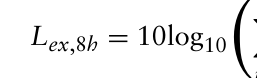
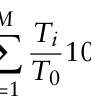
The exposure times were provided by the employer. To calculate the daily exposure level, the same method as described in ISO 9612:2011 was adopted, although referring to the acoustic range. So the exposure level for 8 hours of exposure, Lex-8h, has been calculated for each one-third octave band in the ultrasonic range.
M X
[dB(Lin)] (1)
100.1Leq,i !
Equation reproduced from the original PDF.Equation reproduced from the original PDF.
where
- i is the index that indicates the i-th task (with i =1….M, and M is the number of tasks performed daily);
- Ti is the exposition time during i-th task; - T o is the reference time equal to 8 hours; !
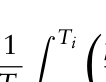
2
p (t)
Equation reproduced from the original PDF.
1 Ti
p0
0
- po = 20 µPa. It should be noted that Lex levels do not consider the effects of any personal protective equipment.
In addition, it has been defined a new sound indicator Lv, i.e. the level measured with the ultrasonic high pass filter V defined in F. Lo Castro et al.
Evaluation of the Exposure Risk to Ultrasound Emitted by Ultrasonic Cleaner Machines 209
< 137 It is suggested to carry out additional actions (note 1)
Class 0 Low LEX,8h < 90 LEX,8h < 105 < 137 No Action Class 1 Medium 90 ≤LEX,8h ≤95; LeqV ≤107 with Ti = 30 minutes
105 ≤LEX,8h ≤110; LeqV ≤122 with Ti = 30 minutes Class 2 High 90 ≤LEX,8h ≤95; LeqV > 107 with Ti = 30 minutes 105≤LEX,8h ≤110; LeqV >122 with Ti = 30 minutes
< 137 Take actions to reduce the exposure levels, such as reducing dwell times related to tasks/activities characterized by significant exposures and shielding the source. Class 3 Not accettable
LEX,8h > 95 LEX,8h >110 < 137 Unacceptable level of exposure Note 1: Implement suitable measures to ensure that the levels are maintained within the limits shown on the side, for example, periodic monitoring of the sources, and evaluating changes in the exposure scenarios. Note 2: The exposure limits must be respected for each ultrasonic band and not for the total energy.
Branson 8210 Branson 1200 Uesseti UST 45/9
Tecna Falc LBS1 3H Aver 2000A Julabo USR8
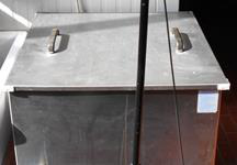
Figure 1: Tested ultrasonic cleaner.
2018c. Thus, the levels obtained were compared with the limit values shown in Table 2.
Table 3. Specification of the tested ultrasonic cleaner.
Table available in the original PDF paper.
Model Ultrasonic Power [W] TANK [L] Nominal frequency [kHz] Branson 8210 200 20.8 44 Tecna Falc LBS1 3H 100 3.0 50 Julabo USR8 n.a. 10.0 35 Bradson 1200 30 1.9 47 Aver 2000A n.a. 50.0 35 Uesseti UST 45/9 450 45.0 38
Table 4. Ultrasound level measured at 0.5 m distance from the device and around 1.5 m height close to the ear more exposed.
Table available in the original PDF paper.
Model Frequency [kHz] Level [dB(Lin)] Peak [dBLin] Risk Level Branson 82101 45 111.2 129.3 Class 3 Tecna Falc LBS1 3H1 33 117.9 109.0 Class 3 Julabo USR81 40 118.5 116.4 Class 3 Bradson 12001 48 107.8 126.8 Class 1 Aver 2000A2 33 101.1 122.6 Class 0 Uesseti UST 45/92 38 113.8 124.1 Class 3
1)no lid; 2)with lid.
depending on the model, performs several main functions: quickly increase the temperature inside the tank, prevent the solution from lowering due to evaporation, and protect against splashing during operation.
Some models, although covered by the lids, have exceeded the exposure limits, defined in Table 2, for continuous 8h working days, up to class III risk level, but the peak level, Lpeak, has never been exceeded (see Table 4).
The evaluation criterion we have developed is one of the most restrictive criteria to safeguard the worker as much as possible. Although the criterion is stringent, it is possible to find simple and inexpensive solutions that can be implemented if the limits are exceeded.
There are several ways the employer can take to reduce the risk:
1) if possible, decrease the power of the ultrasonic transducers, resulting in longer wash or sonication times. 2) use of barriers/shields between source and receiver, such as closing the tank with a lid, placing the sonicator/ultrasonic cleaner under a hood or a closed housing, or using a purely mobile barrier; 3) reduce operator exposure times and delimit the area of greatest exposure; 4) the use of protective devices, such as caps, goggles, and gloves.
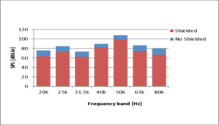
The tests were repeated by covering the tank with a lid or inserting it under the hood with the glass door closed (5 mm thick glass), also following the suggestions of the owner user manual. The worst-case in which the operator stands in front of the washing machine for 8 hours at a distance of 0.5 m was also considered. Table 5 and Figure 2 show the exposure levels to which the worker would be exposed without taking precautions and with the suggested corrective actions to cancel the risk for the operator.
Evaluation of the Exposure Risk to Ultrasound Emitted by Ultrasonic Cleaner Machines 211
Table 5. Ultrasound level measured at 0.5 m distance and around 1.5 m height after taking corrective actions.
Table available in the original PDF paper.
Model Level Lex,8h Before [dBLin]
Action taken to reduce the risk
Level, Lex,8h After [dBLin]
Risk level After Branson 8210 111.2 Use under the hood 88.6@8h Class 0 Tecna Falc LBS1 3H 117.9 Use lid 98.9@8h Class 0
105 @ 1h 105@8h Class 0 Class 0
Julabo USR8 118.5 Use under the hood 99.3@8h Class 0 Bradson 1200 107.8 Use lid 98.7@8h Class 0 Aver 2000A 101.1 No action 101.1@8h Class 0 Uesseti UST 45/9 113.8 Case 1: Reduction of maximum exposure time Case 2: do not approach below 4 m
Bradson 8210 Tecna Falc LBS1 3H Julabo USR8
Bradson 1200 Aver 2000A Uesseti UST 45/9
Figure 2: One-third octave bands spectrum of the six tested ultrasonic cleaners.
CONCLUSION
In this study, six ultrasonic washing machines of different powers and tank capacities were examined. The assessments were carried out by applying the methodology developed by us in collaboration with Eni in 2015, based on existing European and international regulations and legislation. It was neces- sary to develop a measurement method and define risk classes for workers exposed to ultrasound, due to the absence of Italian legislation on the field.
The study has shown that most ultrasound washing machines, with only water inside and shielded with a screen or simply with a lid, fall into the no- risk class. If not, the exposure time can be reduced or the worker’s distance from the cleaner device can be increased to reduce the risk.
ACKNOWLEDGMENT
The authors would like to acknowledge Eni for the collaboration and financial support of the research described in this paper.
REFERENCES
ACGIH (202112) Threshold Limit Values (TLVs®) and Biological Exposure Indices (BEIs®) Appendix B Acton W.I., (1974). “The effects of industrial airborne ultrasound on humans”,
Ultrasonics, Volume 12, Issue 3, Pages 124-128, ISSN 0041-624X, Acton W.I., (1975). Exposure criteria for industrial ultrasound, Letter to the editor Ann. occup. Hyg. VoL 18, pp. 267–268 AFS 2005:16 (2005) Buller Arbetsmiljöverkets föreskrifter om buller samt all-
männa råd om tillämpningen av föreskrifterna (tr. Work Environment Authority regulations on noise and general advice on Application of the Regulations). p p p СанПиН 2.2.4./2.1.8.582-96. (1997) Гигиенические требования при работах с источниками воздушного и контактного ультразвука промышленного, медицинского и бытового назначения. Санитарные правила и нормы (Hygienic requirements for working with sources of air and contact ultrasonic industrial, medical and household purposes Sanitary rules and norms SanPiN 2.2.4./2.1.8.582-96)
D.Lgs. 81/2008 (2008/4). “Testo Unico Sulla Salute E Sicurezza Sul Lavoro”(tr. Consolidated Law on Health and Safety at Work). Gazetta Ufficiale n. 101 30/04/2008 - Suppl. Ordinario n. 108 Dallos, P. J., & Linnell, C. O. (1966). Subharmonic Components in Cochlear Micro-
phonic Potentials. The Journal of the Acoustical Society of America, 40(1), 4–11. doi:10.1121/1.1910063 Danner, P. A., Ackerman E., Frings H. W., (1954). Heating of Haired and Hairless Mice in High Intensity Sound Fields from 6 to 22 kc, The Journal of the Acoustical Society of America 26, 731 Dobroserdov, V.K. (1967). “The Effect of Low Frequency Ultrasonic and High
Frequency Sound Waves on Workers”, Hygiene and Sanitation, vol. 32, pp. 176–181. Dz.U. poz. 1286 (2018) Rozporza˛dzenie Ministra Rodziny, Pracy i Polityki Społecznej z dnia 12 czerwca 2018 r. w sprawie najwy˙zszych dopuszczalnych ste˛˙ze´n i nate˛˙ze´n czynników szkodliwych dla zdrowia w ´srodowisku pracy (tr. Regulation of the Minister of Family, Labor and Social Policy of June 12, 2018 on the maxi- mum allowable concentrations and intensities of factors harmful to health in the work environment) IRPA (1984) International Non-Ionizing Radiation Committee of the International
Radiation Protection Association, Interim guidelines on limits of human exposure to airborne ultrasound, Health Physics, 46 (4), pp. 969–974 ISO 9612:2011 Acoustics — Determination of occupational noise exposure — Engineering method. JIS C 1010-1:2014 定用,制御用及び室用器の安全性-第1部:一般要求事(tr. Safety
requirements for electrical equipment for measurement, control, and laboratory use - Part 1: General requirements) Leighton T.G. (2016), Are some people suffering as a result of increasing mass exposure of the public to ultrasound in air?, Proc. R. Soc. A 472: 20150624 Lo Castro, Fabio, Iarossi, Sergio, De Luca, Massimiliano, Biancifiori, Carlo.
(2018c) “Metodologia di monitoraggio e valutazione degli infrasuoni ed ultrasu- oni: prime applicazioni presso siti industriali ENI (tr. Methodology for monitoring and evaluation of infrasound and ultrasound: first applications at ENI indu- strial sites)”. Proceeding of the conference dBA 2018 October “I rischi fisici nei luoghi di lavoro”, ed. S. Goldoni, P. Nataletti, N. Della Vecchia, Bologna, ISBN:978-88-940868-6-7
Evaluation of the Exposure Risk to Ultrasound Emitted by Ultrasonic Cleaner Machines 213
Lo Castro, Fabio, Iarossi, Sergio, De Luca, Massimiliano, Biancifiori, Carlo, Michele Frabetti, Giulia Pizzella, Gianandrea Turchi, Alfonso Gelormini, (2019), “Meto- dologia di valutazione dell’esposizione dei lavoratori agli infrasuoni ed ultrasuoni emessi in aria adottata presso siti industriali Eni: studio preliminare (tr. Methodo- logy for assessing worker exposure to infrasound and ultrasound emitted into the air adopted at Eni industrial sites: preliminary study)”, proceeding of the conference AIDII 2019 – ISBN:978-88-86293-35-8 Lo Castro, Fabio, Iarossi, Sergio, De Luca, Massimiliano, Biancifiori, Carlo. (2018a)
“Criteri Per La Valutazione Del Rischio Infrasuoni Ed Ultrasuoni Emessi In Aria”, proceeding of the 45° conference of the Associazione di Acustica, AIA, Aosta, ISBN: 978-88-88942-56-8 Lo Castro, Fabio, Iarossi, Sergio, De Luca, Massimiliano, Biancifiori, Carlo (2018b), “Valutazione Del Rischio Infrasuoni Ed Ultrasuoni Emessi In Aria: Un Confronto A Livello Internazionale (tr. Risk Assessment Of Infrasound And Ultrasound Emit- ted In The Air: An International Comparison)” proceeding of the 45° convegno dell’Associazione di Acustica, Aosta, ISBN:978-88-88942-56-8 Parrack, H. O. (1966). Effect of airborne ultrasound on humans, International
Audiology 5 294 Safety code 24, Guidelines for the Safe Use of Ultrasound: Part II - Industrial and Commercial Applications, Minister of Supply and Services Canada, 1991 UNI 9432:2011 Acustica - Determinazione del livello di esposizione personale al
rumore nell’ambiente di lavoro (tr. Acoustics - Determination of the level of personal exposure to noise in the workplace).
LISTED IN THE AHFE DIGITAL BOOKSTORE CATALOGUE
Explore the complete digital volume
Safety Management and Human Factors
Read this individual research paper free through the original publisher, or explore the full digital proceedings book.
ISBN 978-1-958651-40-7
Explore this ISBN in the AHFE Bookstore ↗Listed in the July 2026 bookstore catalogue; search by ISBN to confirm current availability · Digital book purchase optional