Hang Shang, Weifu Wang, Min Zhao (2022). Construction and Evaluation of Influencing Factor Evaluation System Model for Campus Safety Awareness. In: Safety Management and Human Factors. AHFE Open Access, vol. 64, pp. 87–94. https://doi.org/10.54941/ahfe1002632
The university campus is a very densely populated group organization and a place prone to safety accidents.The quality of campus safety prevention work is not only related to the personal safety of campus teachers and students, but also related to the stable development of the society.Therefore, improving the safety awareness of college students and promoting students' safety behavior is the key to improve the campus safety.First of all, according to the three elements of human, material and environment, this paper preliminarily constructed the campus safety awareness evaluation index, including 3 first-level indicators, 9 second-level indicators, to explore the main factors affecting students' safety awareness.Secondly, the preliminarily constructed evaluation indicators are revised by the Delphi method, and the revised indicators are 3 first-level indicators and 12 second-level indicators.Then, the corrected index weights were calculated by hierarchical analysis.Finally, according to the calculated index weight, the Grey evaluation value is calculated, and the main factors affecting students' awareness of campus safety behavior according to the results of the evaluation value are determined.In order to improve the campus security, give a directional reference.
With the progress of world civilization and the rapid development of science and technology, the complex systems involved in mankind are increasing. In the human-centered behavior safety management system, the environment and objects in contact between people and their production activities con- stitute a multi-factor complex system, and so is the campus security system (Kang Y R et al. 2006). Due to the dense personnel, universities are prone to safety risks. Frequent campus safety accidents not only cause both physical and psychological harm to campus teachers and students, but also affect the orderly development of society (Hai-Da YU, 2004). Establishing and impro- ving the efficient campus security system and creating a good campus security atmosphere is the key to solve the problem (Xiangdong Xu, 2003). Through a large number of relevant literature research, it is found that human behavior
Table 1. Student safety awareness of human factor assessment indicators.
Table available in the original PDF paper.
Level 1 indicators Secondary indicators Student safety awareness of human safety behavior factors A1
Understanding of potential safety risks A11 The degree of safety education A12 Knowledge of the safety rules and regulations A13
Table 2. Student safety awareness of material factor assessment indicators. (Hu P and Chen X, 2017).
Table available in the original PDF paper.
Level 1 indicators Secondary indicators Student safety awareness of material safety state factors A2
Improvement degree of on-campus facilities A21 Campus fire control facilities are of perfect degree A22 Improvement degree of the campus security system A23
safety is influenced by people, material and environment elements, which is mainly affected by their own awareness and emotion, that is, by their own safety awareness situation (Li X R et al. 2018). Therefore, the safety of human behavior has multiple characteristics of easy disturbance, easy conformity and complexity. Therefore, to find out the main factors affecting students ‘campus safety awareness, is to improve students’ campus safety behavior, is the key to create a good campus security. This paper takes human, mate- rial and environment elements as the index dimensions of campus safety consciousness evaluation and the first-level index A1~A3 is established. A1 indicates students’ safety awareness, A2 means campus safety facilities, A3 indicates organizational environmental factors, and revised 12 secondary indicators. According to the weight of each index, the gray comprehensive value evaluation is calculated (Pi Zuxun and Liu Heqing, 2008).
BUILD THE EVALUATIOH INDEX SYSTEM OF STUDENT’ SAFETY AWARENESS Preliminary Evaluation Index of Students’ Safety Awareness
According to the division of the main factors affecting human behavior safety in the safety management system, the three elements of human safety beha- vior, material safety state and safety environment are taken as the first-level evaluation indicators in the evaluation index system. Then, according to the actual situation of the campus safety problems, 9 secondary assessment indicators were set up. Specific division is shown in Table 1~3.
Correction of Assessment Index System of Students’ Safety Awareness In order to make the evaluation indicators more scientific and targeted, this study adopted the Delphi method to correct the preliminary constructed
Construction and Evaluation of Influencing Factor Evaluation System Model 89
Table 3. Student safety awareness of environment factor assessment indicators.
evaluation indicators, invited relevant research experts in the field of arti- ficial social theory and complex adaptation system to score the preliminary established index system, and revised the evaluation indicators according to their revised opinions. The following is the basic situation of the experts in the relevant fields.
(1) Expert positive coefficient(α): According to the study steps of the Delphi method, the expert positive coefficient is given by 1.
α = n N (1) Where n indicates the number of retracted questionnaires, and N indicates the number of questionnaires sent. The expert scoring cycle of this article is one week, a total of 6 questionnaires are sent, 6 experts all give feedback, and all are valid opinions. It can be seen that the experts selected in this paper have a high degree of active cooperation.
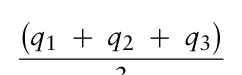
(2) The level of expert authority(Q): According to the implementation steps of the Delphi method, in addition to the above expert positive coefficient, the degree of expert authority should also be included in the scientific and standard evaluation method, the level of expert authority is given by 2.
Equation reproduced from the original PDF.
3 (2)
The meaning of q1 is the academic level of the experts hired, and the measures are shown in Table 4.
The second measure q2 refers to the source of knowledge of the hired experts about the content studied in this article. Its measurement indica- tors mainly include four indicators: the conclusions drawn from the theory, the experience in relevant aspects, the understanding of the peers, and the subjective intuition of the pattern experts themselves. These four indicators directly affect how correct the experts are about what they judge. Experts are evaluated from the three levels of large, medium and small. The quantitative table is shown in Table 5.
Table 5. Quantitative table for judging expert indicators.
Table available in the original PDF paper.
Judgment basis The impact of the judgment basis on the expert’s judgment Large Medium Small
Table 6. Evaluation results of expert authoritativeness.
Table available in the original PDF paper.
1 2 3 4 5 6
Expert academic level quantity q1 0.9 0.7 0.5 0.5 0.9 0.7 The judgment was based on q2 0.5 0.5 0.5 0.5 0.5 0.5 Familiarity with the indicators was performed in q3 0.5 0.5 0.8 0.8 0.8 0.8 Comprehensive results q 0.63
The third measure is q3, which means that the hired experts are familiar with the area where the evaluation index is located. It is divided into five levels are very familiar, familiar, general, not familiar, unfamiliar, and assign the value of 1.0, 0.8, 0.5, 0.2, 0.0. According to Equation 2, the authoritative evaluation results of the selected experts in this study are shown in Table 6.
According to the evaluation criteria, q greater than or equal to 0.60 is acce- ptable. This paper calculates q = 0.63, indicating that the degree of expert authority is acceptable.
(3) Evaluation index system correction:sort out the opinions given by each expert and refine the evaluation indicators of influencing factors of safety awareness. Finally, the results were summarized, and the prelimina- rily established safety awareness influencing factors indicators were revised and supplemented. The original three first-level indicators of human safety behavior, material safety state and safety environment are embodied into stu- dents’ own safety awareness, internal and external environment and campus safety management, and the nine second-level indicators are extended to 12. The revised indicators are specifically shown in Table 7.
Identification of the Weight of Assessment Factors Affecting Students’ Safety Awareness This study used the hierarchical analysis method to determine the weight of the evaluation indicators (Shen Shaohu et al. 2014). AHP weight algorithm is based on rigorous mathematical algorithm: first, divide the evaluation index system. Secondly, construct the evaluation matrix; again pass the ranking and consistency test, and finally calculate the weight of each index. The yaahp software is only used to calculate the index weight.
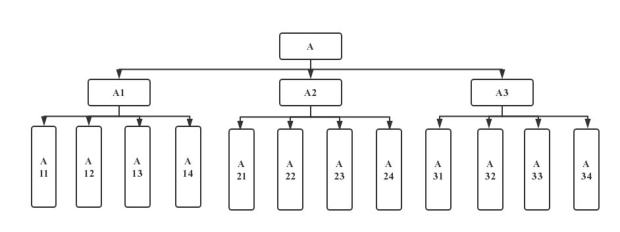
(1) Establish a hierarchical hierarchy: Build a hierarchical structure model. The model has three layers, mainly including target layer, intermediate ele- ment layer and alternative layer. The A series of variables are used to replace
Construction and Evaluation of Influencing Factor Evaluation System Model 91
Table 7. Evaluation index system of influencing factors of students’ safety awareness (After modification).
Table available in the original PDF paper.
Level 1 indicators Secondary indicators Students’ own safety awareness A1 Understanding of potential safety risks A11 The degree of safety education A12 Knowledge of the safety rules and regulations A13 The awareness of Internet fraud A14 Internal and external environment and campus A2
Campus safety atmosphere A21 The attention that family support members pay to safety A22 Campus security A23 The school leaders attach great importance to safety management A24 Campus safety management A3 The school carries out safe learning frequency A31 Campus fire control facilities are of perfect degree A32 Improvement degree of the campus security system A33 Counselors’ ideological education A34
Figure 1: Hierarchical structure diagram.
the first and secondary index names. The hierarchical structure is shown in Figure 1.
By constructing a progressive hierarchical structure system, the affiliation relationship between the constant index and the secondary index has been determined, and the judgment matrix has been constructed on this basis. The judgment matrix is used to express the progressive hierarchical structure system of each level relative to the upper level element, which has determined the membership relationship between the continuous index and the secondary index, and the judgment matrix is constructed on this basis. The judgment matrix is used to describe the importance of each level relative to the upper level elements. The specific evaluation criteria are shown in Table 8.
According to the feedback of invited experts on the influencing factors of students’ safety awareness, the judgment matrix of first level and second level indicators was constructed respectively. The judgment matrix construction
Table 8. Judgment matrix criteria.
Table available in the original PDF paper.
Aij Define 1 The i and j are equally important 3 The i is slightly more important than the j 5 The i is more important than j 7 The i is much more important than the j is 9 The i is absolutely more important than the j 2,4,6,8 Between the above two adjacent judgment scales count backwards The importance ratio of i than j is, then j than i is 1/λ
Table 9. First-level index judgment matrix.
Table available in the original PDF paper.
A1 A2 A3 A1 1 3 2 A2 1/3 1/2 1/2 A3 1/2 1 1/2
Table 10. Second-level index of students’ safety awareness judgment matrix.
table, such as Table 9~12, is omitted due to the complicated calculation process.
The first-level index weights were obtained by calculation (0.645, 0.143, 0.212). According to the calculated weight: B1 (0.347,0.107,0.223,0.323). According to the calculated weight: B2 (0.140,0.446,0.140,0.274) According to the calculated weight: B3 (0.403,0.118,0.202,0.277). The evaluation index weights are determined by the first-level weight set B and the secondary weight indicators B1~B3.
(2) Determination of the evaluation weight vector and the weight matrix Combined with the expert scoring table and the calculation method, the weight matrix (Y) is obtained as follows (Liu Wei et al. 2011):
Construction and Evaluation of Influencing Factor Evaluation System Model 93
Table 12. Second-level index of campus safety management judgment matrix.
The comprehensive evaluation results of the first-level index P is as follows (0.3354, 0.3373, 0.2160, 0.1466).
(3) Comprehensive evaluation value (Z) calculation In order to better draw the evaluation conclusion, this paper replaces the evaluation grade with: 4 points, representing very good; 3 points, relatively good representative; 2 points represent average; 1 points represent relatively poor. The rank vector is DT(4, 3, 2, 1).
Z = P
DT = 3.0 (3) The overall safety awareness score of college students is 3.0, and the result after a full score is 75. This score shows that the overall degree of safety awa- reness in this school is OK. The comprehensive evaluation value is calculated separately for students” safety awareness, internal and external environment and campus, campus safety management respectively, the result as 2.93, 3.2, 2.73.
CONCLUSION
The results show that Students ‘environmental score inside and outside the school is large, followed by the students’ own safety awareness quality, and the campus safety management team is small. Therefore, schools should strengthen student safety education, as well as invest more funds in the sch- ool Safety Culture Committee lectures, to establish a safe and harmonious learning and living environment for students.
ACKNOWLEDGMENT
The authors would like to acknowledge Professor Min Zhao for his valuable opinions and suggestions. We also thank the ‘School of Art and Information Engineering of Dalian University of Technology’ for supporting part of this research.
REFERENCES
Hai-Da Y U. (2004). Education on university students’ safety consciousness. Journal of Hangzhou Teachers College. pp. 25. Hu P, Chen X. (2017) Design and Implementation of Campus Security System Based
on Internet of Things. International Conference on Robots & Intelligent System. IEEE Computer Society. pp. 86–89. Kang Y R, Kim T G, Lee K W. (2006) A Study on Status Laboratory Safety and Improvement According to the Safety Consciousness Survey of University Students in Korea. Acta Medica Okayama. pp. 51–58. Li X R, Chen X B, Sun Q B. (2018) Analysis of the Influence Factors Affecting Cam-
pus Security Based on SEM Model. International Conference on Applied Human Factors and Ergonomics. Springer, Cham, pp. 480–488. Liu Wei, Bai Zhonghang, Zhu Lei. Analysis of the Association between Campus Security and Stability and Building a Harmonious Campus . Law and Economy. pp. 87. Pi Zuxun, Liu Heqing. (2008). Grey correlation evaluation model and application of
campus security. Chinese Journal of Security Sciences. pp. 134–140. Shen Shaohu, Feng Miaomiao, Liu Hanqin, et al. Construction of University Campus Security Performance Management System Based on Hierarchical Analysis Method. Shanxi Science and Technology. pp. 29. Xiangdong Xu. (2003). Philosophical research on safety awareness. Chinese Security
Science Journal. pp. 13.
LISTED IN THE AHFE DIGITAL BOOKSTORE CATALOGUE
Explore the complete digital volume
Safety Management and Human Factors
Read this individual research paper free through the original publisher, or explore the full digital proceedings book.
ISBN 978-1-958651-40-7
Explore this ISBN in the AHFE Bookstore ↗Listed in the July 2026 bookstore catalogue; search by ISBN to confirm current availability · Digital book purchase optional