Zhengtang Tan, Xiangyu Yao, Zhu Yi, Meizhen Den (2022). Interface design of three-dimensional virtual teaching situation based on psychological schema theory. In: Ergonomics In Design. AHFE Open Access, vol. 47, pp. 223–230. https://doi.org/10.54941/ahfe1001940
By analyzing the interface design process of the virtual simulation software of digital skirt design in Hunan Normal University, this study puts forward that based on image schema, users' thoughts and behaviors in the process of learning and operation can be metaphorically interpreted, and then the interpreted users' thoughts and behaviors are mapped to the corresponding visual contents expressing specific functions in the corresponding interface dimensions by using matching psychological schemas such as UP-DOWN", CONTAINER and LEFT-RIGHT. Based on this, an interface design method suitable for 3D virtual teaching software is constructed, which can enhance the fluency in the operation process, reduce the psychological burden of students in the knowledge learning process, and provide services for better virtual simulation teaching experience.
With the advent of the Internet era, more and more attention has been paid to the design and development of online, multi-platform, multi-media, and virtual simulation digital teaching software in teaching. However, at present, in the virtual simulation teaching environment of higher education, the appli- cation of the online learning environment still stays in the single interactive teaching means such as video playing and mouse clicking. Also, it has not fully considered the interface design problems such as the operability of tea- chers and learners, the difficulty of getting started, the difference of cognitive range, etc. In the actual simulated real teaching situation. This makes it neces- sary to study and analyze the rules of learners’ learning and cognition and summarize appropriate methods to assist the interface design and develo- pment of 3D virtual simulation systems, which is essential scientific research to promote the development of digital education.
DESIGN AND ANALYSIS OF 3D VIRTUAL TEACHING INTERFACE Three-dimensional virtual teaching software supports teachers and learners to learn knowledge and gain experience in the virtual teaching situation by providing three-dimensional simulation situations (Liu and Xie, 2015). Its advantage lies in enabling teachers and students to break through the limita- tions of time, space, and cost. Accomplish the learning task with embodiment and immersion (Barkand and Kush, 2009). Aiming at the three-dimensional virtual teaching software, Scholars from the “three-dimensional virtual lear- ning environment (Daniel et al. 2008), “Three-dimensional virtual education platform technology (Liu, 2017),” and “Three-dimensional virtual teaching effect.” Focus on pedagogy to analyze the new teaching model and students’ learning effect.
From the point of view of design, attach importance to the user experience and interactive research of students in learning 3D virtual teaching software. Scholars have pointed out that the complexity of virtual teaching interaction, the diversification of operation modes, and the differentiation of cognitive threshold have brought significant challenges to virtual teaching interaction design and information presentation (Xu and Zhou, 2021). However, few scholars have carried out practical design research on the above problems from the perspective of 3D virtual teaching software interface design, leading to the lack of interface design methods of most virtual teaching software and poor user experience.
RESEARCH AND ANALYSIS OF SCHEMA THEORY Image schema theory is a representative schema theory in psychological sch- ema theory. Image schema, which was first inspired by cognitive linguistics and psychology, is an abstract model that highly generalizes concrete matter. Its practical application value is more reflected in its metaphorical extension. As a source domain, it can correspond to multiple image metaphors. Image metaphor can transform human’s direct experience thinking into the intui- tive design language. Take sliding up the volume bar with louder sound as an example, which can be mapped to the UP-DOWN schema (Hurtienne, 2009). In the daily life experience, sliding upwards easily reminds the expe- rience of the rising water level, bricks piled up upwards, and the increase of height. Therefore, in human consciousness, the upward sliding action can be summed up as the concept of objects upward or increasing. On the con- trary, the downward sliding motion can be summarized as the downward or downward movement of the object. These connections are self-learning, and through repeated experiences in the same plot, these connections become inertial thinking.
In the general research of interface design, scholars have made some ach- ievements around image schema theory. Joern Hurtienne and others put forward the idea of using image schema and central metaphors represented by images as a novel method to mine users’ subconscious mental models of their cognitive fields and use this to design the interface of abstract content (Hurtienne and Blessing, 2007). Joern Hurtienne and others pointed out that image scheme is a very potential theoretical model to provide design language and guidance for user interface design to conform to intuitive user interface
Research on Interface Design of Three-Dimensional Virtual Teaching 225
Table 1. Common image schema and its category of digital virtual simulation teaching software for the skirt pattern.
design (Hurtienne et al. 2015); Yiqi Xiao uses image schema to encode user’s language, that is, it extends metaphors in abstract concepts in language and uses different image schema expressions to interact and design (Xiao and He, 2018). After analysis, it is found that there have been theories focusing on applying image schema to interactive interface design. Still, there is little lite- rature reference for interactive interface design and discussion of 3D virtual situations.
The discussion of the 3D virtual teaching interface in this paper will be based on the representative image schema theory in psychological schema theory. This paper aims to reveal the cognitive phenomena hidden in the behavior, feeling, and thinking of learners in the software learning through the common perceptual experience of human beings and find out the map- ping relationship between them and design expression. So as to inspire the application strategy of 3D virtual teaching interface design (Hurtienne et al. 2015).
DESIGN AND APPLICATION OF SCHEMA IN 3D VIRTUAL TEACHING INTERFACE Three-Dimensional Virtual Teaching Interface Standard Image Schema Extraction
Schema theory is a crucial method basis in designing 3D virtual teaching interface. According to the above discussion, we know that the image schema theory can better help designers understand the user’s thinking. The author takes the interface case of the digital virtual simulation teaching software for skirt pattern of Hunan Normal University as the research content, and according to seven image schemas of “BASIC, FORCE, CONTAINMENT, SPACE, PROCESS, MULTIPLICITY and ATTRIBUTE” proposed by Joern Hurtienne, adopts induction method, and finds that there are two kinds of image schemas commonly used in the virtual simulation teaching inter- face: CONTAINMENT and SPACE. As shown in Table 1, this category and its representative images are illustrated. This article will mainly analyze the interface design methods of the above categories.
Design and Application of Image Schema in Virtual Simulation Teaching Software Virtual Interface Four Modules
To better distinguish the application of image schema in different functional levels, we first divide the modules in the virtual simulation interface into four
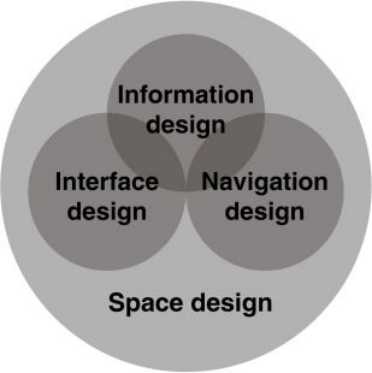
Figure 1: Virtual interface four modules.
modules: Information design, Interface design, Navigation design, and space design. As shown in Figure 1, Information design refers to the text elements in the interface, including teaching knowledge text information. Interface design involves the layout design on the plane, and visualizing the interface function is the visual design of the whole teaching interface. Navigation design guides users to go to a particular place or direction. As a guide in the interface, users can “walk freely” during operation. Space design is the concept of three- dimensional space, which is the whole virtual teaching environment in the teaching interface design. Think of the Space design like a cube. Information design, Navigation design, and Interface design are all elements presented on the plane of the cube. As shown in Figure 1, although the four modules are independent of each other, carrying their functional contents to be expressed, they are integrated to jointly build a virtual simulation teaching interface with complete functions and information.
Analysis of Virtual Simulation Teaching Interface of Skirt Digital Pattern From the above four modules of virtual teaching interface, as well as the image schema and metaphorical extensions involved in the teaching interface. This part uses the usability test method to analyze the process operation. The image schema and corresponding metaphor mapping commonly used in the design of 3D virtual teaching interfaces are summarized by tabulating. As shown in Table 2.
Case 1 Interface design, In the virtual simulation project interface, the step instruction bar at the top of the interface is arranged from left to right according to the operation sequence of knowledge introduction, knowledge assessment and case presentation, and the triangle pointing to the right is used in the middle of the two steps to indicate and remind the next step. Step instruction bar provides users with the information of operation sequence,
Research on Interface Design of Three-Dimensional Virtual Teaching 227
Table 2. Application of image schema in virtual project.
Table available in the original PDF paper.
Interface Module Example Schema and Metaphorical Extensions Interface design Example: Schema: LEFT-RIGHT
Step indicator bar
metaphorical extensions: left is start right is end
Space design Example: Four teaching spaces
Schema: CONTAINER metaphorical extensions: inside is similar outside is different
Navigation design Example: Navigation icon
Schema: CONTAINER
metaphorical extensions: up is forward down is backward
Information design Example: Assessment process box
Schema: UP-DOWN
metaphorical extensions: up is start down is end
which needs to be visualized and involves graphic design, so it belongs to the application of image schema in the module of Interface design. The image schema contained in it is the LEFT-RIGHT schema. The order from left to right is easily reminiscent of the habit of writing and reading words from left to the right, and so on. In many cases, there is a strong correlation between left to right and a sense of order. Therefore, in inertial thinking, it is easy to associate the sorting from left to right with a process from beginning to end. Corresponding to the conceptual metaphor of “left is starting” and “right
is end.” The small triangle sign pointing to the right strengthens the feeling of advancing from left to right. So users can follow the step instruction bar more intuitively to understand each stage of learning.
Case 2 Space design, in the skirt pattern design teaching process, students need to go through four steps: three-dimensional body measurement, sew- ing operation, body temperature measurement, and intelligent production. Sewing also includes pattern design, fabric cutting, and false sewing. Intelli- gent cutting includes CAM automatic cutting and intelligent hanging system making. The teaching process needs a series of continuous interactive opera- tions. The equipment and presentation of teaching knowledge points used in each major step are put into four spaces, namely, three-dimensional anthro- pometry studio, false sewing table, temperature measurement laboratory, and intelligent garment manufacturing room; that is, each part is put into four containers respectively. The four operation interfaces all involve the visual design and environmental design of operating equipment, so they belong to the Space design module. Putting different knowledge blocks into different containers can bring users a smooth learning experience, promote students to classify knowledge points in the learning process, and improve the learning effect. It is not difficult for a container to think that things inside the contai- ner have similar properties, while things outside the container don’t want to be the same. Corresponding to “inside is similar” and “outside is different.”
Case 3 Navigation design, the navigation icon in the interface belongs to the application of image schema in the typical Navigation design module. The design of navigation icons uses the CONTAINED schema and refers to the features of the container interior, boundary, and exterior to distinguish the correct direction of progress. Design a navigation icon to guide the dire- ction. Using the metaphorical extension of “up is forward” and “down is backward,” the navigation icon is designed as a closed circular space, and the whole circular part is centered on the user’s position and an arrow indi- cates the direction in which the user’s line of sight is located. If the indicator is up, the user is facing forward, and if the needle is down, it is backward. The blue sector in the navigation icon also uses the CONTAINER schema. The blue sector is inside. Otherwise, it is outside. The interior is the field of vision that users can see through the screen, which can help users better locate the target position. The conceptual metaphor of “inside is similar” and “outside is different” explained in the previous section are used.
Case 4 Information design, the examination interface of garment pattern design and production process requires students to put the operation steps into the correct box from top to bottom, which belongs to the UP-DOWN schema used in Information design. The common sense of life can be mapped to the waterfall flowing down, combing hair from top to bottom, and the “up and down” in orientation is connected with the “start and end” in time.
Design Method Construction of 3D Virtual Teaching Situation Based on Image Schema Based on the above analysis of the virtual simulation project interface and the design practice of image schema on the interactive interface, this paper
Research on Interface Design of Three-Dimensional Virtual Teaching 229
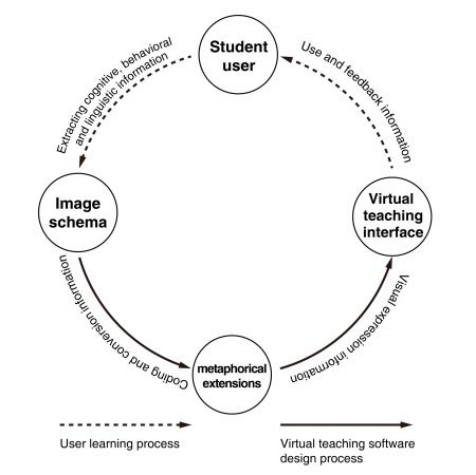
Figure 2: Design method of three-dimensional virtual teaching situation based on image schema.
summarizes the design method suitable for the 3D virtual teaching interface. As shown in Figure 2. The dotted line represents the learning process of analy- zing student users, and the solid line represents the design process of virtual teaching software. The specific method includes four steps. The first step is user analysis. Specifically, it refers to summarizing and refining student users’ cognitive, behavioral, and linguistic information in specific learning tasks through interview and observation and transforming it into correspon- ding image schemas such as UP-DOWN and CENTER-PERIPHERY. The second step is to encode the image schema into conceptual metaphors cor- responding to users’ cognitive characteristics, behavioral characteristics and language information, such as the concept of “more” associated with “upw- ard” behavioral metaphor. In the third step, three expressive methods of iconics, metaphorics, and deictics (Mcneill, 1992) are adopted to visually express the information to be designed, that is, to complete the design of a virtual teaching interface for users. As shown in Figure 2, this design method can form a loop path that it can iterate circularly. After the interface design is completed, this method can also be used to test whether the design case can bring a better teaching experience to students to promote the feedback correction of the design scheme. This part also constitutes the fourth step of this design method.
CONCLUSION
Based on the image schema theory, this study explores the interface design method of 3D teaching project with great development potential at present.
This paper puts forward that virtual simulation interface design can be divi- ded into Information design, Interface design, Navigation design and Space design. Based on the practical design process of the digital virtual simula- tion teaching software interface of skirt pattern in Hunan Normal University, a three-dimensional virtual teaching interface design method is constructed. It is found that the study of image schema as a design tool can effectively analyze the cognitive, behavioral and linguistic information of student users, and then construct the interface function and interface visual form of user cognitive matching, which can improve the user experience and learning effi- ciency in the use of virtual software. However, there are still some difficulties in the process of specific case design. For example, the design elements and the image schema it reflects are not one-to-one. The same design element may activate multiple corresponding image schemas, and the same image schema can also be used to understand different design elements. Conceptual meta- phor is not only a single cognitive field, but researchers also need to focus on thinking and solving the above problems in future research.
ACKNOWLEDGMENT
This paper is thanks to the support of the curriculum teacher training based on virtual simulation of skirt pattern design and fit test (No.:202102072052) and the project of “Progressive Project-Driven” Teaching Mode Reform Pra- ctice Research (No.:HNJG-2021-0040), the core curriculum group of fashion design specialty.
REFERENCES Barkand, J. and Kush, J. (2009). GEARS a 3D Virtual Learning Environment and Virtual Social and Educational World Used in Online Secondary Schools. Electronic Journal of e-Learning, 7(3), pp. 215–224. Daniel, L., Jeremy, K., Edmund, E. (2008). From Multi-User Virtual Environment
to 3D Virtual Learning Environment. Research in Learning Technology, 16(3), pp. 139–150. Hurtienne, J. (2009). Image schemas and design for intuitive use. technische universitaet berlin, pp. 107–117. Hurtienne, J., Blessing, L. (2007). Design for Intuitive Use - Testing Image Sch-
ema Theory for User Interface Design. International Conference on Engineering Design, pp. 829–833. Hurtienne, J., Klockner, K., et al. (2015). Designing with Image Schemas: Resolving the Tension Between Innovation, Inclusion and Intuitive Use. Interacting with Computers, 27(3), pp. 355–356. Liu, G.P. and Xie, T. (2015). A Review on Three Dimensional Virtual Learning
Environment. china educational technology, 2015(09), pp. 22–27. Liu, Q.Y. (2017). Study on Virtualization-based Distance Education Platform. Xidian University, 2018(04). Mcneill, D. (1992). Hand and Mind: What Gestures Reveal about Thought.
University of Chicago Press, 37(2), 28–31/07, pp. 203–209. Xiao, Y.Q. and He, R.K. (2018). Approach to Interactive Metaphor Design Based on Image Schema Coding. Packaging Engineering, 39(16), pp. 162–166. Xu, Y.S. and Zhou, J. (2021). Research on Cross-screen interaction Design of Library
Information System from the Perspective of Image Schema. Library Tribune, 2022–02-15, pp. 1–10.
LISTED IN THE AHFE DIGITAL BOOKSTORE CATALOGUE
Explore the complete digital volume
Ergonomics In Design
Read this individual research paper free through the original publisher, or explore the full digital proceedings book.
ISBN 978-1-958651-23-0
Explore this ISBN in the AHFE Bookstore ↗Listed in the July 2026 bookstore catalogue; search by ISBN to confirm current availability · Digital book purchase optional