Hee Seon Yang, Bill Deng Pan, Dennis Vincenz, Dahai Liu (2025). Investigating the Acceptance of Vertiport Construction Near Residence Using Technology Acceptance Model (TAM). In: Advances in Human Factors of Transportation. AHFE Open Access, vol. 186, pp. 33–42. https://doi.org/10.54941/ahfe1006491
Unmanned Air Mobility (UAM) is an emerging concept of transportation expected to be integrated into urban areas in the coming years. Vertiports are essential facilities for operating UAM for locations where passengers board and disembark after traveling between destinations. This study examines public acceptance of vertiport construction in relation to annual household income and geographical location through a quantitative survey. The research adopts the Technology Acceptance Model (TAM) to investigate socio-economic and geographic differences in Urban Air Mobility (UAM) acceptance. It specifically assesses perceptions and tolerance levels concerning safety risks, noise disturbances, and privacy concerns related to vertiport implementation. Data were collected via an online survey comprising 19 questions addressing demographics and acceptance levels, with 64 responses obtained. A one-way ANOVA was conducted to analyze the public acceptance of UAM. The findings revealed significant differences in vertiport acceptance based on annual household income. Additionally, the study highlighted significant variations in the acceptance of privacy invasion, also associated with annual household income.
The world is at a stage where unmanned air mobility (UAM), part of advanced air mobility (AAM), can transport people and property without onboard pilots. In order to commercialize UAM effectively, governments worldwide, including the U.S., are currently developing policies and systems for wide-spread UAM implementation. The Federal Aviation Administration’s (FAA) UAM Concept of Operations v2.0 outlines plans to integrate UAM into the National Airspace System (NAS) (FAA, 2023). A critical component of the UAM system is the vertiport, hubs for electric Vertical Takeoff and Landing (eVTOL) aircraft. The need for vertiport development and integration raises considerations such as safety, infrastructure, regulations, environmental impact, and community acceptance.
This study explored public acceptance of vertiports across income brackets and geographical locations, analyzing factors including tolerance for safety
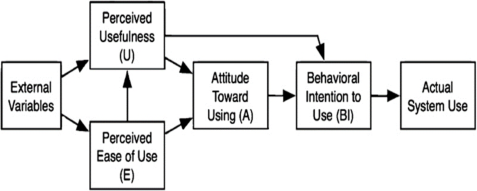
risks, potential aircraft noise, and privacy concerns (Ison, 2023). By addressing gaps in existing research, such as the limited exploration of income and location influences on the public acceptance of vertiports, this study aims to inform inclusive strategies for future vertiport planning and integration. Many people may be unfamiliar with UAM infrastructure. Therefore, it is essential to analyze how people accept new technology. The Technology Acceptance Model (TAM) is a theoretical framework that was used to understand and predict user acceptance of new technologies, as shown in Figure 1.
Figure 1: Technology Acceptance Model (TAM) (adapted from “Technology Acceptance Model”, Davis, 1987).
Using TAM as a framework, this research investigated perceived usefulness and ease of use to predict acceptance of vertiports. Existing research indicates that individuals with higher incomes are more inclined to use premium transportation options, prioritizing convenience and comfort as disposable income increases (Kamijo et al., 2022; Wang & Wang, 2021). Busy individuals particularly value time-saving benefits, such as reduced travel duration and avoidance of traffic congestion (Anderson et al., 2020). Therefore, analyzing household income levels and geographical locations was crucial for determining optimal vertiport placement and understanding tolerance for issues like noise, safety, and privacy.
This study employed a quantitative survey to uncover the factors influencing vertiport acceptance. These insights of this study enable policymakers and urban planners to address specific community needs effectively, leveraging data-driven strategies to enhance public support and guide vertiport implementation.
In this research, the following null hypotheses were tested. H1: There is a significant association between income status and acceptance of building a vertiport near their residential area.
H2: There is a significant association between the location of residency and acceptance of building a vertiport near their residential area.
H3: There is a significant difference in acceptance of noise levels when building a vertiport near a residential area between individuals with different income levels.
H4: There is a significant difference in acceptance of noise levels when building a vertiport near a residential area between individuals with different locations of residency.
Investigating the Acceptance of Vertiport Construction Near Residence 35
H5: There is a significant difference in acceptance of UAM utilizing sensors and cameras for an operation that can also detect people and property in private space, flying around the residencies between people with different income levels.
H6: There is a significant difference in acceptance of UAM utilizing sensors and cameras for an operation that can also detect people and property in private space, flying around the residencies between people with different locations of residency.
H7: There is a significant difference in the acceptance of safety risk related to building vertiports near residencies between individuals with different income levels.
H8: There is a significant difference in the acceptance of safety risks related to building vertiports near residences between individuals with different residence locations.
REVIEW OF THE RELEVANT LITERATURE The advancement of UAM has introduced the potential for pilotless air taxis and drone deliveries, necessitating the construction of vertiports in residential areas. However, public acceptance remains a critical factor in the successful implementation of vertiports. The integration of this infrastructure into daily life is in its early stages, requiring meticulous planning and collaboration with local and state authorities. As with any emerging technology, the transition phase poses significant challenges. This section provides a review of relevant literature, including the concept and function of vertiports, public attitudes toward vertiport placement, technology acceptance theory, and the acceptance of UAM and vertiport systems.
Vertiport Infrastructure for UAM Vertiports are an essential component to the UAM system, serving as the infrastructure for eVTOL vehicles. A typical vertiport comprises take- off and landing pads, taxiways, parking gates equipped with charging or refueling facilities, and areas for passenger processing. There are three primary types of vertiports: Vertihub, Vertibase, and Vertipad (Gouevia et al., 2022). Vertihubs, the largest type, is designed for city centers and features extensive maintenance facilities. While Vertibase, a medium-sized vertiport, can be located near airports or on city outskirts and includes smaller maintenance capabilities. Vertipad, the smallest of the three, is highly versatile in placement but lacks significant maintenance facilities (Johnston et al., 2020). The successful development of vertiports must integrate sustainability measures and foster community engagement to align with evolving societal and environmental expectations. Key concerns, such as safety, noise, and proximity to residential areas, remain significant barriers to widespread adoption (Bauranov et al., 2021; Yedavalli & Mooberry, 2019). Furthermore, optimizing airspace operations and creating employment opportunities can enhance public perception of vertiports (Gouevia et al., 2022).
Concerns Related to Vertiport Operations Several operational concerns must be addressed in order to promote public acceptance of vertiports. Noise pollution is one of the most pressing issues, particularly as vertiports are often planned to be located near residential areas. Noise complaints, akin to those seen at airports such as John Wayne International Airport (KSNA), are expected to increase. However, manufacturers like Joby Aviation have made significant progress in reducing eVTOL noise levels. NASA testing revealed that Joby’s aircraft emitted operational noise levels comparable to normal city sounds (45.2–65 decibels), alleviating some concerns about excessive noise pollution (Joby Aviation, 2022; John Wayne Airport, n.d.). These advancements align with data from the Centers for Disease Control and Prevention (CDC), which categorizes normal conversation at 60 dB and city traffic at 80–85 dB, suggesting eVTOL systems can operate within tolerable noise thresholds.
Privacy concerns also pose a challenge due to the advanced sensors on eVTOLs used for navigation and obstacle detection. These sensors, when flying near residential areas, may inadvertently intrude upon personal privacy. Research indicates that 88% of Americans oppose drones recording their property, and 83% believe companies should not use data collected from drones for marketing purposes (Meyer, 2023). Existing regulatory gaps must be addressed to mitigate these concerns and foster trust in vertiport operations (Rao, 2016).
Safety concerns remain paramount, as many individuals fear the possibility of eVTOL crashes near residential areas. To address this, UAM systems must employ advanced collision-avoidance technologies alongside established separation methods, such as fixed separation (based on airspace class) and dynamic separation (unique to each aircraft’s specifications). Public education on these safety measures is also crucial for alleviating fears and building confidence in vertiport operations (Bauranov et al., 2021; Ison, 2023).
Acceptance of Vertiports and UAM Public acceptance of vertiports and UAM systems hinges on addressing concerns about convenience, environmental impact, cost, and safety. Urban residents value vertiports for their potential to reduce congestion, while rural communities see them as an opportunity to improve access to transit. However, suburban residents often exhibit lower enthusiasm due to perceived lesser benefits (Kim et al., 2021; Ison, 2024). Income levels may also influence acceptance, with higher-income individuals generally showing greater willingness to pay for UAM services. However, studies also reveal that middle-income groups ($35,000–$49,999 annually) exhibit a similar willingness to pay, challenging the assumption that UAM is primarily attractive to affluent individuals (Garrow et al., 2021; Winter et al., 2020; Ison, 2024).
Proximity to vertiports also influences public perception. Research indicates that individuals prefer vertiports to be within a 20–30-minute walking distance of their homes, aligning with preferences for accessibility
Investigating the Acceptance of Vertiport Construction Near Residence 37
and convenience (Ison, 2023). Furthermore, understanding community needs—such as saving time, reducing air pollution, and minimizing travel costs—can guide the strategic placement of vertiports and improve public acceptance. Stakeholder engagement is equally critical, with concerns such as airspace integration, enabling technology, and real-time data sharing requiring active collaboration to maximize opportunities and address public apprehensions (Gouevia et al., 2022).
The Technology Acceptance Model (TAM) provides a framework for understanding the adoption of vertiports, emphasizing the importance of perceived usefulness (PU) and ease of use (PEOU). Studies on Passenger Air Vehicles (PAVs) demonstrate that PU is a stronger determinant of adoption than PEOU, with public perception driven more by the tangible benefits of using the technology than by its simplicity. Training programs, user experience, and intuitive system design have been shown to enhance PEOU, further supporting adoption (Davis, 1987; Johnson et al., 2022). For example, a study on Electronic Flight Bag (EFB) acceptance among pilots revealed that training and experience significantly increased both PU and PEOU, insights that are directly applicable to vertiport operations (Techau, 2018).
METHODOLOGY
This research utilized a quantitative research method with a non- experimental survey design. The independent variables (IVs) for this research were annual household income and location of residency. The dependent variables (DVs) for this research were acceptance of vertiport construction near residency, acceptance of noise issues, acceptance of privacy invasion issues, and acceptance of safety risks.
Quantitative data was collected using a SurveyMonkey questionnaire distributed to volunteers on Amazon Mechanical Turk (MTurk) who consented to participate in the research. The study targeted individuals living in the U.S. who had previously filed taxes, utilizing a non- random convenience sampling method. The final sample size consisted of 64 participants. While this sample represents a small fraction of the more than 162 million individual tax returns filed in 2023 (Washington, 2024), the size has minimal impact on statistical validity given the large overall population. Data collected through the survey were analyzed using multiple one-way ANOVAs to test the study’s respective hypotheses.
RESULTS
This section presents the comprehensive outcomes of the statistical analysis, including the results of the one-way ANOVAs conducted, based on the data collected as a part of this research study.
Vertiport Acceptance Income Level. A one-way between-subjects ANOVA was conducted to test the null hypothesis that there was no difference in acceptance of vertiport
with annual household income. Levene’s test for homogeneity of variance was significant (p = .004). With the alpha-level set at. 05, the ANOVA was significant F(2, 62) = 3.781, p = .028, η2 = .109 (a large effect) as shown in Table 1, and thus the null was rejected. The unequal variance post hoc test, Games-Howell, indicated that the mean acceptance score for people with low-level annual household income was significantly lower than that for candidates with high-level annual household income, p = 0.004. Participants with middle-level annual household income showed significantly lower acceptance means than those with high-level annual household income, p = 0.002.
Residential Location. A one-way between-subjects ANOVA was conducted to test the null hypothesis that there was no difference in acceptance of vertiport depending on the location of residency. Levene’s test for homogeneity of variance was not significant (p = .927). With the alpha-level set at. 05, the ANOVA was not significant, F(2, 62) = 0.365, p = .696, as shown in Table 2, and thus, the null was retained. There were no differences in the means of acceptance of vertiport construction between urban, suburban, and rural areas.
UAM Noise Level Income Level. A one-way between-subjects ANOVA was conducted to test the null hypothesis that there was no difference in acceptance of 70db noise level with annual household income. Levene’s test for homogeneity of variance was not significant (p = .389). With the alpha-level set at. 05, the ANOVA was not significant, F(2, 62) = 0.469, p = .628, as shown in Table 1, and thus, the null was retained.
Residential Location. A one-way between-subjects ANOVA was conducted to test the null hypothesis that there was no difference in acceptance of 70db noise level depending on the location of residency. Levene’s test for homogeneity of variance was not significant (p = .567). With the alpha-level set at. 05, the ANOVA was not significant, F(2, 62) = 0.65, p = .696, as shown in Table 2, and thus, the null was retained.
UAM Impact on Privacy Income Level. A one-way between-subjects ANOVA was conducted to test the null hypothesis that there was no difference in acceptance of privacy invasion with annual household income. Levene’s test for homogeneity of variance was not significant (p = .061). With the alpha-level set at. 05, the ANOVA was significant, F(2, 62) = 5.551, p = .006, η2 = .109 (a large effect) as shown in Table 1, and thus the null was rejected. The equal variance post hoc test, Bonferroni, indicated that the mean acceptance score of medium-level annual household income was lower than the mean for people with high-level annual household income, p = .005.
Residential Location. A one-way between-subjects ANOVA was conducted to test the null hypothesis that there was no difference in acceptance of privacy invasion depending on the location of residency. Levene’s test for homogeneity of variance was not significant (p = .625). With the alpha level
Investigating the Acceptance of Vertiport Construction Near Residence 39
set at. 05, the ANOVA was not significant, F(2, 62) = 1.357, p = .265, and thus, the null was retained, as shown in Table 2.
UAM Safety Risk Income Level. A one-way between-subjects ANOVA was conducted to test the null hypothesis that there was no difference in acceptance of safety risks with annual household income. The safety risk was divided into two parts. The first part was about the acceptance of UAM crashes, malfunctions, and emergency operations. Levene’s test for homogeneity of variance was not significant (p = .288). With the alpha-level set at. 05, the ANOVA was not significant, F(2, 62) = 2.108, p = .130, and thus the null was retained. The second part was about acceptance of ground operation issues and structural failures related to UAM. Levene’s test for homogeneity of variance was not significant (p = .631). With the alpha-level set at. 05, the ANOVA was not significant, F(2, 62) = .132, p = .876, as shown in Table 1, and thus the null was retained.
Residential Location. A one-way between-subjects ANOVA was conducted to test the null hypothesis that there was no difference in acceptance of safety risks depending on the location of residency. Safety risk was divided into two parts, similar in the same method as for income level. Both parts’ Levene’s test for homogeneity of variance was significant (p < .001 and p = .007), indicating that the assumption of equal variances was violated. With the alpha-level set at. 05, the ANOVA was not significant, F(2, 62) = 2.194, p = 0.12, as shown in Table 6. The second part was about acceptance of ground operation issues and structural failures related to UAM. With the alpha-level set at. 05, the ANOVA was not significant, F(2, 62) = .153, p = .859, as shown in Table 6. To address the violation of equal variances, a Welch ANOVA was performed. For the first part about safety risks, with the alpha-level set at. 05, the Welch ANOVA was not significant, F(2, 36.179) = 0.214, p = .808. For the second part about safety risks, with the alpha-level set at. 05, the Welch ANOVA was not significant, F(2, 29.158) = 2.710, p = .083. Given that both the standard ANOVA and the robust Welch ANOVA did not show significant results, the null hypothesis is retained.
Table 1: ANOVA of acceptance of vertiport and its concerns in relation to annual household income.
Table available in the original PDF paper.
df F p η2
DV Levene’s Test Acceptance of Vertiport 0.004 2, 62 3.781 0.028 0.109 Acceptance of Noise concerns 0.389 2, 62 0.469 0.628 Acceptance of Privacy Invasion 0.061 2, 62 5.551 0.006 0.152 Acceptance of Safety Risks Crash, Emergency, Malfunction 0.288 2, 62 2.108 0.13 Ground operation issues, structural failures 0.631 2, 62 0.132 0.876
Note. IV for this table is annual household income. Acceptance of safety risks is divided into two variables.
Table 2: ANOVA of acceptance of vertiport and its concerns in relation to location of residency.
Table available in the original PDF paper.
df F p
DV Levene’s Test Acceptance of Vertiport 0.927 2, 62 0.365 0.696 Acceptance of Noise concerns 0.567 2, 62 1.305 0.279 Acceptance of Privacy Invasion 0.625 2, 62 1.357 0.265 Acceptance of Safety Risks Crash, Emergency, Malfunction <.001 2, 62 2.194 0.12 Ground operation issues, structural failures 0.007 2, 62 0.153 0.859
DISCUSSION
The acceptance of vertiport development significantly varies by annual household income, with higher-income individuals demonstrating greater acceptance than those with low or medium incomes. This may stem from high-income individuals perceiving greater economic benefits and having more disposable income to invest in emerging technologies. Integrating the Technology Acceptance Model (TAM), higher-income individuals likely perceive vertiports as more useful (PU) due to their convenience and alignment with their transportation needs. Additionally, their positive experiences with premium technologies may enhance perceived ease of use (PEOU). In contrast, acceptance levels did not significantly vary based on the location of residency, with urban, suburban, and rural residents expressing similar, slightly over-neutral acceptance. These findings suggest that strategies to enhance acceptance should emphasize universal cross- demographic benefits of vertiport development such as safety, environmental sustainability, and economic growth.
UAM noise concerns were not significantly influenced by income level or residential location. While urban residents reported slightly higher acceptance of noise, likely due to familiarity with ambient noise, rural residents exhibited the lowest acceptance, possibly reflecting their preference for quieter environments. Overall, noise was identified as a universal concern requiring priority in vertiport design and operations. Effective noise reduction technologies and transparent communication about noise abatement measures can improve perceived ease of use (PEOU). Survey results suggest that lowering the operational noise level to 60dB could increase public acceptance.
Privacy concerns demonstrated significant differences by income, with medium-income participants expressing lower acceptance than high-income individuals. This disparity may reflect heightened perceptions of risk among medium-income groups, negatively impacting PEOU. Addressing these concerns may require clear communication about data security measures and privacy protections to enhance trust. Notably, privacy concerns were consistent across urban and suburban residential locations, emphasizing the need for universal privacy standards and transparent communication to foster acceptance.
Investigating the Acceptance of Vertiport Construction Near Residence 41
Safety concerns, including those related to crash emergencies and ground operations, were universal and did not differ significantly by income or residential location. These findings highlight the importance of comprehensive safety measures and clear communication of protocols to improve perceived ease of use (PEOU). Consistent safety standards and public assurance efforts can build trust and enhance acceptance across all demographic and geographic groups. Collectively, these results underscore the importance of addressing universal concerns—such as noise, privacy, and safety—while tailoring strategies to specific demographic factors like income to improve public acceptance of vertiports.
CONCLUSION
This study highlights the significant influence of annual household income on the acceptance of vertiports and related concerns. Higher-income individuals demonstrated greater acceptance of vertiports compared to those with low or medium incomes, which were significantly less accepting. Privacy invasion concerns were also more pronounced among medium-income participants, leading to lower acceptance scores compared to high-income groups. However, no significant differences were found in noise or safety concerns based on income. Acceptance levels were generally neutral or lower across all areas, suggesting the need for targeted strategies to improve public perception.
Familiarity with UAM and vertiports emerged as a critical factor in shaping acceptance. Many participants reported limited knowledge about these systems, correlating with lower acceptance levels. To enhance public acceptance, efforts must focus on educating the public about UAM operations, safety features, regulations, and the benefits of vertiports, including perceived usefulness (PU) and ease of use (PEOU). Clear communication and effective marketing can help build familiarity and trust, ultimately improving acceptance across all demographic groups.
REFERENCES
Anderson, C. K., Belledeau, P., & Mulder, M. (2020). Risk and attribute: A discrete choice experiment in aviation. Transportation Research Part F: Traffic Psychology and Behaviour, 73, 97–108. Bauranov, A., & Rakas, J. (2021). Designing airspace for urban air mobility: A review
of concepts and approaches. Progress in Aerospace Sciences, 125, 100726. https:// doi.org/10.1016/j.paerosci.2021.100726 Centers for Disease Control and Prevention. (2022, November 8). What noises cause hearing loss? Centers for Disease Control and Prevention. https://www.cdc.gov/ hearing-loss/causes/?CDC_AAref_Val=https://www.cdc.gov/nceh/hearing_loss/ what_noises_cause_hearing_loss.html Davis, F. (1987). Perceived usefulness, perceived ease of use, and user acceptance of
information technology. MIS Quarterly, 13(3), 319–340. https://doi.org/10.2307/ 249008 Federal Aviation Administration. (2023). Advanced air mobility (Section 6). Faa.gov. https://www.faa.gov/air_traffic/publications/atpubs/aim_html/chap11_ section_6.html
Garrow, L. A., German, B. J., & Leonard, C. E. (2021). Urban air mobility: A comprehensive review and comparative analysis with autonomous and electric ground transportation for informing future research. Transportation Research Part C: Emerging Technologies, 132, 103377. Gouveia, M., Dias, V., & Silva, J. (2022). Management of urban air mobility
for sustainable and smart cities: Vertiport networks using a user-centred design. Journal of Airline and Airport Management, 12(1), 15–28. https://doi.org/ 10.3926/jairm.207 Ison, D. C. (2023). Public opinion concerning the siting of vertiports. International Journal of Aviation, Aeronautics, and Aerospace, 10(4). https://doi.org/10.58940/ 2374-6793.1854 Ison, D. C. (2024). Consumer willingness to fly on advanced air mobility (AAM)
electric vertical takeoff and landing (eVTOL) aircraft. Collegiate Aviation Review International, 42(1), 29–56. John Wayne Airport. (n.d.). Noise abatement. https://www.ocair.com/business/ general-aviation/pilot-information/noise-abatement/#: ∼: text=John% 20Wayne%20Airport%20(SNA) %20is Johnston, T., Riedel, R., & Sahdev, S. (2020, August 31). To take off, flying vehicles first need places to land. McKinsey & Company. https://www.mckinsey.com/industries/automotive-and-assembly/our-insights/ to-take-off-flying-vehicles-first-need-places-to-land#/ Joby Aviation. (2023). Joby confirms revolutionary low noise footprint following NASA testing. https://www.jobyaviation.com/news/joby-revolutionary- low-noise-footprint-nasa-testing/ Kamijo, Y., König, M., & Otnes, C. (2022). Exploring consumer willingness to pay
for AAM: Price sensitivity and flight scenarios. Sustainability, 13(13), 7421. Meyer, S. (2023, April 13). Could delivery drones be the next tech privacy violation?
88% of Americans think so. The Zebra. https://www.thezebra.com/resources/ home/delivery-drones-survey/ Rao, B., Gopi, A. G., & Maione, R. (2016). The societal impact of commercial drones. Technology in Society, 45, 83–90. https://doi.org/10.1016/ j.techsoc.2016.02.009 Winter, S. R., Rice, S., & Lamb, T. L. (2020). A prediction model of consumer’s willingness to fly in autonomous air taxis. Journal of Air Transport Management, 89, 101926. https://doi.org/10.1016/j.jairtraman.2020.101926 Yedavalli, P., & Mooberry, J. (2019). An analysis of urban air mobility concepts
and approaches to integrating them into air traffic management. Journal of Air Transport Management, 80, 101158.
LISTED IN THE AHFE DIGITAL BOOKSTORE CATALOGUE
Explore the complete digital volume
Advances in Human Factors of Transportation
Read this individual research paper free through the original publisher, or explore the full digital proceedings book.
ISBN 978-1-964867-62-5
Explore this ISBN in the AHFE Bookstore ↗Listed in the July 2026 bookstore catalogue; search by ISBN to confirm current availability · Digital book purchase optional