Javed Anjum Sheikh, Asia Mumtaz, Saba Farzeen (2024). IoT-based Vertical Farming Systems. In: Cognitive Computing and Internet of Things. AHFE Open Access, vol. 124, pp. 105–113. https://doi.org/10.54941/ahfe1004708
Vertical farming, a revolutionary approach to agricultural production, has gained significant attention in recent years due to its potential to address various challenges facing traditional farming practices. This paper provides a comprehensive overview of IoT-based Vertical Farming systems, exploring their hardware design, implementation strategies, testing methodologies, and prospects.The hardware design of IoT-based Vertical Farming systems encompasses a range of components essential for creating optimal growing environments. Soil moisture sensors, temperature and humidity sensors, light-dependent resistors (LDRs), and ESP32 Wi-Fi modules are among the key elements utilized in these systems. Soil moisture sensors enable precise irrigation management by measuring water content in the soil, while temperature and humidity sensors provide insights into environmental conditions. LDRs detect light levels, facilitating optimal lighting control, and ESP32 Wi-Fi modules enable wireless communication for remote monitoring and control.Implementation strategies for IoT-based Vertical Farming systems involve hardware setup, software development, and integration with existing infrastructure. Sensor nodes distributed throughout the farming environment are connected to a central control unit via Wi-Fi or other communication protocols. Software interfaces and applications are developed to provide users with real-time monitoring and control capabilities, allowing them to adjust environmental parameters as needed.Effective testing methodologies are crucial for ensuring the reliability, functionality, and security of IoT-based Vertical Farming systems. Black box testing focuses on external functionality, such as user interface interactions and sensor responses, while white box testing examines internal system components and code logic. Grey box testing combines elements of both black and white box testing, with a focus on limited knowledge and system behavior.The future prospects of IoT-based Vertical Farming are promising, with opportunities for innovation and advancement. Research and development efforts are needed to enhance system scalability, energy efficiency, and data analytics capabilities. Integration with artificial intelligence (AI) and machine learning (ML) algorithms can enable predictive analytics and autonomous decision-making, optimizing crop production and resource utilization. Expanding the application of vertical farming to diverse environments, including urban areas and arid regions, can address global food security challenges and promote sustainable agriculture practices.In conclusion, IoT-based Vertical Farming represents a transformative approach to agriculture, offering scalable and sustainable solutions to meet the growing demand for food production. Continued research, development, and adoption of these systems have the potential to revolutionize the agricultural industry and contribute to a more food-secure and environmentally sustainable future.
Smart agriculture, which utilizes automation to minimize human interven- tion, offers a promising solution for eliminating potential threats to crops (Arun and Sudha, 2012). Vertical farming, a key component of smart agriculture, takes this a step further by employing controlled-environment agriculture (CEA) technology. This allows for meticulous control over all environmental factors that influence plant growth (Kim et al., 2008). This project implements an automated system that leverages the Internet of Things (IoT) to establish such a controlled environment within a vertical farming setup (Jadhav and Wani, n.d.).
Soil moisture sensors play a critical role by constantly monitoring the water content within the vertical farm’s soil. This real-time data allows for contin- uous plant monitoring and ensures they receive adequate hydration (Jambu et al., 2023). A user-friendly web interface empowers users to monitor plant health by displaying soil moisture levels. This interface also provides remote control over the water valve, enabling manual water release whenever sensor readings dip below a certain threshold (Mitra and Saini, 2019). This develop- ment revolutionizes vertical farming management by facilitating remote plant monitoring, eliminating the constant need for a physical presence (Bhandari et al., 2021; Srivastava et al., 2018).
However, designing a vertical farming system for indoor environments goes beyond simply planting crops vertically. It necessitates careful consid- eration of several crucial aspects, including the watering system, ambient temperature, and the condition of the soil itself (Chavan and Karande, 2014; Senbetu and Dheepa, 2019; Hwang et al., 2010; Yoon et al., 2018). As previously mentioned, the web interface provides remote control over the water valve for optimal irrigation. Similarly, temperature sensors and humid- ity sensors can be integrated into the system for real-time monitoring and adjustments to maintain ideal temperature and humidity levels (Miskam et al., 2009; Senapati et al., 2020).
Beyond environmental control, the vertical farm will incorporate organic minerals and enzymes to nurture healthy plant growth. This approach not only promotes high mineral content in the plants but also enhances the final product’s flavor and overall nutritional value throughout the crop cycle (Gomathy, n.d.; Gomathy, 2021; Li et al., 2011). In essence, the core principle revolves around creating an environment perfectly tailored to plant needs.
These automated agricultural systems hold immense potential in managing and safeguarding the environment, particularly in agricultural areas (Honda et al., 2009; Mampentzidou et al., 2012). Real-time environmental moni- toring is a cornerstone of smart farming, and this project serves as a prime example by incorporating a suite of sensors to gather critical data (Yuan et al., 2004; Shinghal et al., 2011). A user-friendly Graphical User Interface (GUI) will be implemented to provide a central hub for controlling the hardware system. The entire system will function within a fully enclosed environment, equipped with sensors like temperature sensors, humidity sensors, and photo emitters to create an optimal atmosphere for plant growth (Miskam et al., 2009; Senapati et al., 2020).
IoT-Based Vertical Farming System 107
Problem Statement Climate change is throwing farmers a curveball. Unpredictable weather pat- terns, floods, and extreme events are disrupting growing seasons, water supplies, and even allowing weeds to thrive, all leading to lower crop yields. Soil erosion is shrinking the amount of arable land. Yet, farmers are being asked to do more with less – conserve water, use fewer resources, and adopt sustainable practices to reduce agriculture’s greenhouse gas emissions. Here’s where smart agriculture comes in. Using internet-connected sensors that mea- sure temperature, humidity, and soil moisture at various at depths, smart agriculture provides farmers with real-time data to optimize their operations. This not only reduces workload and improves farmer well-being, but also addresses the pressing issues of our time – feeding a growing population in a changing climate with a shrinking workforce. By leveraging technology throughout the farming process, from planting and irrigation to crop health monitoring and harvesting, smart agriculture offers a path towards a more sustainable and productive future.
LITERATURE REVIEW
Many countries are turning to technology to make agriculture more eco- friendly. Improved irrigation systems are a key factor in achieving water efficiency, this paper explores how “Smart Irrigation” - combining the Inter- net of Things (IoT) and sensor systems - contributes to these goals. The study uses a qualitative approach, relying on existing research. We high- light how automated irrigation systems, enabled by sensors and IoT, play a vital role in water conservation. By linking agriculture with automation and IoT, these systems make farming processes more effective and efficient. Sensor systems provide farmers with a deeper understanding of their crops, allowing them to reduce environmental impact and conserve resources. These advanced systems enable real-time monitoring of soil moisture and weather conditions, leading to efficient water management. Smart irrigation acts as a positive contributor to optimized irrigation practices, promoting continu- ous research and development focused on enhancing sustainable operations and cost reduction. Finally, we discuss the challenges and benefits associated with implementing sensor-based irrigation systems. This review aims to equip researchers and farmers with a better understanding of irrigation techniques and provide them with a framework for carrying out irrigation activities more effectively (Obaideen et al., 2022).
Many countries are turning to technology to make agriculture more eco- friendly. Improved irrigation systems are a key factor in achieving water efficiency, a critical component of the UN’s Sustainable Development Goals (SDGs), particularly Goal 6 (Clean Water and Sanitation) and Target 6.4 (Water Use Efficiency). This paper explores how “Smart Irrigation” - com- bining the Internet of Things (IoT) and sensor systems - contributes to these goals. The study uses a qualitative approach, relying on existing research. We highlight how automated irrigation systems, enabled by sensors and IoT, play a vital role in water conservation. By linking agriculture with automation and IoT, these systems make farming processes more effective and efficient.
Sensor systems provide farmers with a deeper understanding of their crops, allowing them to reduce environmental impact and conserve resources. These advanced systems enable real-time monitoring of soil moisture and weather conditions, leading to efficient water management. Smart irrigation acts as a positive contributor to optimized irrigation practices, promoting continu- ous research and development focused on enhancing sustainable operations and cost reduction. Finally, we discuss the challenges and benefits associated with implementing sensor-based irrigation systems. This review aims to equip researchers and farmers with a better understanding of irrigation techniques and provide them with a framework for carrying out irrigation activities more effectively (Ragab et al., 2022).
A global effort is underway to combine new technologies and improve agricultural efficiency, with a particular focus on sustainable irrigation prac- tices. This research project examines smart irrigation methods, which utilize advanced monitoring devices, wireless communication, and improved con- trol techniques to optimize irrigation scheduling. By analyzing a wide range of recent scientific papers (published within the last four years) from inter- national authors, the study explores various irrigation techniques, decision- making processes, and the latest technologies used in smart irrigation systems. Particular attention is given to real- time irrigation scheduling, the role of the Internet of Things (IoT), internet connectivity, smart sensors, and even energy harvesting methods (Gamal et al., 2023). Physical sensors used in smart irri- gation systems, like those for temperature, humidity, and soil moisture, can be unreliable due to external interferences. This research proposes using a Long Short-Term Memory (LSTM) neural network as a “neural sensor” to com- plement physical sensors. By analyzing real-world data from a lemon field in Pakistan, the study shows the LSTM neural sensor can predict accurate temperature values and acceptable humidity and moisture levels, suggesting its potential to improve the reliability of smart irrigation systems (Sami et al., 2022). Smart irrigation systems often rely on physical sensors for factors like tem- perature and moisture, but these can be inaccurate. This research explores using a special neural network, like a “smart sensor,” alongside the physical ones. By studying data from a lemon farm, the researchers found this neu- ral network could predict temperature very precisely and estimate moisture and humidity well, suggesting it could significantly improve the reliability of smart irrigation systems. This paper describes a smart irrigation system using IoT that automates irrigation based on real-time data from soil mois- ture and temperature sensors. The system utilizes a Node MCU ESP8266 microcontroller to collect sensor data, upload it to the cloud, and control the water pump based on predefined moisture thresholds. This approach not only conserves water but also reduces labour, power consumption, and overall irrigation system maintenance costs (Kumar et al., 2022).
METHODOLOGY
This research designed and implemented a smart irrigation system using an object-oriented approach and leveraging the Internet of Things (IoT) for
IoT-Based Vertical Farming System 109
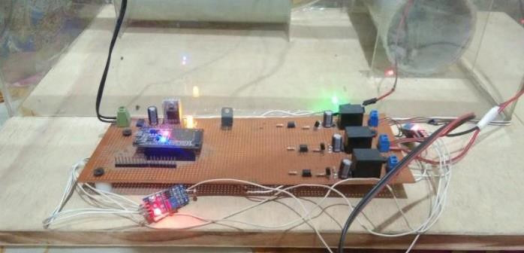
precision agriculture as presented in Figure 1. The core objective was to auto- mate irrigation based on real-time sensor data, optimizing water usage and promoting crop health. The system is comprised of two main parts: hardware components and software functionalities.
Hardware Components – Soil moisture sensor: This sensor measures the amount of water present in the soil. – DHT11 sensor: This sensor detects both temperature and humidity levels. – Node MCU ESP8266 microcontroller: This microcontroller acted as the brain of the system, collecting data from the sensors and uploading it to the cloud platform. It also controlled the water pump based on predefined moisture thresholds. – Water pump: This pump delivered water for irrigation based on signals from the microcontroller.
Software Functionalities – Mobile application: This app provides a user-friendly interface to mon- itor sensor data (moisture, temperature, humidity), adjust irrigation settings remotely, and control the entire system. – Cloud platform: This platform played a crucial role in data storage. It facilitated communication between the mobile application and the microcontroller, enabling remote access and data analysis.
System Implementation The development of the system followed a step-by-step approach:
Hardware Integration: The initial phase involved connecting all the hard- ware components (sensors, microcontroller, and pump) according to the designed schematics.
Figure 1: Smart soil irrigation system.
Software Development: In this stage, the development team wrote codes for the microcontroller. These codes enabled the microcontroller to collect
data from the sensors, communicate with the cloud platform, and control the pump based on predefined moisture thresholds for optimal irrigation.
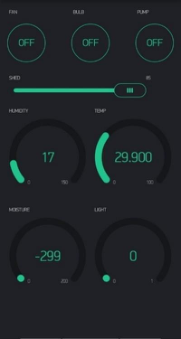
Mobile Application Development: Figure 2 depicts a mobile application interface was created to allow users to monitor sensor readings, adjust irrigation settings based on crop needs and real-time data, and control the system remotely for added convenience.
Figure 2: Mobile application of smart soil irrigation system.
Cloud Integration: The final step involved integrating the entire system with a cloud platform. This platform offered data storage capabilities and facilitated communication between the mobile application and the microcontroller, enabling remote access and control.
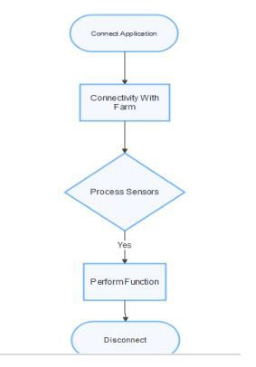
Figure 3: Flow diagram of smart soil irrigation system app.
IoT-Based Vertical Farming System 111
Testing Procedures To ensure proper functionality, the system underwent two main testing phases:
Unit Testing: This phase focused on individual software modules. Each module was rigorously tested to verify its functionality and identify and rectify any errors in handling potential issues.
Integration Testing: After individual modules were tested, the entire system, encompassing both hardware and software components, was tested for seamless operation and data flow. This ensured that all components worked together effectively to achieve the desired outcome of automated irri- gation based on real-time sensor data. The testing methodology employed a combination of black-box and white-box testing approaches. Black-box test- ing focused on the external behaviour of the system based on user inputs and outputs. White-box testing, on the other hand, delved deeper into the internal functionalities of the code to identify and rectify errors within the code itself.
CONCLUSION
This vertical farming system revolutionizes agricultural production. Users can manage the farm through a user-friendly mobile application. The system automates key aspects like irrigation, temperature, and humidity based on pre-programmed settings. This allows for precise control over growing con- ditions, optimizing yields of fruits and vegetables. Furthermore, the ability to grow indoors eliminates the need for vast tracts of land and reduces reliance on external resources. This not only makes fresh produce more accessible and affordable but also positions vertical farming as a sustainable solution for urban environments with limited space.
REFERENCES
Arun, C. and Sudha, K. L., 2012. Agricultural management using wireless sensor networks-a survey. Bhandari, A., Rai, P. and Dr Rathee, A., 2021. Research article on smart irrigation
system using IOT. Int J Res Appl Sci Eng Technol (IJRASET). IC Value, 45. Chavan, C. H. and Karande, P. V., 2014. Wireless monitoring of soil moisture, temperature & humidity using zigbee in agriculture. International Journal of Engineering Trends and Technology (IJETT), 11(10), pp. 493–497. Gamal, Y., Soltan, A., Said, L. A., Madian, A. H. and Radwan, A. G., 2023. Smart
irrigation systems: Overview. IEEE Access. Gomathy, D. C., 2021. Article: A Scheme of ADHOC Communication using Mobile Device Networks. International Journal of Emerging technologies and Innovative Research (JETIR) Volume, 5, pp. 320–326. Gomathy, D. C., Article: A Web Based Platform Comparison by an Exploratory
Experiment Searching For Emergent Platform Properties. IAETSD Journal For Advanced Research In Applied Sciences, 5(3). Honda, K., Shrestha, A., Witayangkurn, A., Chinnachodteeranun, R. and Shimamura, H., 2009. Fieldservers and sensor service grid as real-time monitoring infrastructure for ubiquitous sensor networks. Sensors, 9(4), pp. 2363–2370.
Hwang, J., Shin, C. and Yoe, H., 2010. Study on an agricultural environment monitoring server system using wireless sensor networks. Sensors, 10(12), pp. 11189–11211. Jadhav, P. and Wani, V., A Research on IOT Based Smart Automation Irrigation
System. Jambu, M., Singh, K., Shrivastav, H. K. and Singh, S., 2023. Smart Irrigation System for Farmers using ESP8266 detecting Moisture, Temperature and Water level in Fields. IJRAR-International Journal of Research and Analytical Reviews (IJRAR), 10(2), pp. 87–93. Kim, Y., Evans, R. G. and Iversen, W. M., 2008. Remote sensing and control of an
irrigation system using a distributed wireless sensor network. IEEE transactions on instrumentation and measurement, 57(7), pp. 1379–1387. Kumar, A., Ranjan, P. and Saini, V., 2022. Smart irrigation system using IoT. In Agri-Food 4.0: Innovations, Challenges and Strategies (pp. 123–139). Emerald Publishing Limited. Li, S., Cui, J. and Li, Z., 2011, March. Wireless sensor network for precise agriculture
monitoring. In 2011 Fourth International Conference on Intelligent Computation Technology and Automation (Vol. 1, pp. 307–310). IEEE. Mampentzidou, I., Karapistoli, E. and Economides, A. A., 2012, October. Basic guidelines for deploying wireless sensor networks in agriculture. In 2012 IV Inter- national Congress on Ultra Modern Telecommunications and Control Systems (pp. 864–869). IEEE. Miskam, M. A., Nasirudin, A. B. and Rahim, I. A., 2009. Preliminary design
on the development of wireless sensor network for paddy rice cropping moni- toring application in Malaysia. European Journal of Scientific Research, 37(4), pp. 649–657. Mitra, A. and Saini, G., 2019, October. Automated smart irrigation system (ASIS).
In 2019 international conference on computing, communication, and intelligent systems (ICCCIS) (pp. 327–330). IEEE. Obaideen, K., Yousef, B. A., AlMallahi, M. N., Tan, Y. C., Mahmoud, M., Jaber, H. and Ramadan, M., 2022. An overview of smart irrigation systems using IoT. Energy Nexus, 7, p. 100124. Ragab, M. A., Badreldeen, M. M. M., Sedhom, A. and Mamdouh, W. M., 2022. IOT
based smart irrigation system. International Journal of Industry and Sustainable Development, 3(1), pp. 76–86. Sami, M., Khan, S. Q., Khurram, M., Farooq, M. U., Anjum, R., Aziz, S., Qureshi, R.
and Sadak, F., 2022. A deep learning-based sensor modeling for smart irrigation system. Agronomy, 12(1), p. 212. Senapati, M., Das, R. K. and Samal, B., 2020. Wireless Smart Irrigation System. Int.
J. Eng. Res. Technol, 8(1). Senbetu, T. H. and Dheepa, G. K., 2019. Iot based irrigation remote real time monitoring and controlling systems. International Journal of Innovative Technology and Exploring Engineering, 8(7), pp. 927–932. Shinghal, D. K., Noor, A., Srivastava, N. and Singh, R., 2011. Intelligent humidity
sensor for-wireless sensor network agricultural application. International Journal of Wireless & Mobile Networks (IJWMN), 3(1), pp. 118–128. Srivastava, D., Kesarwani, A. and Dubey, S., 2018. Measurement of Temperature and Humidity by using Arduino Tool and DHT11. International Research Journal of Engineering and Technology (IRJET), 5(12), pp. 876–878.
IoT-Based Vertical Farming System 113
Yoon, C., Huh, M., Kang, S. G., Park, J. and Lee, C., 2018, February. Implement smart farm with IoT technology. In 2018 20th International Conference on advanced communication technology (ICACT) (pp. 749–752). IEEE. Yuan, G., Luo, Y., Sun, X. and Tang, D., 2004. Evaluation of a crop water stress index
for detecting water stress in winter wheat in the North China Plain. Agricultural Water Management, 64(1), pp. 29–40.
LISTED IN THE AHFE DIGITAL BOOKSTORE CATALOGUE
Explore the complete digital volume
Cognitive Computing and Internet of Things
Read this individual research paper free through the original publisher, or explore the full digital proceedings book.
ISBN 978-1-964867-00-7
Explore this ISBN in the AHFE Bookstore ↗Listed in the July 2026 bookstore catalogue; search by ISBN to confirm current availability · Digital book purchase optional